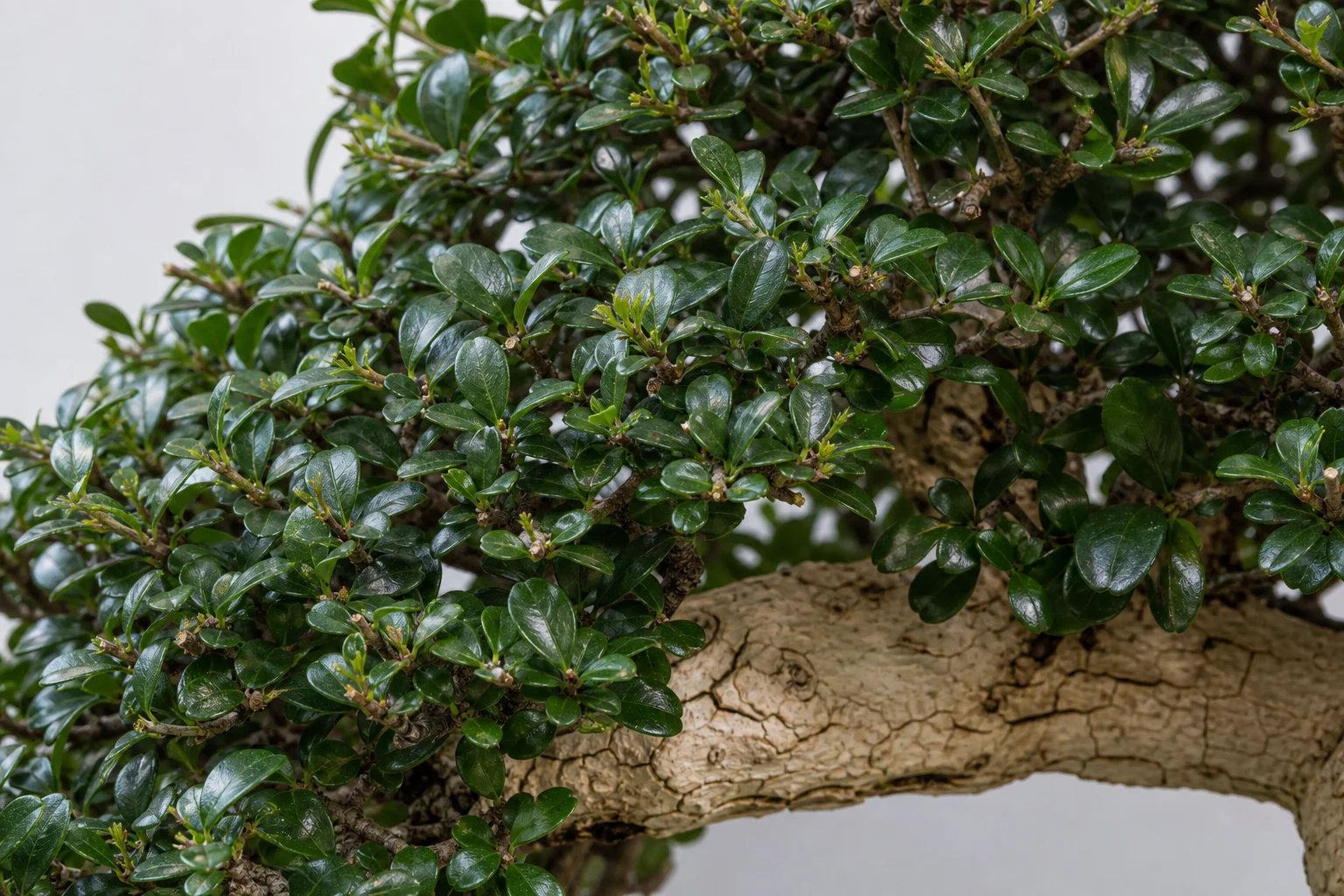
Common box bonsai care
Buxus sempervirensDense small leaves, pale fissured bark, an evergreen presence year-round — and a serious UK disease and pest situation that every grower must understand before starting.
Water
Every 2 days
check daily in summerLiquid feed
Every 14 days
growing seasonSolid feed
Every 28 days
slow releaseRotate
Every 14 days
even canopy growthBox has been a beloved European bonsai species for centuries — the fine glossy leaves, slow steady growth, exceptional ramification, and pale flaking bark on older trees give a refined, almost porcelain quality unmatched by other evergreen broadleaves. Mature box bonsai have a quality that fits beautifully into traditional English aesthetic — quiet, considered, undeniably old.
The case against starting with box in the UK in the 2020s is real and worth being honest about. Two serious threats are currently devastating box plantings across Britain: box blight (Calonectria pseudonaviculata) and box tree moth (Cydalima perspectalis). Together they've made box hedges in many UK gardens effectively unviable, and the conditions don't spare bonsai. Box blight is particularly an issue for bonsai because the humid, sheltered conditions of typical bonsai displays favour the fungus.
If you decide to grow box anyway — and the species is still worthwhile for those who accept the risk — you need to take both threats seriously from day one: airflow management, prompt removal of any suspect foliage, regular inspection for moth caterpillars, and isolation of new acquisitions before adding to your collection. With vigilance, box can still be grown well in the UK. Without it, the species is genuinely difficult to maintain.
For new growers who want a fine-leaved evergreen broadleaf without the disease and pest pressure, consider Korean hornbeam or Japanese privet as alternatives. Box is for people who want this specific species enough to manage the threats.
Buxus sempervirens is native throughout Europe including the UK, where it forms one of our few native evergreen broadleaved species (Box Hill in Surrey is famously named after it). Naturalised across most of Europe. Several closely related species are used in bonsai, particularly Buxus microphylla (Japanese box) which has smaller leaves and slightly more disease resistance, and Buxus harlandii (Harland's box) from southern China which is the standard refined bonsai box in Asia.
Seasonal calendar
Timing is for South East England. Select your region above to see adjusted guidance.
- Light structural work
- Inspect for box tree moth pupae
- Plan spring repotting
- Watch for first box tree moth flight (rare in cold years)
- Begin repotting late month
- Inspect for first signs of box blight
- Main repotting window
- First box tree moth eggs may be laid
- Begin light feeding
- Begin pinching new shoots
- Watch closely for moth caterpillars
- Continue pinching
- Take cuttings if propagating
- Peak moth activity
- Maintain airflow on benches
- Continue inspection for caterpillars
- Watch for second moth generation
- Begin reducing feeding mid-month
- Stop feeding mid-month
- Inspect for autumn moth caterpillars
- Reduce watering
- Final moth inspection before pupation
- Position with airflow for winter
- Watch for blight in damp weather
- Heavy structural work if needed
- Continue blight vigilance
Watering
Water moderately. Every 2–4 days in summer growing season, every 4–7 days in spring and autumn, every 7–14 days in winter. Box tolerates a wider moisture range than pines or junipers but resents both prolonged dryness (causes leaf yellowing) and waterlogging (causes root rot).
The species' main vulnerability around watering is that wet foliage in still humid conditions encourages box blight infection. Water at the soil rather than overhead where possible. Avoid evening watering during damp summer weather.
Tap water of any hardness is fine.
Feeding
Light feeding. Half-strength liquid feed every two weeks from May through to mid-September. Slow-release organic pellets in spring and early summer.
Box responds well to consistent moderate feeding. Heavy feeding produces soft growth that's more susceptible to box blight. The species' natural slow growth is part of why it makes such fine bonsai; pushing it harder is counterproductive.
Soil & Repotting
Free-draining and slightly alkaline-tolerant. Box performs well on chalk in the wild and tolerates UK hard tap water without complaint.
60% akadama, 30% pumice, 10% lava is reliable. Box tolerates a wide range of substrates and isn't fussy about specific mixes.
Repot every 3–4 years on established trees. The window is mid-March through to early May — slightly later than for deciduous species, waiting for warmer conditions.
Box tolerates moderate root work — up to a third of the root mass on healthy trees. Comb the roots carefully — box roots are fine and damage easily. Don't bare-root.
The species responds slowly to repotting. Don't expect visible vigour for 2–3 months after the work.
Pruning
Box pruning is among the most refined in bonsai — the species accepts cutting almost like a hedge plant but produces dense ramification with patience.
Through the growing season, let new shoots extend to 3–4 pairs of leaves then cut back to 1–2 pairs. Pinch every three to four weeks during active growth. The species back-buds reliably on old wood and tolerates moderate hard cutbacks, though recovery is slow.
Use sharp small scissors and cut just above leaf nodes — box doesn't respond to fingertip pinching the way junipers do, but scissor cuts heal cleanly if positioned well.
Structural pruning in late winter to early spring (February–March). Major cuts heal slowly. Larger wounds benefit from cut sealant.
A specific consideration: never prune in wet humid weather. Cut surfaces are infection points for box blight. Wait for a dry day.
Wiring & Styling
Wire after new growth hardens in early summer or on dormant wood in winter. Box bark is thin and marks visibly — apply loosely and check fortnightly. Aluminium for almost all work; copper rarely needed because branches are flexible.
The species' slow growth means wire can stay on for extended periods (often a full season) without biting in, which makes wiring more relaxed than on vigorous species.
Wire scars on box bark fade slowly. Take wire off as soon as branches set.
Informal upright with a chunky trunk is the classic box style. Broom and clump styles work brilliantly on the species' natural rounded habit. Cascade and semi-cascade work but are uncommon. Twin-trunk forms are traditional and effective.
The pale fissured bark on older box bonsai is one of the species' main aesthetic assets and styling should aim to showcase it — clean trunk lines and a canopy that allows views of the bark below. Refined boxwood bonsai have a quality of quiet dignity that few other species can match.
Winter care
Hardy across most of the UK with no protection needed. Box takes normal British winters without complaint.
The main winter consideration is fungal pressure. Box blight thrives in cool damp conditions and a sheltered bench with poor airflow is exactly what it likes. Position trees with good air movement around them, particularly in winter and spring. Some growers use small fans on benches to maintain airflow through still weather.
Never bring indoors.
Propagation
From semi-hardwood cuttings in summer (June–August) with rooting hormone — moderate success rate, the standard route for bonsai material. Air layering possible but slow. From seed produces variable seedlings and is rarely used. Collected garden material is widely available — many UK gardens have old box hedging being removed as the disease and pest pressure becomes unmanageable, and individual specimens can be salvaged for bonsai.
Common problems
Two serious modern issues dominate box cultivation in the UK: box blight and box tree moth. Other problems are minor by comparison.
Box blight (Calonectria pseudonaviculata)
Symptoms: Dark brown spots on leaves, dieback of patches of foliage, black streaks on stems, eventual collapse of affected branches. Often spreads rapidly in wet weather.
Cause: Fungal disease, ubiquitous in UK conditions since the 1990s. Spores spread by water splash and tools.
Solution: Prevention is far easier than cure. Maintain airflow around trees. Water at soil only. Disinfect tools between trees with bleach or alcohol. Remove and bin (not compost) any affected foliage immediately. Severe cases may require destruction of the tree. Some growers use copper fungicide preventatively in spring and autumn — effectiveness is debated. Buxus microphylla and B. harlandii show better resistance than B. sempervirens.
Box tree moth (Cydalima perspectalis)
Symptoms: Caterpillars (green with black heads) feeding on foliage in colonies; silken webbing visible on shoots; rapid defoliation in summer.
Cause: Invasive moth species established in UK since 2008 and now widespread. Multiple generations per year — typically May, July, and September.
Solution: Regular inspection from April through October. Hand-pick caterpillars where possible. Pheromone traps to monitor moth flight timing. Bacillus thuringiensis spray when caterpillars are active. Severe infestations may strip the tree completely; healthy trees can recover but multiple cycles are exhausting. The pest is unfortunately here to stay.
Box leafminer (Monarthropalpus flavus)
Symptoms: Blister-like swellings on leaves where larvae mine within the leaf tissue.
Cause: Fly larvae feeding inside leaves.
Solution: Hand-strip affected leaves where practical. Systemic insecticide drench in spring. Less serious than blight or moth but persistent.
Bronze winter colour
Symptoms: Foliage turns bronze-yellow through winter rather than staying green.
Cause: Cold winter weather combined with strong sun on exposed positions.
Solution: Mostly cosmetic — leaves green up again in spring. Position with afternoon shade in winter if bronzing is disliked. Some cultivars resist this more than others.
Phytophthora root rot
Symptoms: Whole tree weakens, foliage dulls, eventual collapse.
Cause: Saturated substrate.
Solution: Prevention via free-draining substrate and careful watering. Largely fatal once symptoms appear.
Slow recovery from major work
Symptoms: Tree shows little visible response for months after pruning or repotting.
Cause: Normal species behaviour — box recovers slowly compared to vigorous species.
Solution: Patience. Don't combine multiple major interventions. Maintain optimal conditions and the tree will recover. Six months of apparent stasis is normal after substantial work.
Popular cultivars
The European species. UK native, traditional bonsai material in Europe. Most susceptible to box blight and moth.
Smaller leaves, denser habit, somewhat better disease resistance. Excellent for refined bonsai work. The standard refined box in Japanese bonsai.
Chinese species. The most refined box for bonsai — small leaves, fine ramification potential, attractive pale bark on older trees. Less hardy than B. sempervirens; needs protection below -5°C in UK.
Chinese species closely related to microphylla. Used in Asian bonsai. Less common in UK.
Compact slow-growing cultivar of B. sempervirens widely used as garden edging. Suitable for shohin bonsai. Same disease vulnerabilities as the species.
Track your Common box with Kentai.
Collection tracking, care logs and photo history are free — no card, no time limit.
More care guides
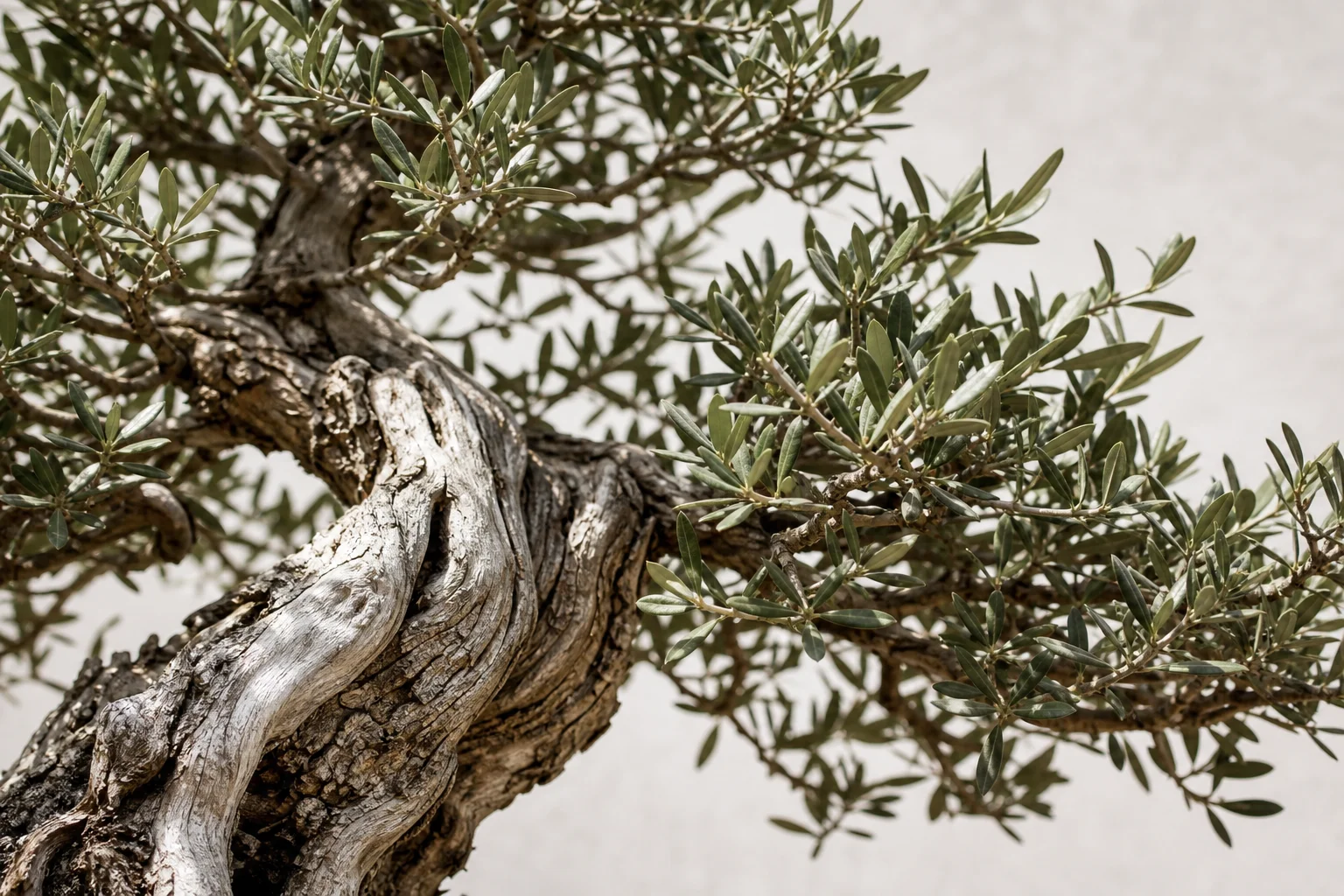
Olive
Olea europaeaSilver-grey foliage, gnarled trunk character on collected material, and the Mediterranean climate the UK is increasingly providing. Borderline-hardy but workable.
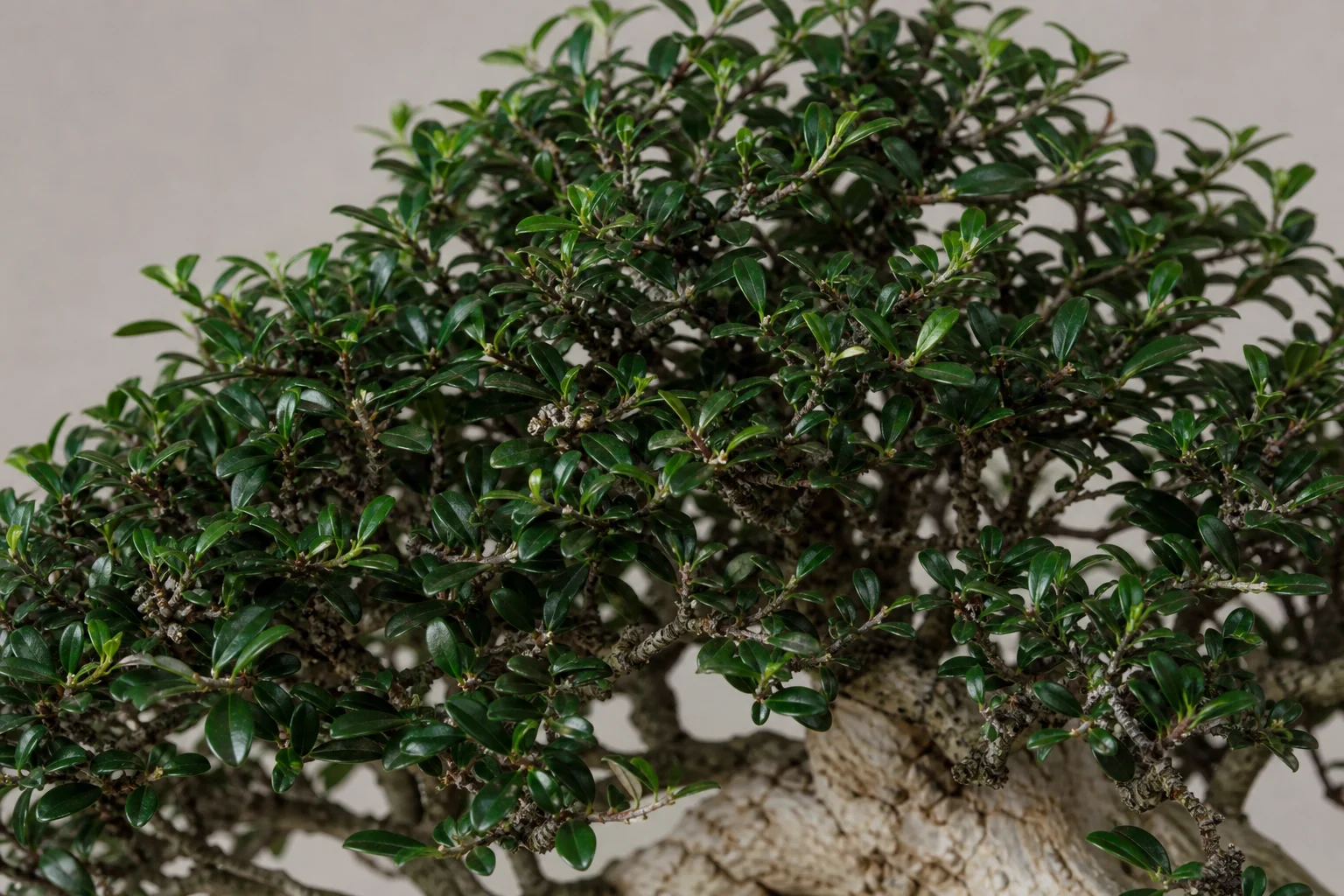
Privet
LigustrumThe bonsai species snobs avoid and beginners should embrace. Free in every overgrown UK garden, bulletproof in pots, develops quickly, looks excellent.
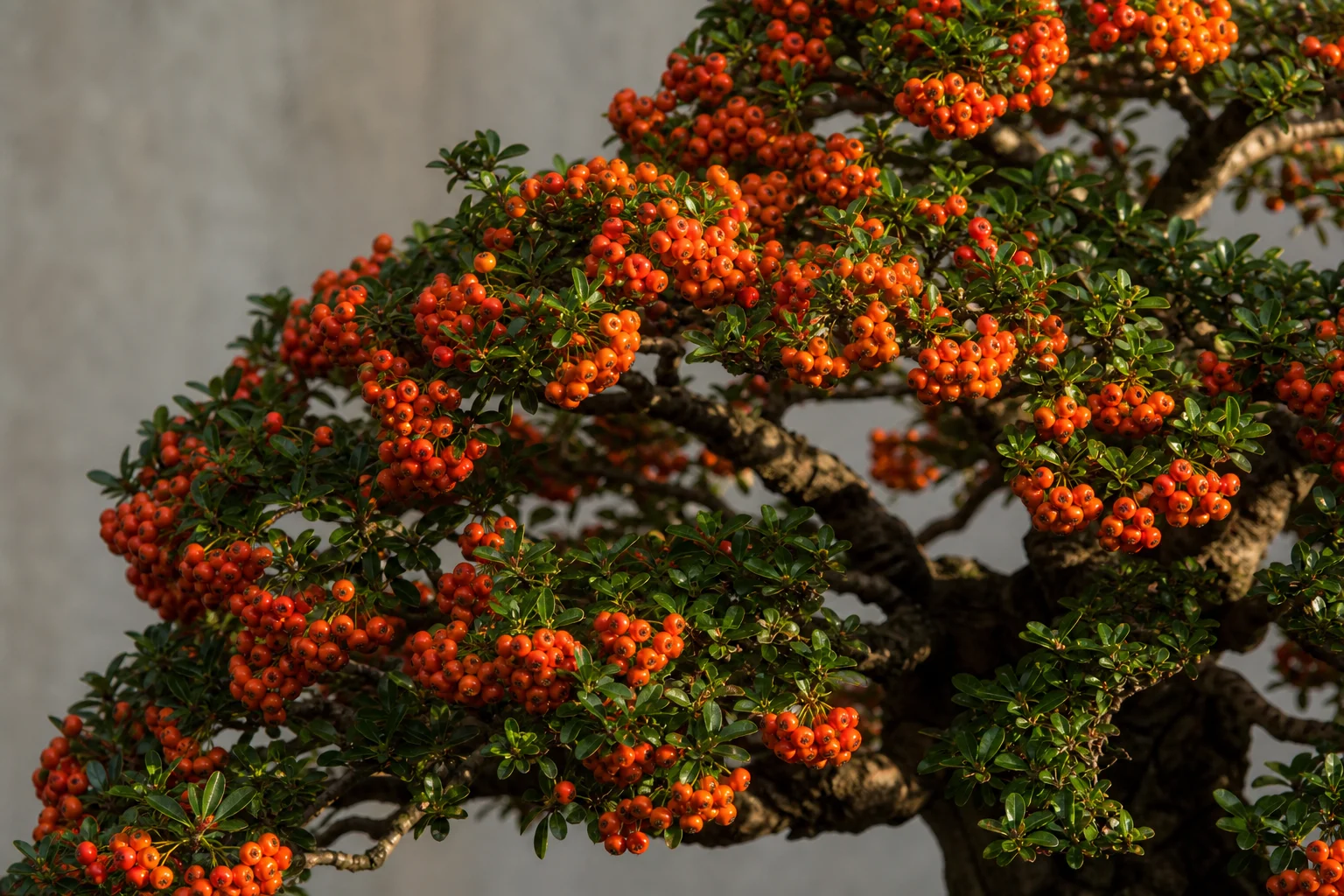
Pyracantha
Pyracantha coccineaEvergreen, thorny, and covered in red or orange berries from autumn through winter. The bonsai that earned the name firethorn.