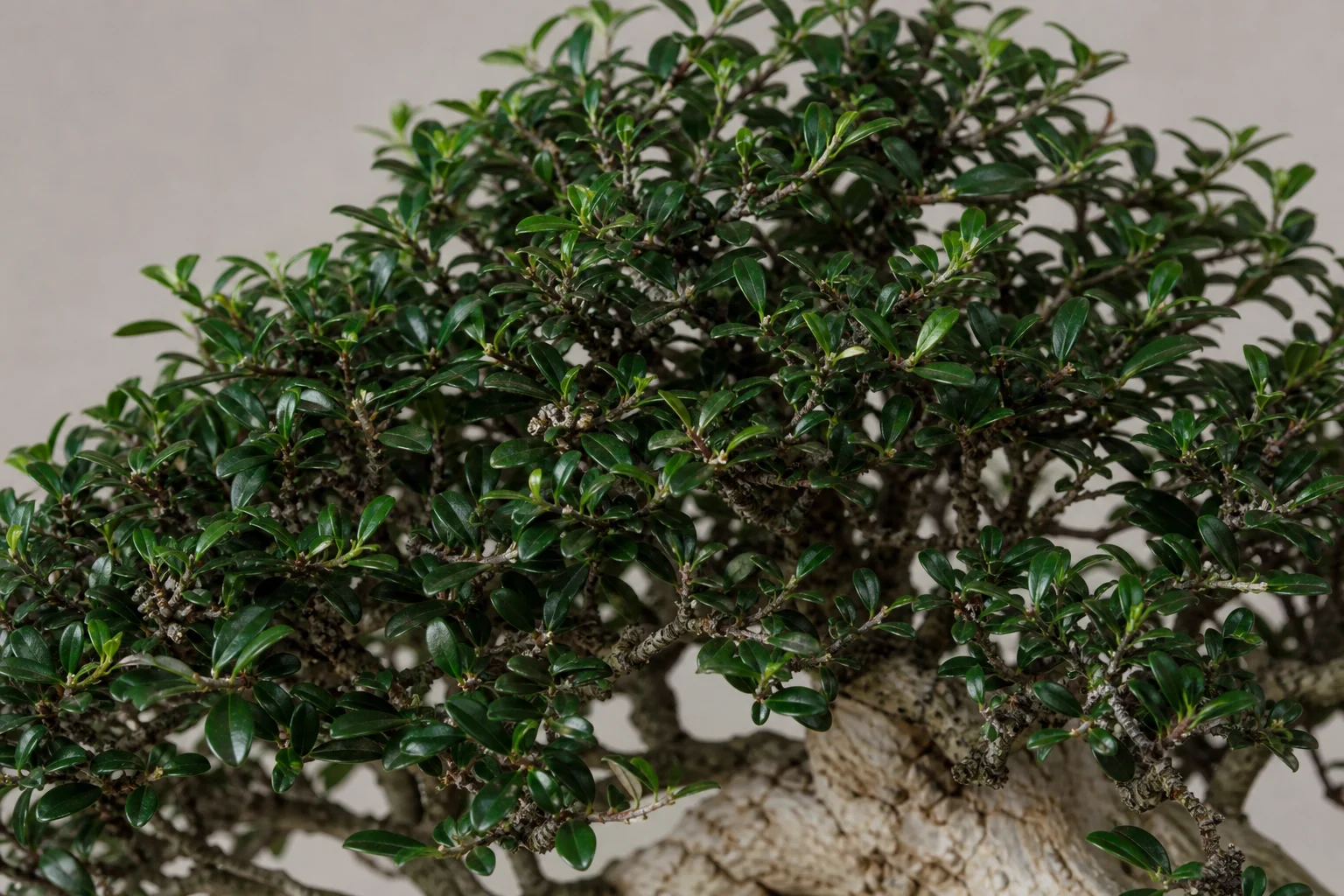
Privet bonsai care
LigustrumThe bonsai species snobs avoid and beginners should embrace. Free in every overgrown UK garden, bulletproof in pots, develops quickly, looks excellent.
Water
Every 1 day
check daily in summerLiquid feed
Every 7 days
growing seasonSolid feed
Every 28 days
slow releaseRotate
Every 14 days
even canopy growthPrivet is the species bonsai growers either love or pretend not to know about. The British associate it with municipal hedging and 1970s suburban front gardens, which is somehow disqualifying for some growers. This is a mistake. As bonsai, privet has every quality you'd want in a starter species — vigorous, forgiving, fast-developing trunk character, back-buds reliably on old wood, evergreen or semi-evergreen, available for free from any overgrown UK garden where the hedge needs taking down.
Better still: privet is what experienced UK growers reach for when they want to practice technique without risk. Hard cutbacks that would kill a juniper are routine on privet. Aggressive repotting that would set back a maple by a year is a non-event for privet. The species accepts the kind of work that builds bonsai skills.
Several species sit under the "privet" umbrella, and they're worth distinguishing. Ligustrum sinense (Chinese privet) is the smallest-leaved and most refined — the species behind most quality privet bonsai in Asia. Ligustrum ovalifolium is the standard UK garden hedge privet — larger leaves, more vigorous, less ideal for refined work but excellent for development. Ligustrum japonicum (wax-leaf or Japanese privet) has thick glossy leaves and is increasingly popular for bonsai. Ligustrum lucidum (Chinese tree privet) develops the largest trunks and is the choice for substantial specimens.
Multiple species spanning Europe, North Africa, and across Asia to Japan. Ligustrum vulgare is the UK native species (rare in the wild but historically widely planted as hedging before garden privet superseded it). Most of the bonsai-suitable privets come from East Asia. The species has been used as ornamental and hedging plants in the UK since the 17th century and several Asian species have naturalised through escape from gardens.
Seasonal calendar
Timing is for South East England. Select your region above to see adjusted guidance.
- Structural pruning while dormant
- Plan year's collection
- Begin repotting late month
- Final winter pruning
- Main repotting window
- Pot up collected material
- New growth begins
- Begin daily watering
- First slow-release feed
- Start weekly liquid feed
- Begin pinching new shoots
- Small white flowers possible on mature trees
- Defoliate refined healthy trees mid-month if desired
- Wiring window opens
- Twice-daily watering in heat
- Continue regular pinching
- Reduce feeding slightly mid-month
- Take cuttings if propagating
- Continue work on developing material
- Stop feeding late month
- Reduce watering
- Semi-evergreen forms begin leaf drop
- Most species retain foliage
- Light structural work possible
- Heavy structural pruning if needed
- Wire bare branches on deciduous-leaning forms
Watering
Daily through the growing season. Privet is vigorous and thirsty in active growth — twice-daily watering for trees in shallow pots in summer heat.
The species tolerates inconsistent watering much better than fussier species. A missed day in midsummer causes some leaf droop but rarely lasting damage. The species evolved on a wide range of conditions and is genuinely robust.
In winter, regular but reduced watering. Semi-evergreen species (L. ovalifolium) lose some leaves in cold weather; evergreen species (L. japonicum, L. lucidum) keep them through normal winters.
Tap water of any hardness is fine.
Feeding
Weekly liquid feed at full strength from late April through to mid-September. Slow-release organic pellets in spring and early summer.
Privet is a vigorous feeder when in growth. Standard feeding programmes work well — there's no need for specialised regimes. Heavy feeding produces large leaves and long internodes, so for refined work, slightly restrained feeding produces better results.
Stop feeding by late September.
Soil & Repotting
Free-draining and tolerant. Privet is unfussy about substrate.
60% akadama, 30% pumice, 10% lava is reliable. The species tolerates cheaper development mixes well — useful for starter material and trees in active development.
Repot every 2–3 years for young trees, every 3–4 for mature specimens. The window is wide — mid-February through to early April. Privet recovers quickly from repotting and is more forgiving of slightly off-window timing than most species.
Privet tolerates aggressive root work — up to half the root mass on healthy trees. Collected garden material can be dramatically reduced when first lifted, and the species recovers fast.
Pruning
Privet pruning is the easiest and most forgiving of any common bonsai species. The tree back-buds reliably on old wood, tolerates hard cutbacks, and recovers rapidly from any pruning errors.
Structural pruning anytime the tree is actively growing — typically February through October. Through the growing season, let new shoots extend to four or five pairs of leaves then cut back to two. Pinch every two to three weeks. The species' vigour means it can take more frequent pinching than slower species without exhaustion.
Defoliation works well on healthy trees and reduces leaf size significantly. The species often needs annual or biennial defoliation to develop refined ramification with appropriate leaf size — a major leaf reduction is often what separates a privet bonsai that looks finished from one that still looks like a hedge plant.
Hard cutbacks on bare wood produce vigorous back-budding within weeks — useful for restyling collected material.
Wiring & Styling
Wire after new growth hardens in early summer or on bare branches in winter. Privet bark thickens quickly with age and marks moderately — apply loosely and check fortnightly. Aluminium for most work; copper for thicker structural branches.
The species' vigour means branches thicken fast — wire can bite in within a single season. Check regularly during active growth.
Informal upright is the natural fit. Broom style works particularly well — the species' habit suits naturally rounded crowns. Twin-trunk and clump forms are common. The pale corky bark on older privet trunks is an underrated aesthetic feature and styling should aim to display it.
Cascade and semi-cascade are uncommon but possible. Formal upright doesn't suit the species' habit. Forest plantings work well on young material.
Winter care
Hardy across most of the UK with no protection needed. The various privet species range from H6 (most species) to H4 (the more tender Asian forms like L. japonicum in northern UK).
L. ovalifolium and L. sinense tolerate normal British winters without complaint. L. japonicum benefits from shelter in colder UK regions and in exposed positions. L. lucidum is hardier than its tropical appearance suggests but appreciates shelter in northern UK.
Never bring indoors.
Propagation
From semi-hardwood cuttings in summer (June–August) with rooting hormone — very high success rate, the standard propagation method. Hardwood cuttings in winter also work. From seed possible but produces variable seedlings. Collected garden material is widely available — every UK suburb has overgrown privet hedges being removed somewhere. Air layering works well on suitable branches.
Common problems
Generally healthy. Privet has fewer problems in UK cultivation than most ornamental species.
Scale insects
Symptoms: Small brown or white bumps on stems and undersides of leaves; sticky residue.
Cause: Common pest on privet, particularly on neglected trees.
Solution: Manual removal with alcohol-dipped cotton bud. Horticultural oil in winter on bare branches. Systemic insecticide for severe infestations.
Privet thrips
Symptoms: Silvery patches on leaves, sometimes with black specks of frass.
Cause: Small sap-sucking pests.
Solution: Hose foliage thoroughly. Neem oil if persistent. Rarely causes serious harm.
Powdery mildew
Symptoms: White dusty coating on leaves in late summer.
Cause: Humid stagnant air.
Solution: Improve airflow. Remove worst-affected leaves. Milk-water spray (1:10) as preventative. Sulphur-based fungicide if severe.
Honey fungus (Armillaria)
Symptoms: Sudden tree decline; white fungal sheets visible under bark; black bootlace-like structures in soil around the tree.
Cause: Soil-borne fungal disease.
Solution: Largely fatal once established. Dispose of affected tree and substrate. Disinfect tools. Less common in bonsai pots than in garden settings but possible.
Failure to develop refined ramification
Symptoms: Tree grows vigorously but produces sparse coarse branching.
Cause: Insufficient pinching combined with overfeeding.
Solution: Pinch more frequently and at shorter extensions (after 4-5 leaves rather than 6-8). Defoliate annually on healthy trees. Reduce feeding to half strength. Ramification will develop with consistent technique over 2-3 seasons.
Toxicity to pets
Symptoms: No symptoms on the tree but a safety consideration for the household.
Cause: Privet berries and leaves are toxic to dogs, cats, and humans if ingested.
Solution: Position out of reach of pets. Sweep up fallen berries promptly. Wash hands after handling prunings. Not high-risk for most growers but worth knowing.
Popular cultivars
Small leaves, refined habit, smaller white flowers and dark berries. The standard for refined privet bonsai in Asia. Less common in UK but available.
The standard UK garden hedge privet. Larger leaves than sinense, vigorous growth, semi-evergreen. Excellent for development material; collected hedgerow material is widely available.
Thick glossy evergreen leaves. Refined and increasingly popular for bonsai. Slightly less hardy than ovalifolium.
Larger species capable of developing substantial trunks. Excellent for medium to large bonsai. Slightly tender in northern UK.
The UK native privet, semi-evergreen, rarely planted as garden hedge but suitable for bonsai. Smaller leaves than ovalifolium.
Yellow-leaved cultivar of L. ovalifolium. Striking but variegation can be unstable in low light.
Track your Privet with Kentai.
Collection tracking, care logs and photo history are free — no card, no time limit.
More care guides
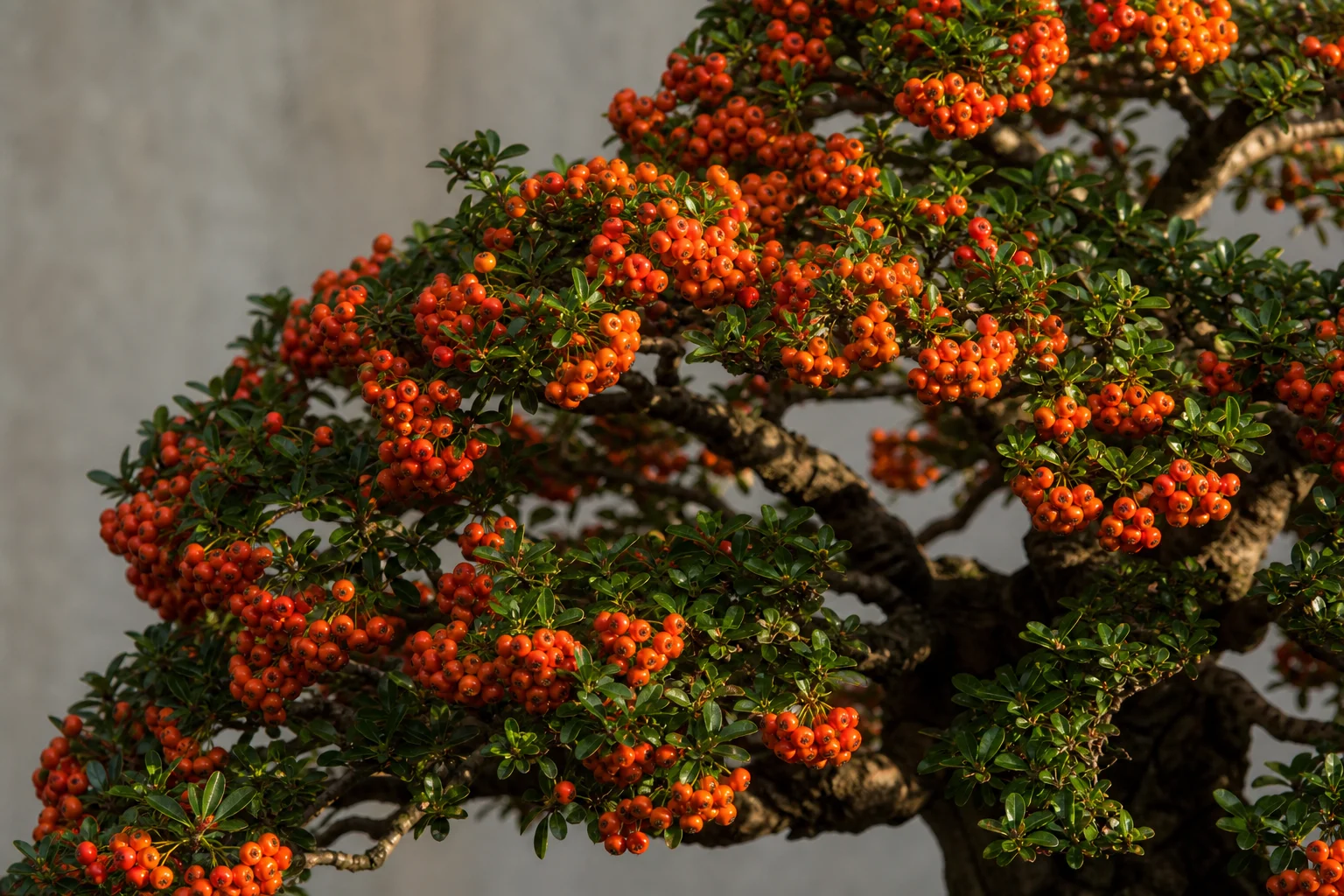
Pyracantha
Pyracantha coccineaEvergreen, thorny, and covered in red or orange berries from autumn through winter. The bonsai that earned the name firethorn.
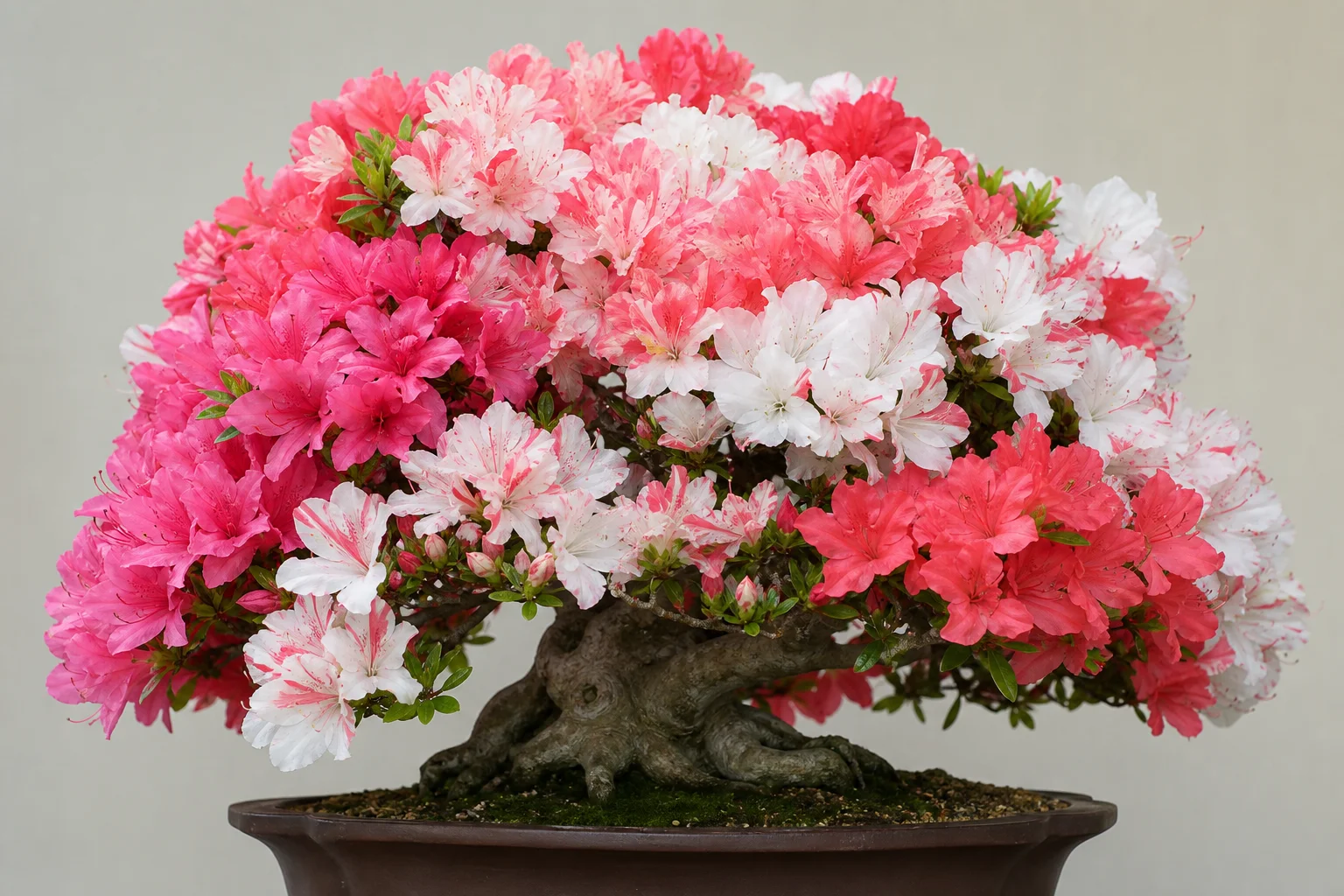
Satsuki azalea
Rhododendron indicumThe flowering specialist. Cloud-like masses of bloom in late May to June, evergreen for the rest of the year, and a substrate and watering regime unlike anything else in bonsai.
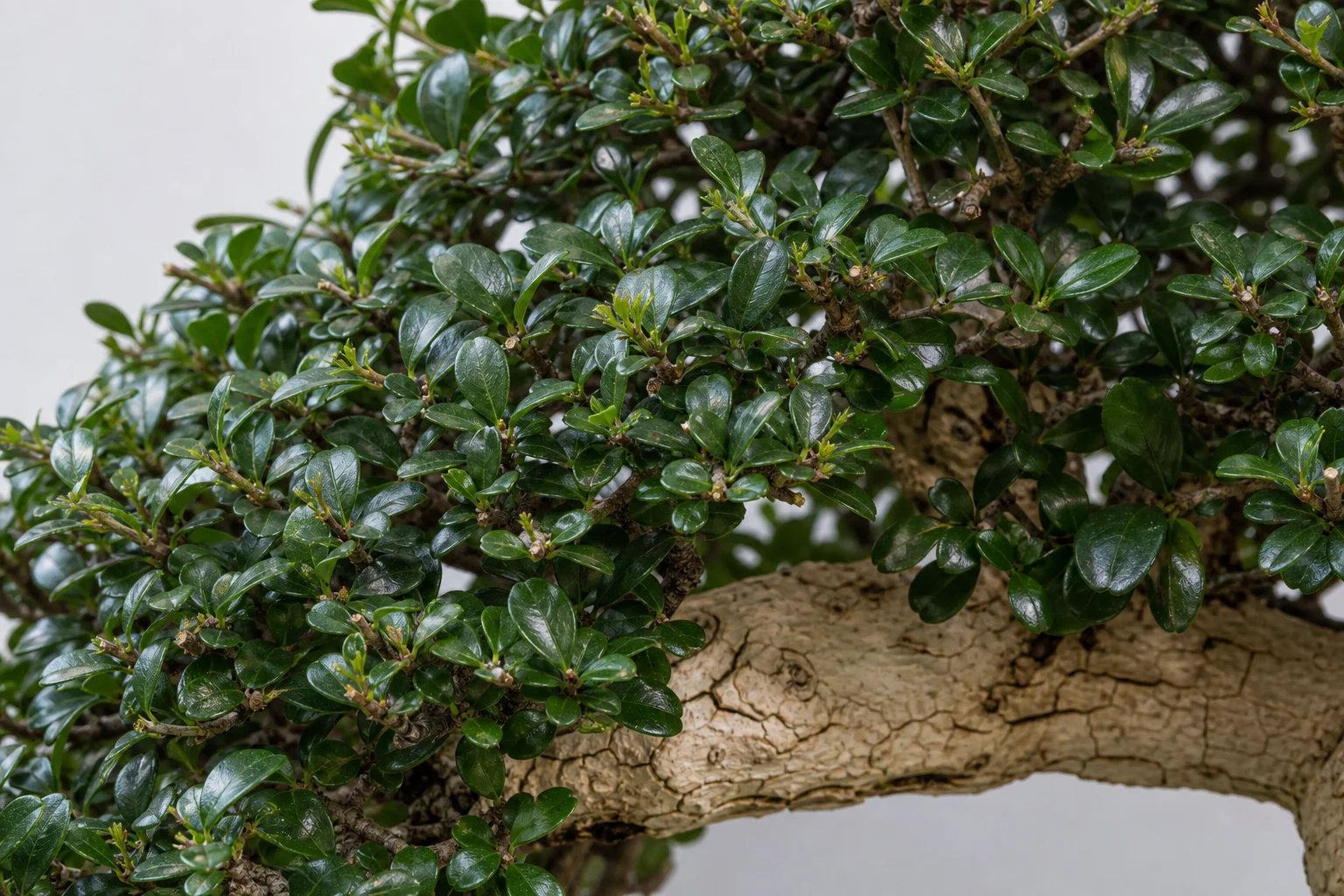
Common box
Buxus sempervirensDense small leaves, pale fissured bark, an evergreen presence year-round — and a serious UK disease and pest situation that every grower must understand before starting.