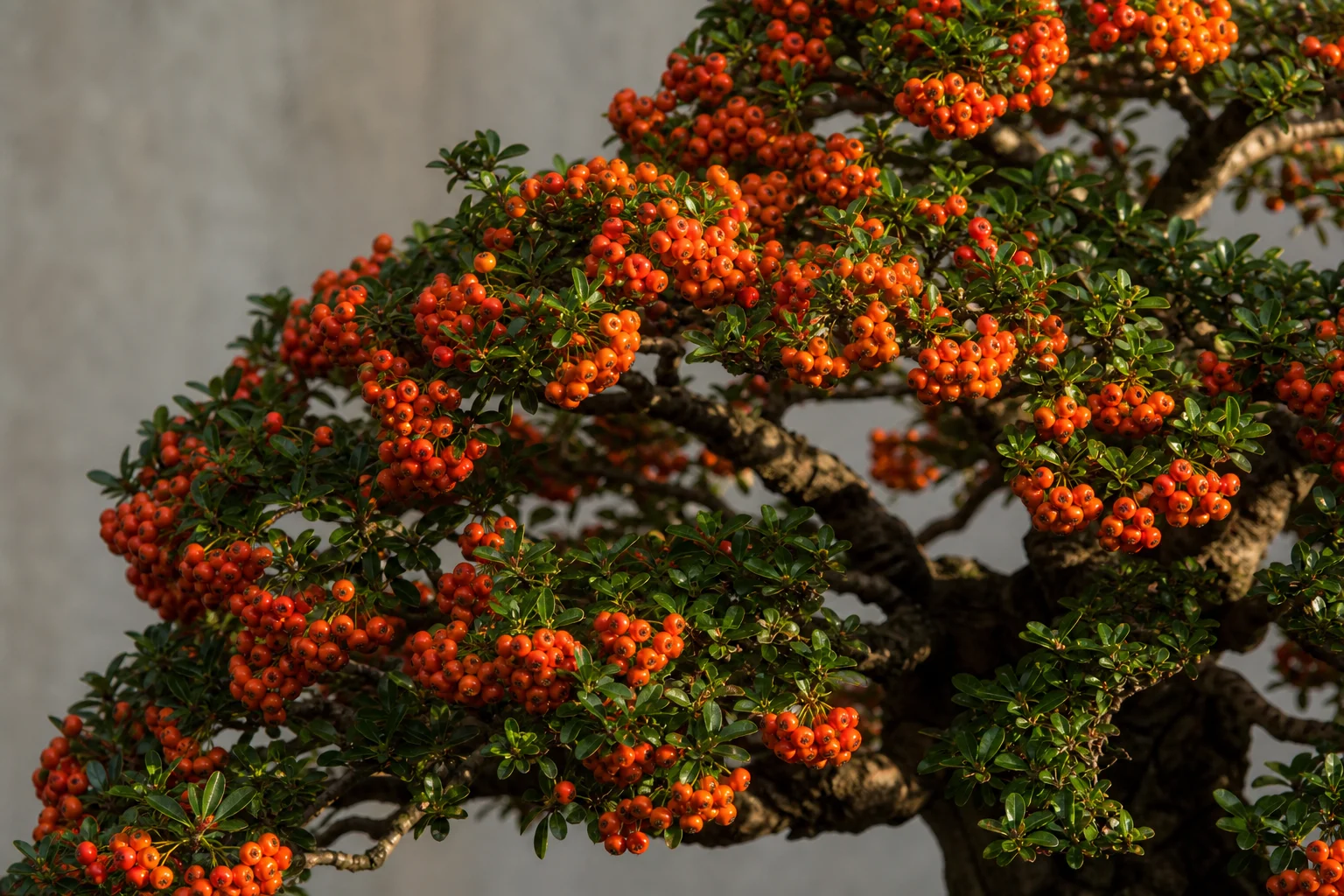
Pyracantha bonsai care
Pyracantha coccineaEvergreen, thorny, and covered in red or orange berries from autumn through winter. The bonsai that earned the name firethorn.
Water
Every 1 day
check daily in summerLiquid feed
Every 7 days
growing seasonSolid feed
Every 28 days
slow releaseRotate
Every 14 days
even canopy growthPyracantha is the bigger, more vigorous, more dramatic cousin of cotoneaster. The leaves are slightly larger, the thorns are genuinely sharp (sturdy gloves recommended), the white spring flowers are profuse, and the berry display in autumn is spectacular — bright orange to scarlet, in dense clusters, persisting through to spring on most cultivars. The Latin name translates roughly as fire-thorn, and a well-fruited specimen in October justifies it.
As bonsai, pyracantha is straightforward and vigorous. It back-buds aggressively on old wood, tolerates hard cutbacks, develops trunk girth faster than cotoneaster, and produces refined ramification through consistent pinching. The evergreen foliage means winter trees are clothed rather than bare, which suits some growers and not others.
The species' main risks are fireblight (a serious bacterial disease of Rosaceae) and the thorns themselves. Both manageable with awareness.
Native to southeastern Europe and western Asia. Widely cultivated as garden hedging in the UK since the 16th century. Hybridised extensively for garden use — most modern cultivars are Pyracantha coccinea × P. crenulata or P. coccinea × P. rogersiana crosses, selected for berry colour, disease resistance, and growth habit.
Seasonal calendar
Timing is for South East England. Select your region above to see adjusted guidance.
- Structural pruning
- Plan repotting
- Repot late month as buds prepare to swell
- Final winter pruning
- Complete repotting
- First slow-release feed
- Strong growth begins
- Begin daily watering
- Start weekly liquid feed
- Spring flowering
- Pinch new shoots after flowering
- Continue pinching
- Wiring window opens
- Watch for fireblight after rain
- Twice-daily watering in heat
- Berries forming
- Reduce nitrogen
- Berries colouring
- Berries reach full colour
- Continue light feeding
- Peak berry display
- Reduce watering frequency
- Berries persist
- Shelter from harshest wind if needed
- Berries provide winter interest
- Minimal watering
Watering
Daily through the growing season. Pyracantha is vigorous and thirsty in full leaf. The evergreen habit means watering doesn't stop in winter — trees continue mild transpiration year-round and should be watered when the substrate has dried, typically every 5–10 days in winter depending on temperature.
Tap water of any hardness is fine.
Feeding
Weekly liquid feed from late April through to mid-September. Slow-release organic pellets in spring and again in early summer. For best flowering and fruiting, ensure adequate phosphorus and potassium — high-N feeds produce foliage at the expense of display.
Continue light feeding through winter at quarter strength to support the evergreen foliage — full dormant trees can be fed less, but pyracantha doesn't go fully dormant.
Soil & Repotting
Free-draining and tolerant. Pyracantha is unfussy about substrate.
60% akadama, 30% pumice, 10% lava is reliable. The species tolerates a wide range of mixes.
Repot every 2 years for young trees, every 3 for mature specimens. The window is late February through early April. Repot before strong new growth begins but after any risk of hard frost has passed.
The species tolerates aggressive root work — up to half the root mass on healthy trees. Comb roots radially, prune cleanly, settle into fresh substrate. Recovery is fast.
Pruning
Pyracantha pruning is forgiving. The species back-buds aggressively on old wood — even hard chops on heavy trunks produce new buds within 3–4 weeks.
Structural pruning in late winter or after flowering (June). Through the growing season, let new shoots extend to 5–6 leaves then cut back to 2. Pinch every two to three weeks.
The species flowers on previous year's growth. If flowers and berries are wanted, leave some shoots to extend rather than pinching every shoot — pyracantha is more forgiving of this trade-off than some flowering species because its vigorous back-budding builds new flowering wood quickly.
Wear gloves. The thorns are genuinely sharp and embedded thorns can introduce bacterial infections (pyracantha thorns are notorious for septic wounds in gardeners).
Wiring & Styling
Wire after leaves harden in early summer or on bare branches in winter. Pyracantha bark is fairly forgiving. Aluminium for most work; copper for thicker structural branches.
The species' vigour means wire can bite in within weeks during active growth — check fortnightly through summer.
Informal upright is the most common style. Cascade and semi-cascade work well — pyracantha's natural sprawling habit suits these forms. The species' evergreen foliage and dramatic fruiting make it well-suited to styles that emphasise mass and presence rather than refinement.
Forest plantings work but are less common — the individual character of a well-developed pyracantha usually justifies a solo specimen. Root-over-rock plantings are particularly effective.
Deadwood is less commonly featured but the species does produce dramatic deadwood when branches are removed and weathered.
Winter care
Hardy in most of the UK with minimal protection. Pyracantha tolerates -10°C without issue. In Scotland and the colder midlands, shelter from prevailing wind helps protect evergreen foliage from desiccation in hard freezes. Below -15°C — rare in the UK — into an unheated greenhouse or cold frame.
Don't bring indoors. The species needs cold for proper berry persistence and overall health.
Propagation
Easy from semi-hardwood cuttings in early summer with rooting hormone — high success rate. Air layering works well. From seed produces variable seedlings and is rarely used for bonsai.
Common problems
Pyracantha shares some Rosaceae diseases — fireblight is the most serious concern. The thorns also deserve respectful awareness.
Fireblight (Erwinia amylovora)
Symptoms: Sudden blackening and wilting of shoots, looking scorched. Sometimes weeping cankers on woody branches.
Cause: Bacterial disease — the species' main serious problem. Spread by insects, rain splash, and contaminated tools.
Solution: Cut back well below visible damage (at least 30cm) into healthy wood. Disinfect tools between cuts. Burn or bin all affected wood — don't compost. Severe infections may require destroying the tree. Choose disease-resistant cultivars where possible (Saphyr Orange, Saphyr Rouge series are bred for resistance).
Pyracantha scab
Symptoms: Olive-black scab-like spots on leaves and fruit; affected berries shrivel.
Cause: Fungal disease related to apple scab.
Solution: Improve airflow. Remove and bin affected leaves and berries. Copper fungicide preventatively in spring. Resistant cultivars are available.
Woolly aphid
Symptoms: White cottony patches on branches and joints.
Cause: Common aphid species.
Solution: Wash off with water jet. Neem if persistent.
Thorn injuries
Symptoms: Not a tree problem — a grower problem. Embedded thorns can cause persistent infections in human skin.
Cause: The species earns the name firethorn.
Solution: Wear sturdy gloves when handling. Remove embedded thorn fragments promptly. Disinfect any deep puncture wounds — pyracantha thorns are notorious for introducing bacterial infections.
Scale insects
Symptoms: Brown or white bumps on stems, honeydew, sooty mould.
Cause: Various scale species attack pyracantha.
Solution: Manual removal. Horticultural oil in winter. Systemic insecticide if severe.
Bird predation of berries
Symptoms: Berries stripped quickly in autumn.
Cause: Blackbirds and thrushes love pyracantha berries.
Solution: Net the tree if you want to preserve the display. Some cultivars (particularly orange-berried ones) are less preferred by birds than red-berried.
Popular cultivars
Wild type. Red berries, vigorous growth, the standard for bonsai material.
Vigorous variety with orange berries. Less susceptible to scab than some red-berried forms.
Yellow-berried cultivar. Distinct visual character, otherwise similar care.
French-bred cultivars selected for disease resistance (particularly to fireblight and scab). Worth seeking out for serious bonsai work where disease pressure is a concern.
Narrow-leaved species. Less common as bonsai but distinctive.
Track your Pyracantha with Kentai.
Collection tracking, care logs and photo history are free — no card, no time limit.
More care guides
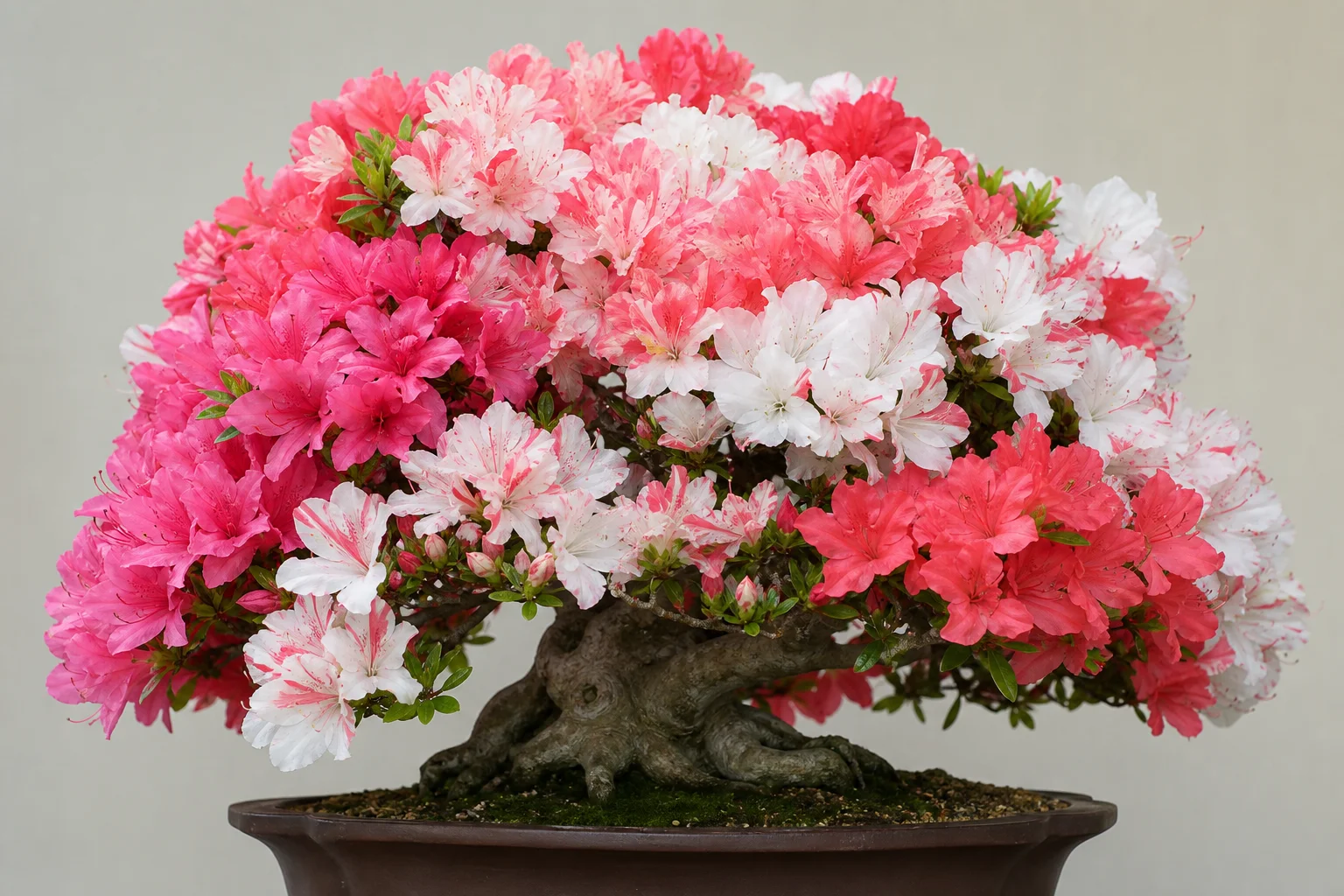
Satsuki azalea
Rhododendron indicumThe flowering specialist. Cloud-like masses of bloom in late May to June, evergreen for the rest of the year, and a substrate and watering regime unlike anything else in bonsai.
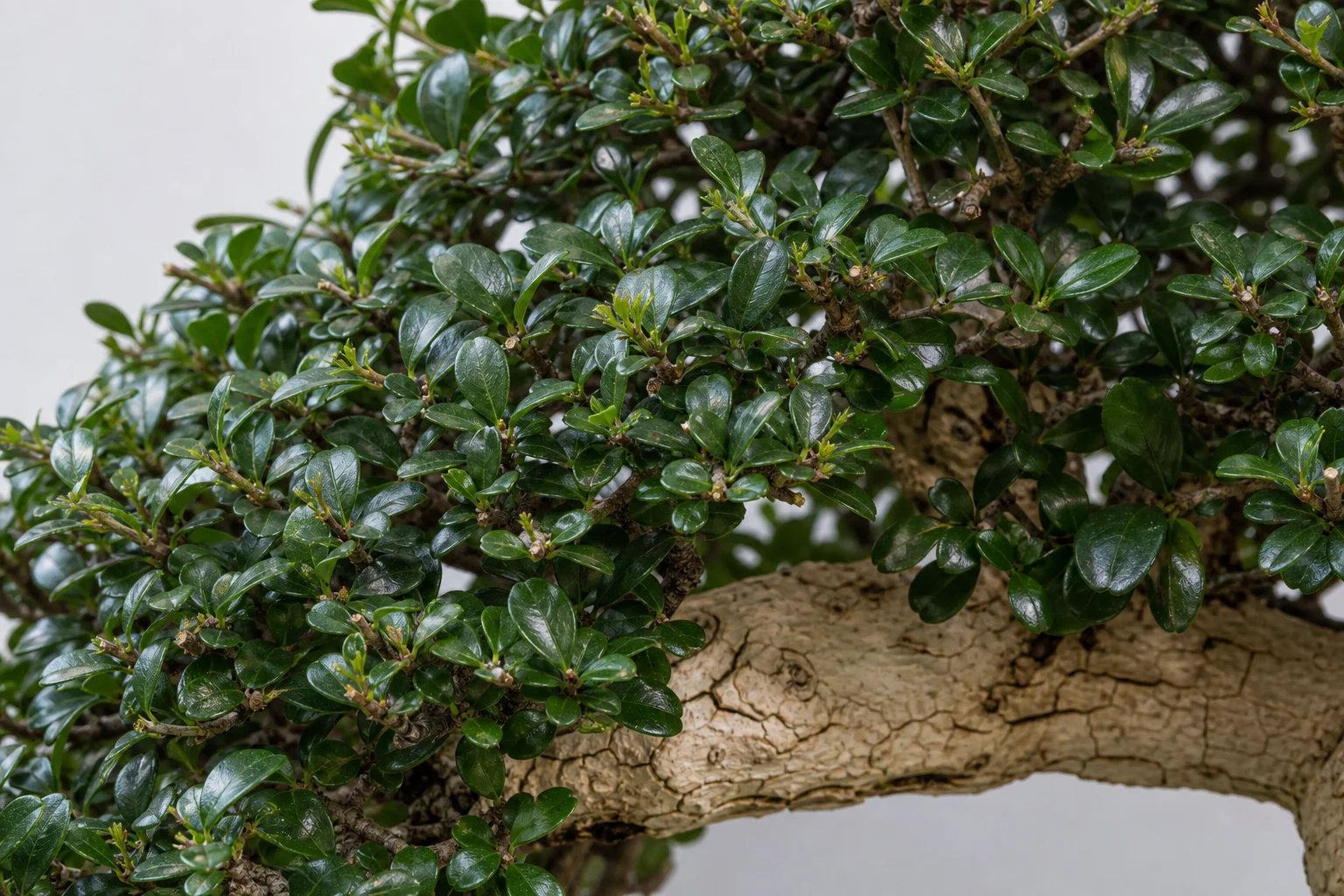
Common box
Buxus sempervirensDense small leaves, pale fissured bark, an evergreen presence year-round — and a serious UK disease and pest situation that every grower must understand before starting.
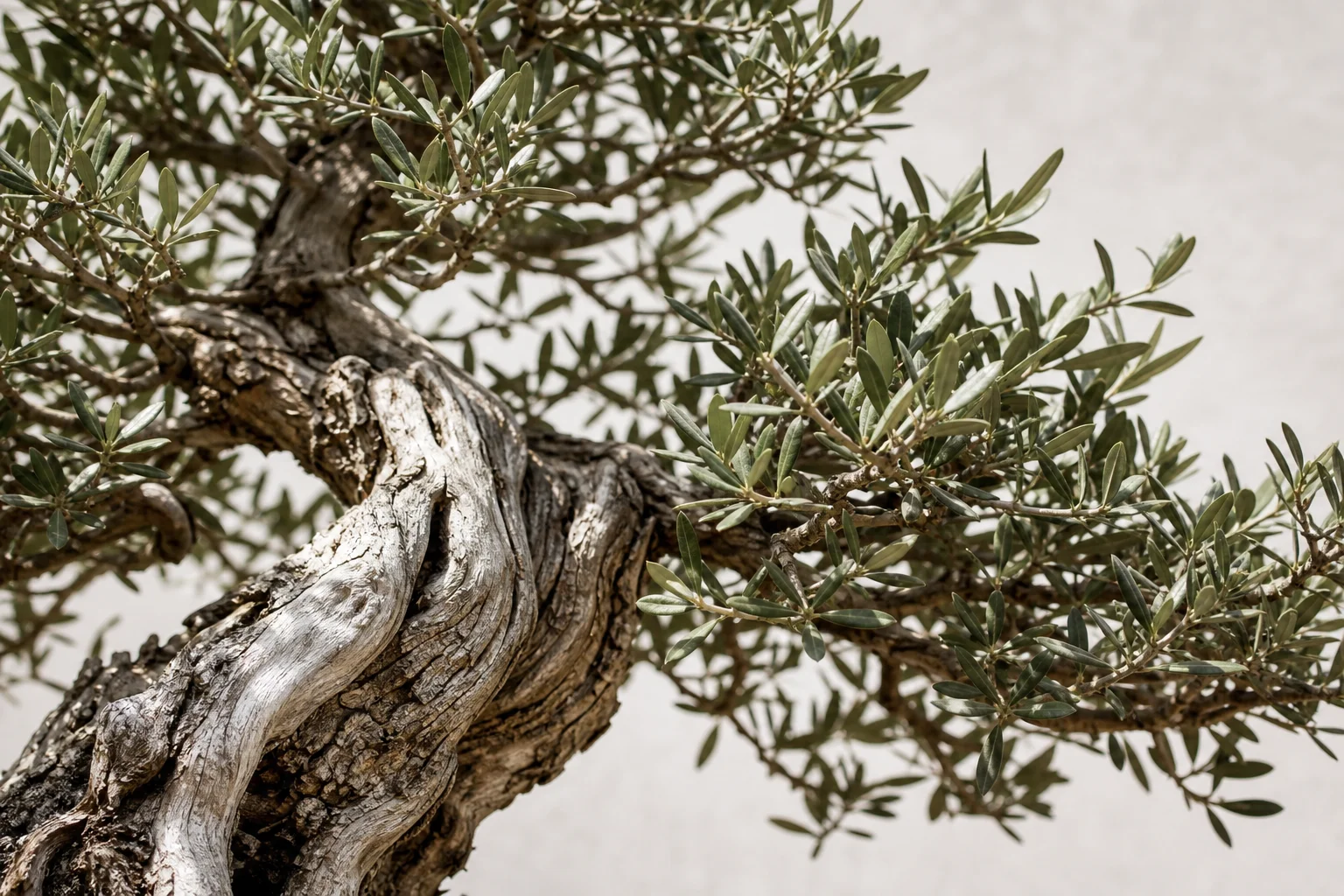
Olive
Olea europaeaSilver-grey foliage, gnarled trunk character on collected material, and the Mediterranean climate the UK is increasingly providing. Borderline-hardy but workable.