Bonsai care guides for UK growers
Each guide covers watering, feeding, repotting, pruning, wiring, winter protection and a month-by-month calendar — with timing adjusted for your region. No generic advice: every guide is written for temperate British conditions.
Deciduous
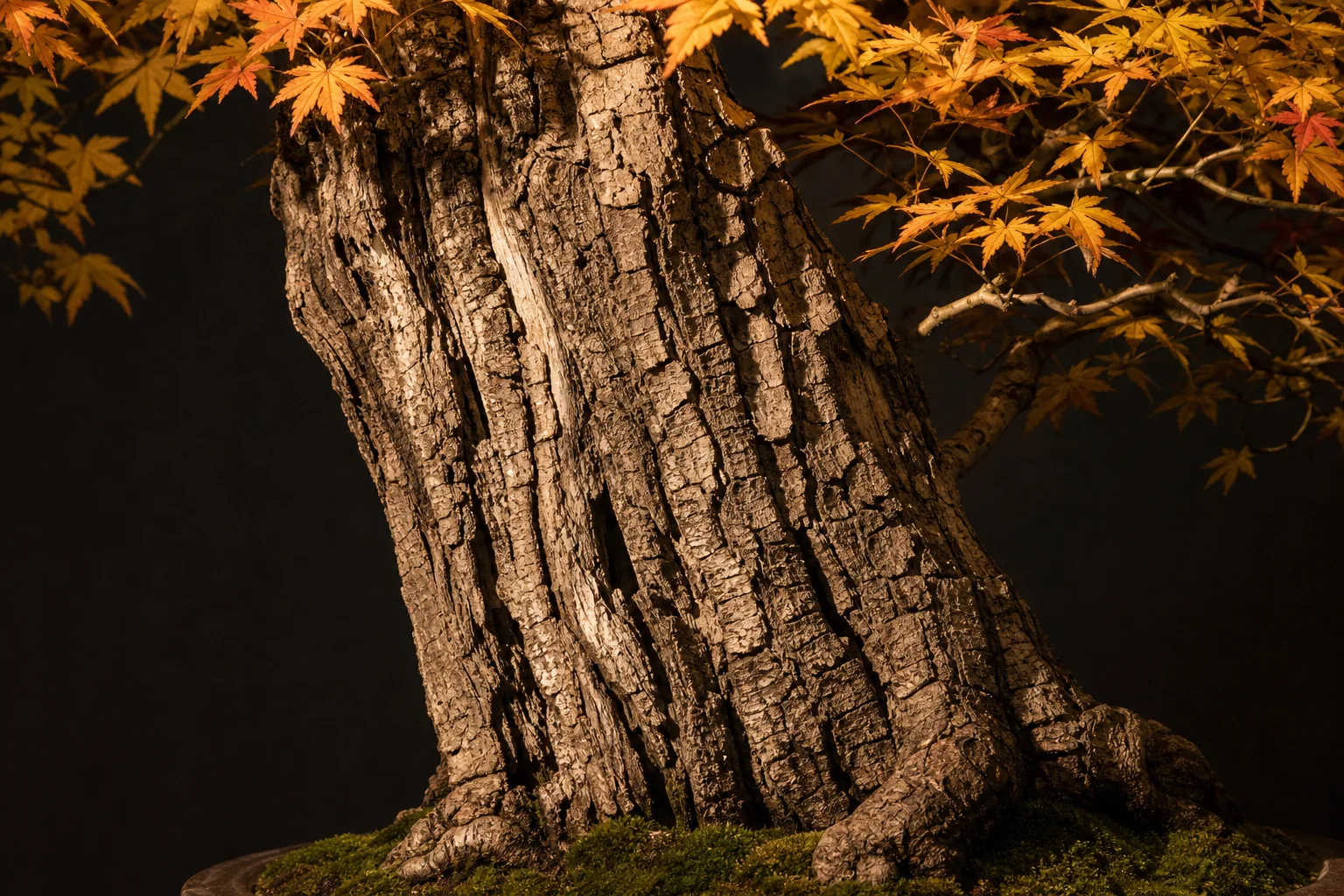
Arakawa maple
Acer palmatum 'Arakawa'The rough-bark Japanese maple. Develops corky deeply fissured bark unique among palmatum cultivars — trunk character that takes other species 50 years to acquire.
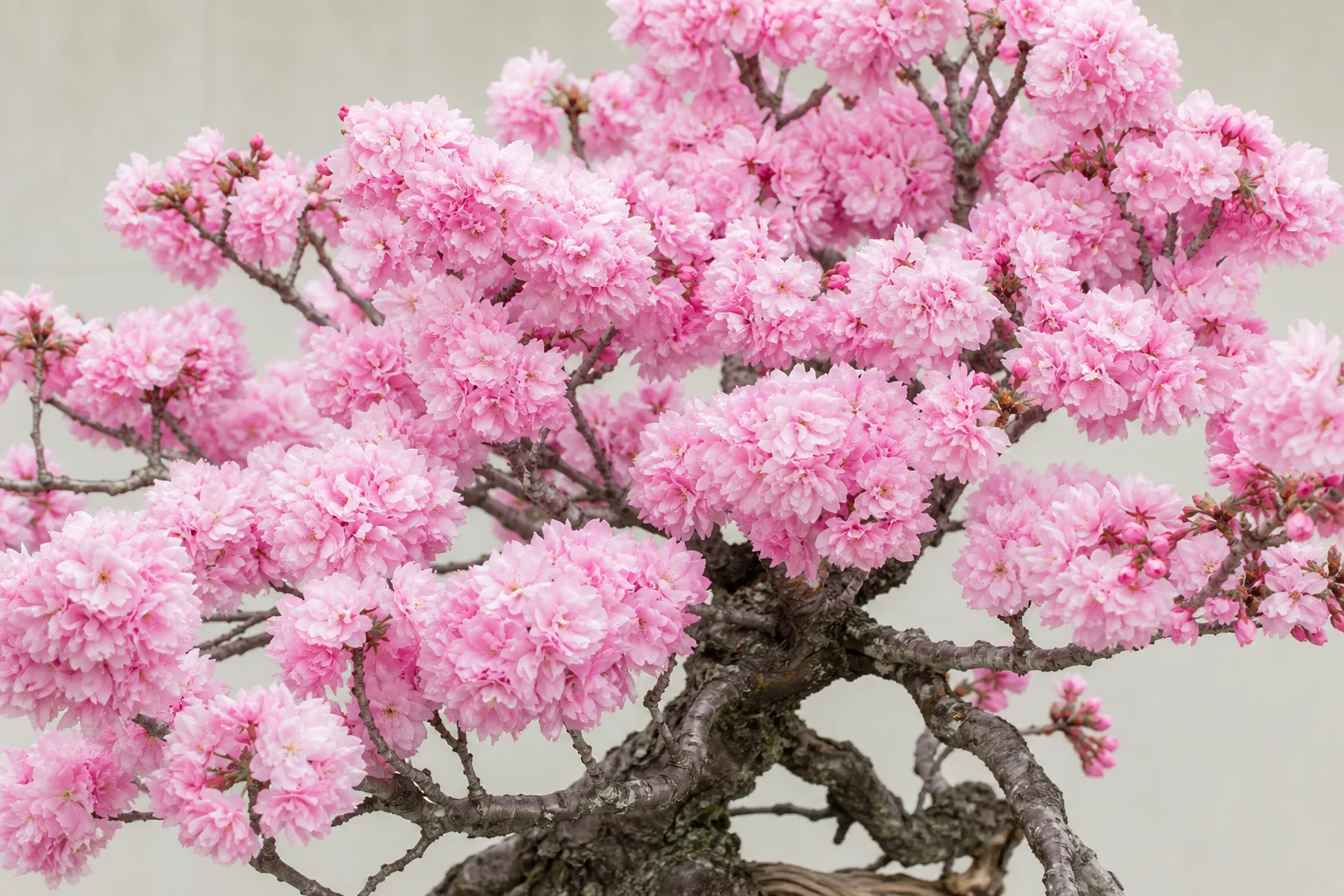
Cherry / Prunus
PrunusThe sakura genus. Includes Japanese flowering cherry, plum, peach, almond, and apricot — and produces some of the most culturally significant flowering bonsai in the tradition. Demanding but unforgettable.
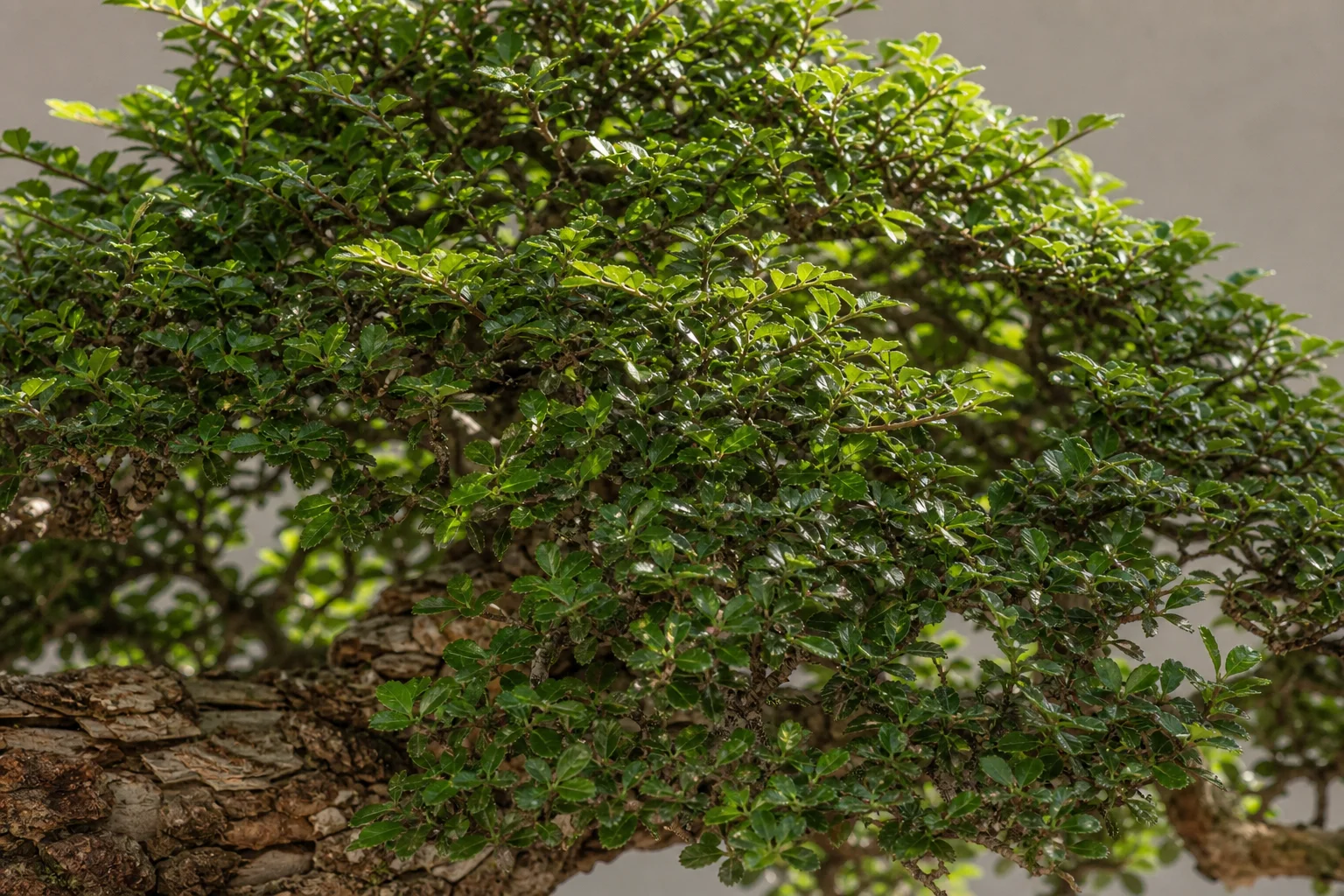
Chinese elm
Ulmus parvifoliaThe most forgiving deciduous bonsai. Fast, vigorous, tolerant of mistakes, and beautiful in every season.
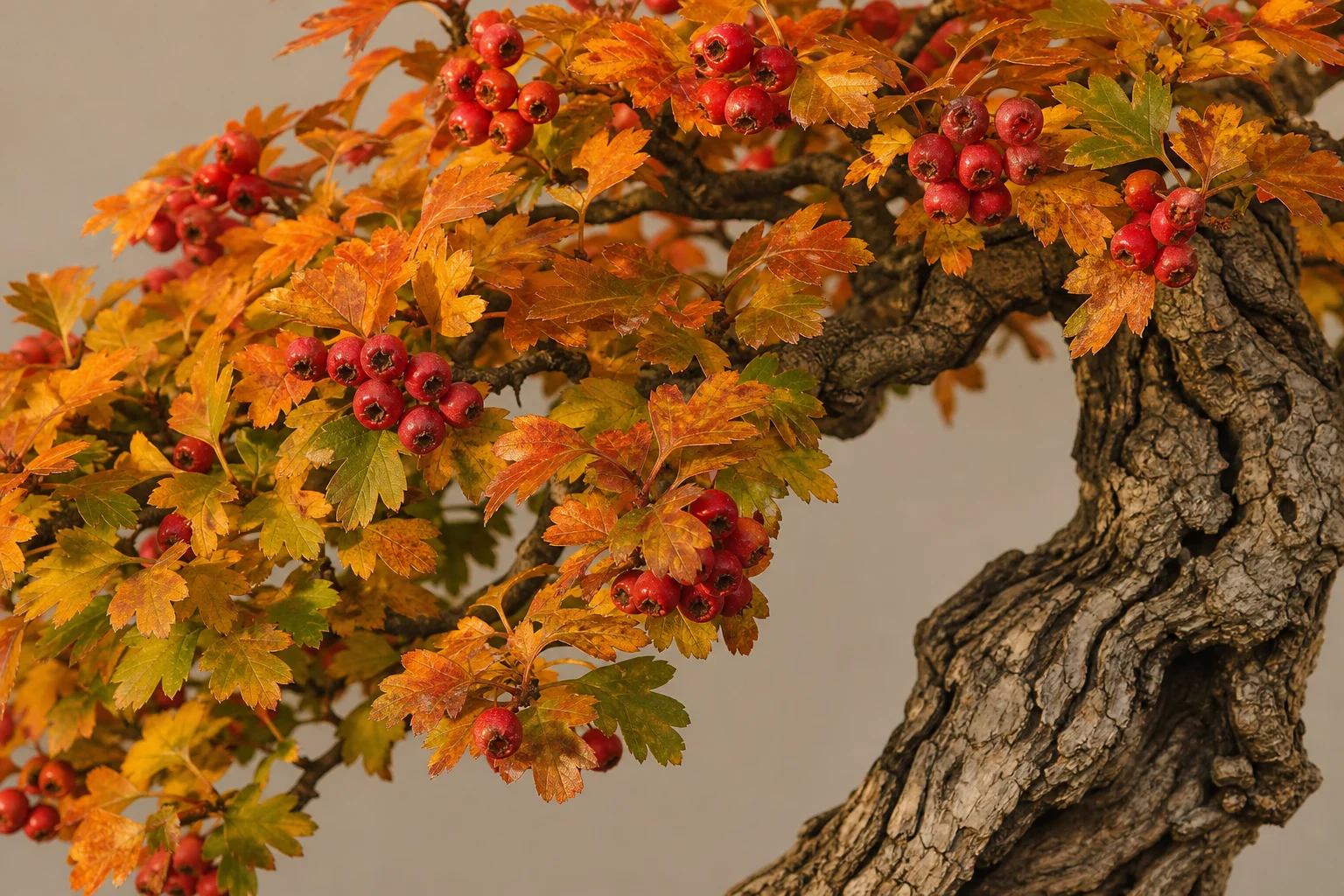
Common hawthorn
Crataegus monogynaThe everywhere tree. Bulletproof hardy, flowers in May, red berries in autumn, and the species behind some of the finest collected bonsai in the UK.
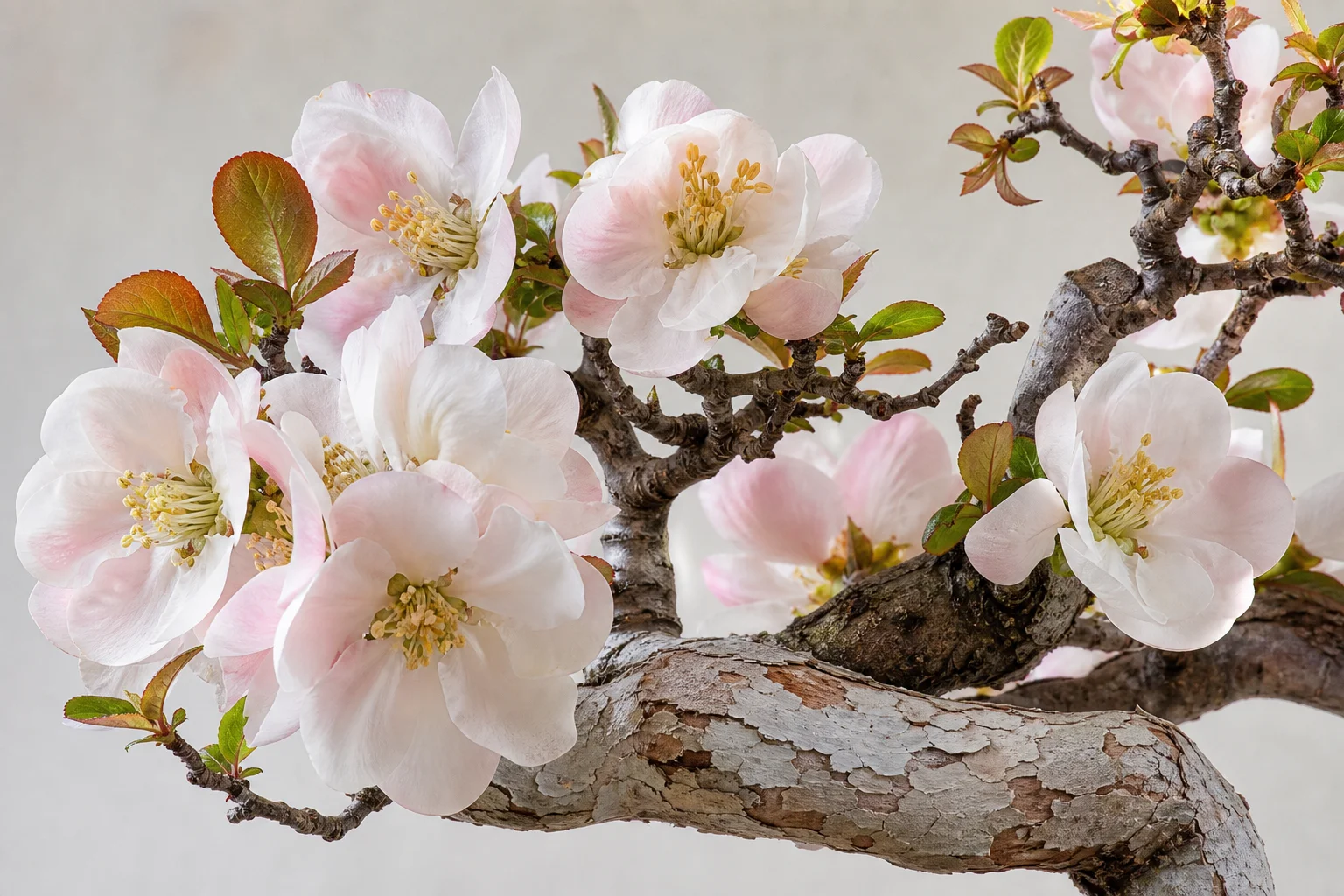
Common quince
Cydonia oblongaThe other quince. Distinct from flowering quince (Chaenomeles) — larger leaves, larger pale pink-white flowers, and aromatic golden-yellow fruit. The species that gives us quince jelly.
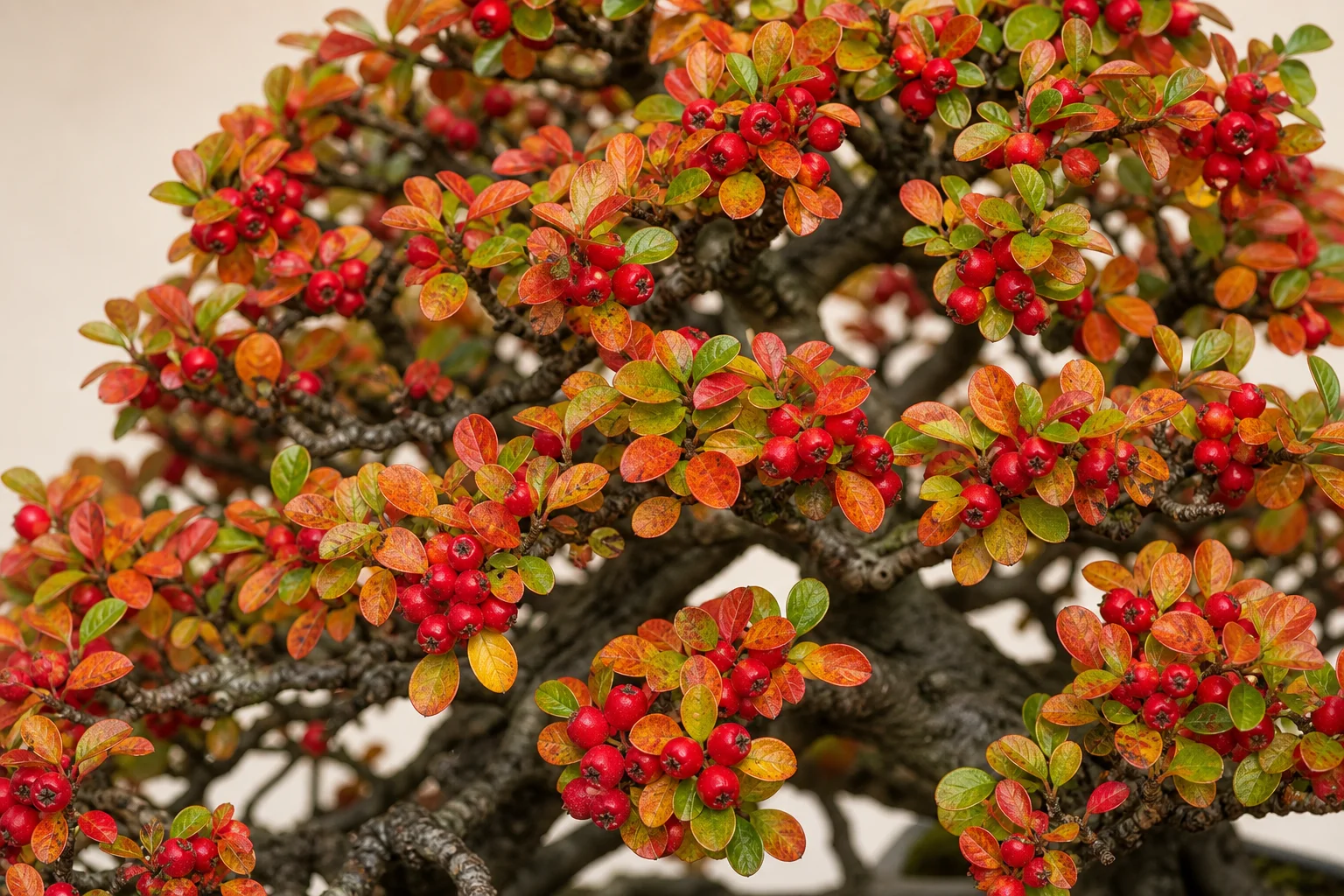
Cotoneaster
Cotoneaster horizontalisSmall leaves, spring flowers, red berries through autumn and winter — and easy. The flowering shrub that thinks it's a bonsai already.
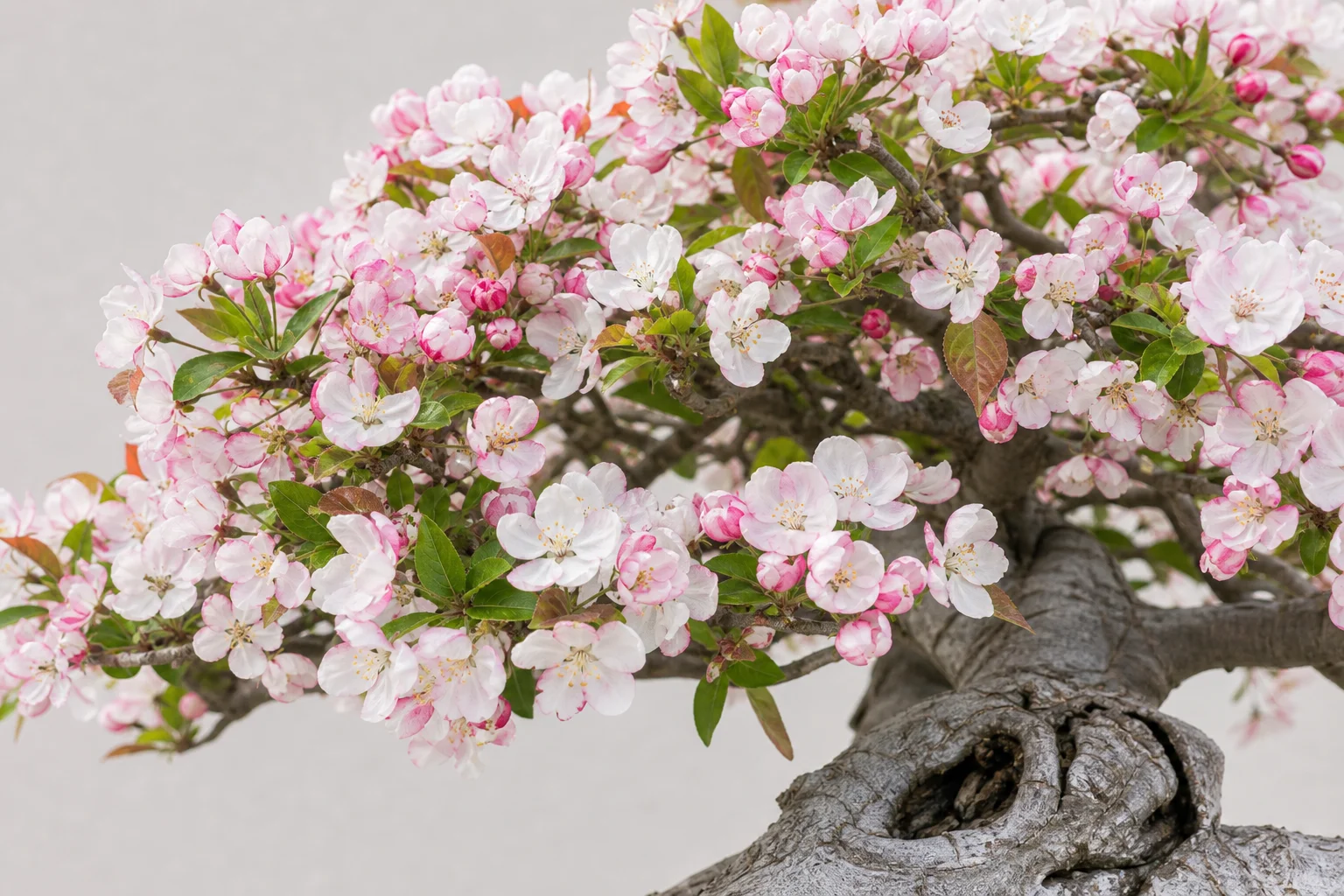
Crab apple
Malus sylvestrisPink-and-white spring blossom, small bright fruit in autumn, and the genuine theatre of a tree that performs differently every month of the year.
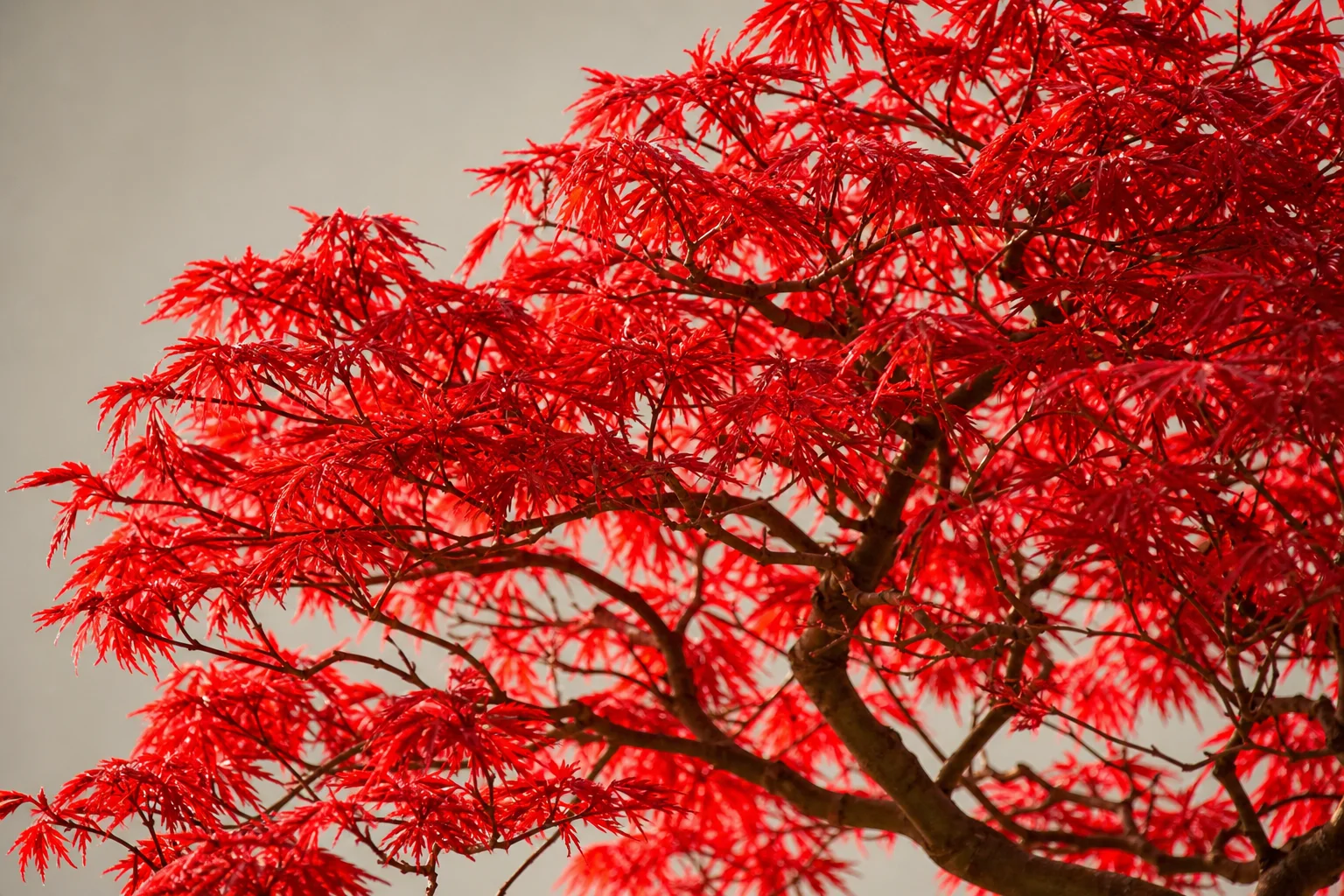
Deshojo maple
Acer palmatum 'Deshojo'Brilliant scarlet spring foliage that fades to green-bronze through summer and returns to red in autumn. The most theatrical of the common Japanese maple cultivars.
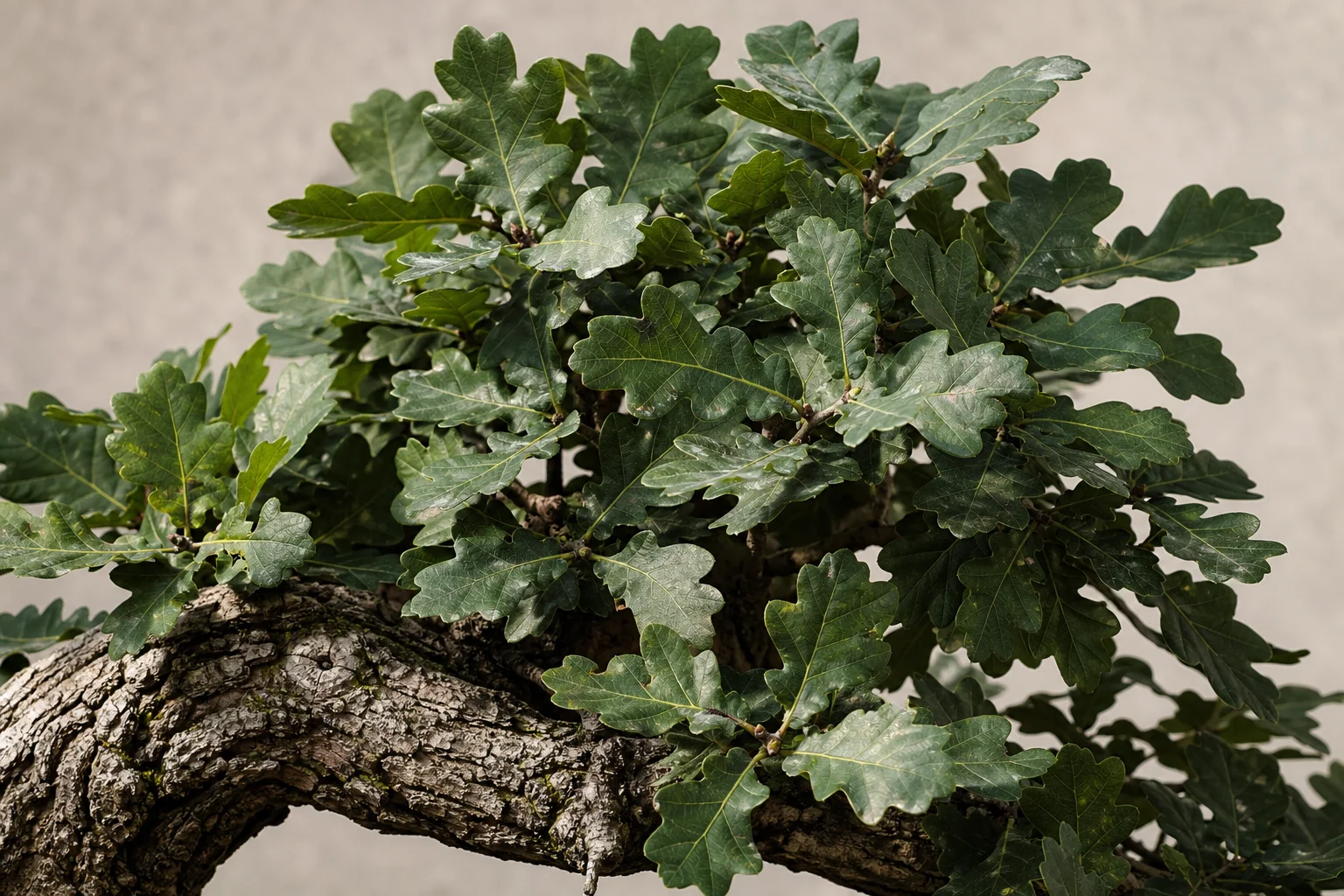
English oak
Quercus roburThe defining tree of the English landscape. Slow, deliberate, demanding patience — and unmatched in presence at full maturity.
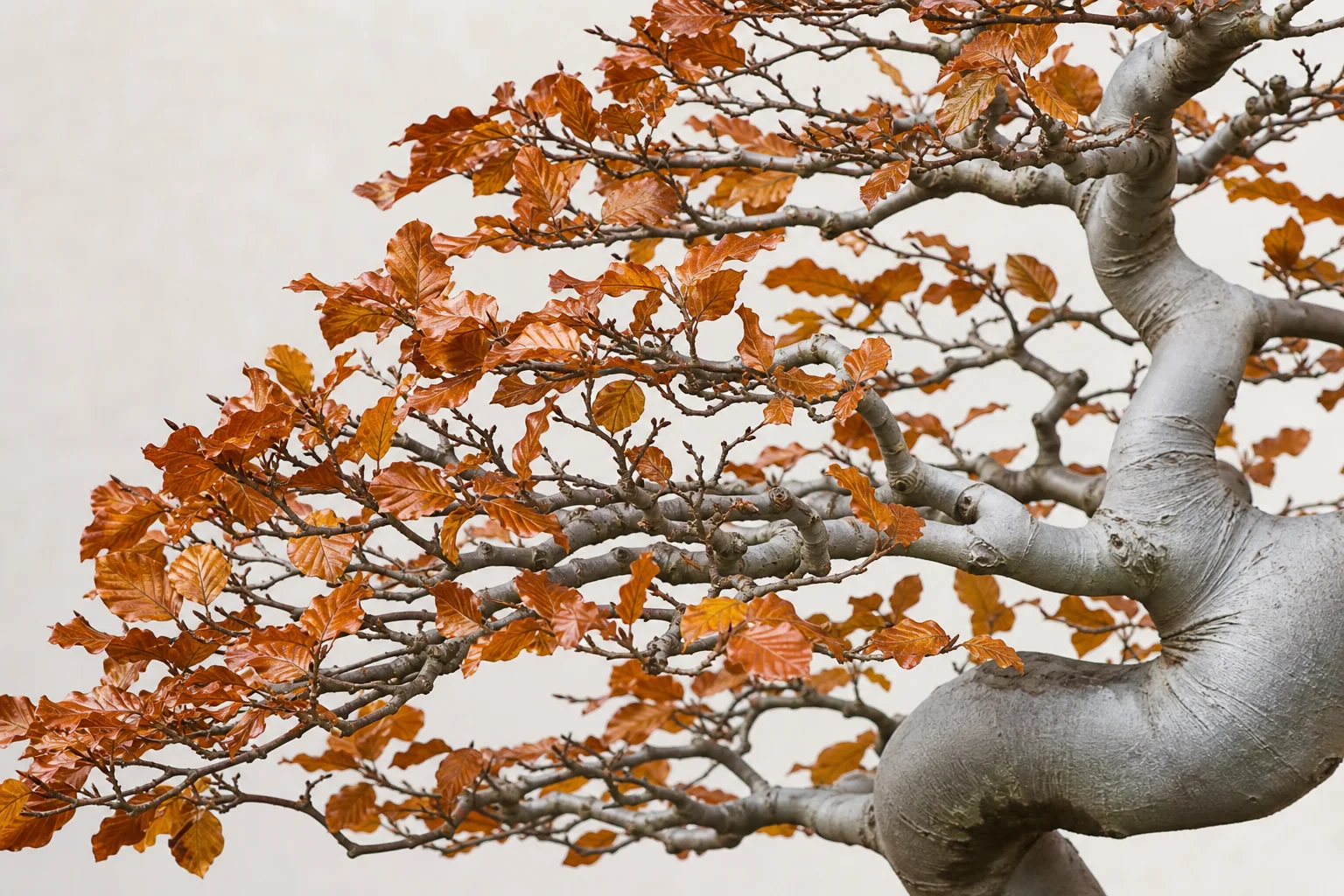
European beech
Fagus sylvaticaSmooth grey bark, copper-brown winter leaves held through to spring, and a presence that no other deciduous bonsai quite matches.
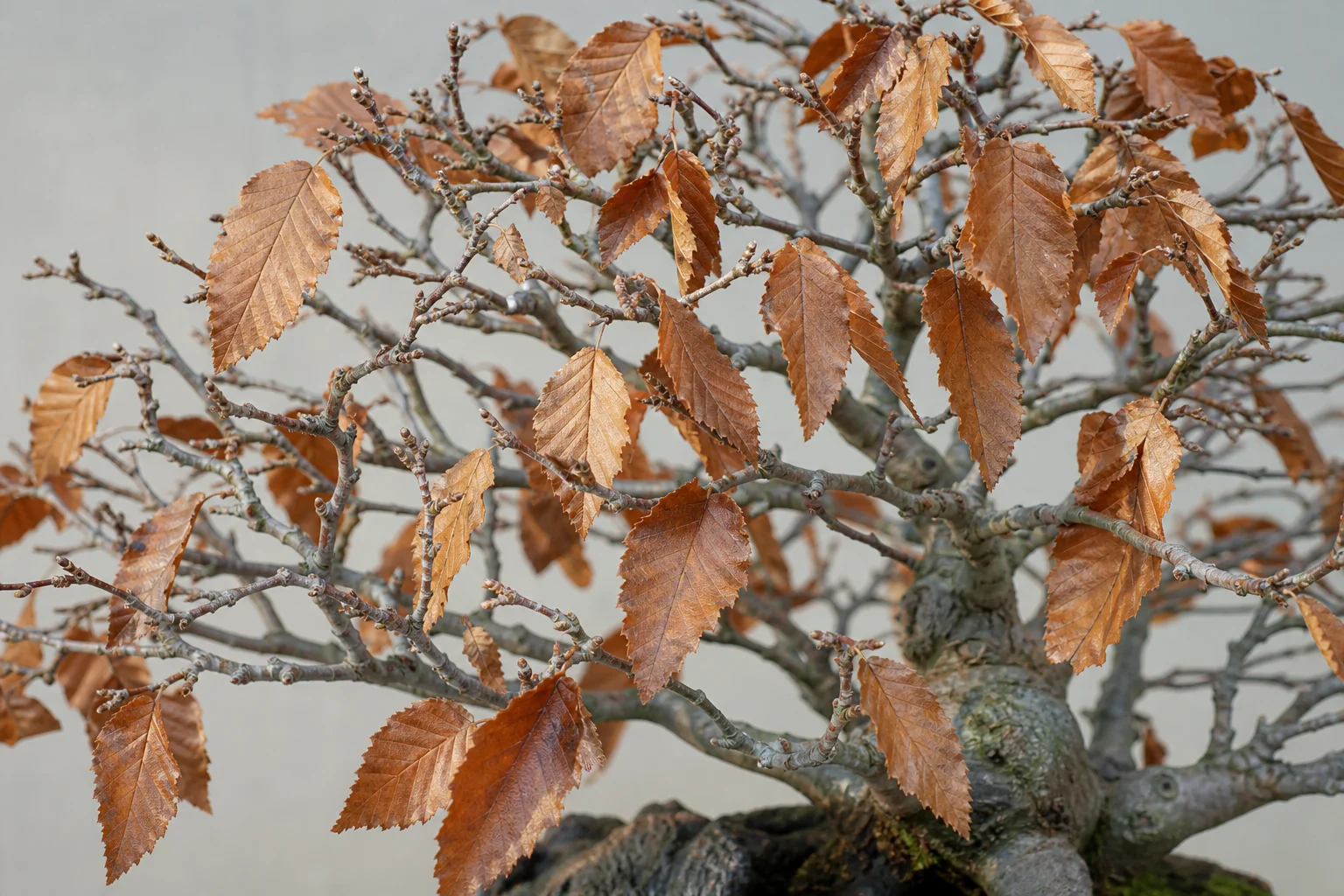
European hornbeam
Carpinus betulusThe UK native that bonsai forgot. Strong, fast, beautiful in winter, and lovely in spring — and you can find good material in any hedgerow.
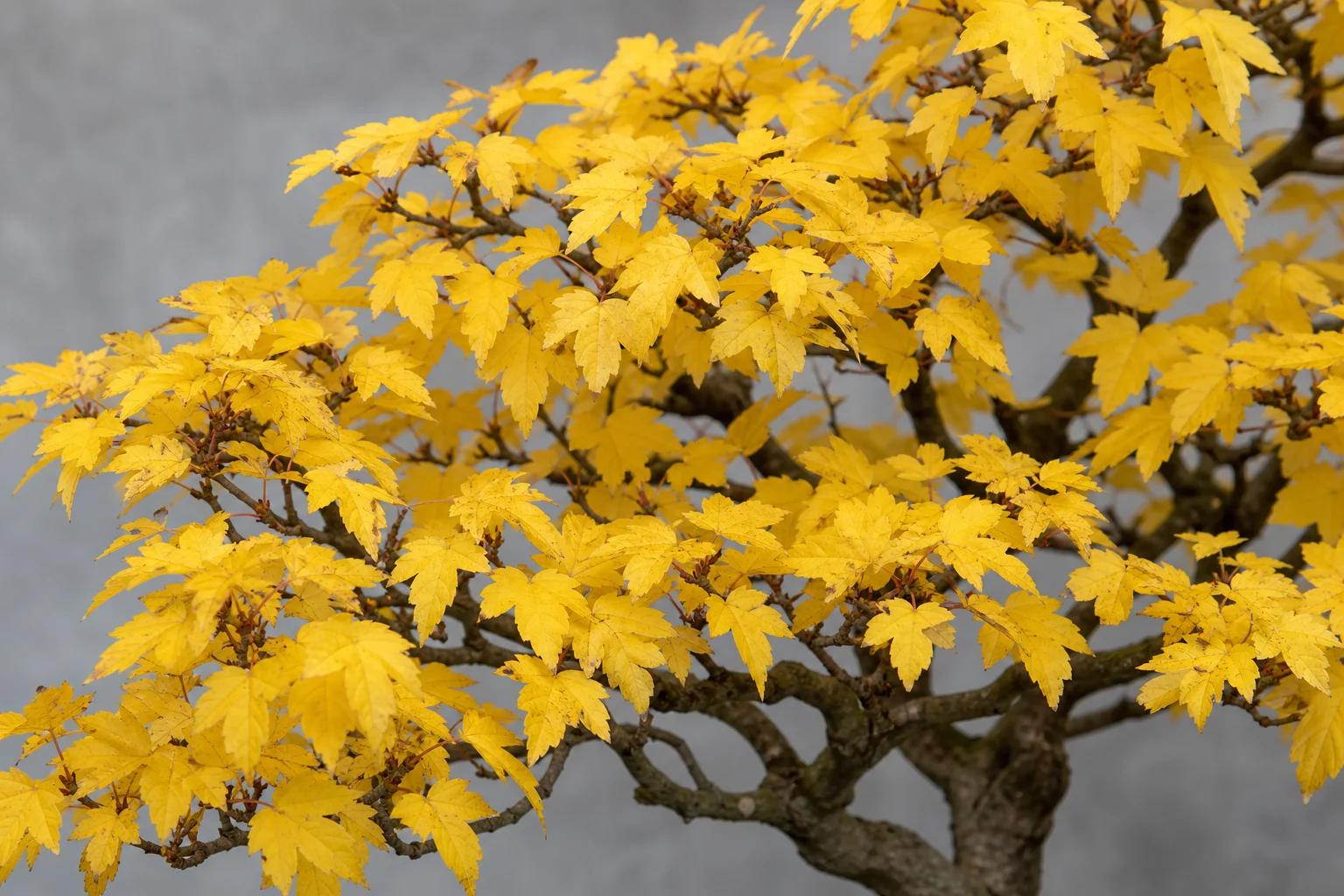
Field maple
Acer campestreThe UK's native maple — bulletproof hardy, butter-yellow autumn colour, and free in every English hedgerow.
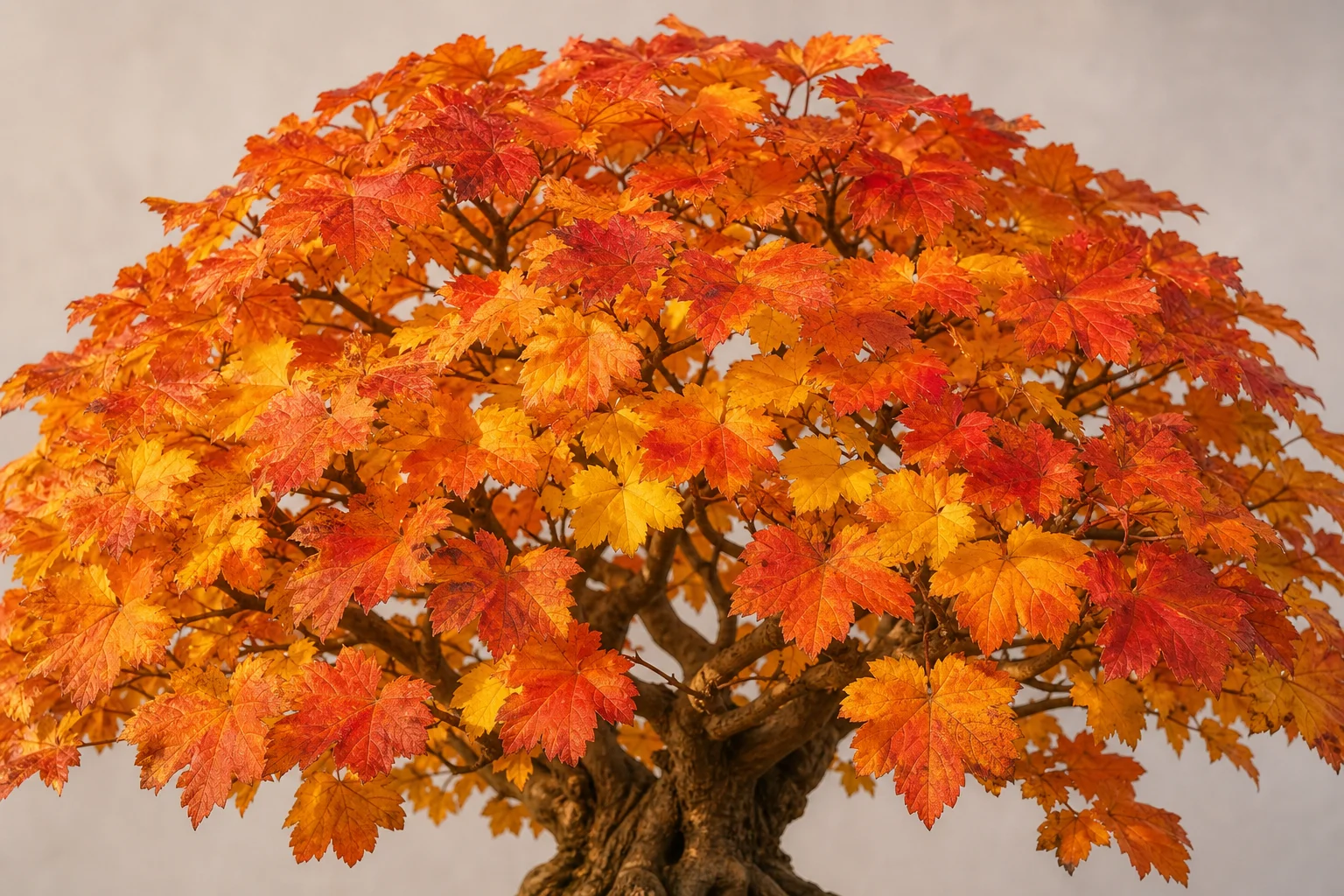
Full-moon maple
Acer japonicumThe other Japanese maple. More rounded leaves with shallower lobes than Acer palmatum, similar care, distinct enough to be its own species — and home to two of the most beautiful maple cultivars in bonsai.
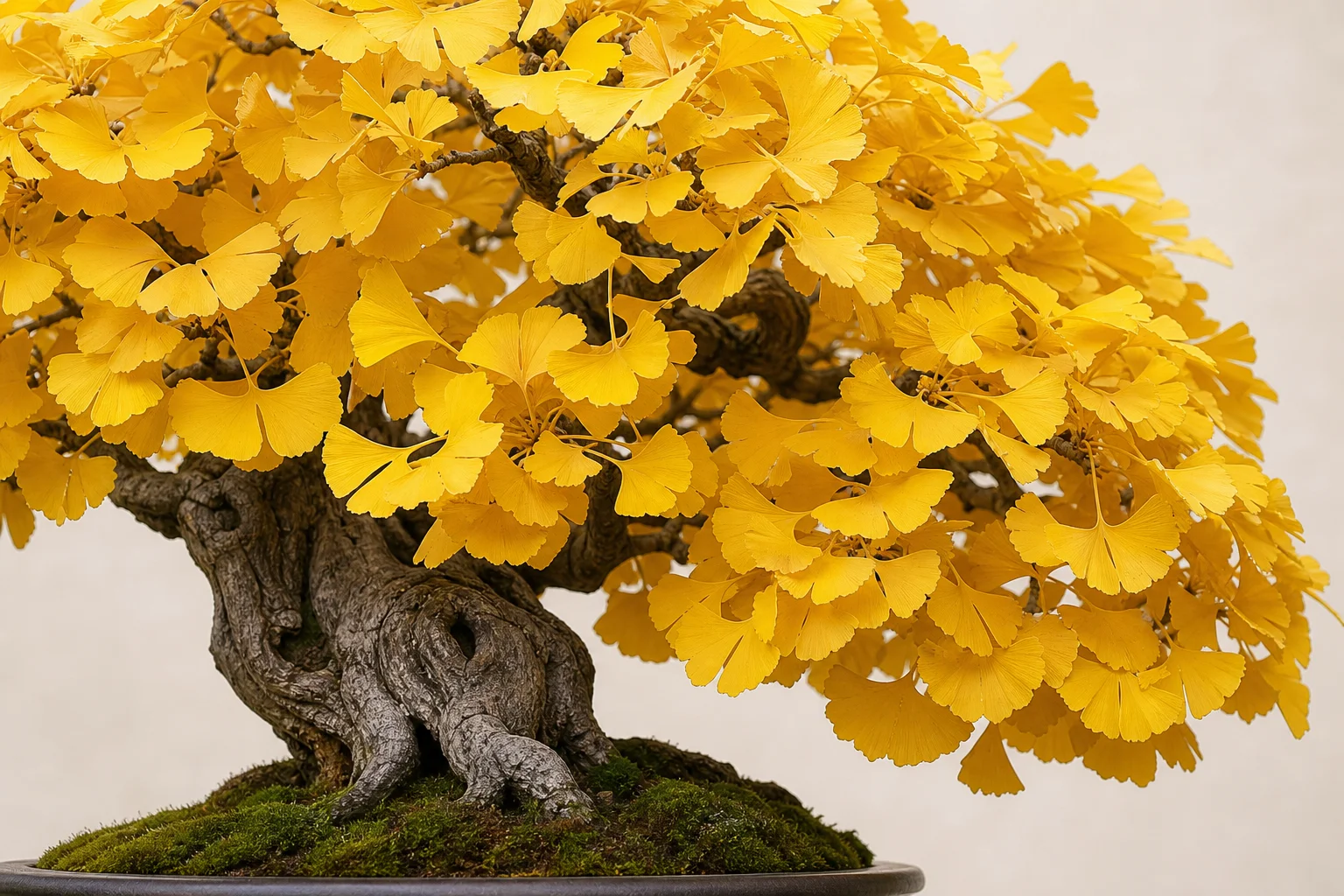
Ginkgo
Ginkgo bilobaThe living fossil. The only surviving species in an entire plant lineage 200 million years old, fan-shaped leaves unlike anything else in horticulture, and brilliant butter-yellow autumn colour. A bonsai with a genuinely unique place in the natural world.
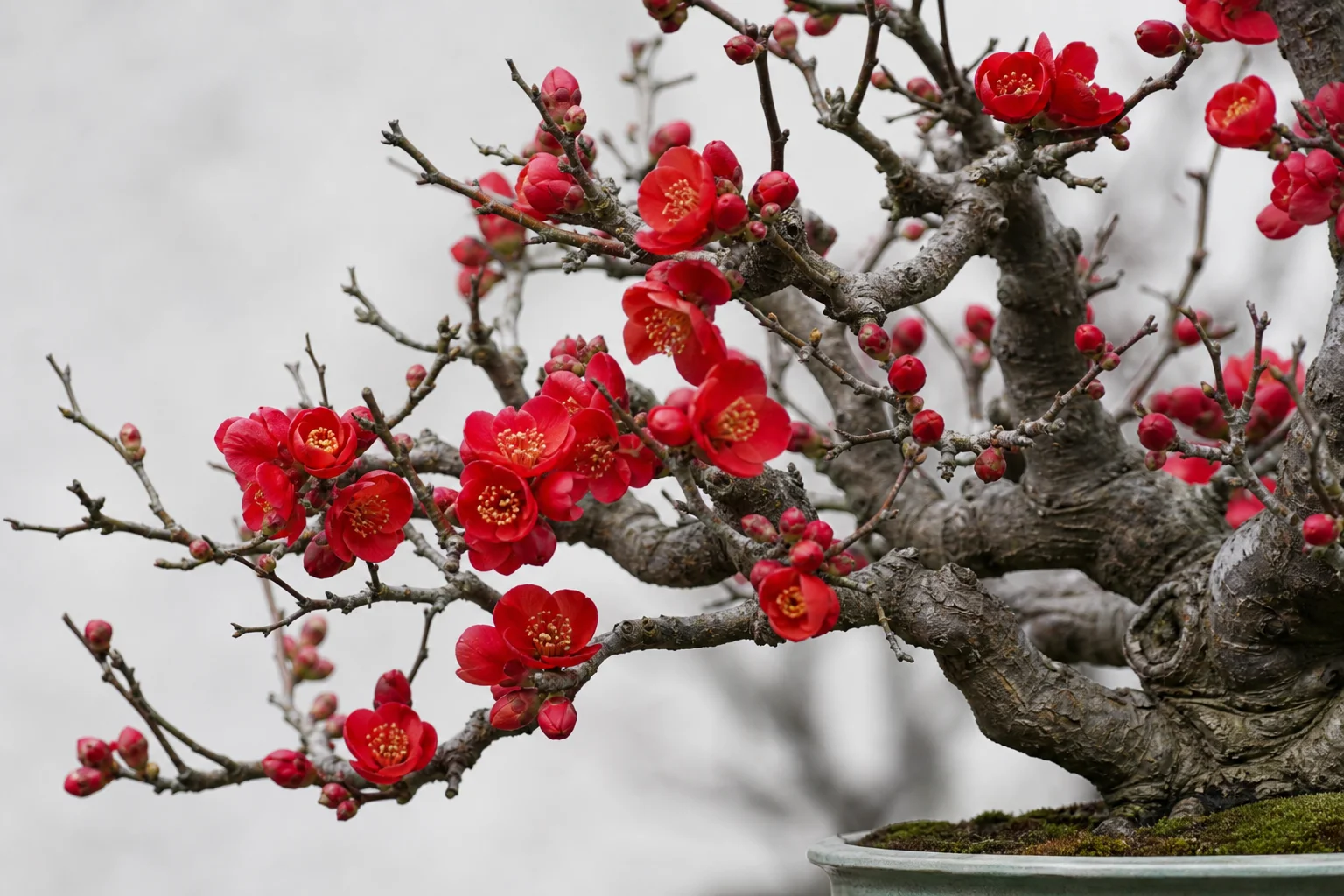
Japanese flowering quince
Chaenomeles japonicaWinter-into-spring flowers in red, orange, pink, or white. The bonsai that blooms when nothing else does.
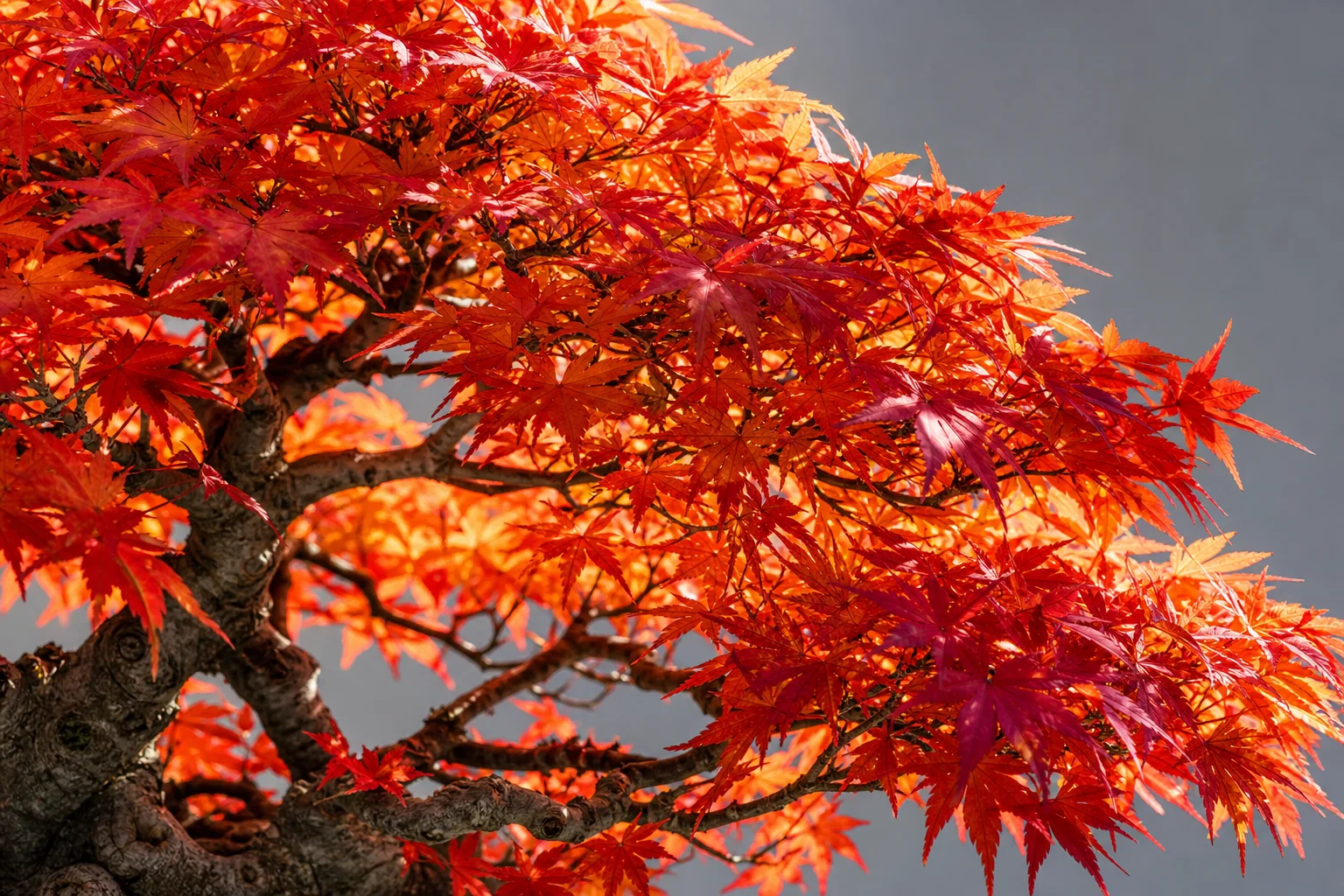
Japanese maple
Acer palmatumThe iconic deciduous bonsai — slender twigs, palmate leaves, and four genuinely different seasons.
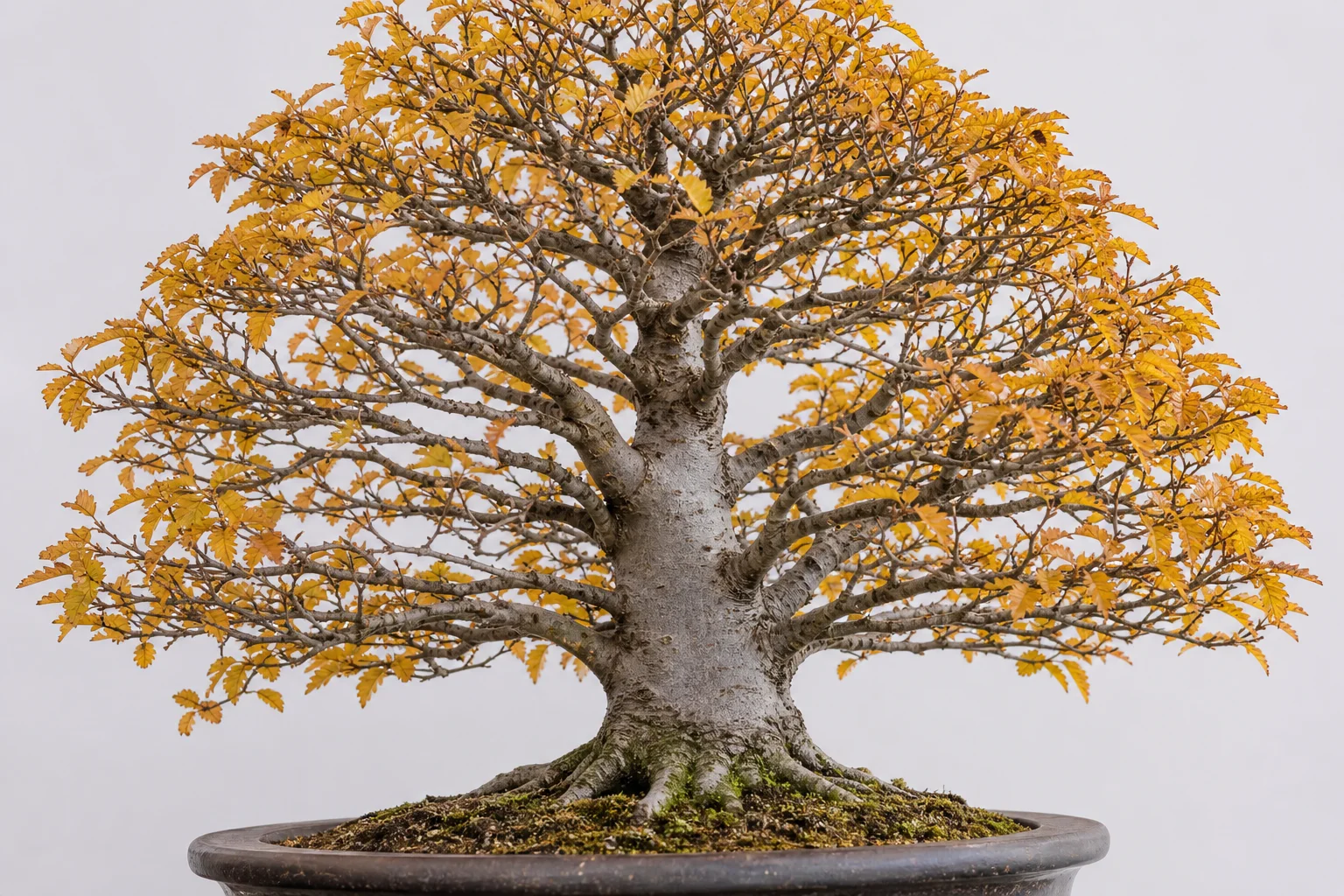
Japanese zelkova
Zelkova serrataThe broom-style classic. Natural vase-shaped habit, smooth grey bark, small serrated leaves, and an ease of cultivation that makes it among the best deciduous bonsai species for UK growers.
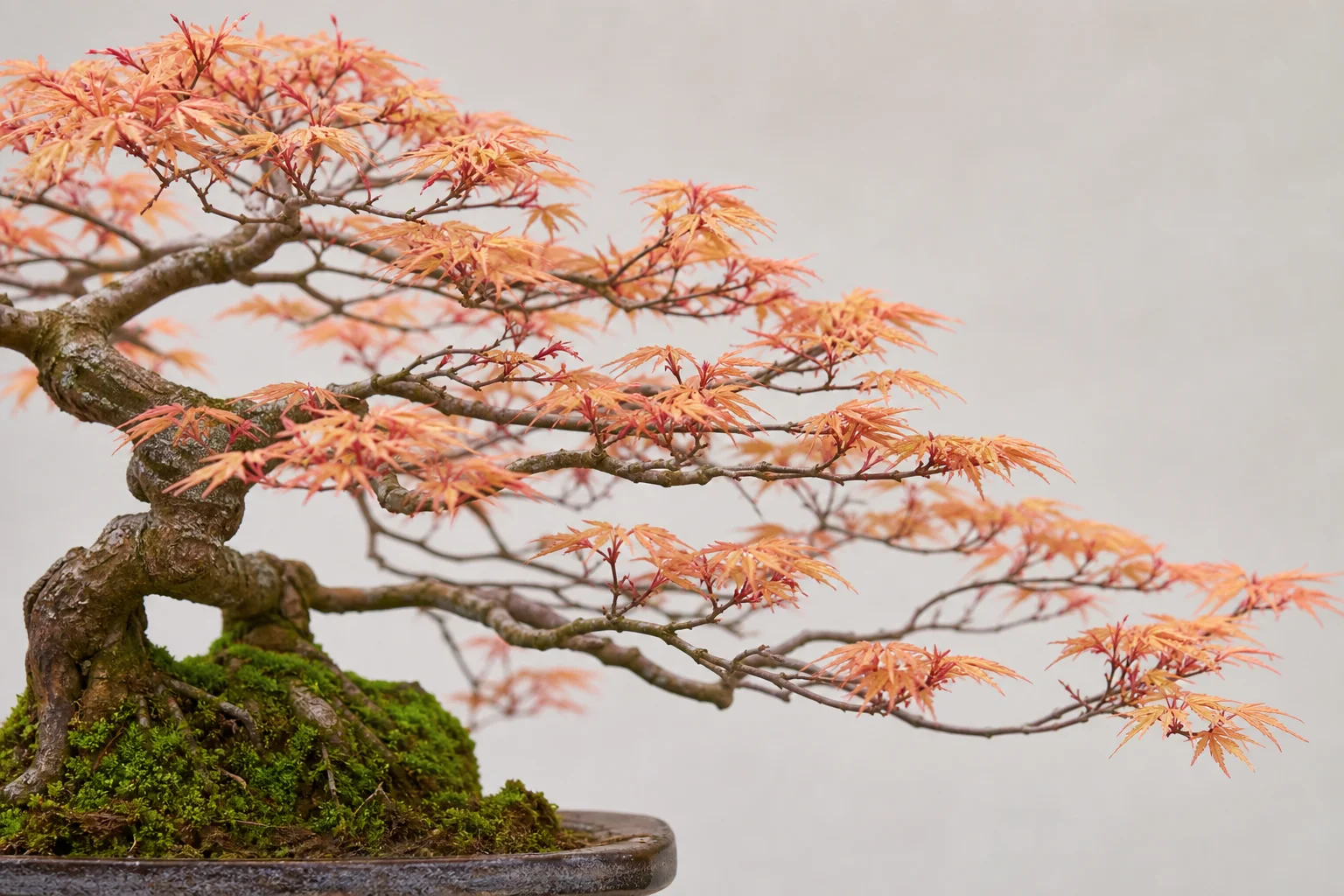
Kiyohime maple
Acer palmatum 'Kiyohime'The dwarf Japanese maple. Tiny leaves, naturally spreading low habit, orange spring colour — and the cultivar that makes shohin bonsai possible without years of refinement.
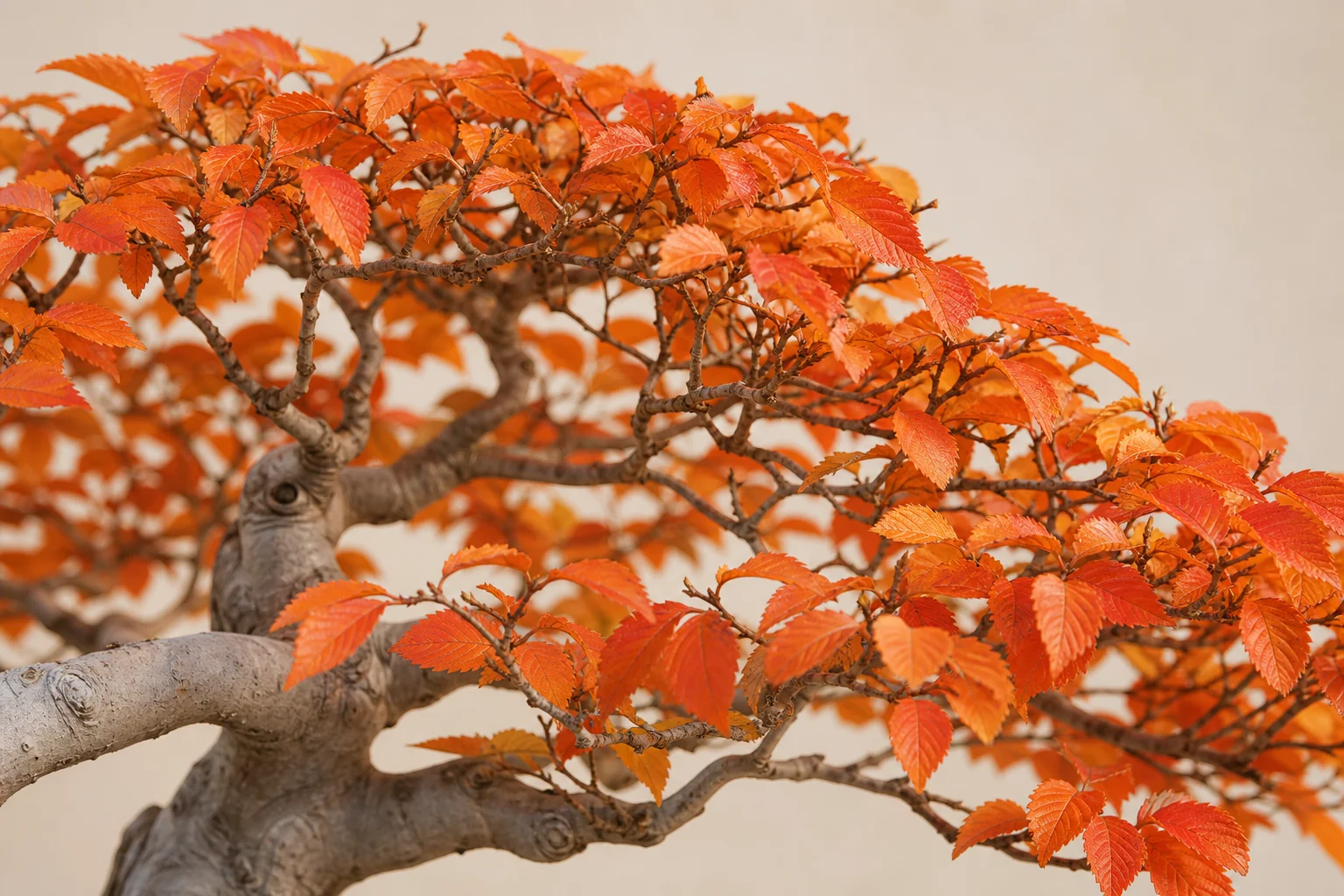
Korean hornbeam
Carpinus turczaninowiiThe Asian hornbeam most commonly imported as refined bonsai. Smaller leaves than European hornbeam, exceptional ramification potential, brilliant autumn colour.
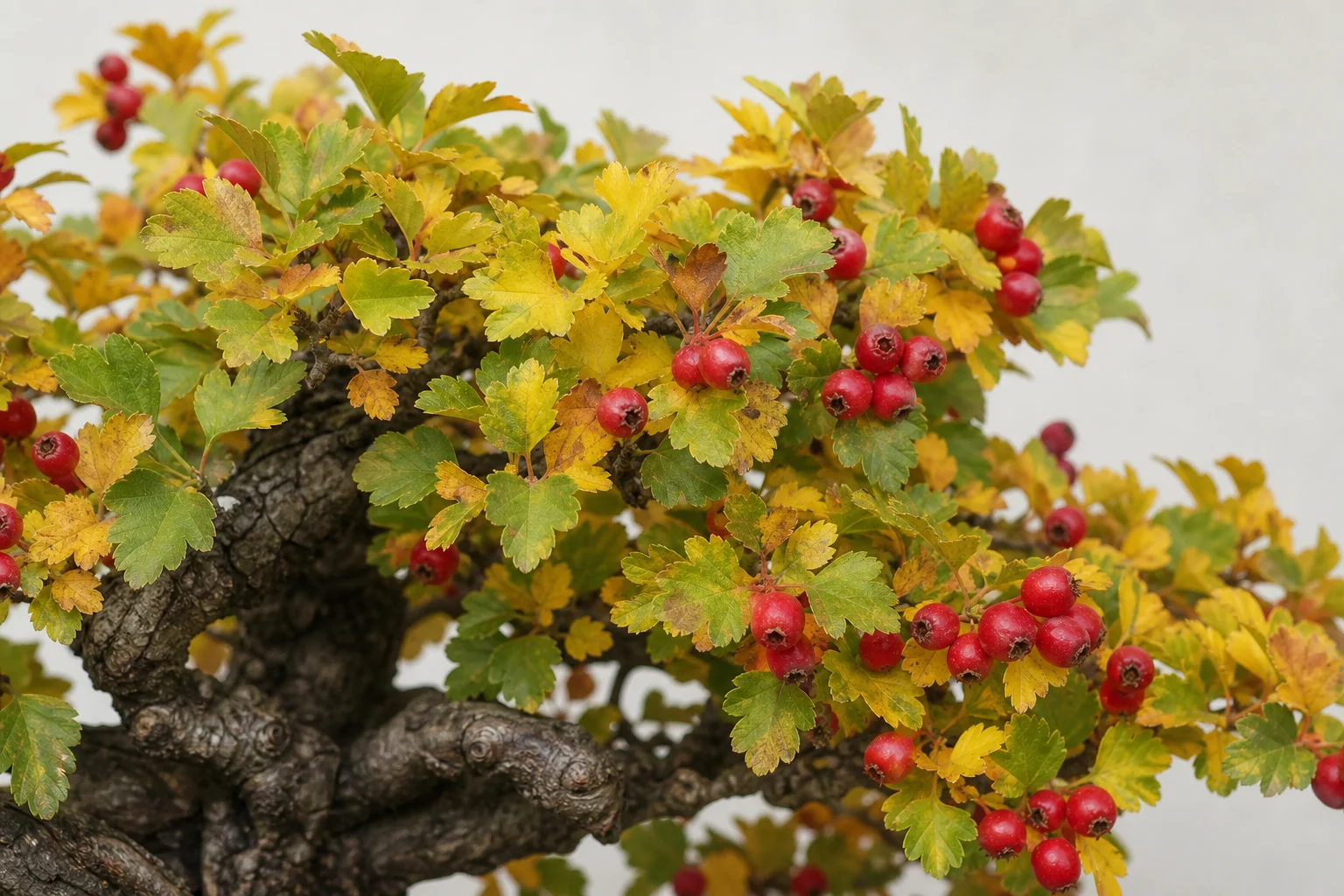
Midland hawthorn
Crataegus laevigataThe second UK native hawthorn. Similar to common hawthorn but with subtle differences worth knowing if you're collecting wild material or growing for ecology — and the parent of 'Paul's Scarlet', the double-flowered cultivar widely planted in UK streets and gardens.
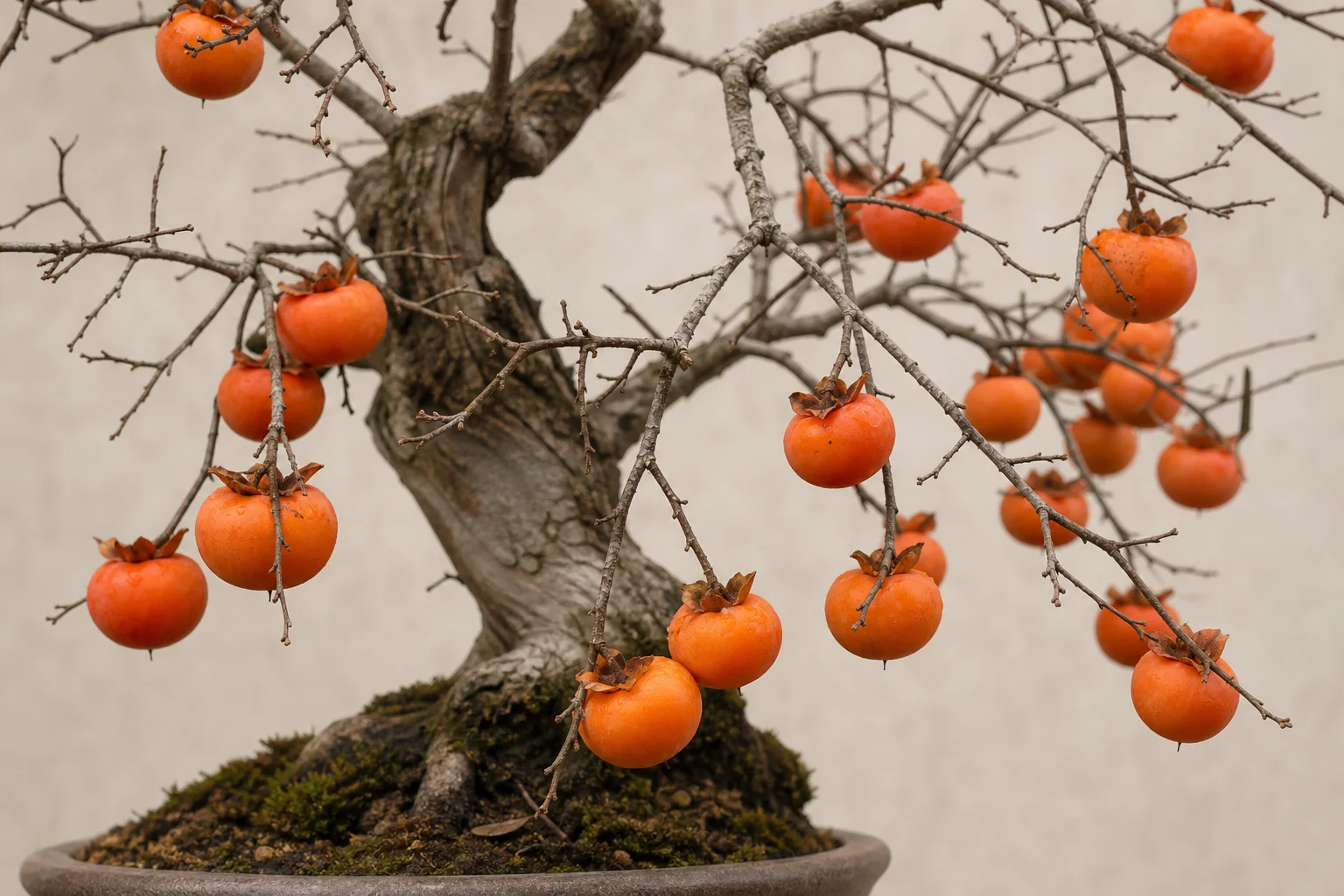
Persimmon
Diospyros kakiBright orange fruit hanging on bare branches into winter, brilliant autumn foliage colour, plated bark on mature trees — and one of the more dramatic seasonal bonsai displays in cultivation.
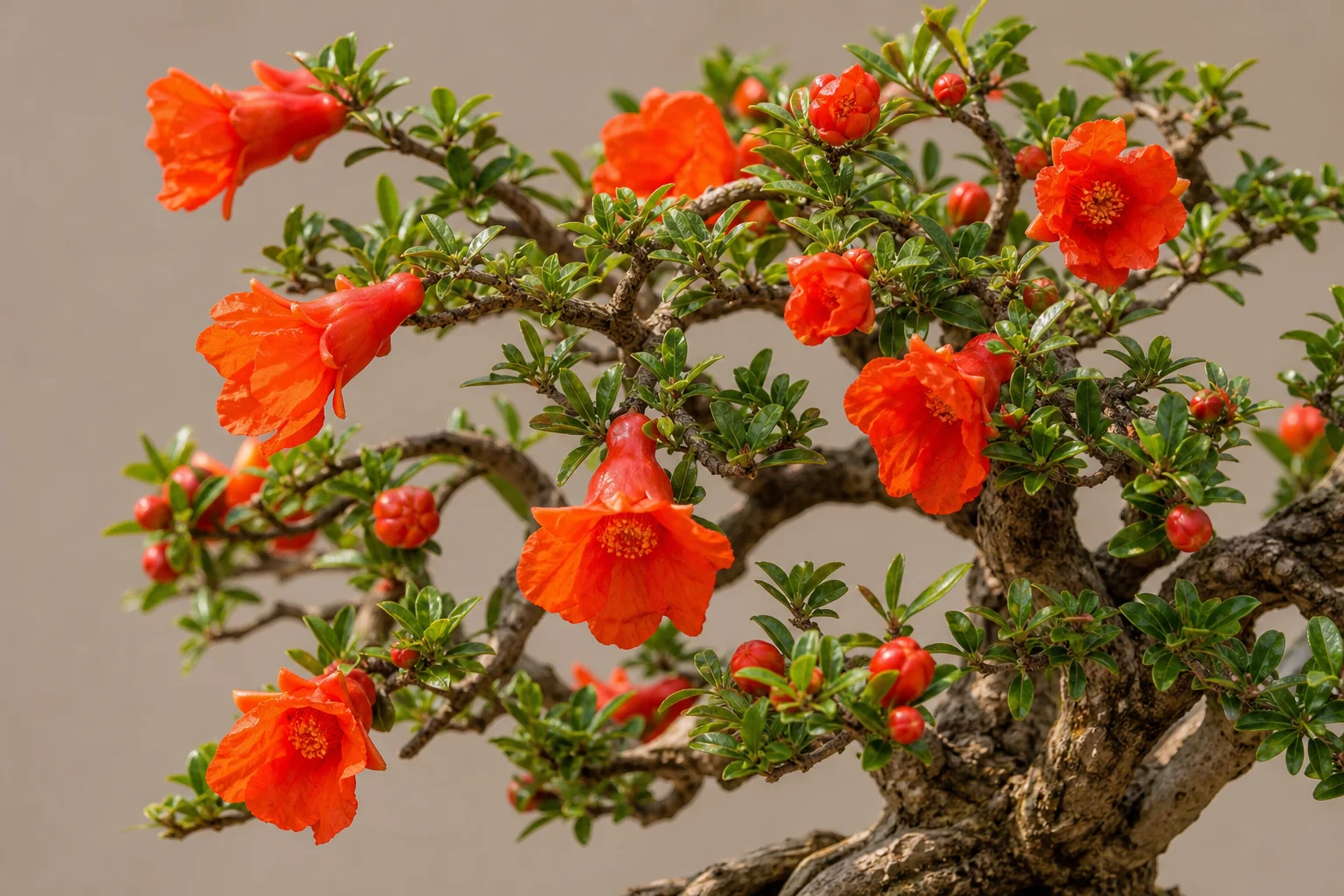
Pomegranate
Punica granatumOrange-red trumpet flowers in summer, miniature pomegranate fruit in autumn, twisted gnarled trunk character on collected ancient material. Borderline-hardy but stunning.
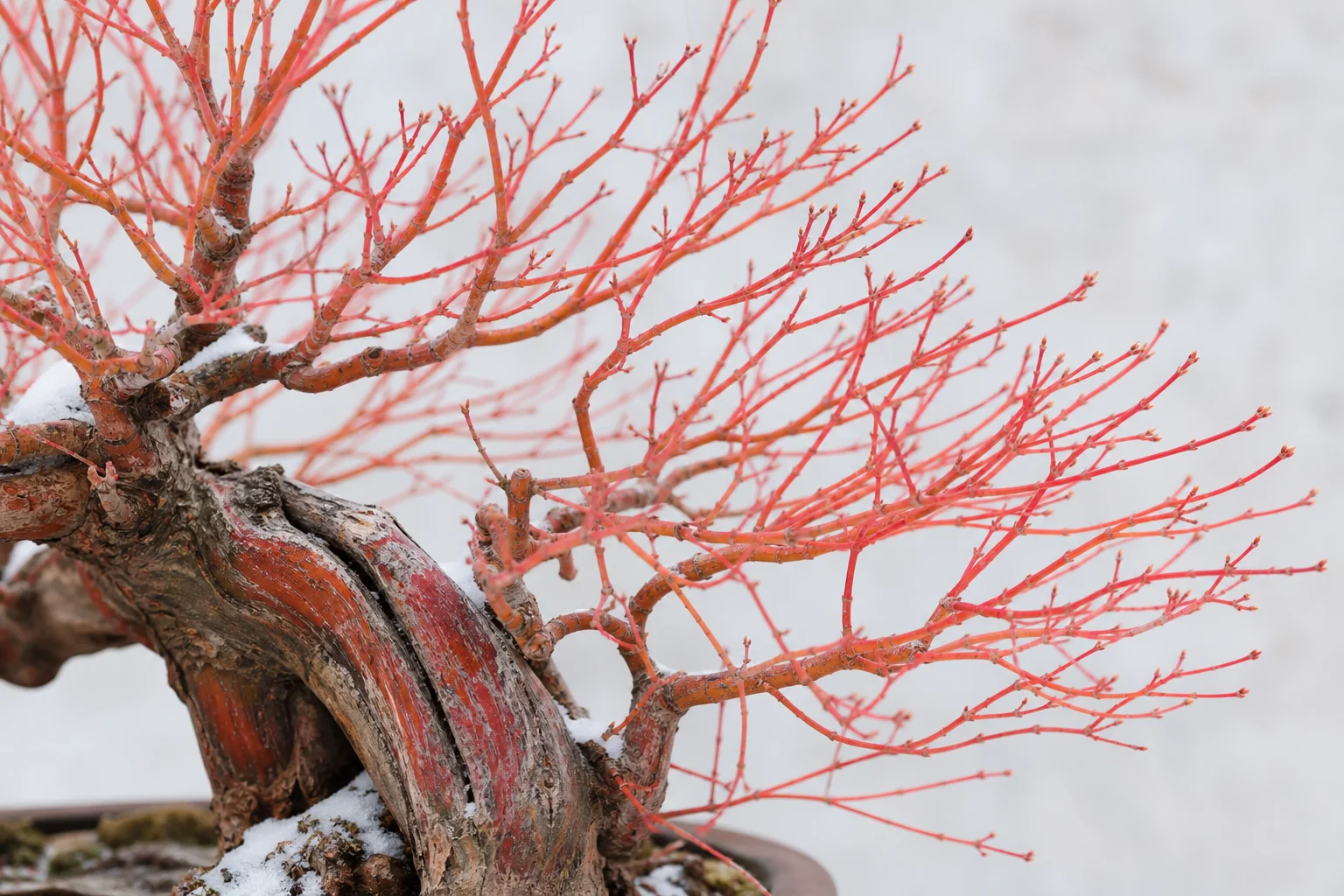
Sango Kaku maple
Acer palmatum 'Sango Kaku'The coral-bark maple. Year-round interest from bright coral-red young bark on the previous year's growth — at its most intense in winter when bare twigs glow against snow.
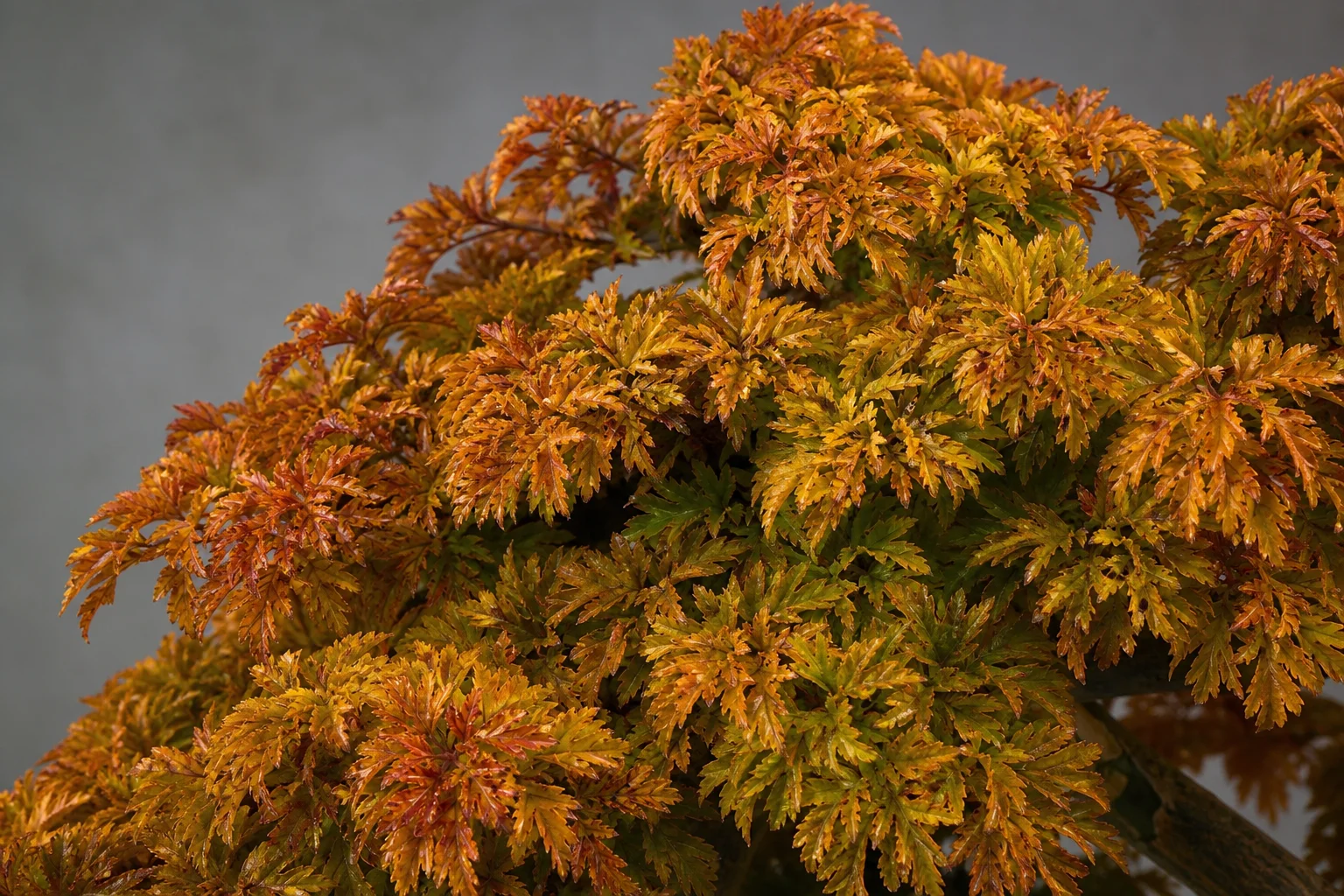
Shishigashira maple
Acer palmatum 'Shishigashira'The crinkled-leaf maple. Tightly curled, deeply lobed small leaves clustered densely on short shoots — a cultivar whose habit looks bonsai-trained before any work is done.
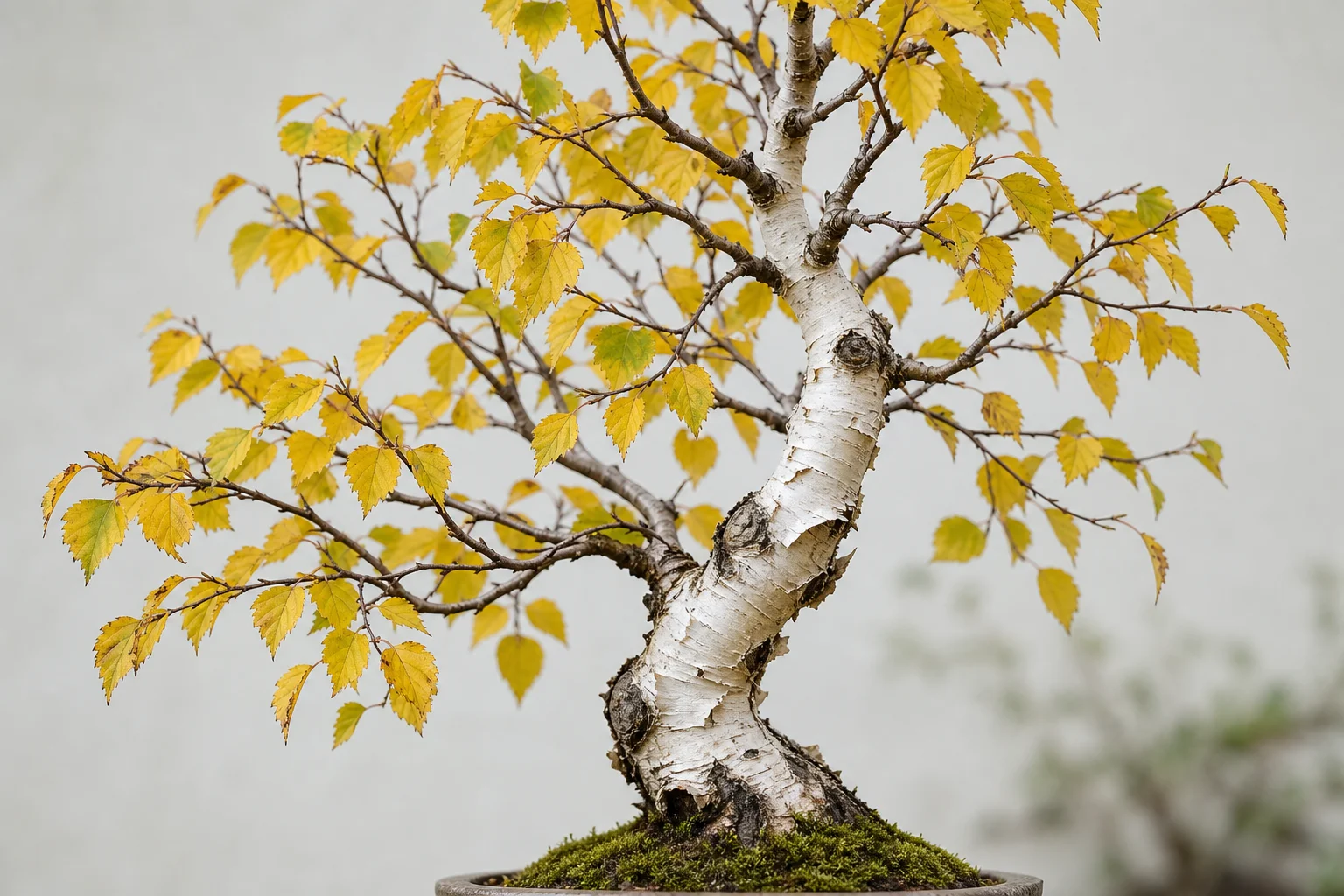
Silver birch
Betula pendulaThe white-bark UK native. Striking visually but genuinely tricky as bonsai — a species more often killed than refined by inexperienced growers.
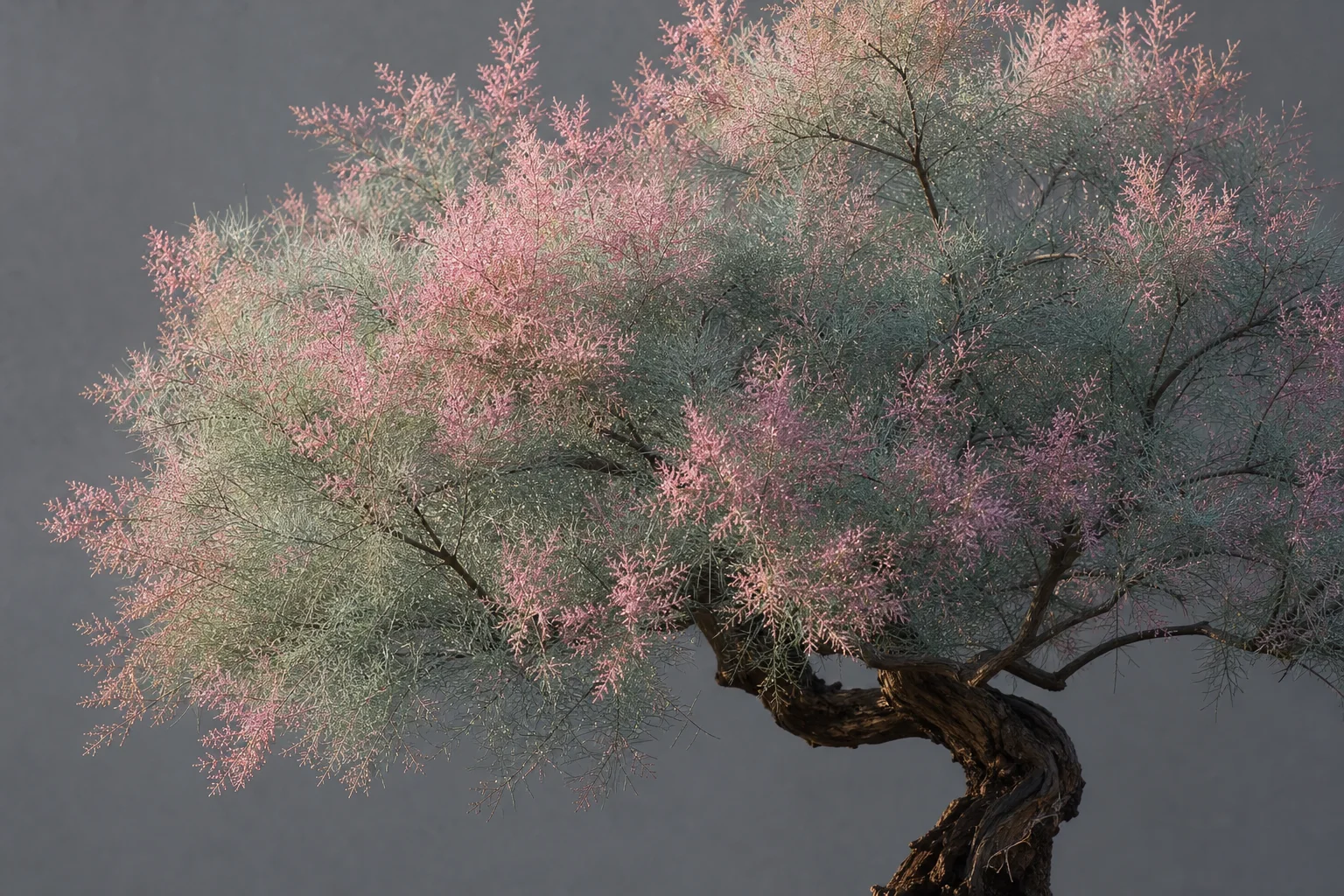
Tamarisk
Tamarix gallicaFeathery scale-like foliage, pink flower plumes in late spring or summer, salt tolerance unmatched among bonsai species — and a distinctive softness that no other tree quite provides.
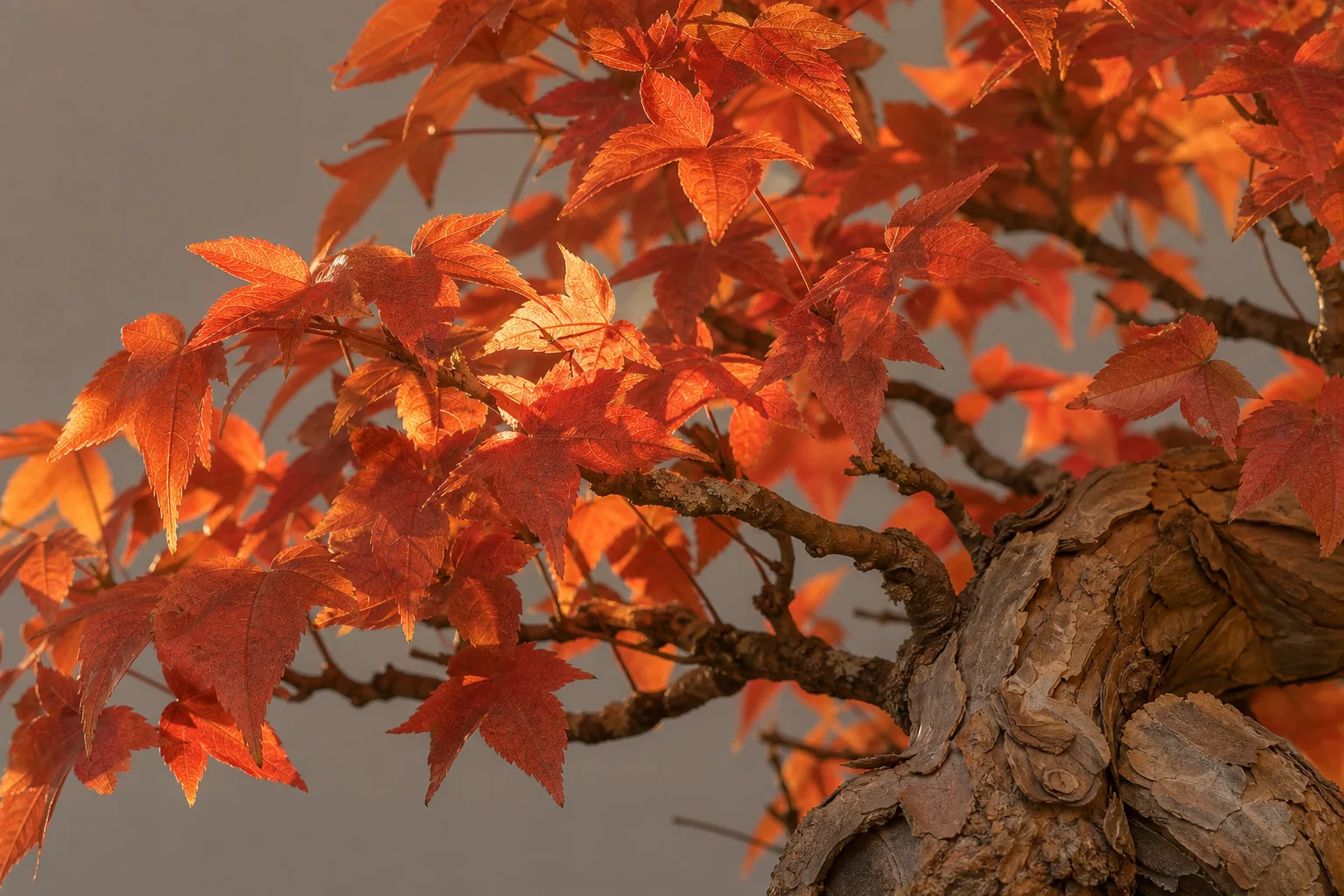
Trident maple
Acer buergerianumThe other classic maple — faster, hardier, more forgiving than its Japanese cousin, and famous for spectacular flaking bark.
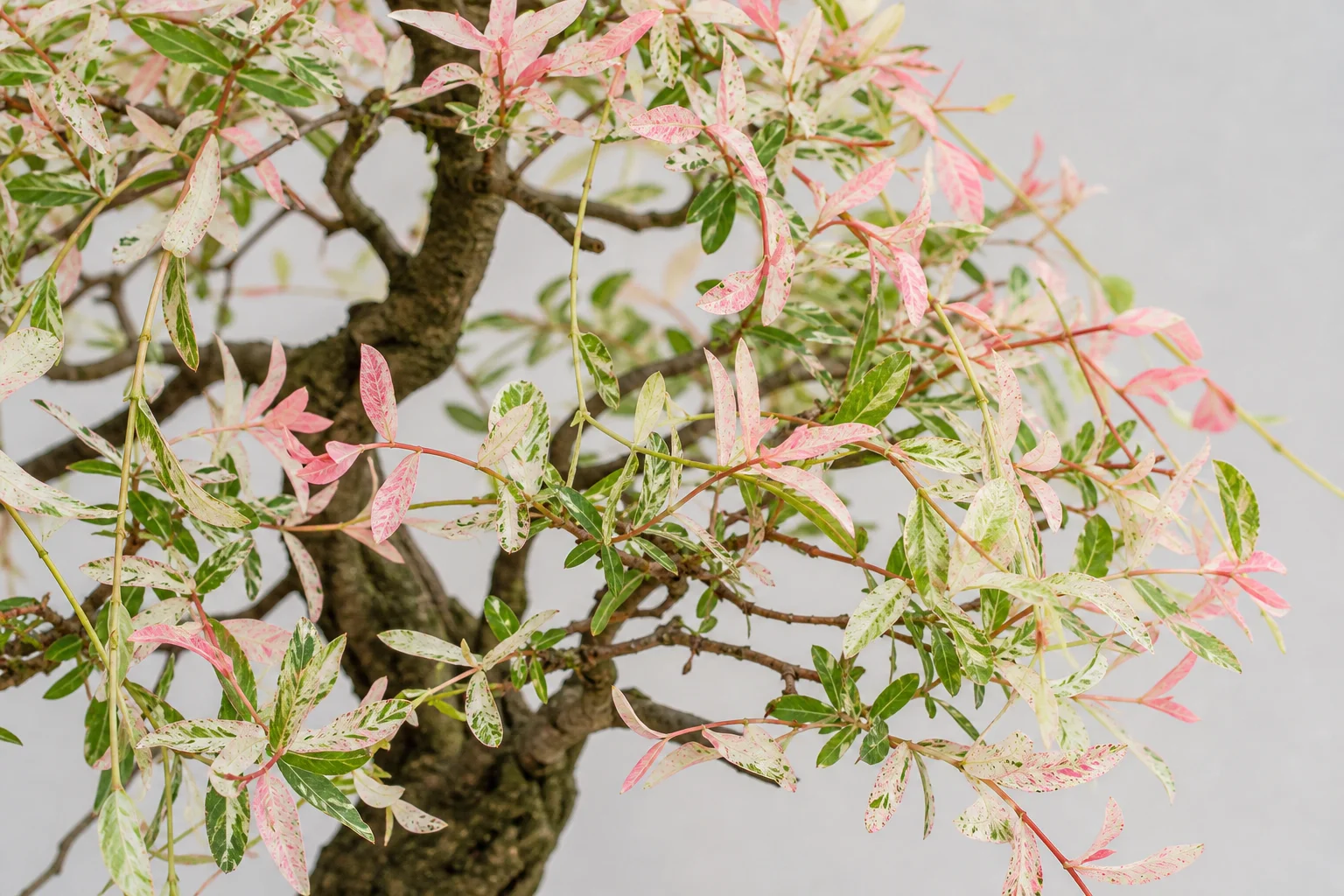
Willow
SalixVigorous, water-loving, fast-growing — and challenging for bonsai precisely because of that vigour. The species that breaks every conventional rule about bonsai water management.
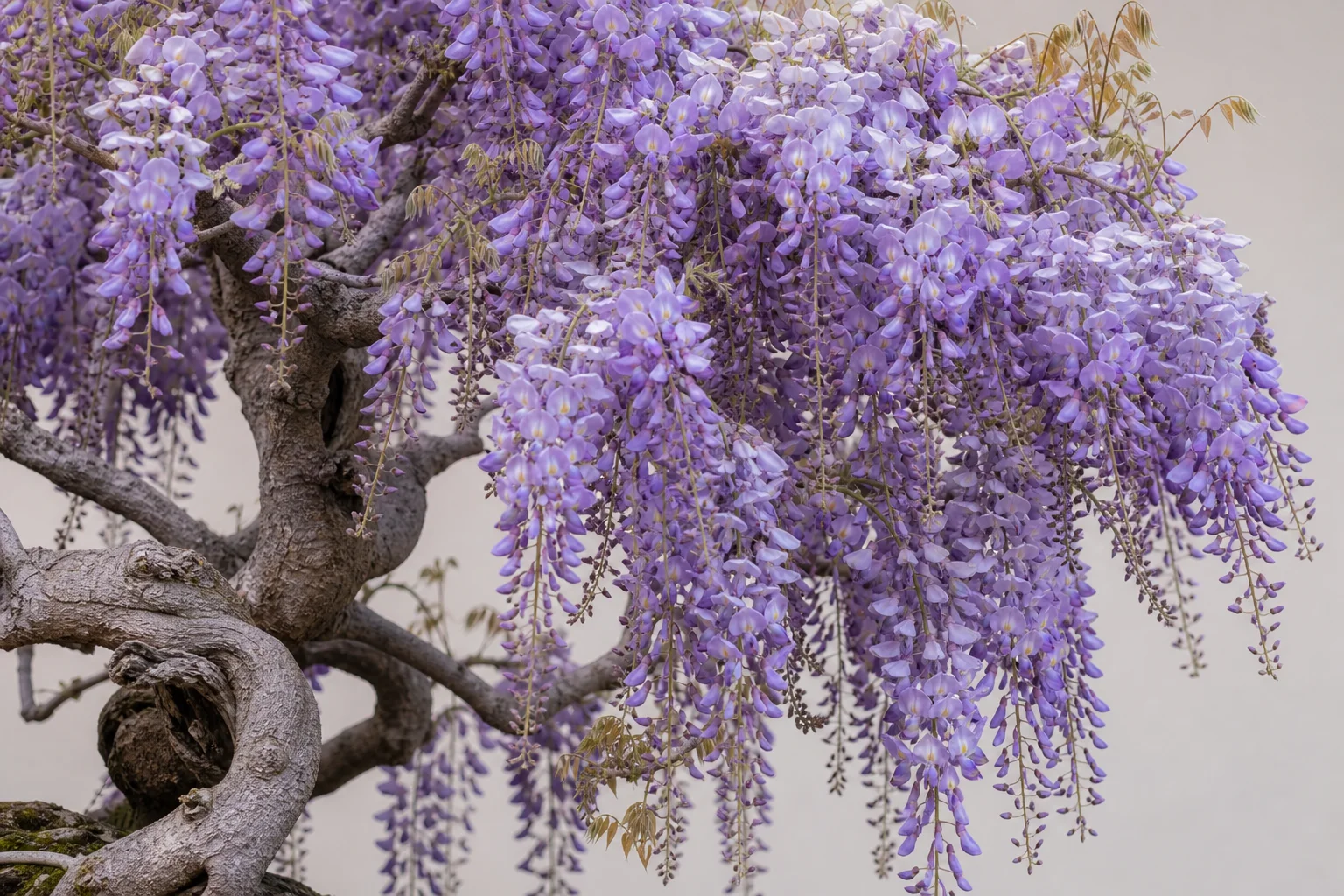
Wisteria
Wisteria floribundaPendulous racemes of lavender, white, or pink flowers in May–June — the most spectacular flowering bonsai when it works, and the most frustrating when it doesn't.
Conifer
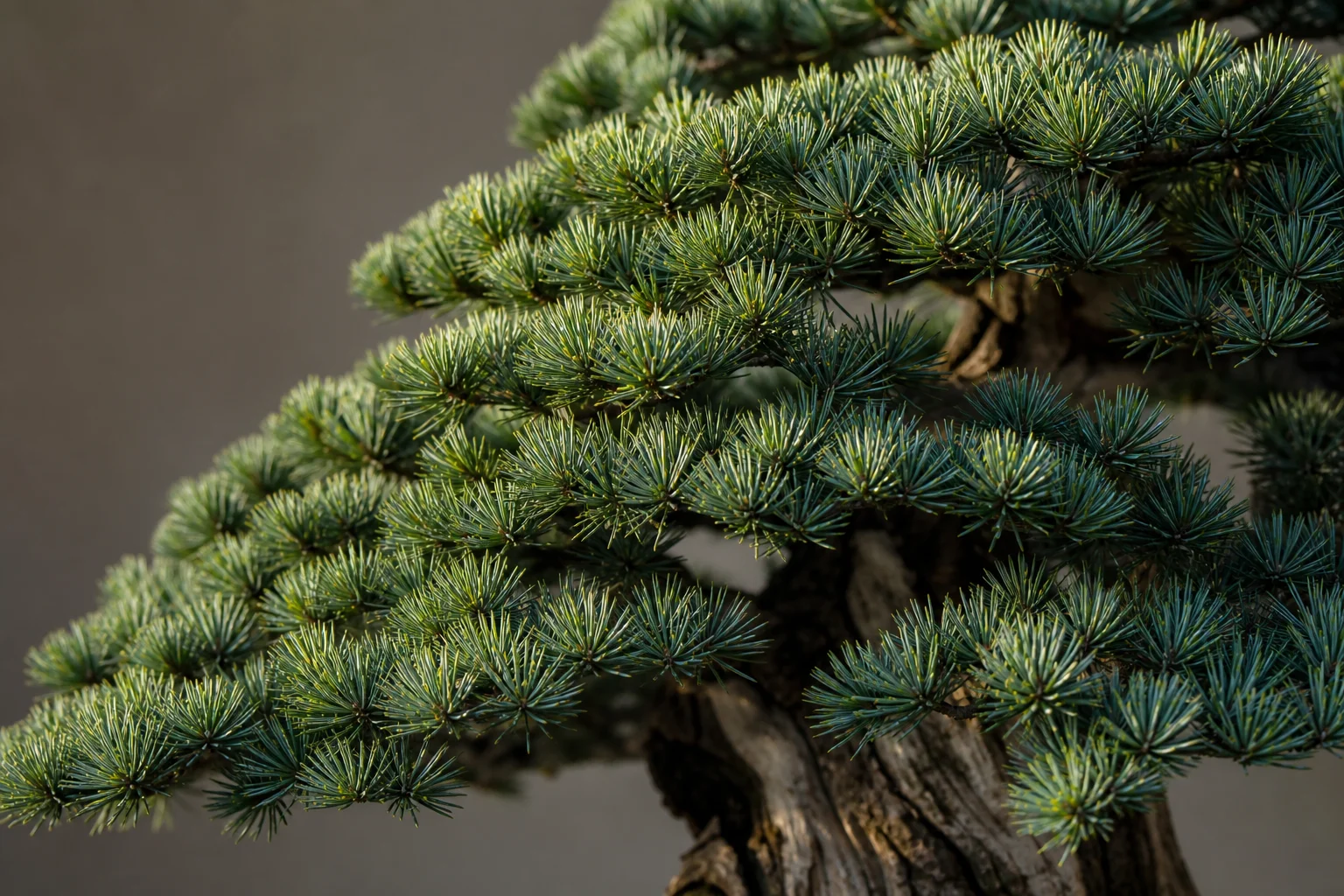
Cedar
CedrusClustered needles in distinctive rosettes, horizontal branching habit, and a presence that few conifers match. Less commonly grown than pines but worth seeking out.
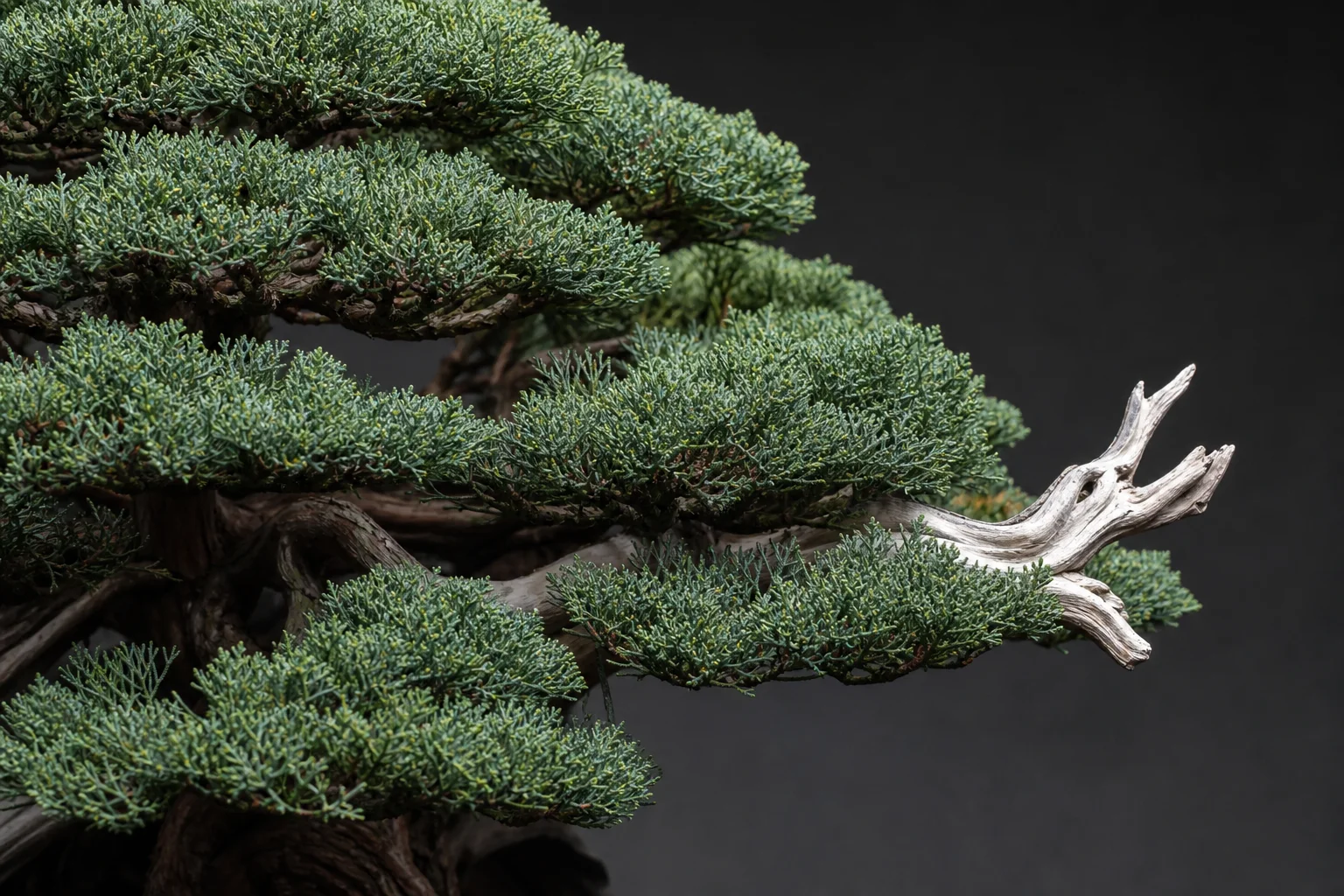
Chinese juniper (Itoigawa)
Juniperus chinensisThe connoisseur's juniper. Finer foliage, more dramatic deadwood potential, and the species behind most world-class juniper bonsai.
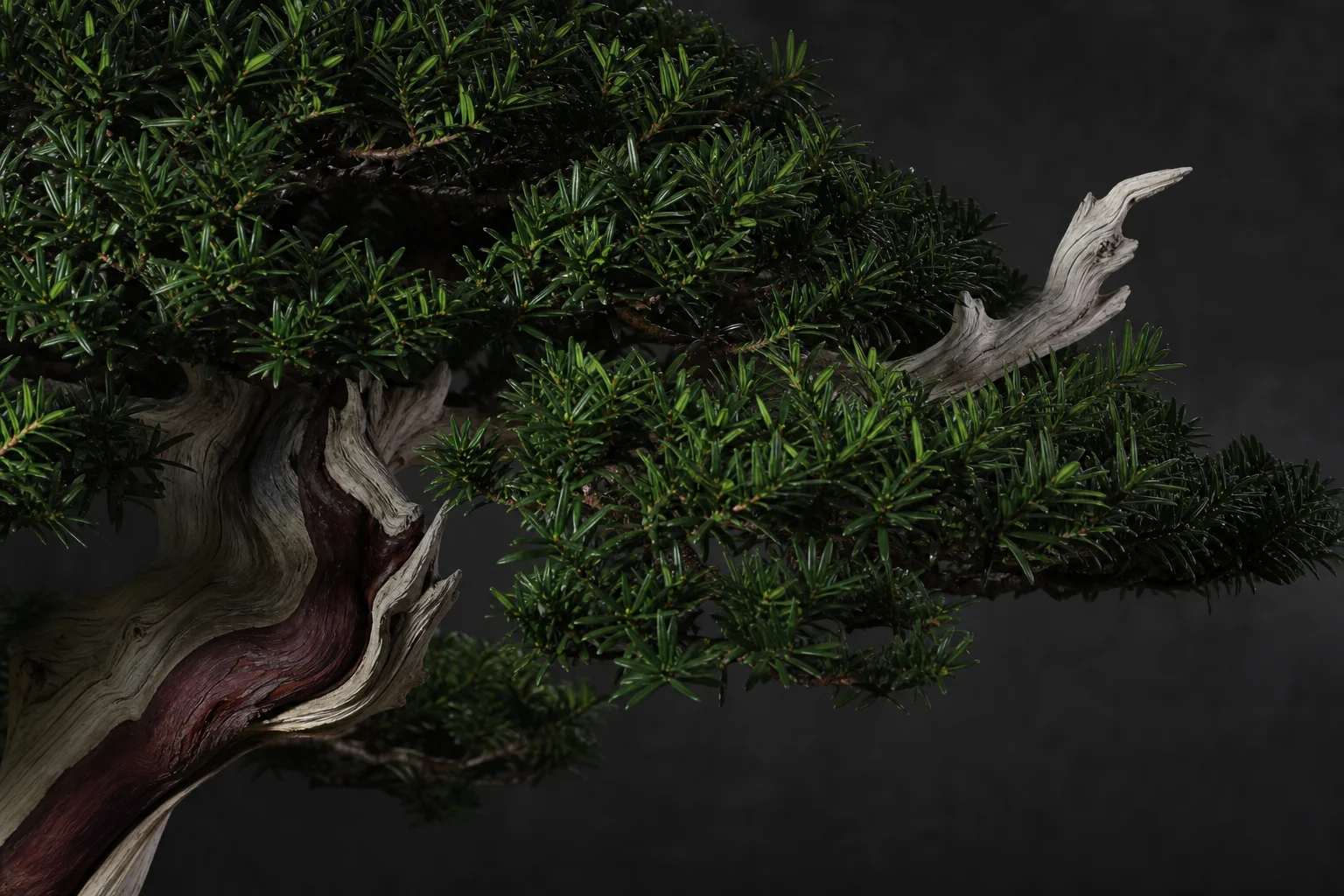
English yew
Taxus baccataThe oldest living things in Britain. Dark green needles on the youngest twigs, deep red heartwood for deadwood, and a capacity for back-budding that no other conifer matches.
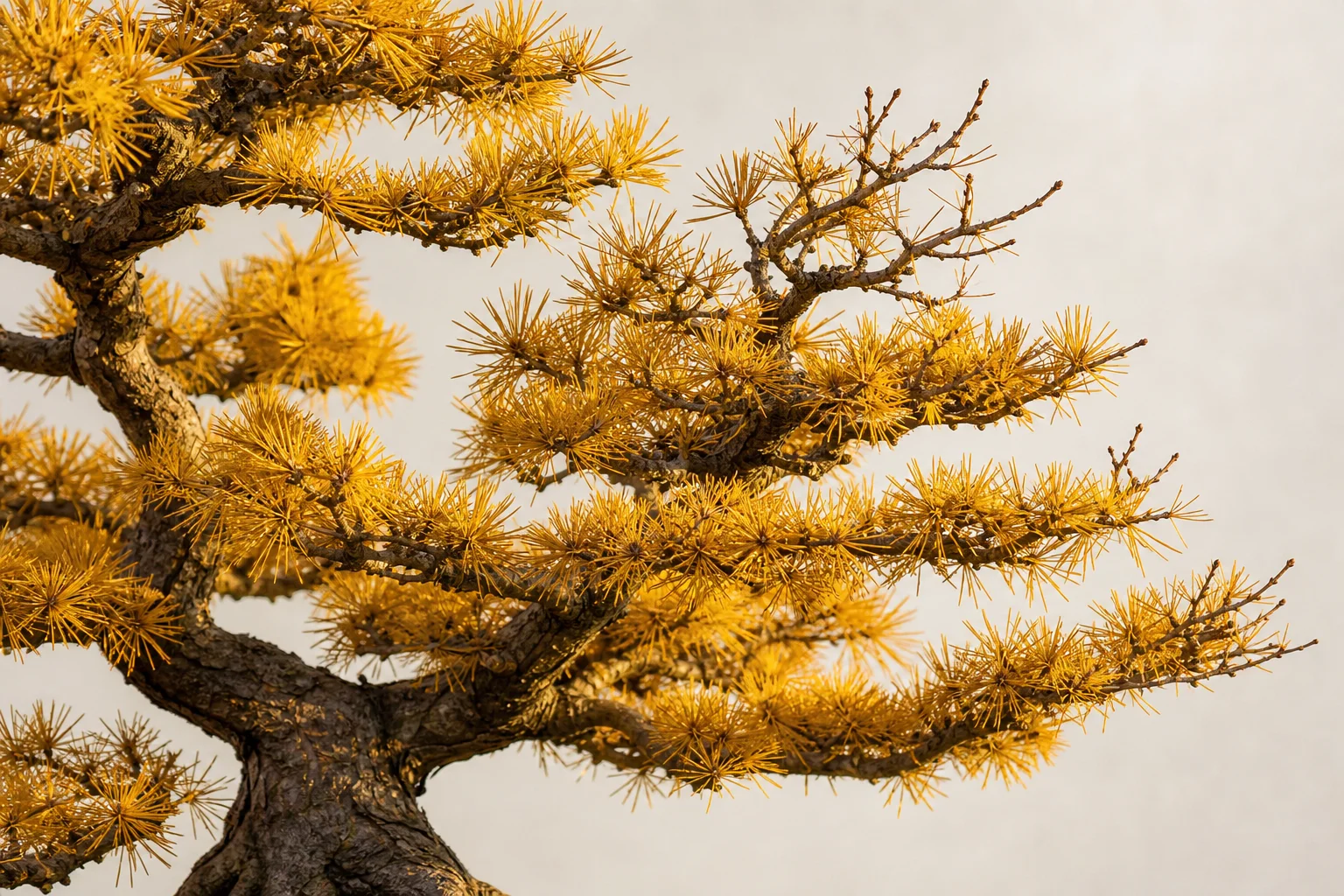
European larch
Larix deciduaThe deciduous conifer. Soft acid-green needles in spring, gold in autumn, bare in winter — and one of the toughest bonsai species in the UK.
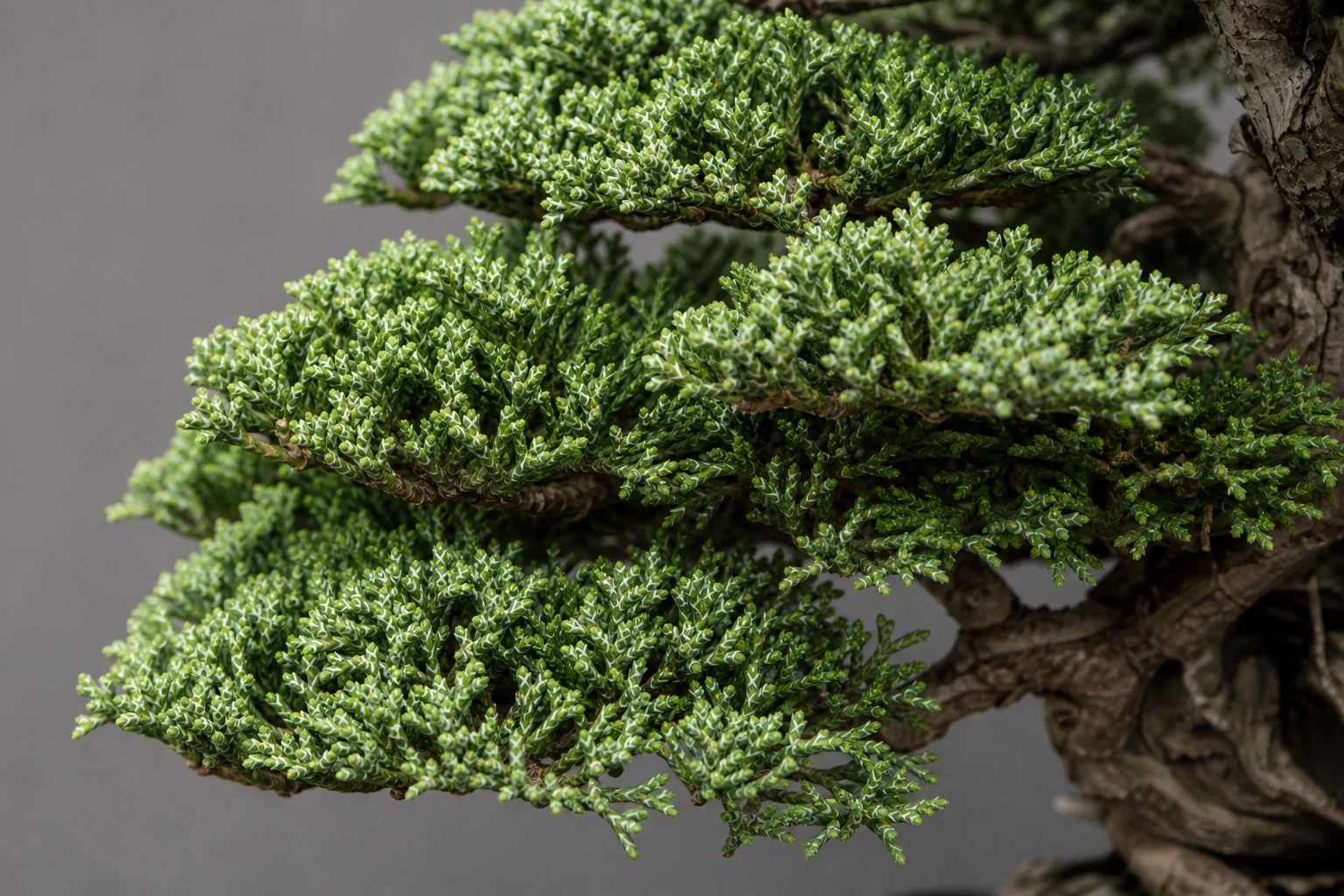
Hinoki cypress
Chamaecyparis obtusaDistinctive scale-like foliage with white markings on the underside, refined ramification potential, and a tradition stretching back through Japanese temple culture. The conifer for growers who find pines and junipers too familiar.
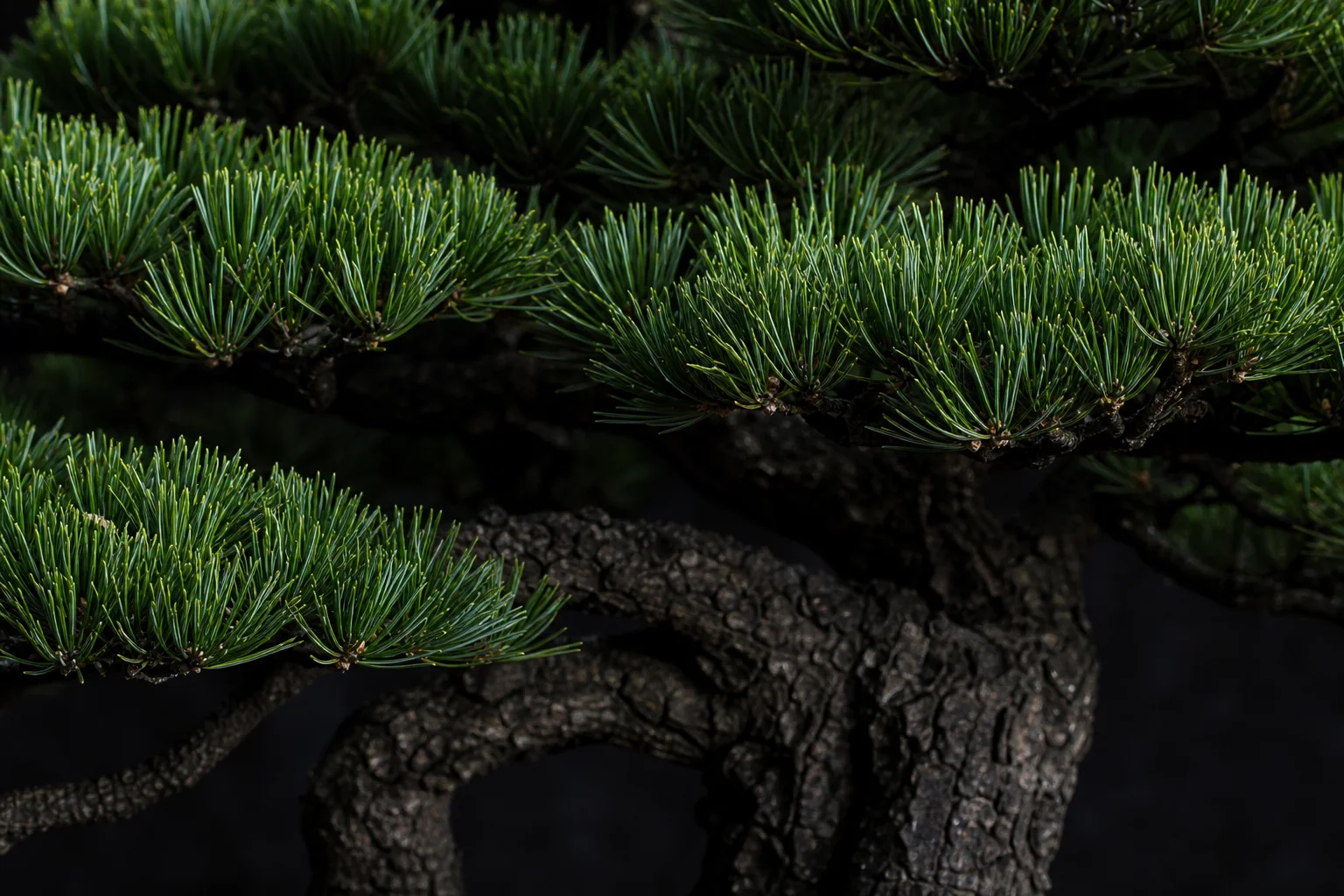
Japanese black pine
Pinus thunbergiiThe flagship bonsai pine — dark fissured bark, two-flush technique, and a steeper learning curve than any other common species.
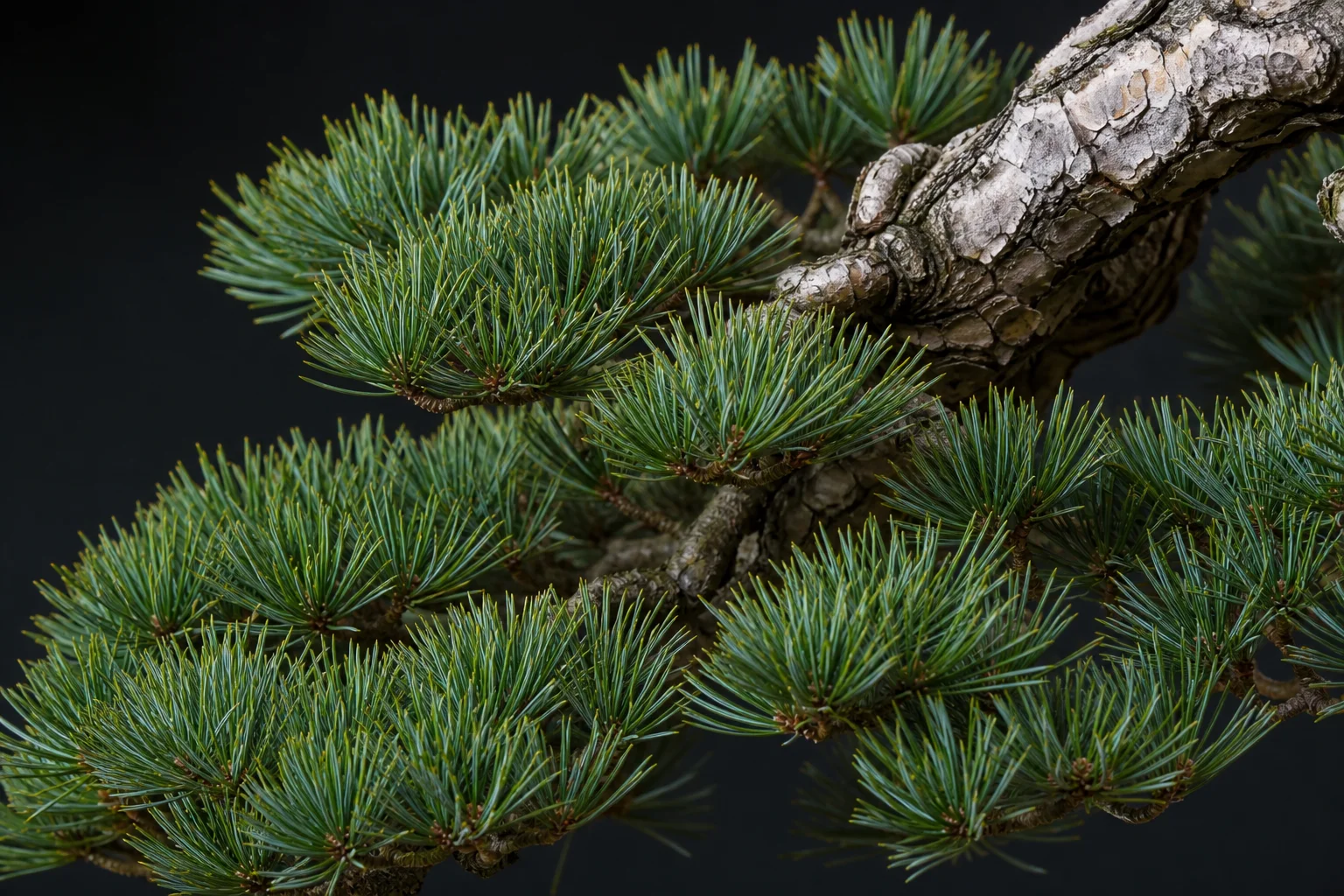
Japanese white pine
Pinus parvifloraThe other classic Japanese pine. Five blue-green needles per bundle, single-flush growth, and a refined elegance that no other pine quite matches.
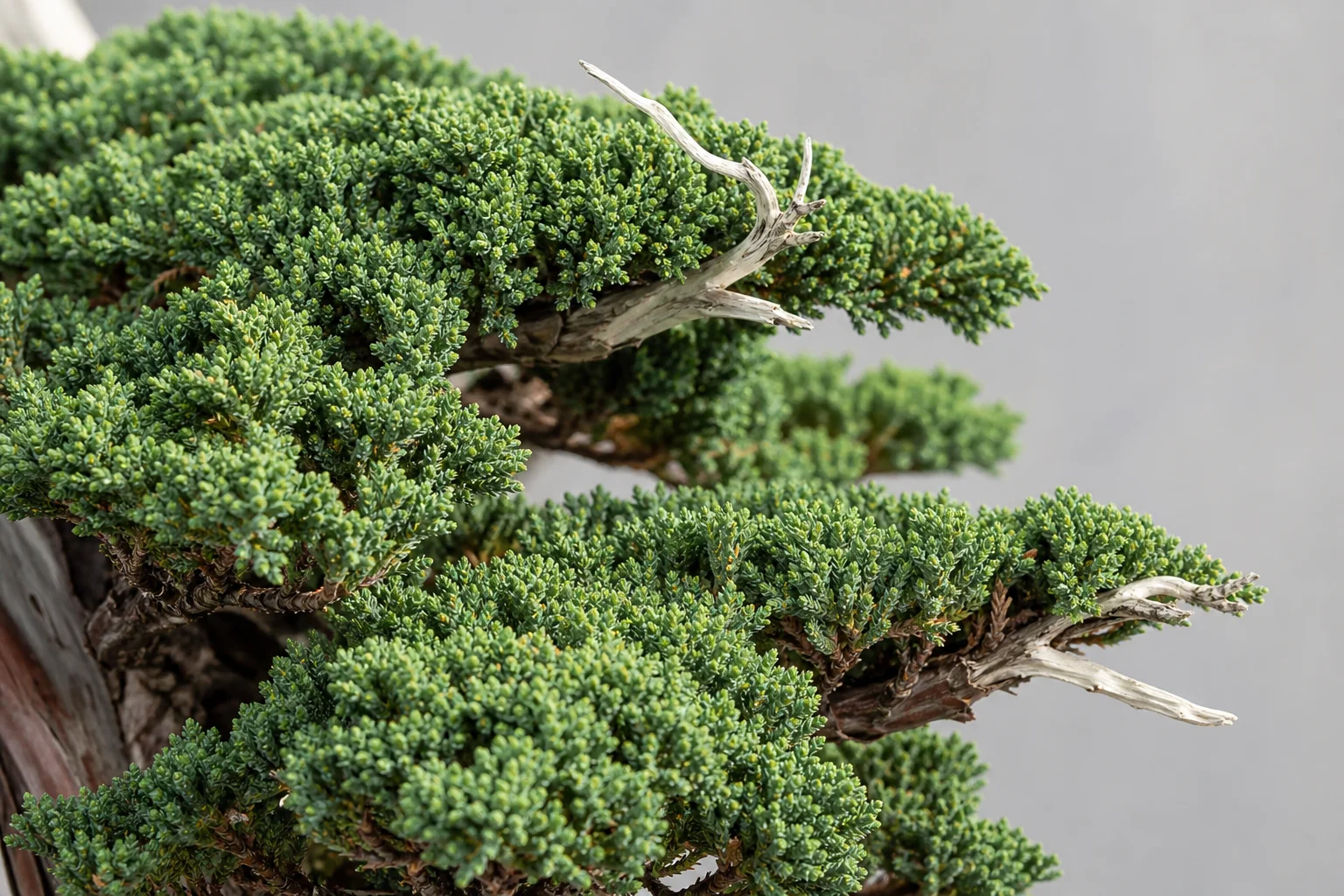
Juniper procumbens 'Nana'
Juniperus procumbens 'Nana'The classic mall bonsai, often the first tree people own — and often killed by being kept indoors. Outside, hardy, sun-loving and beautiful.
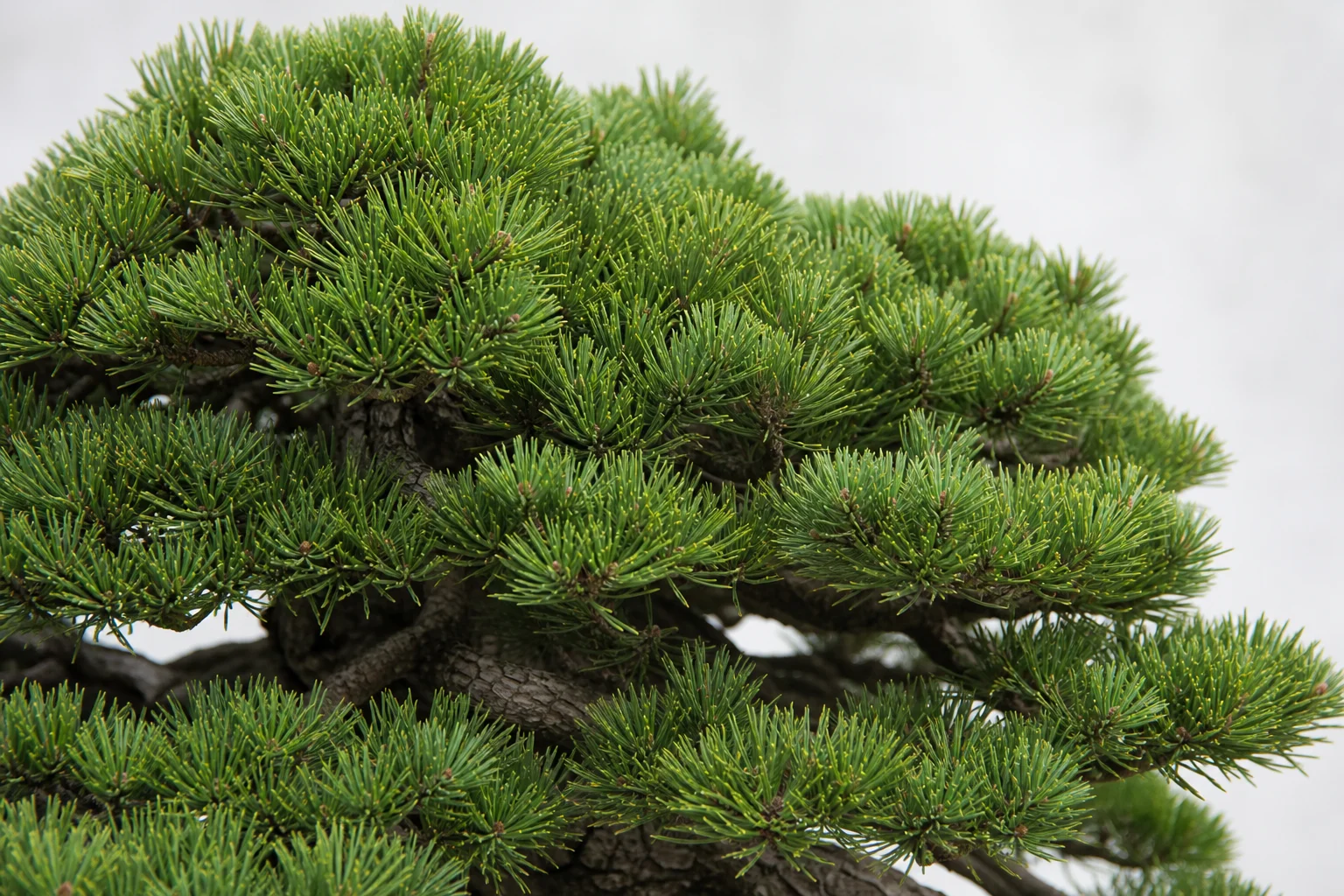
Mugo pine
Pinus mugoThe easy pine. Bulletproof, widely available, and the best beginner conifer in the UK.
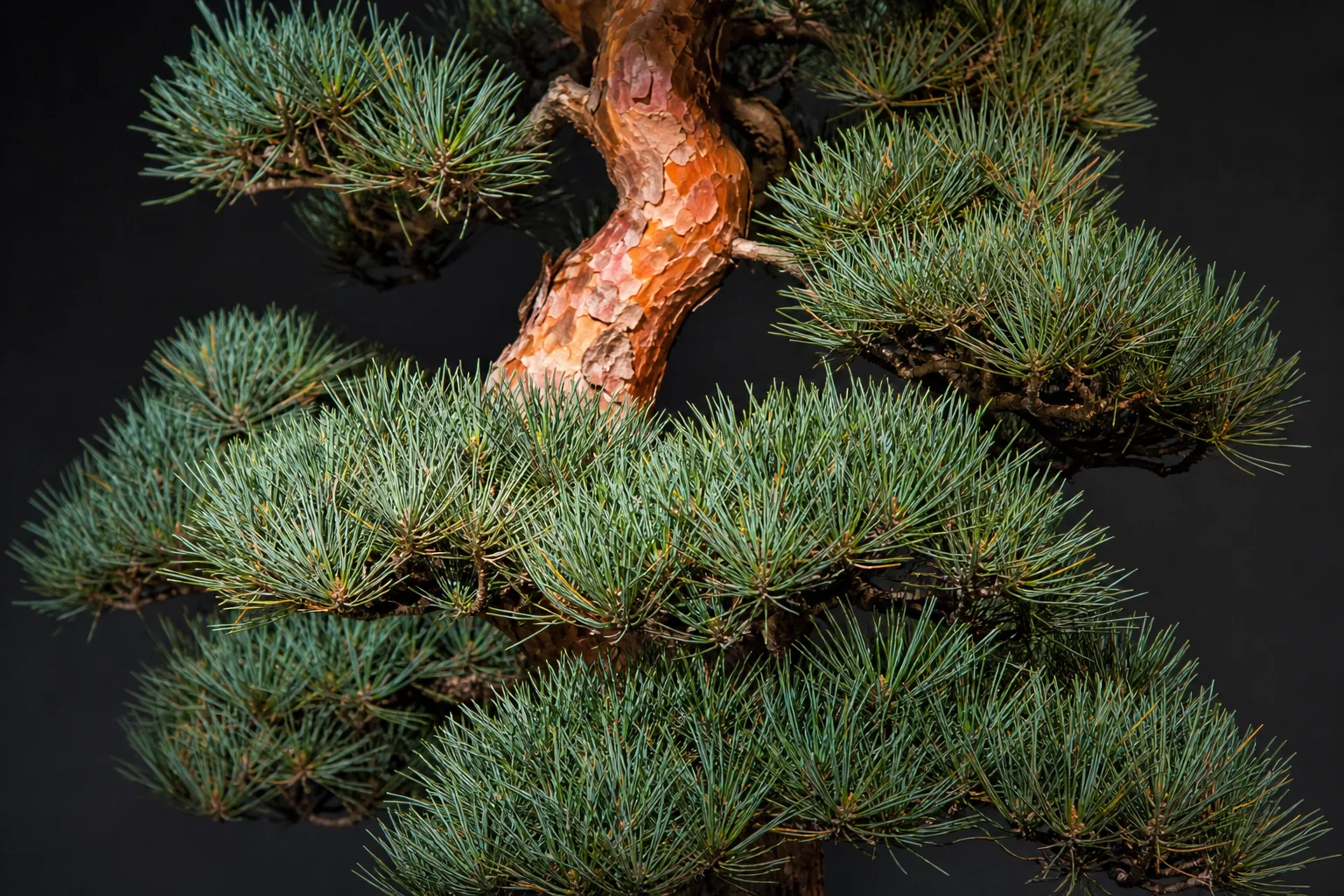
Scots pine
Pinus sylvestrisThe UK's native pine — orange-flaked bark, blue-green needles, and a natural affinity with rocky, windswept styling.
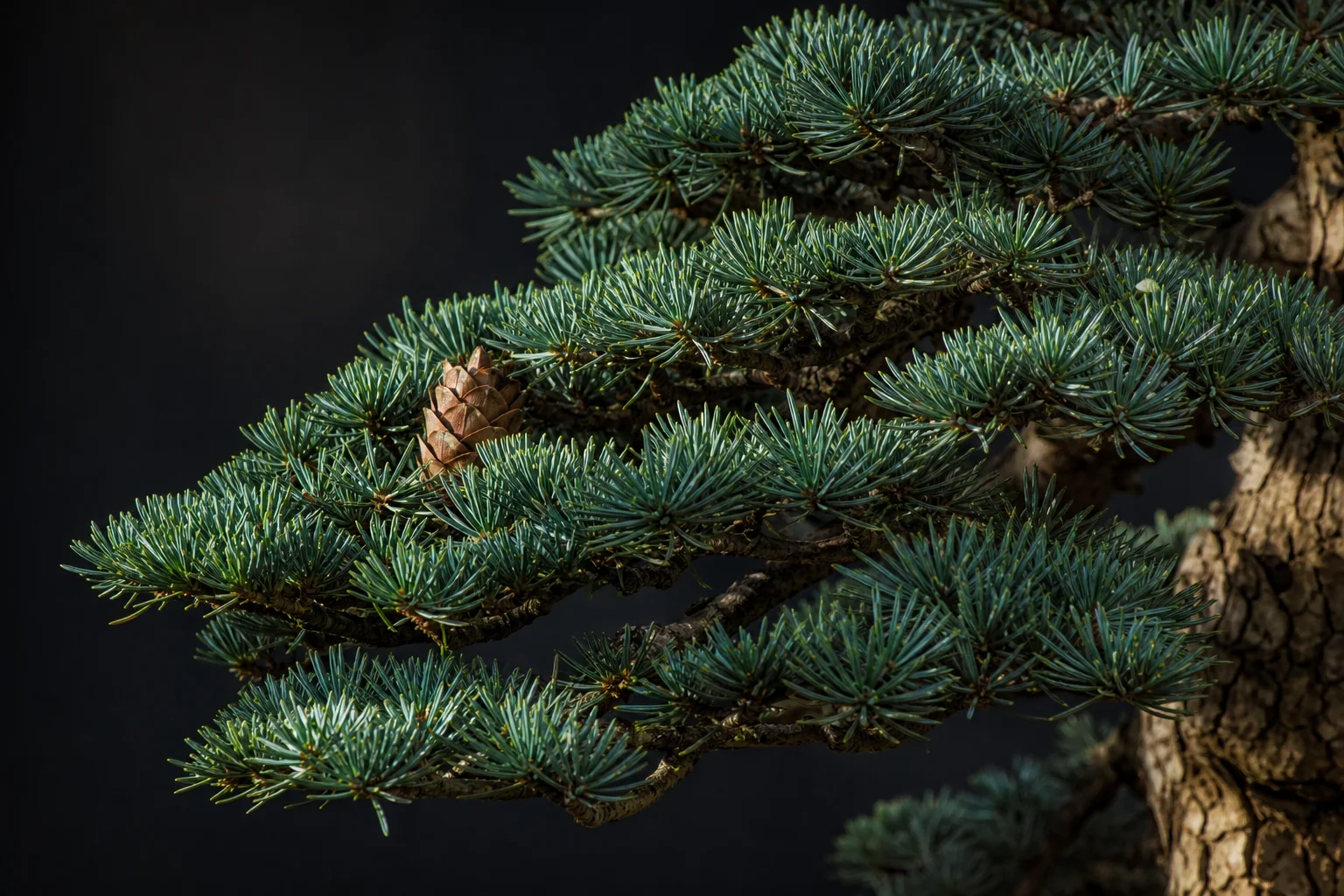
Spruce
PiceaStiff sharp needles arranged singly on woody pegs, distinctive cone display on mature trees, exceptional hardiness. The less-developed conifer worth considering.
Tropical & Indoor
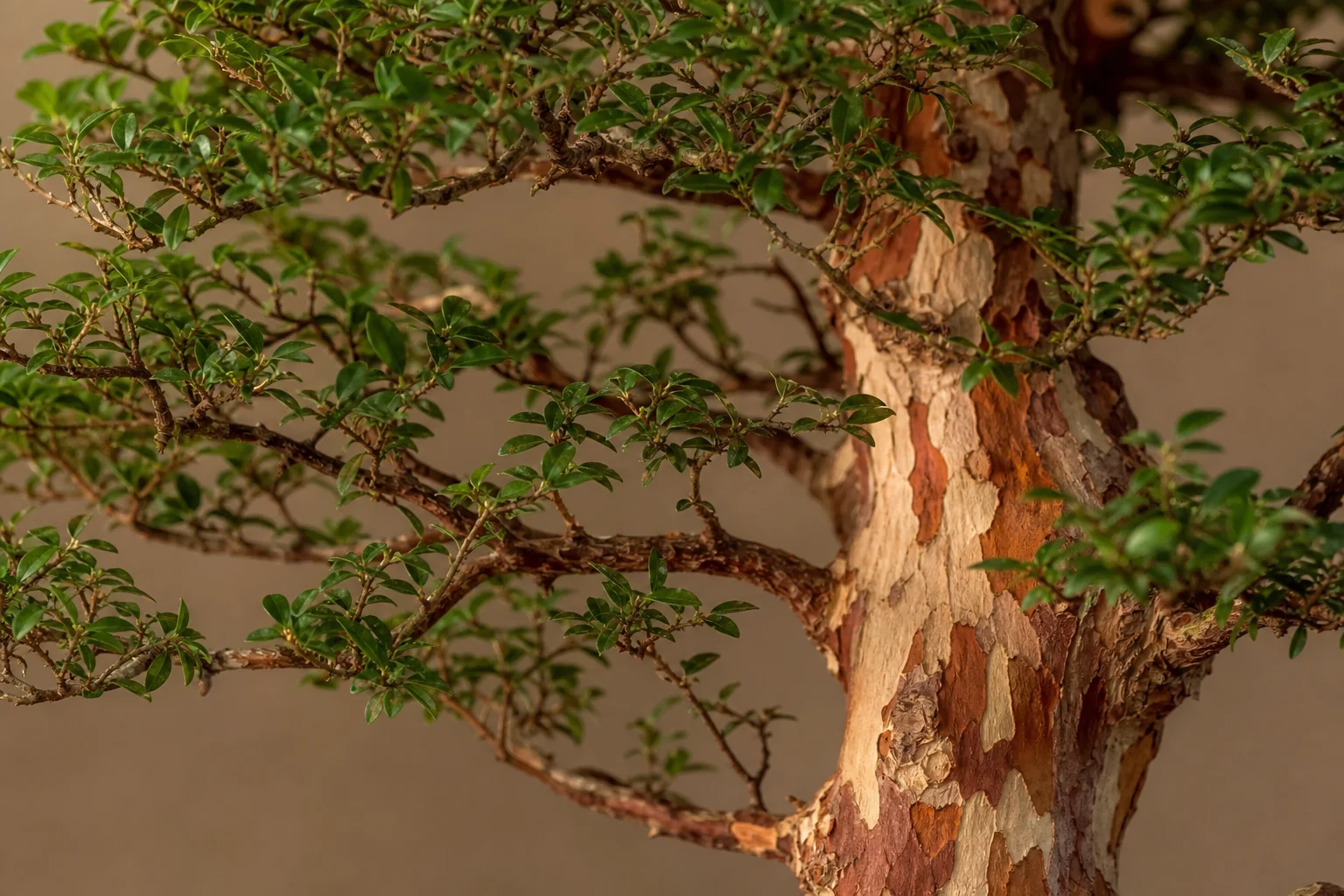
Chinese sweet plum
Sageretia theezansThe other indoor bonsai. Distinctive peeling bark, tiny leaves, and a more refined character than the mass-market ficus.
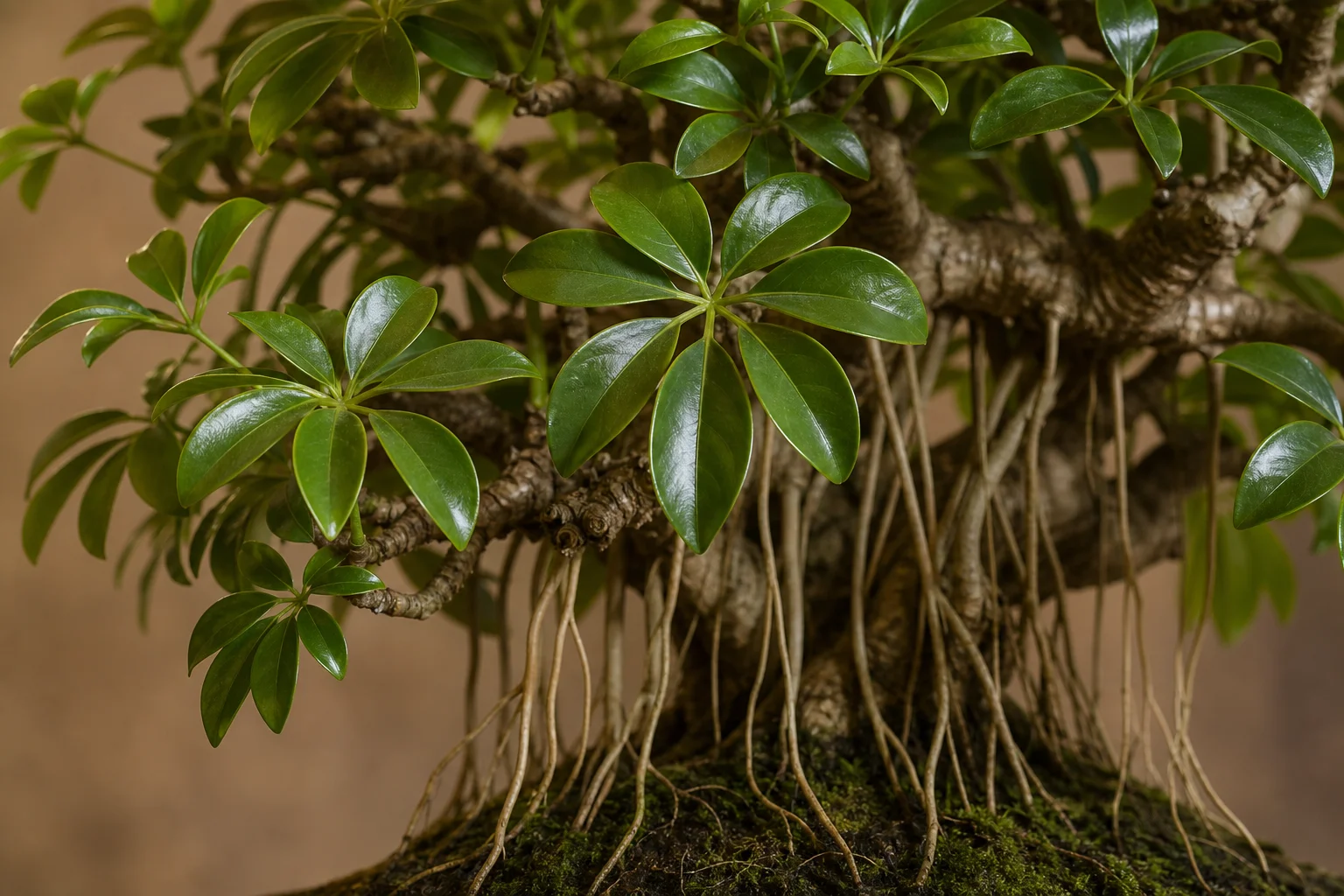
Dwarf umbrella tree
Schefflera arboricolaThe banyan-style indoor bonsai. Aerial roots, compound leaves arranged in umbrella patterns, almost impossible to kill — and one of the few species that genuinely lives up to its "easy indoor bonsai" marketing.
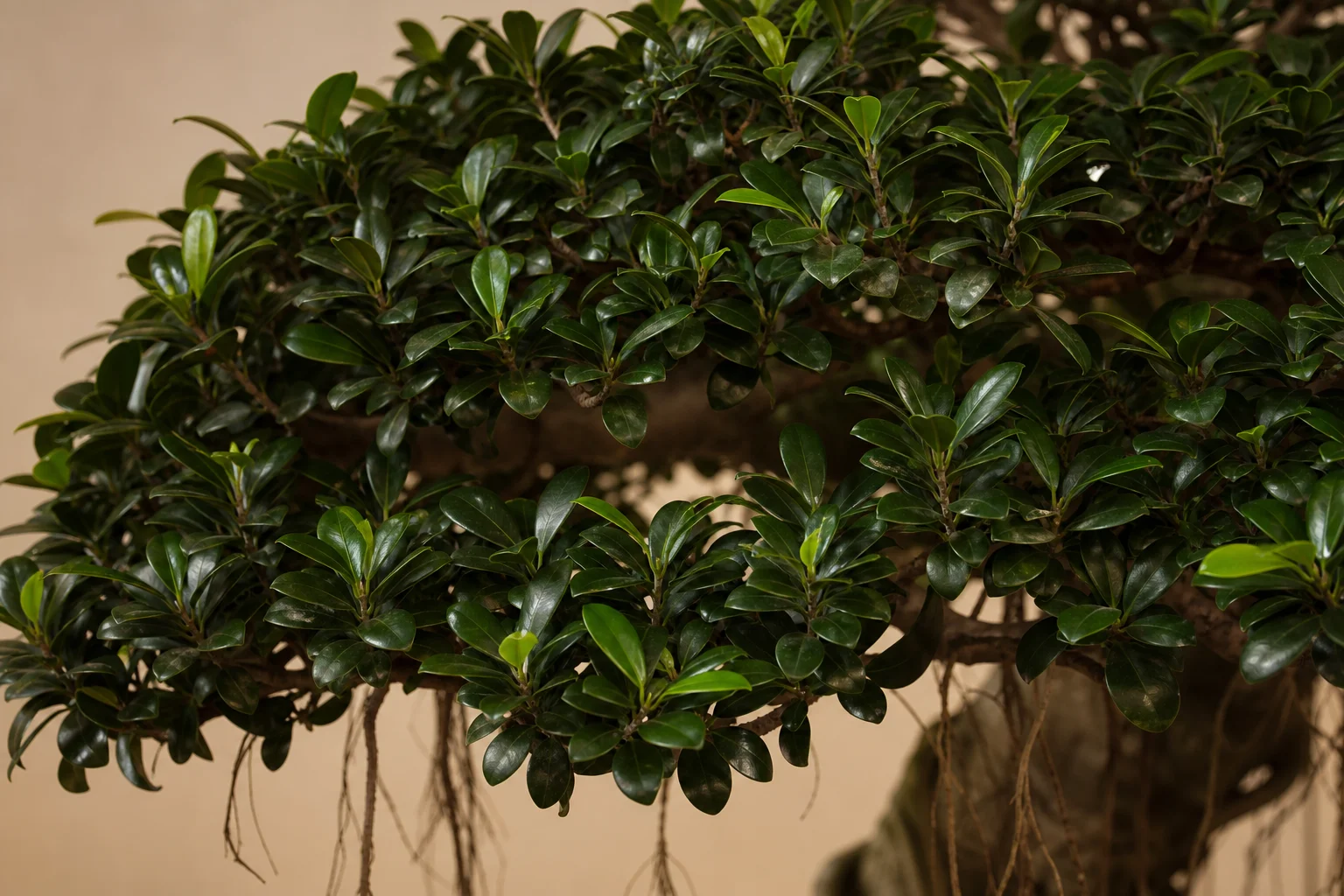
Ficus retusa
Ficus microcarpaThe best indoor bonsai. Tolerant of household conditions, fast-growing, and the only common bonsai species that truly thrives without a winter dormancy.
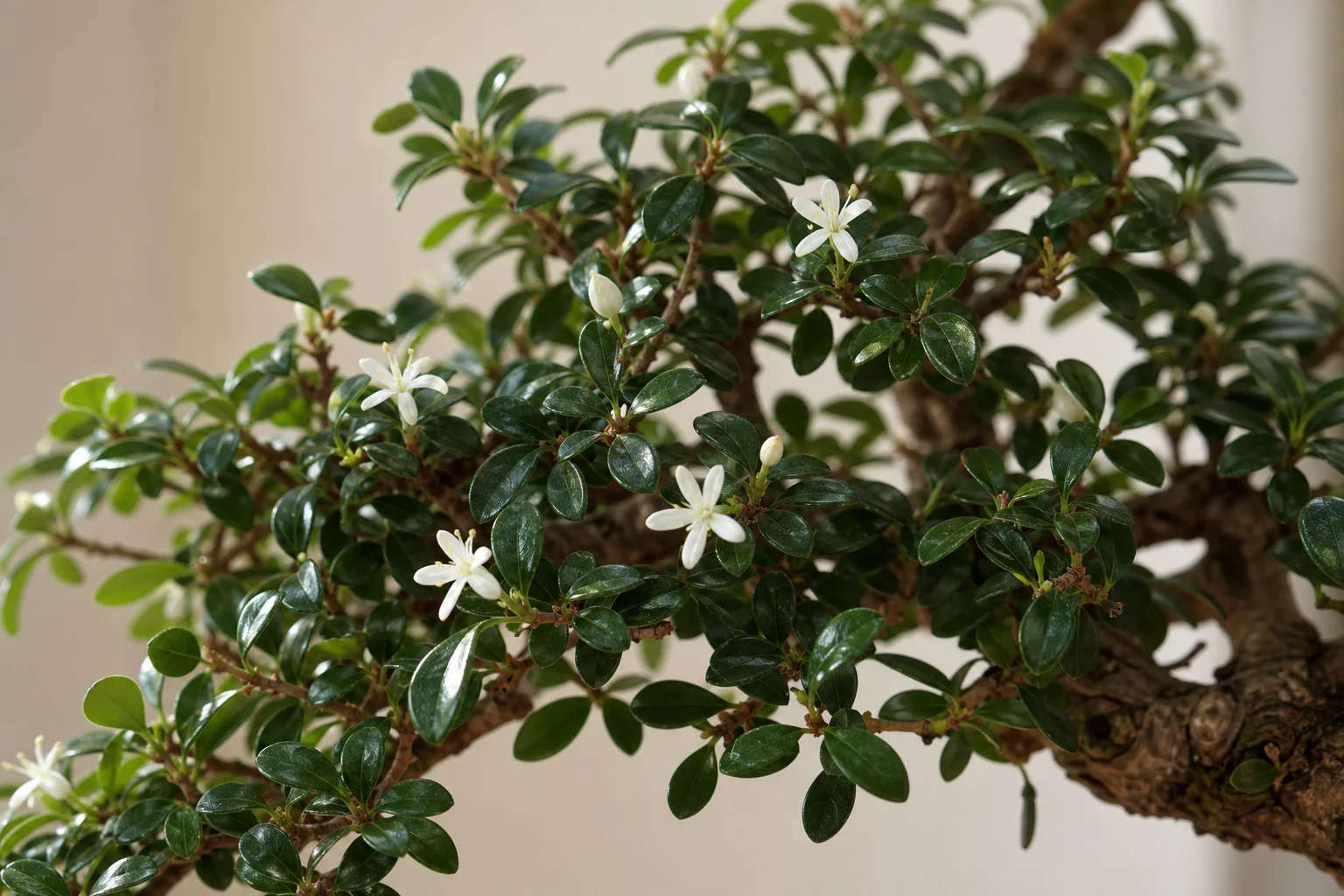
Fukien tea
Carmona retusaSmall dark glossy leaves, tiny white flowers year-round, small red berries — the popular indoor bonsai widely sold as starter material despite being one of the more challenging species to maintain.
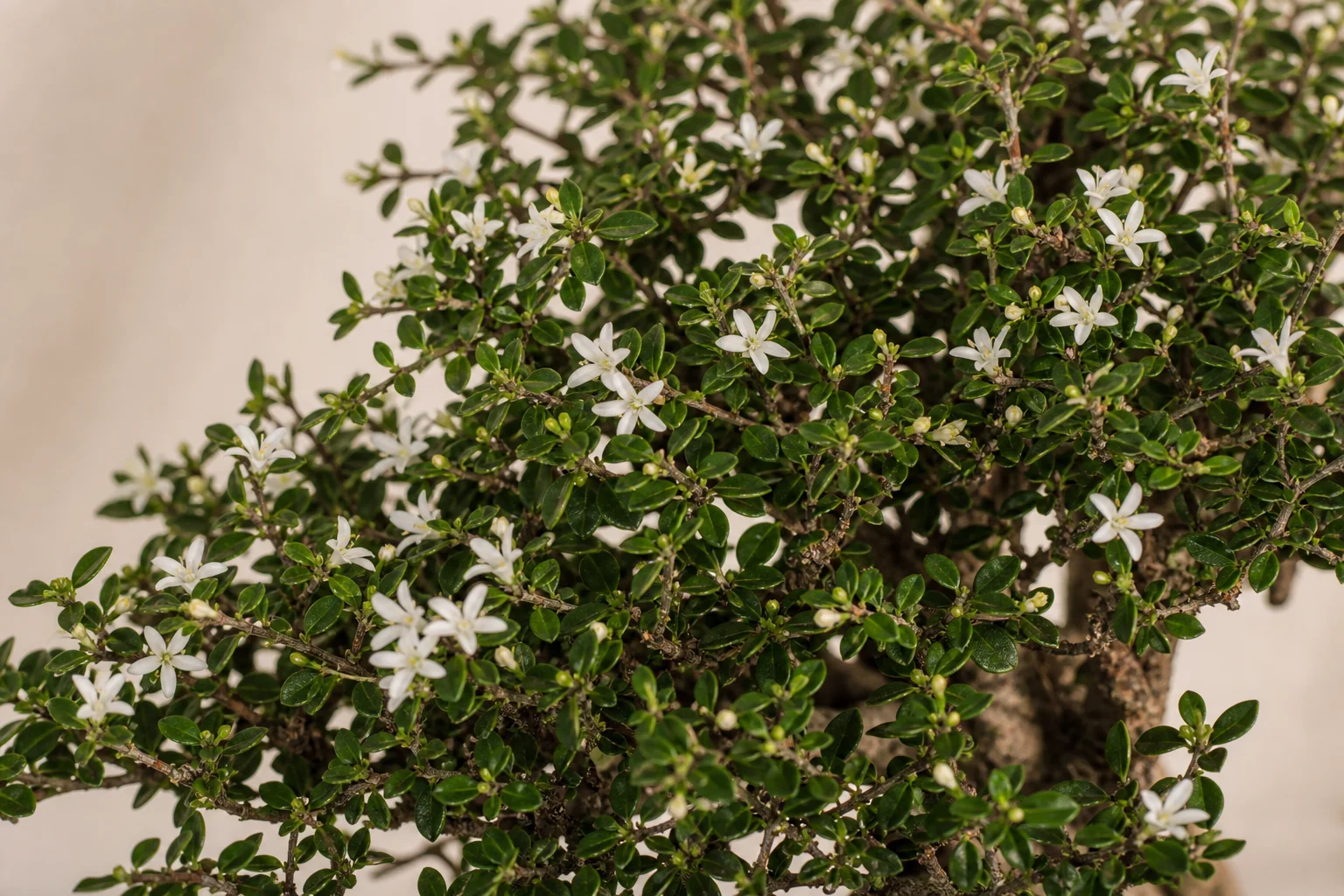
Serissa
Serissa japonicaSmall white star-shaped flowers year-round, tiny dark leaves, refined twiggy habit — and a reputation as the most temperamental indoor bonsai you can buy. The drama queen of the indoor world.
Evergreen Broadleaf
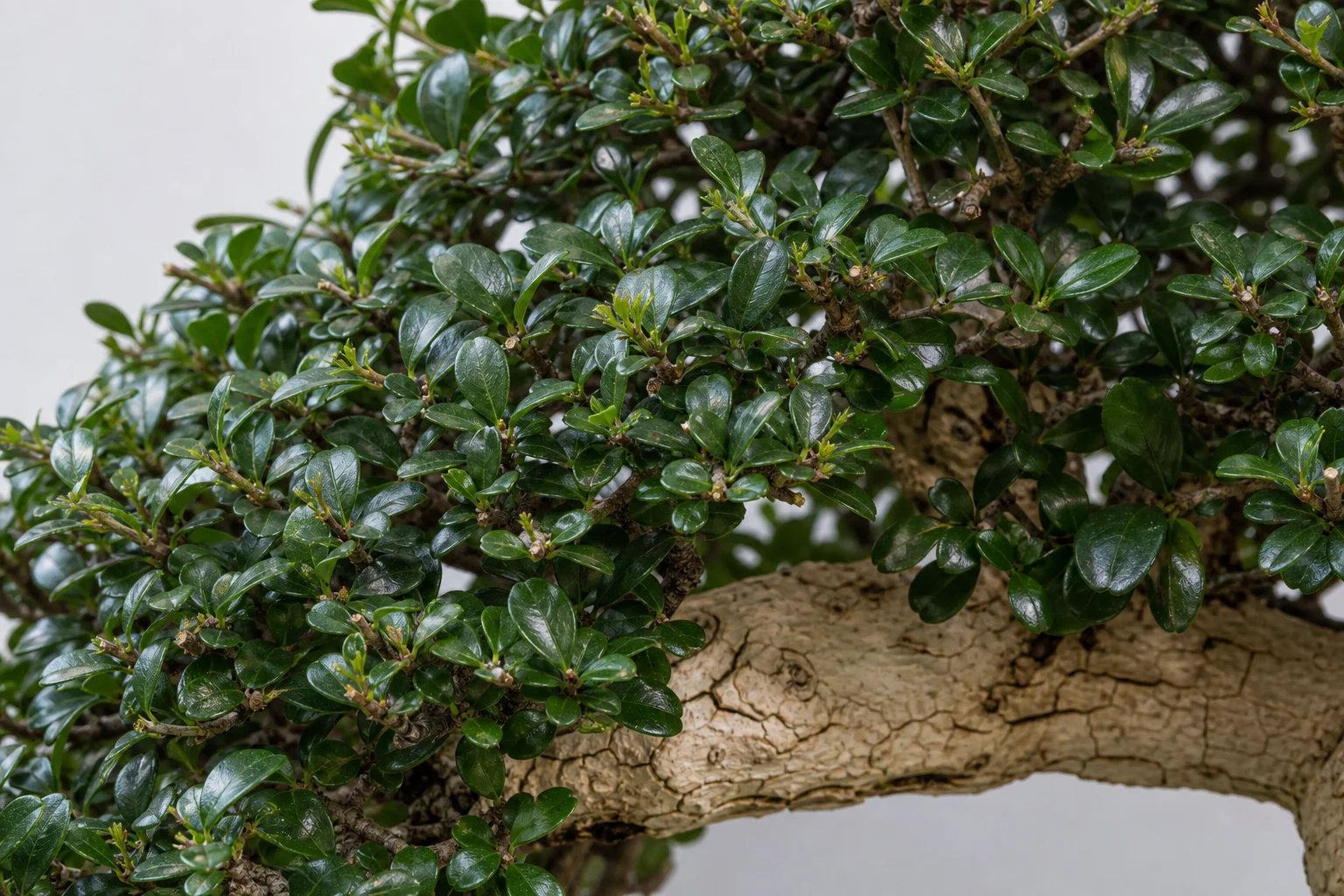
Common box
Buxus sempervirensDense small leaves, pale fissured bark, an evergreen presence year-round — and a serious UK disease and pest situation that every grower must understand before starting.
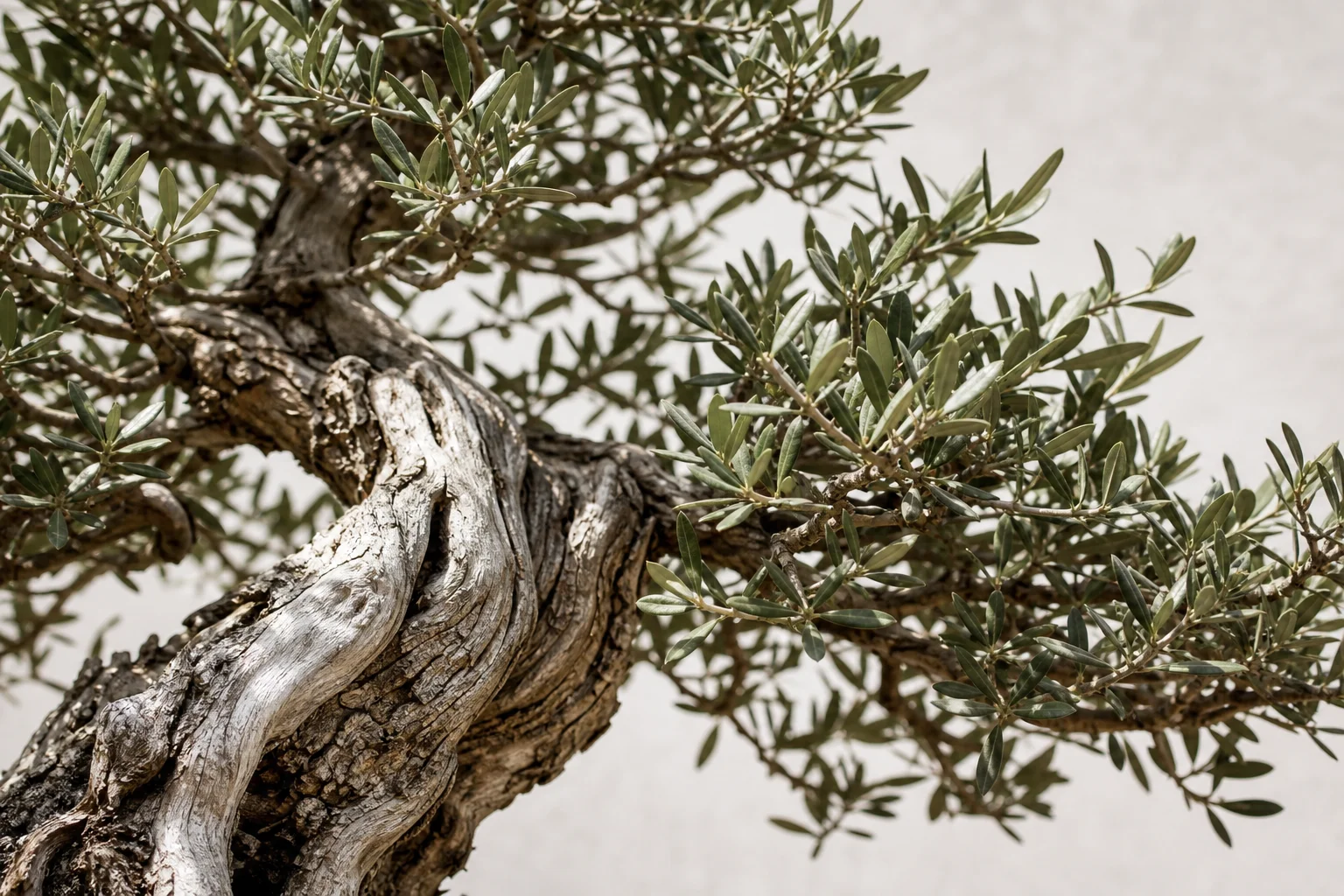
Olive
Olea europaeaSilver-grey foliage, gnarled trunk character on collected material, and the Mediterranean climate the UK is increasingly providing. Borderline-hardy but workable.
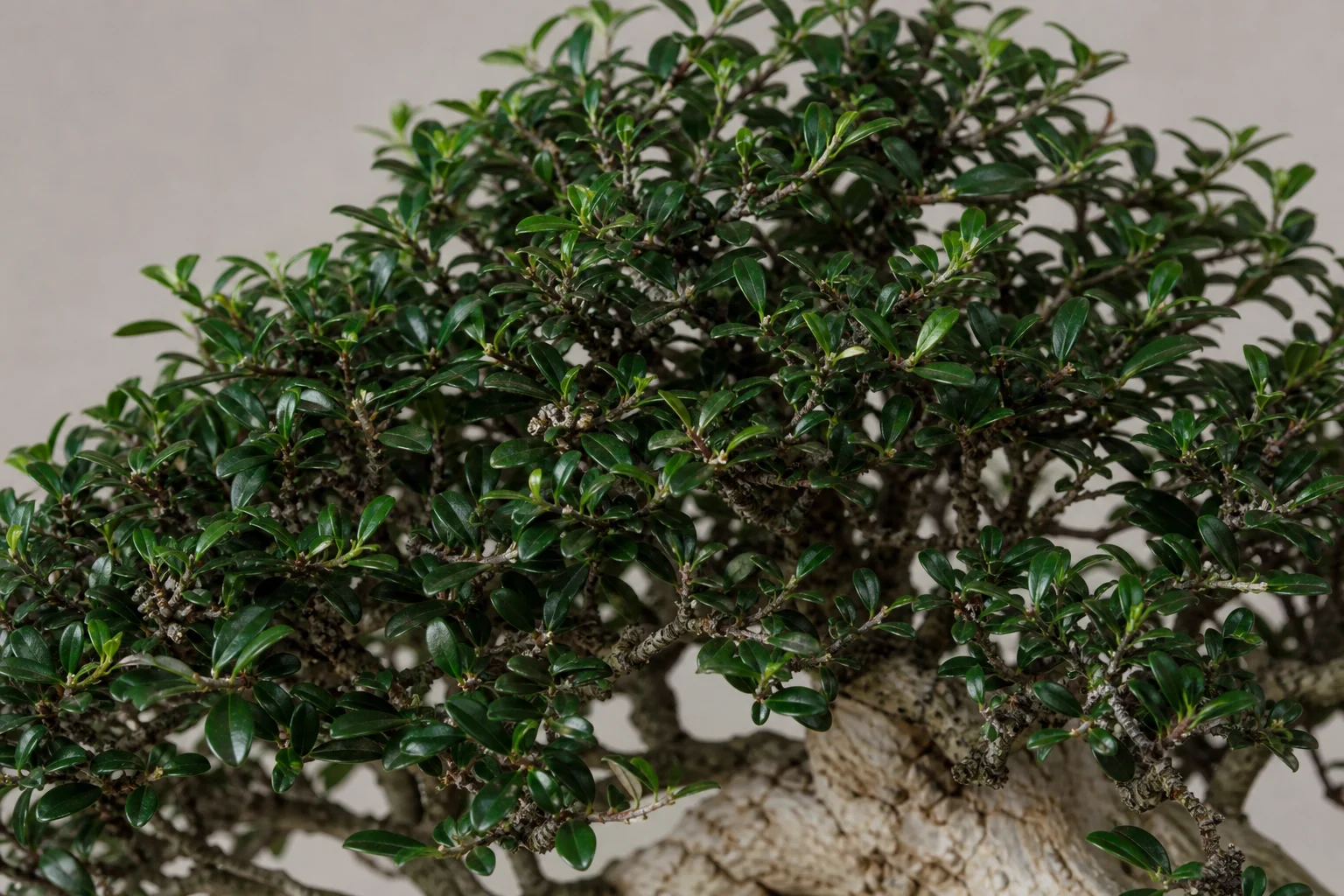
Privet
LigustrumThe bonsai species snobs avoid and beginners should embrace. Free in every overgrown UK garden, bulletproof in pots, develops quickly, looks excellent.
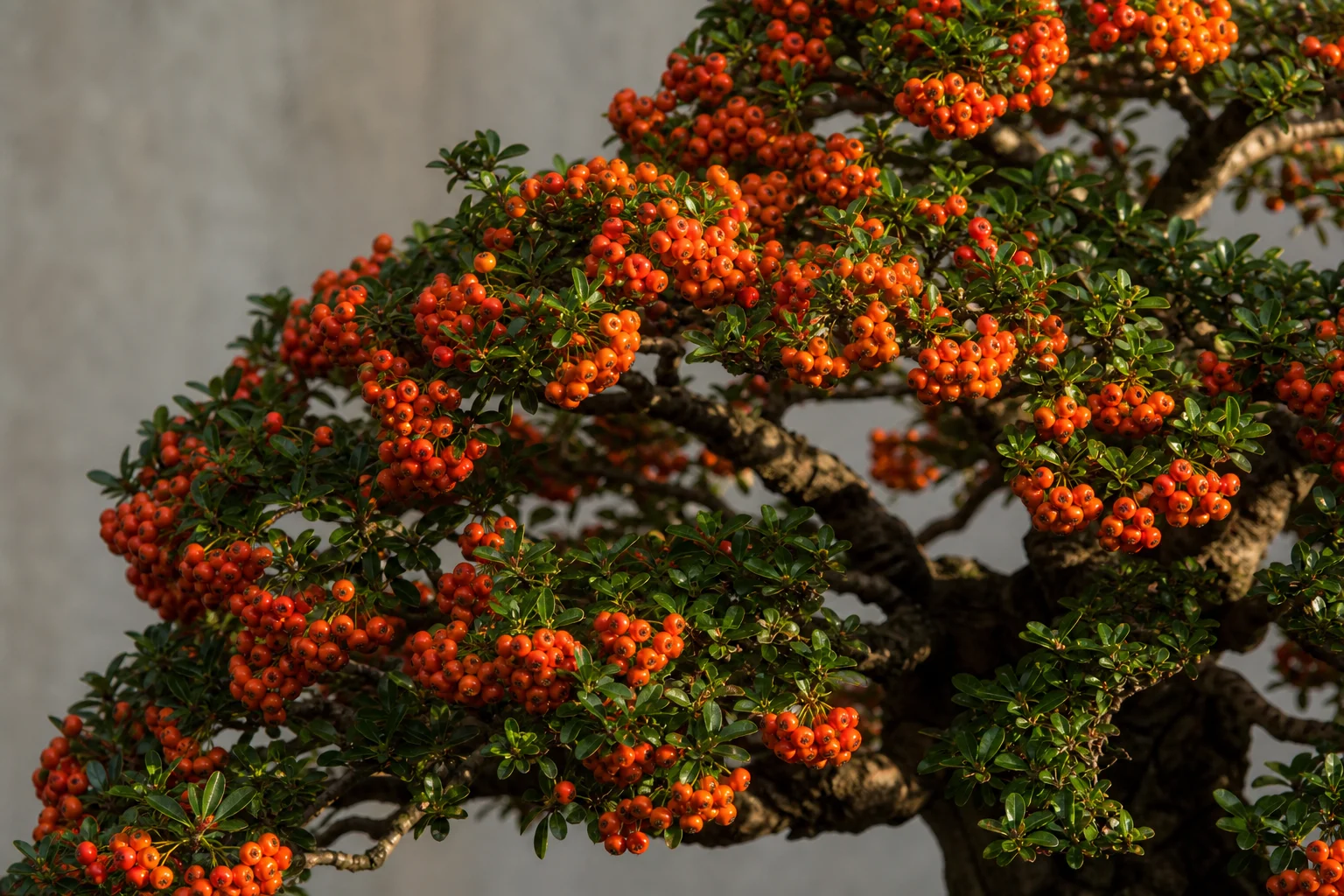
Pyracantha
Pyracantha coccineaEvergreen, thorny, and covered in red or orange berries from autumn through winter. The bonsai that earned the name firethorn.
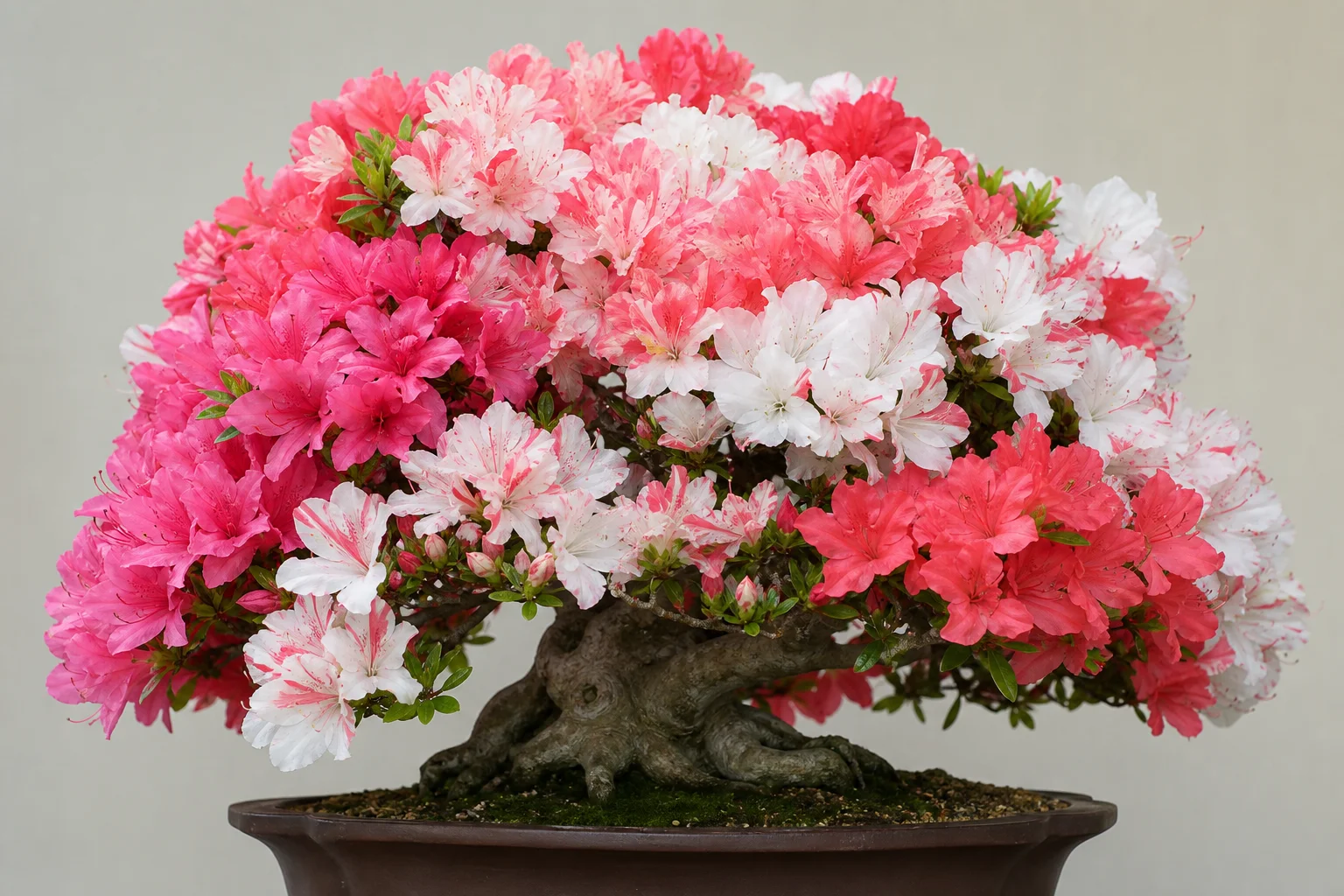
Satsuki azalea
Rhododendron indicumThe flowering specialist. Cloud-like masses of bloom in late May to June, evergreen for the rest of the year, and a substrate and watering regime unlike anything else in bonsai.
Succulent
Track your trees and never miss a feed.
Collection tracking, care logs and photo history are free — no card, no time limit.