European hornbeam bonsai care
Carpinus betulusThe UK native that bonsai forgot. Strong, fast, beautiful in winter, and lovely in spring — and you can find good material in any hedgerow.
Water
Every 1 day
check daily in summerLiquid feed
Every 7 days
growing seasonSolid feed
Every 28 days
slow releaseRotate
Every 14 days
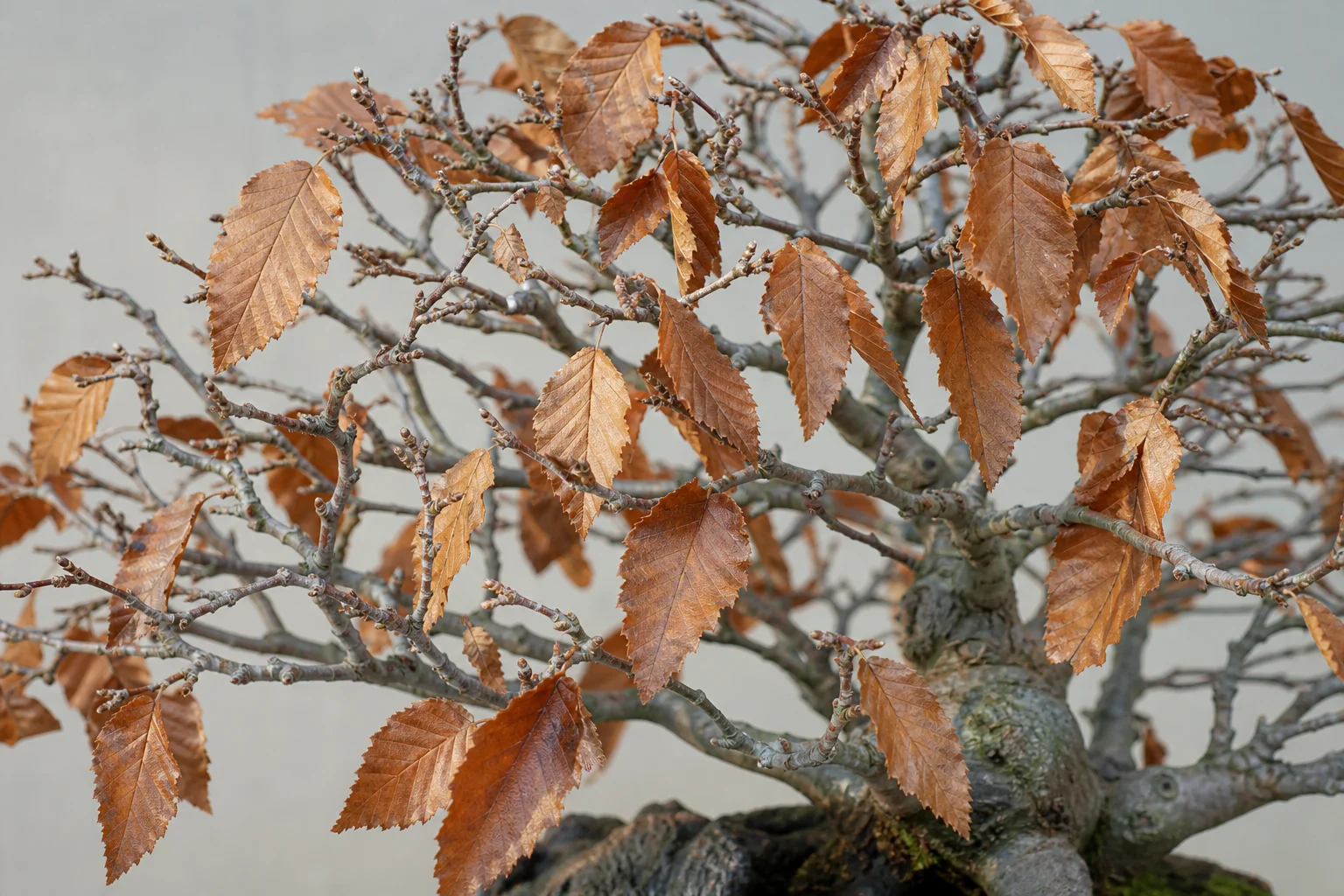
even canopy growthHornbeam is one of those species that bonsai growers from outside the UK look at enviously. It's native to most of England and parts of Wales, it's planted widely as a hedge, and good material is available for the cost of a polite conversation with the owner of an overgrown hedge. The resulting bonsai develops a distinctive smooth silver-grey bark with vertical fluting, holds its papery copper-brown leaves through much of winter (a feature called marcescence, also seen in beech), and pushes fresh acid-green leaves in spring that age to dark green by summer.
The species shares many advantages with Chinese elm — it back-buds reliably, tolerates heavy pruning, develops fine ramification quickly with consistent pinching, and is forgiving of beginner errors. The differences are aesthetic: hornbeam reads as quietly British in a way that suits the kind of bonsai that doesn't shout.
For UK growers, this should be a top-three starter species along with field maple and Chinese elm. It's not widely available as bonsai-trained nursery stock but is readily collected, propagated, or developed from hedging whips.
Native to most of Europe from southern England to the Caucasus. In the UK it occurs naturally in southern and eastern England and is widely planted elsewhere as hedging, street tree, and woodland. The species' close relative Carpinus turczaninowii (Korean hornbeam) is the more commonly imported bonsai version, but C. betulus is at least as good and easier to source here.
Seasonal calendar
Timing is for South East England. Select your region above to see adjusted guidance.
- Structural pruning while dormant
- Collect hedgerow material if planned
- Continue collection of dormant material
- Prepare for repotting
- Repot as buds swell
- Pot up any collected material
- Leaves emerge
- Begin daily watering
- First slow-release feed
- Start weekly liquid feed
- Begin pinching new shoots
- Continue pinching
- Wiring window opens
- Defoliate refined trees late month
- Twice-daily watering in heat
- Continue pinching every 2-3 weeks
- Reduce nitrogen feeding mid-month
- Watch for wire biting
- Switch to low-N autumn feed
- Reduce watering
- Autumn colour develops (yellow to copper-brown)
- Stop feeding
- Most leaves turn copper-brown and persist
- Light leaf clearance only — leave marcescent leaves on tree
- Structural pruning
- Plan collection of new material
Watering
Daily through the growing season — hornbeams are thirstier than they look once in full leaf. In summer heat, twice daily for trees in shallow pots. The species tolerates brief dryness better than maples but consistent dryness scorches leaf margins.
In winter, regular checking — hornbeams hold leaves longer than most deciduous species and continue transpiring lightly through mild winters, so don't let pots dry out completely even when dormant.
Tap water of any hardness is fine. The species is unfussy.
Feeding
Weekly liquid feed from late April through to mid-September. Slow-release organic pellets in spring and early summer. Reduce nitrogen from late August and switch to a low-N autumn feed to harden wood.
Hornbeams respond well to consistent moderate feeding. Underfed trees sit and sulk; overfed trees produce coarse foliage and long internodes. The middle path is what you want.
Soil & Repotting
Free-draining and tolerant. Hornbeam is unfussy about substrate and performs well in a wide range of mixes.
60% akadama, 30% pumice, 10% lava is reliable. For trees in development or collected hedgerow material, a coarser mix with 50/40/10 akadama/pumice/lava encourages root growth. Hornbeams tolerate cheaper substrates better than maples — useful for keeping costs down on starter material.
Repot every 2–3 years for young trees, every 3–5 for refined specimens. The window is mid-February through early April — wider than the maple window and forgiving of timing errors. Repot as buds swell.
The species tolerates aggressive root work — up to half the root mass on healthy trees, and collected hedgerow material can be reduced significantly when first potted up. Comb the roots out radially, prune cleanly, settle into fresh substrate.
For collected material in its first spring after lifting: pot into a deep wooden box or oversized training pot with free-draining substrate. Don't combine root work with branch pruning in the same year — let the tree recover one before doing the other.
Pruning
Hornbeam pruning is essentially identical to Chinese elm: easy, forgiving, and rewarding.
Structural pruning in late winter. Through the growing season, let new shoots extend to five or six leaves then cut back to two. Pinch every two to three weeks in vigorous growth. The species back-buds reliably on old wood — hard chops on healthy trees produce new buds within four to six weeks.
Defoliation works well and is useful for refining trees, but isn't strictly necessary — careful pinching alone produces good ramification. If defoliating, late June is the window, and only on healthy well-fed trees.
The species' tolerance of heavy pruning means collected hedgerow whips with no apparent trunk taper can be developed into compelling bonsai through repeated trunk chops over several years.
Wiring & Styling
Wire after leaves harden in early summer or on bare branches in winter. Bark is moderately resistant to marking — better than Japanese maple, less forgiving than oak. Use aluminium for most work, copper for thicker structural branches. Check every two to three weeks in summer growth.
Hornbeam branches are stiffer than maple branches and major bends usually require either raffia-wrapping or a more gradual approach over multiple wirings.
Informal upright is the natural fit. Twin-trunk, clump, and forest plantings are all traditional and look completely at home as bonsai. Broom style suits older specimens with naturally rounded crowns. The species' smooth silver bark and winter leaf retention make it particularly effective in winter — a hornbeam at its visual peak in February reads as far more refined than the same tree in summer leaf.
The species doesn't suit literati, cascade, or formal upright styles. Don't fight the natural form.
Winter care
Fully hardy across the UK with no protection needed. Hornbeams sit out British winters unprotected without complaint. Pots in exposed positions benefit from a position out of the prevailing wind to protect swelling spring buds.
A specific point about winter aesthetic: hornbeams retain dead leaves through much of winter (marcescence). This is a feature, not a problem. The papery copper-brown leaves are part of the species' winter character. They drop naturally as new growth pushes in spring.
Never bring indoors.
Propagation
Easiest from collected hedgerow material — find a hedge due for cutting back in February, identify a suitable trunk, dig with permission. Also from seed (autumn-sown, cold-stratified, slow to germinate — can take 18 months), from semi-hardwood cuttings in June (moderate success), and from air layering in May (good success). Hedging whips from native plant nurseries are an inexpensive starting point for development material.
Common problems
Very healthy. Hornbeam is among the most trouble-free bonsai species in UK cultivation.
Aphids
Symptoms: Curled sticky leaves on spring shoots.
Cause: Standard spring pressure.
Solution: Hose off. Neem if persistent.
Powdery mildew
Symptoms: White coating on leaves in late summer.
Cause: Humid stagnant air on sheltered benches.
Solution: Improve airflow. Remove affected leaves. Milk-water spray (1:10) as preventative.
Slow growth on collected material
Symptoms: Hedgerow tree pushes weakly in its first year in a pot.
Cause: Normal recovery period.
Solution: Patience. Don't repot or prune year one. Water consistently and feed lightly. Strong growth typically returns year two.
Failure to drop marcescent leaves in spring
Symptoms: Old copper-brown leaves still on tree after new growth emerges.
Cause: Normal in some cultivars and conditions.
Solution: Hand-strip remaining old leaves in early April as new buds break, if cosmetically bothered. Otherwise leave — they'll fall naturally over a few weeks.
Sunburn on smooth bark
Symptoms: Vertical cracks or scorched patches on south-facing trunk.
Cause: Sudden exposure to intense sun on previously shaded smooth bark — usually after a heavy pruning that opened up the canopy.
Solution: Provide partial shade for a season after heavy structural work. Affected bark usually recovers but can scar.
Popular cultivars
The wild type. Collected hedgerow material gives the most authentic character.
Korean hornbeam — smaller leaves, more refined habit, commonly imported as bonsai. Often confused with C. betulus.
Columnar form. Not generally suitable for bonsai but occasionally sold in error.
Narrow columnar form. Same issue — wrong habit for bonsai.
Track your European hornbeam with Kentai.
Collection tracking, care logs and photo history are free — no card, no time limit.
More care guides
Other Carpinus guides: Korean hornbeam
Field maple
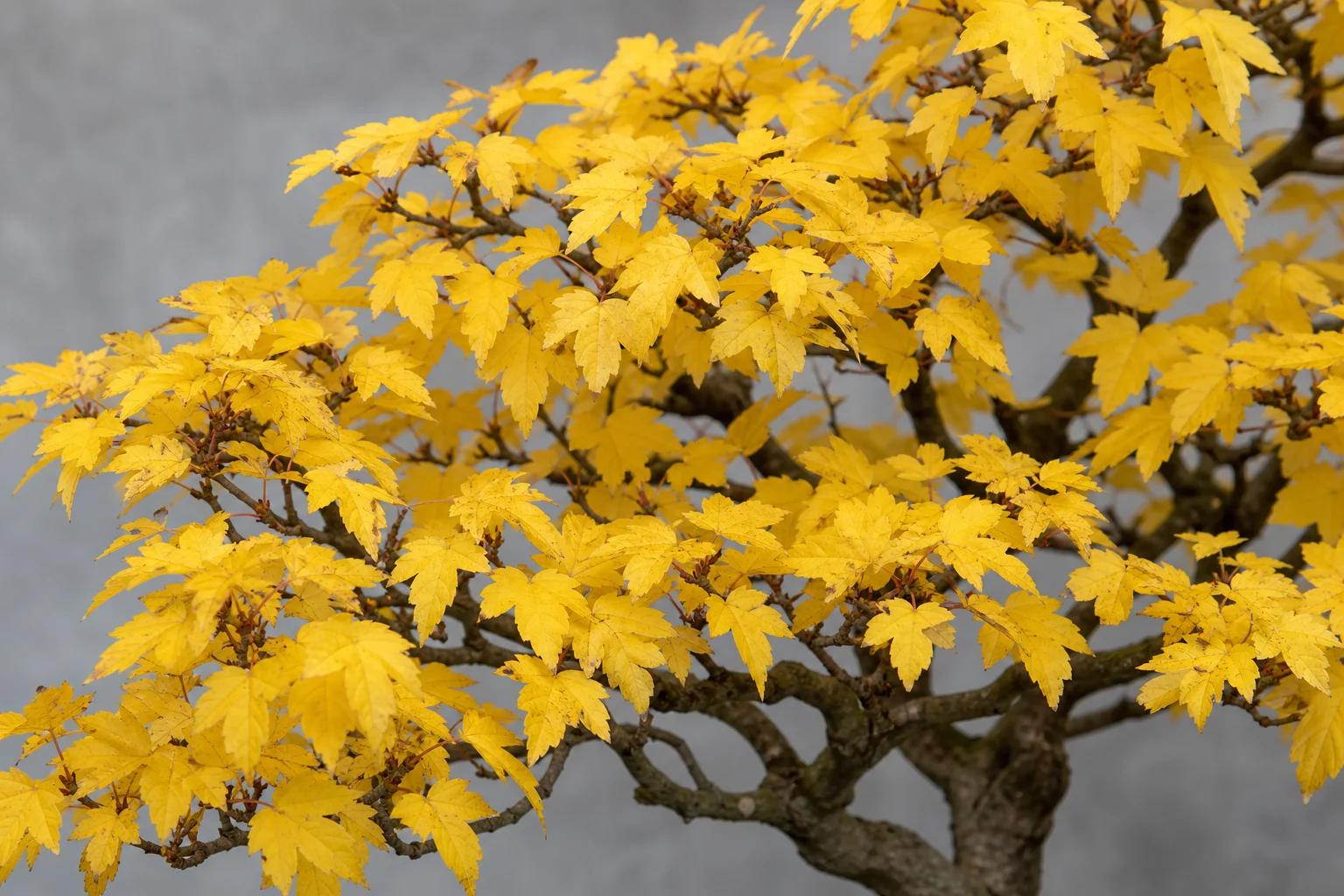
Acer campestreThe UK's native maple — bulletproof hardy, butter-yellow autumn colour, and free in every English hedgerow.
Full-moon maple
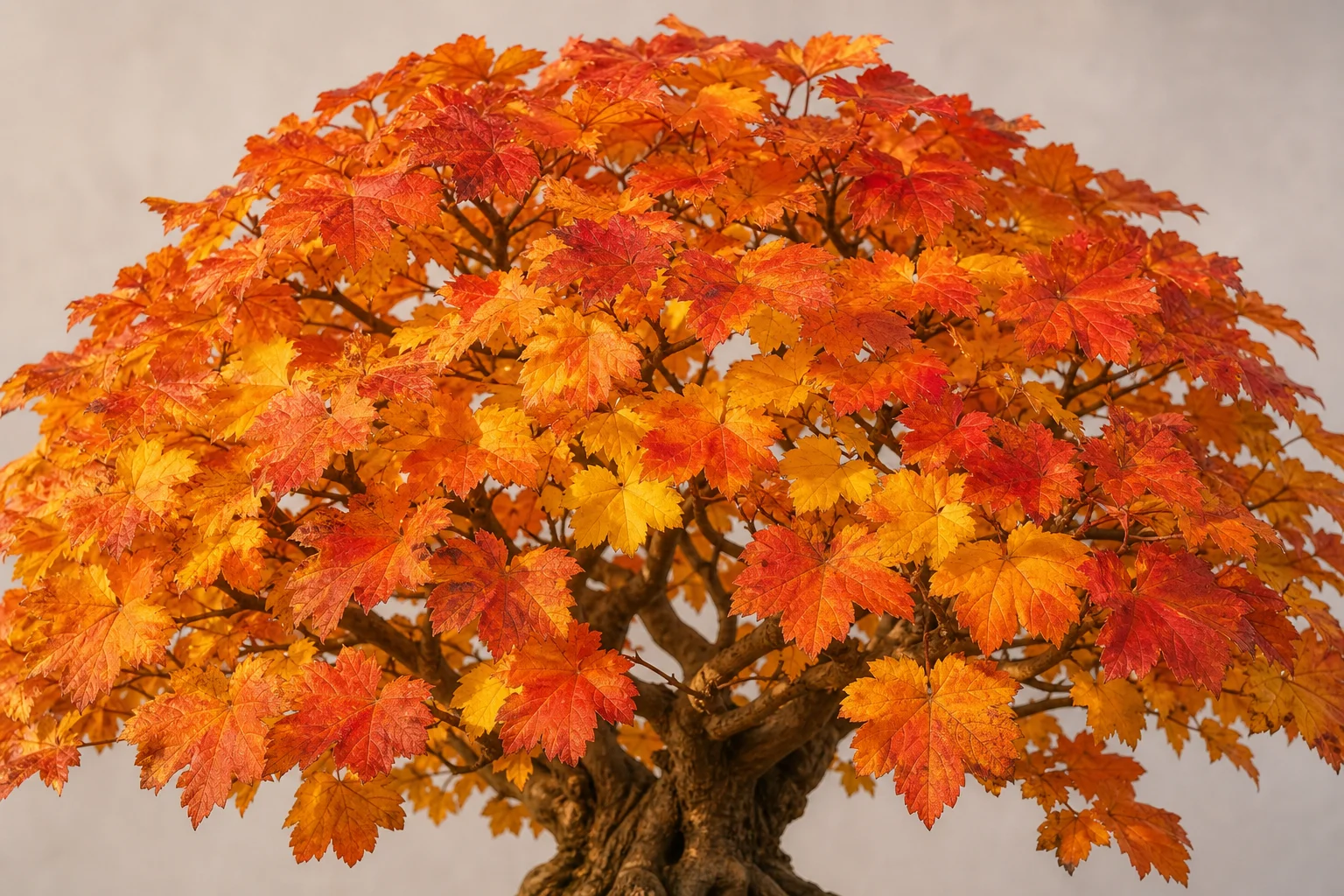
Acer japonicumThe other Japanese maple. More rounded leaves with shallower lobes than Acer palmatum, similar care, distinct enough to be its own species — and home to two of the most beautiful maple cultivars in bonsai.
Ginkgo
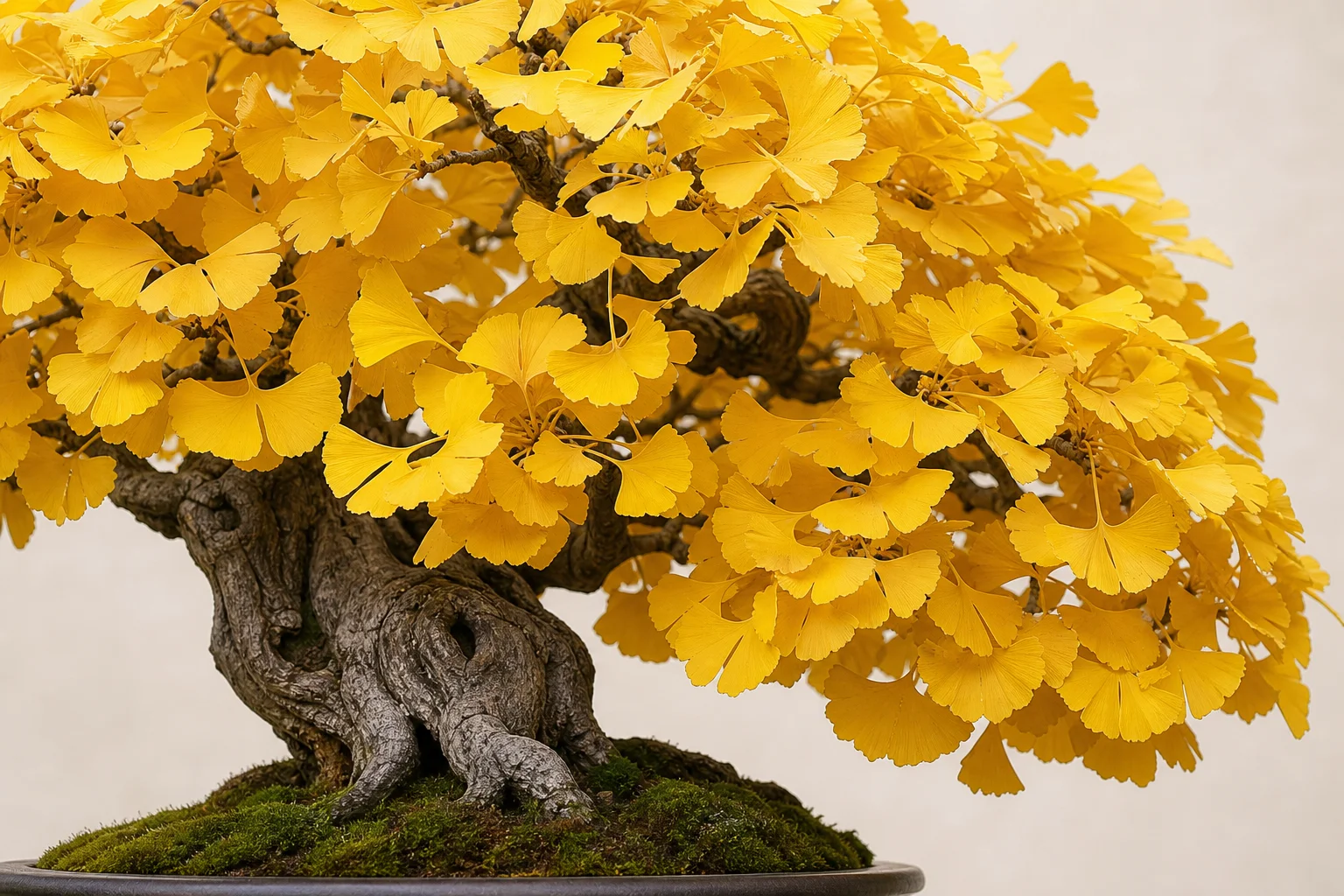
Ginkgo bilobaThe living fossil. The only surviving species in an entire plant lineage 200 million years old, fan-shaped leaves unlike anything else in horticulture, and brilliant butter-yellow autumn colour. A bonsai with a genuinely unique place in the natural world.