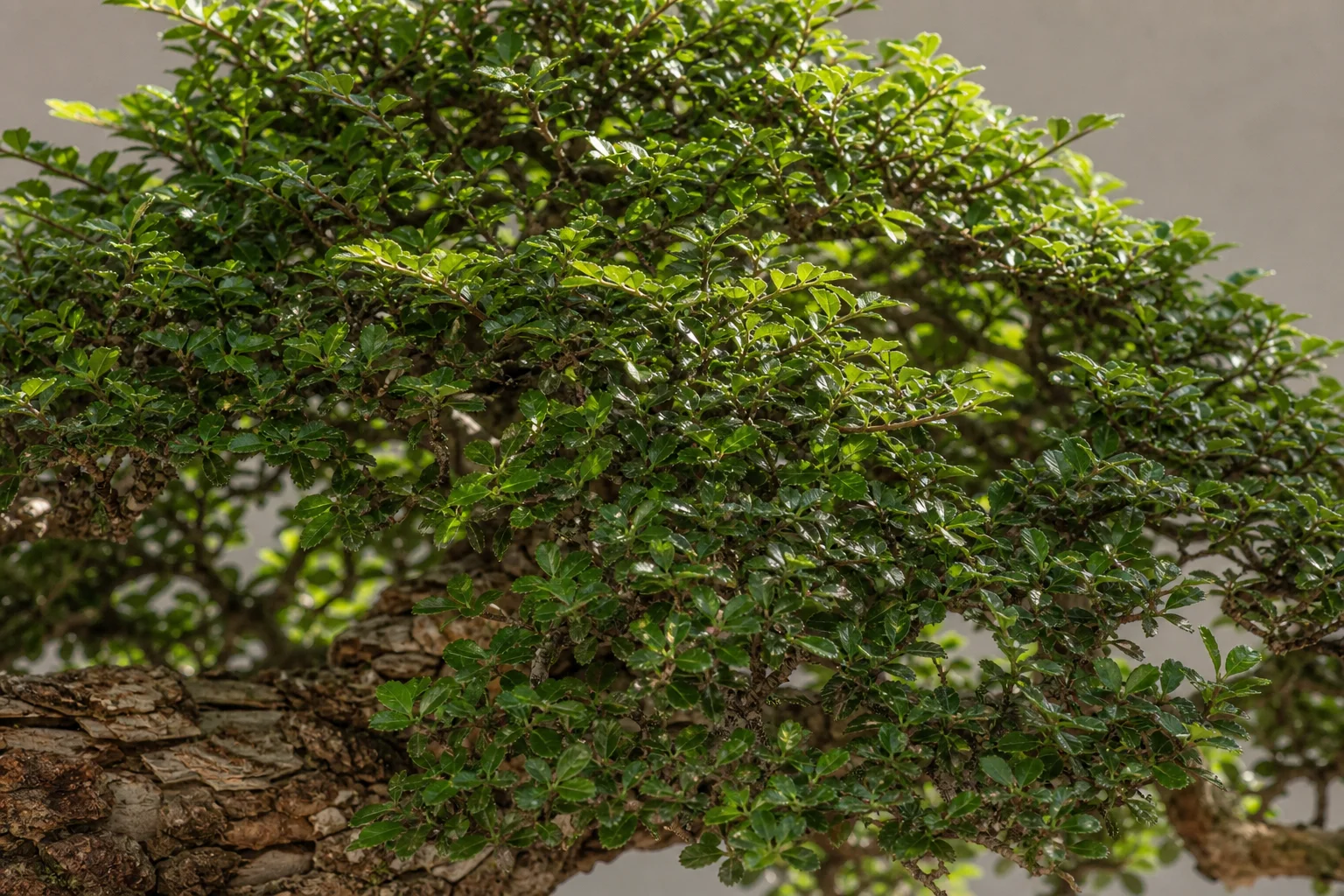
Chinese elm bonsai care
Ulmus parvifoliaThe most forgiving deciduous bonsai. Fast, vigorous, tolerant of mistakes, and beautiful in every season.
Water
Every 1 day
check daily in summerLiquid feed
Every 7 days
growing seasonSolid feed
Every 28 days
slow releaseRotate
Every 14 days
even canopy growthIf a friend asks which bonsai they should start with, Chinese elm is the right answer. It tolerates over- and under-watering, recovers fast from pruning errors, back-buds reliably on old wood, and develops a beautiful flaky bark surprisingly quickly. It works outdoors year-round in most of the UK, and unlike most outdoor species it will also tolerate spells indoors — useful if you're new and not yet confident with winter protection.
The trade-off is that it isn't the most refined or revered species in bonsai. A great Japanese maple is a great Japanese maple; a great Chinese elm is a great Chinese elm. But it's the species that teaches you most quickly what it feels like when a tree is happy.
Central and eastern China, Korea, Japan, and Vietnam. Unlike European elms, U. parvifolia is largely resistant to Dutch elm disease, which is why it's also widely planted as a street tree in temperate cities.
Seasonal calendar
Timing is for South East England. Select your region above to see adjusted guidance.
- Structural pruning if not done
- Check winter protection
- Final structural pruning
- Prepare for repot
- Repot as buds break
- Begin moving outdoors if sheltered overwinter
- Leaves emerge
- Begin daily watering
- First slow-release feed
- Start weekly liquid feed
- Begin pinching new growth
- Wiring window opens
- Continue pinching
- Heavy growth phase
- Defoliate refined trees if desired
Most vigorous month. Push feeding on developing trees.
- Twice-daily watering in heat
- Continue pinching every 2-3 weeks
- Continue pinching
- Watch for wire biting in
- Switch to low-N autumn feed
- Reduce pinching frequency
- Autumn colour develops (modest yellow)
- Reduce watering
- Leaf drop
- Move imported/young trees to shelter
- Structural wiring
- Monitor winter protection
Watering
Chinese elms are thirsty but tolerant. Water when the surface of the soil starts to dry — typically daily in spring and autumn, twice a day in high summer. Unlike maples they shrug off occasional dryness and recover well from a missed day, but consistent dryness causes leaves to crisp and drop.
They also tolerate slightly wetter feet than most deciduous species, which makes them forgiving of the inconsistent watering most beginners do. Don't take this as licence to leave them sitting in waterlogged soil — they'll still rot eventually — but a soaked pot after heavy rain isn't a crisis.
Tap water is fine. Rainwater is better. Either works.
Feeding
Feed weekly with a balanced liquid feed from when leaves harden in spring (April) through to early autumn (mid-September). Chinese elms grow fast and will respond visibly to feeding — a well-fed tree pushes long extensions that you'll need to manage with regular pinching. An underfed elm sits and sulks.
Slow-release organic pellets (biogold or similar) work well alongside liquid feed; apply spring and early summer.
Reduce nitrogen from late August so the wood ripens before the cold. A high-K feed for a few weeks before dormancy helps hardiness.
Soil & Repotting
Free-draining, moisture-retentive, slightly acidic to neutral. Chinese elms are less fussy than maples about substrate and will perform well in a fairly broad range of mixes.
60% akadama, 30% pumice, 10% lava is a reliable default. For trees in development pushing for trunk growth, a coarser mix with more pumice (50/40/10) is fine. They tolerate cheaper substrates better than maples do — a starter tree in a generic bonsai mix will still grow well.
Repot every 2 years for young trees, every 3 years for mature ones. The window is wider than for maples: late February through to mid-April depending on region. The ideal moment is just as buds begin to break.
Chinese elms tolerate aggressive root work — you can safely remove up to half the root mass on healthy trees. Comb the roots out radially, prune cleanly, and re-pot into fresh substrate. Water in heavily and keep out of strong sun for two weeks afterwards.
Pruning
This is where Chinese elms shine. They back-bud reliably on old wood, tolerate hard cutbacks, and develop ramification quickly.
Structural pruning in late winter (February). Through the growing season, let new shoots extend to 6–8 leaves, then cut back to 1–2 leaves. Trees in development can be allowed to run further. Trees being refined need constant pinching from May through September — every two to three weeks in vigorous growth.
Don't be precious about hard pruning. An elm that's been cut back to bare wood will push new buds within weeks if it's healthy. This is the species to learn pruning on.
Wiring & Styling
Wire after leaves harden in early summer, or on bare branches in winter. The bark thickens and develops character with age, but it doesn't mark as easily as maple bark — wire bites are less of a crisis. Standard anodised aluminium for most branches; copper for thicker structural work.
Watch growing branches closely — elms thicken fast in summer and a wire applied in June can cut in by August.
Almost any style works. Informal upright is most common, but Chinese elms make excellent broom-style trees (the natural habit of the species in the open), and they're widely used for clump and forest plantings because of how readily they back-bud. Their tolerance of hard pruning means you can radically restyle an existing tree without killing it — useful if you've bought commercial nursery stock that needs rethinking.
Winter care
Hardier than they look but with a caveat: trees grown from indoor or greenhouse stock (most imported Chinese elms sold in the UK) haven't developed full winter hardiness and need more protection than the species technically requires.
For a tree that's spent its life outdoors in the UK, no protection is needed down to about -3°C. Below that, shelter from wind. Below -7°C, into an unheated greenhouse or cold frame.
For a newly imported tree, treat it as half-hardy in its first winter — keep it in a frost-free but cool space (a porch, an unheated conservatory) and acclimatise it gradually over a year or two of full outdoor seasons.
A common mistake is to keep a Chinese elm indoors permanently because the garden centre tag said "indoor bonsai". This is the species that started that confusion. It will survive indoors for a year or two but will be permanently weakened — it needs a proper dormant period to thrive long-term.
Propagation
Easy from semi-hardwood cuttings in early summer (June) with rooting hormone — high success rate. Also from seed if you can find it, though cultivar names won't come true. Air layering works well in May–June.
Common problems
Generally trouble-free. The species' Dutch elm disease resistance is a major advantage; most ailments are minor and recover quickly.
Black spot / leaf spot
Symptoms: Small dark spots on leaves through summer, sometimes coalescing; affected leaves yellow and drop.
Cause: Fungal, encouraged by overhead watering and poor air circulation.
Solution: Water at the soil rather than the foliage. Improve airflow around the tree. Remove and bin affected leaves. A copper-based fungicide is effective if it spreads.
Elm leaf beetle
Symptoms: Skeletonised leaves (only veins left); small yellow-and-black beetles or pale yellow grubs visible.
Cause: Common pest on outdoor elms in warm summers.
Solution: Hand-pick where possible. Systemic insecticide if severe. Inspect tree weekly in June–July when adults lay eggs.
Loss of inner growth
Symptoms: Foliage retreats to the tips of branches, leaving bare wood in the interior of the canopy.
Cause: Inadequate pinching combined with low light in the interior.
Solution: Open up the canopy by removing some outer growth and shoot tips to let light into the interior. The bare wood will back-bud within a few weeks. Future pinching should keep extensions short to maintain interior foliage.
Yellowing leaves in summer
Symptoms: Older leaves yellow and drop in midsummer despite adequate watering.
Cause: Usually nitrogen deficiency in a heavily-flushing tree.
Solution: Increase feeding frequency. Apply a balanced liquid feed weekly. Trees flushing strongly can outgrow their nitrogen supply.
Winter dieback on indoor-kept trees
Symptoms: Tree weakens over successive winters, dies back from extremities, becomes more pest-prone.
Cause: Lack of true dormancy. Chinese elms need a cool rest, not necessarily a hard freeze.
Solution: Move outdoors for the growing season at minimum. Provide a cool (not warm) winter rest — porch, cold frame, unheated greenhouse. Acclimatise gradually if the tree has been indoors long-term.
Popular cultivars
Smaller leaves, slower growth, denser ramification. The classic refined-bonsai cultivar.
Very small leaves and short internodes — excellent for shohin and mame work. Slow but rewarding.
Compact, with characteristic corky bark from a young age. Good for trees you want to look old fast.
Dwarf form, very tight habit. Less common in the UK but worth seeking out.
Track your Chinese elm with Kentai.
Collection tracking, care logs and photo history are free — no card, no time limit.
More care guides
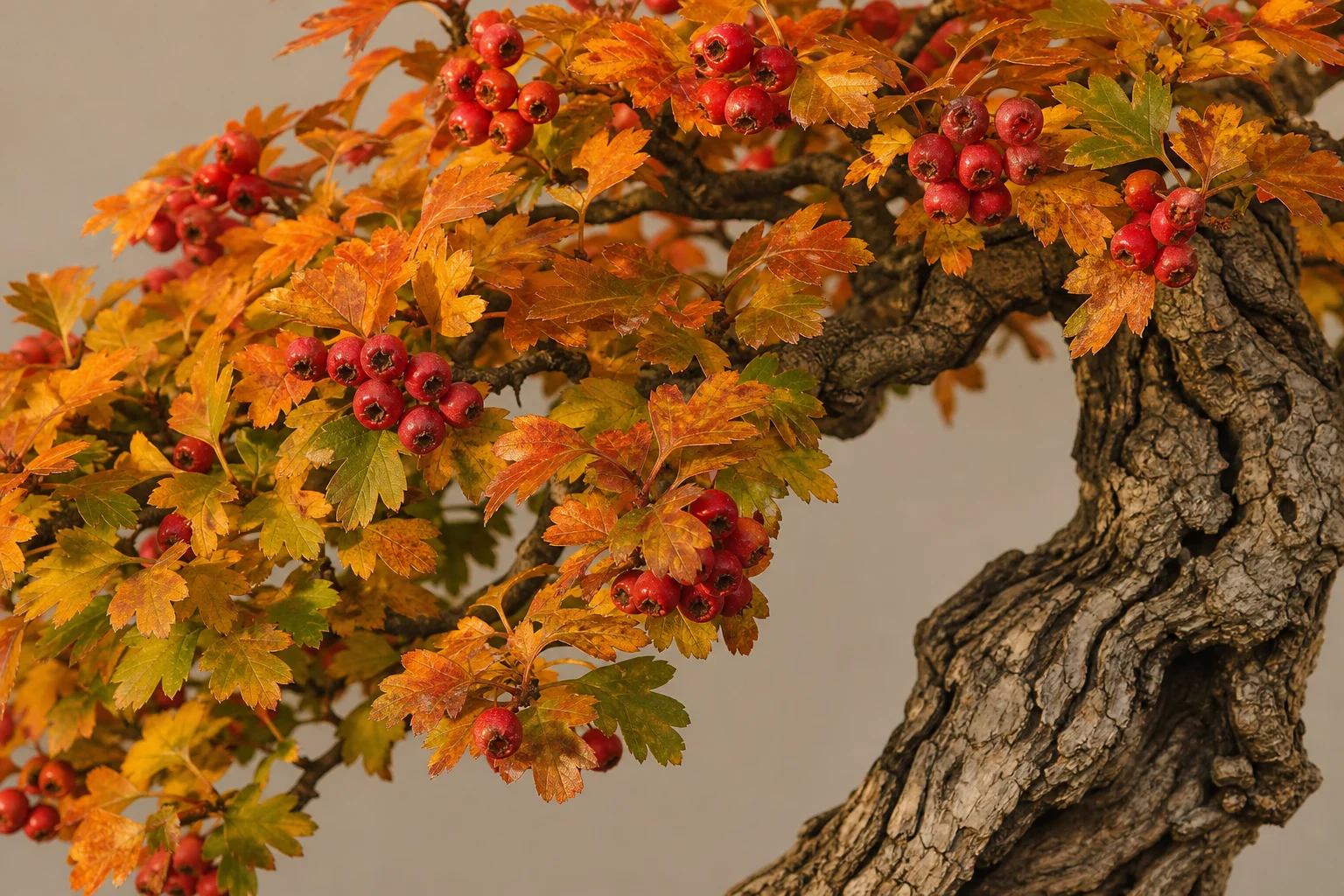
Common hawthorn
Crataegus monogynaThe everywhere tree. Bulletproof hardy, flowers in May, red berries in autumn, and the species behind some of the finest collected bonsai in the UK.
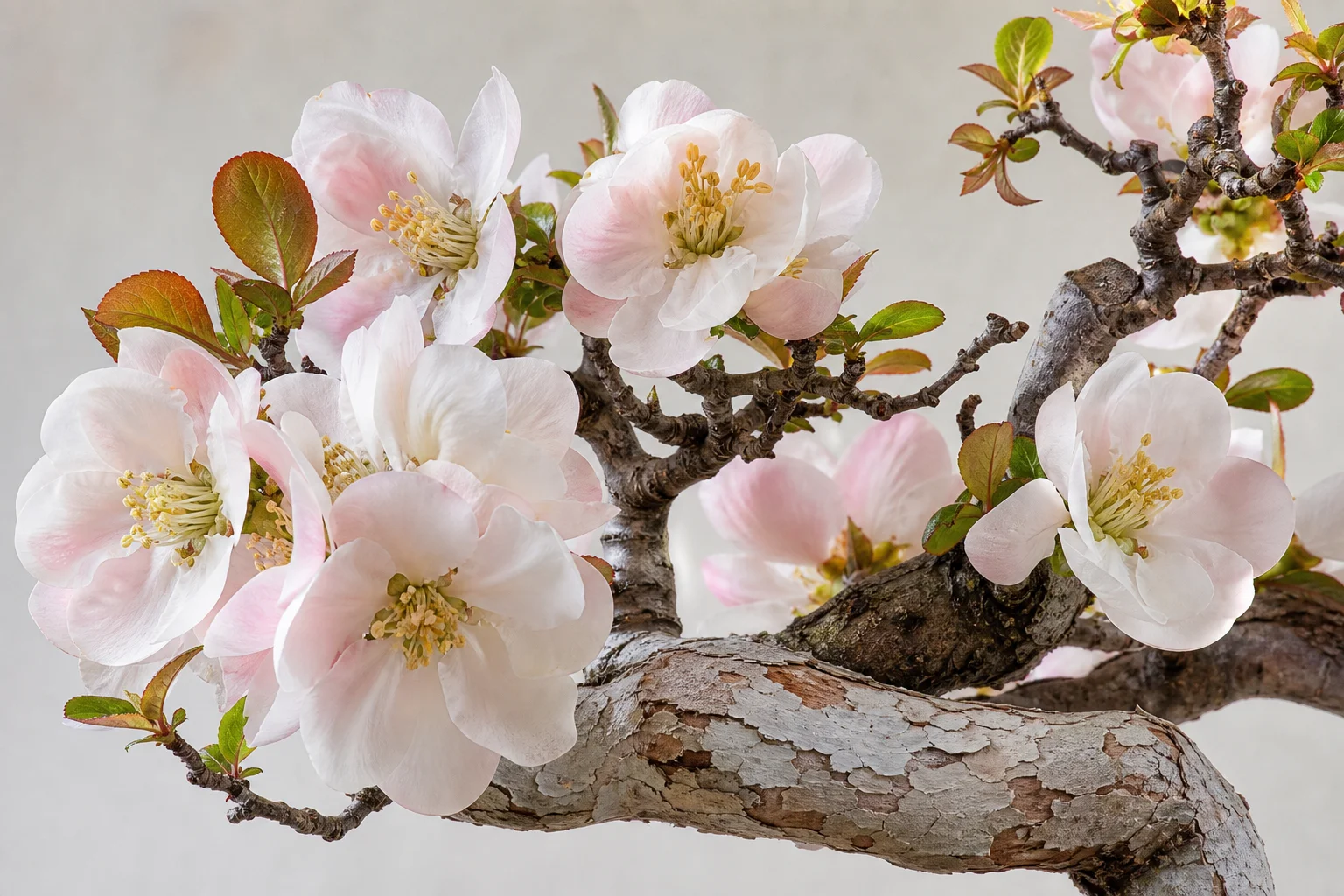
Common quince
Cydonia oblongaThe other quince. Distinct from flowering quince (Chaenomeles) — larger leaves, larger pale pink-white flowers, and aromatic golden-yellow fruit. The species that gives us quince jelly.
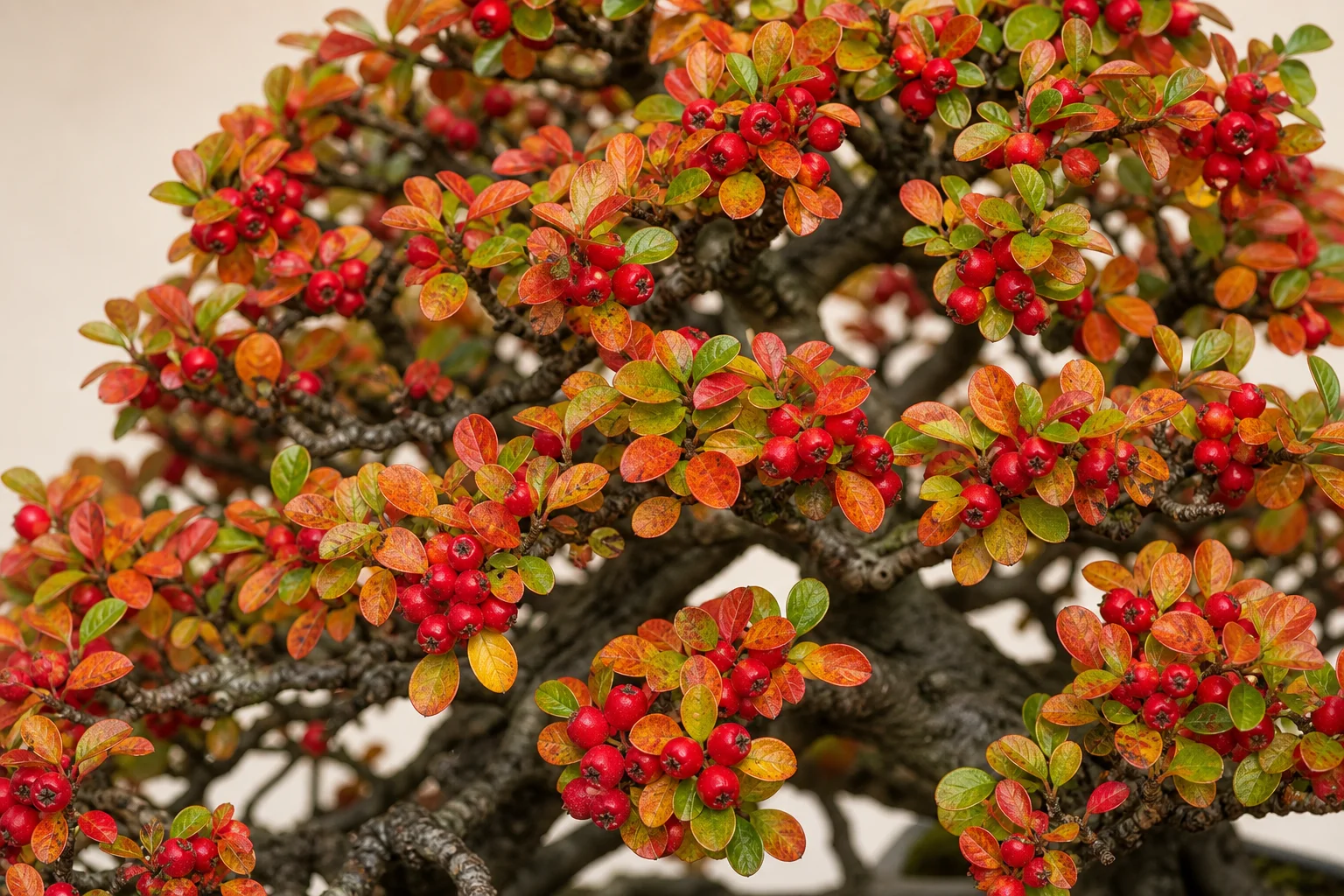
Cotoneaster
Cotoneaster horizontalisSmall leaves, spring flowers, red berries through autumn and winter — and easy. The flowering shrub that thinks it's a bonsai already.