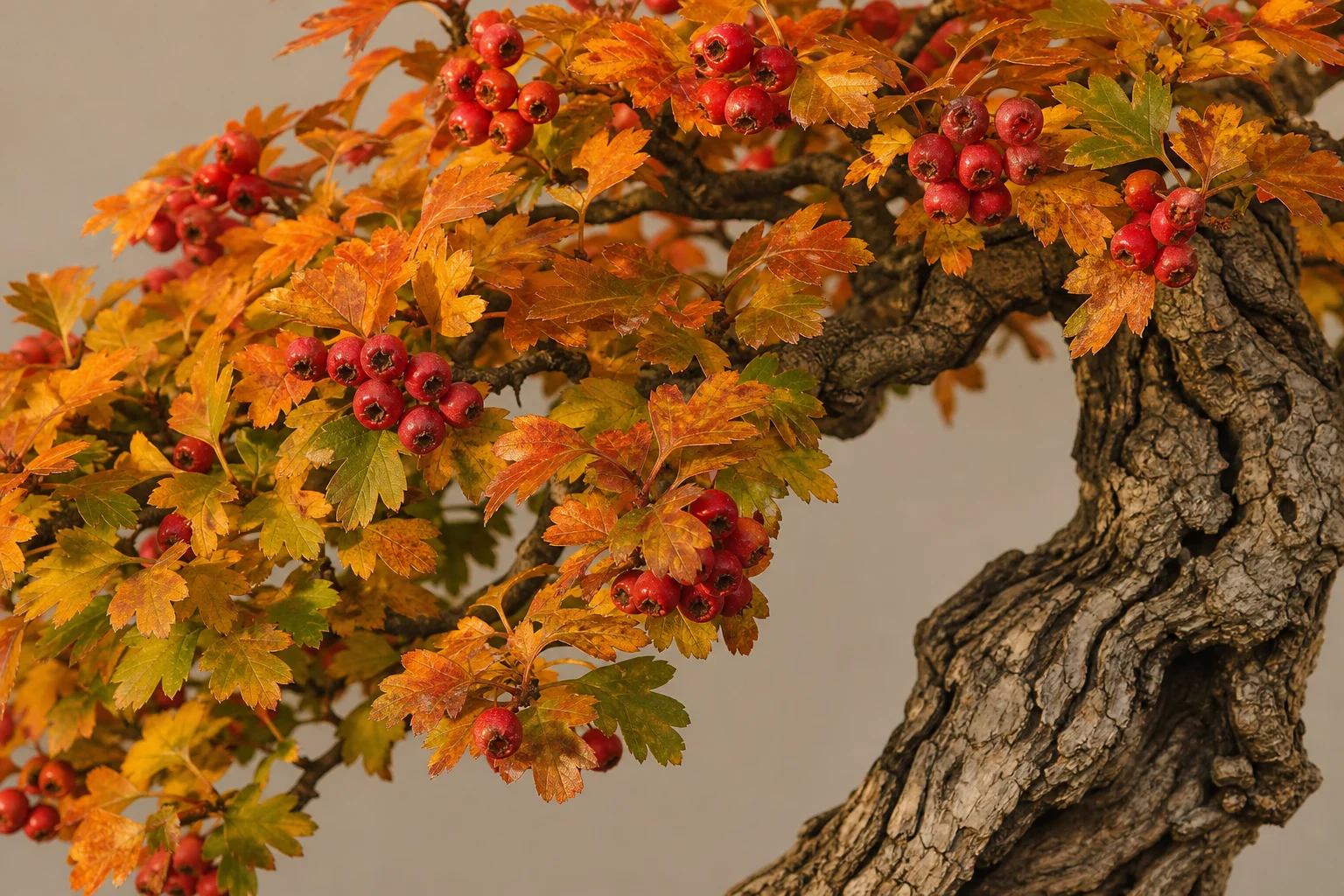
Common hawthorn bonsai care
Crataegus monogynaThe everywhere tree. Bulletproof hardy, flowers in May, red berries in autumn, and the species behind some of the finest collected bonsai in the UK.
Water
Every 1 day
check daily in summerLiquid feed
Every 7 days
growing seasonSolid feed
Every 28 days
slow releaseRotate
Every 14 days
even canopy growthHawthorn might be the most under-appreciated bonsai species in the British Isles. It grows in every hedge in the country, develops dramatic gnarled trunks within its first thirty years, flowers spectacularly in May, produces red berries (haws) through autumn into winter, takes a beating in any weather, and tolerates almost any abuse from a grower learning their craft. The famous Hawthorn cup at the Best of British Bonsai competitions exists because so many collectors discovered, independently, that this hedgerow species produces some of the best UK bonsai.
The single best route to a great hawthorn bonsai is to find a wild collected specimen — there's no nursery shortcut that comes close. A 40-year-old hawthorn from an overgrown hedge has trunk character that you couldn't develop from a seedling in a lifetime. Many UK bonsai clubs run organised yamadori trips specifically for hawthorn collection.
The species' few disadvantages: it has thorns (genuinely sharp ones), the flowers smell odd to some noses (a faintly fishy ammonia note), and the leaves are larger than ideal — though they reduce well with refinement.
Native throughout the British Isles and across most of Europe. The defining hedgerow species of the British countryside, planted as enclosure hedging from the 18th century onwards and self-seeding wherever land falls fallow. Tolerates almost any soil, full sun, partial shade, wind, drought, and waterlogging — there are few plants more adapted to British conditions.
Seasonal calendar
Timing is for South East England. Select your region above to see adjusted guidance.
- Structural pruning while dormant
- Collect wild material from overgrown hedges
- Continue collection
- Begin repotting late month
- Main repotting window
- Pot up collected material into recovery boxes
- Leaves emerge
- Begin daily watering
- First slow-release feed
- Flowering — leave undisturbed if wanted
- Start weekly liquid feed
- Post-flowering pruning possible
- Pinch new shoots
- Wiring window opens
- Defoliate refined trees late month
- Twice-daily watering in heat
- Continue pinching
- Reduce nitrogen feeding mid-month
- Berries forming
- Switch to low-N autumn feed
- Berries colouring red
- Autumn colour and red berries
- Reduce watering
- Leaf drop
- Berries persist on tree
- Structural pruning
- Berries provide winter interest
Watering
Daily through the growing season — hawthorns are vigorous and thirsty in full leaf. The species tolerates brief dryness and brief waterlogging better than most, which makes it forgiving of inconsistent watering.
Tap water of any hardness is fine. Hawthorn grew on every soil type in Britain long before anyone thought about it.
In winter, regular checking. The species holds berries late and continues mild transpiration through dormant periods.
Feeding
Weekly liquid feed from late April through to mid-September. Slow-release organic pellets in spring and early summer. Reduce nitrogen from late August.
Hawthorn responds well to consistent moderate feeding. The species produces both flowers and berries — flowering is enhanced by adequate phosphorus and potassium, so a balanced feed (rather than high-N) produces a better-looking tree over the season.
Soil & Repotting
Free-draining and tolerant. Hawthorn is among the least fussy species in cultivation.
60% akadama, 30% pumice, 10% lava is reliable. Collected hedgerow material does well in coarser mixes with more pumice (50/40/10) for the recovery years. Hawthorns tolerate alkaline conditions, hard water, and even slightly poor substrates better than maples or beech.
Repot every 2–3 years for young trees, every 3–5 for mature specimens. The window is wide — mid-February through early April. Repot as buds swell.
The species tolerates substantial root work. Up to half the root mass can be removed on healthy established trees. Collected material can be aggressively reduced when first lifted — the tree's vigour will recover what's removed.
For collected wild material in its first spring after lifting: deep wooden box or training pot with coarse free-draining substrate. Don't combine root work with significant branch work in the same year.
Pruning
Hawthorn pruning is forgiving. The species back-buds reliably on old wood — even hard chops on heavy collected trunks produce new buds within four to six weeks in the growing season.
Structural pruning in late winter (February) or late spring after flowering (June). Through the growing season, let new shoots extend to five or six leaves then cut back to two. Pinch every two to three weeks.
If you want flowers and berries the following year, leave some shoots to extend and form flowering wood — hawthorn flowers on the previous year's growth, so aggressive pruning eliminates the next year's display. The trade-off between refined ramification and floral display is real on this species.
Defoliation works well on healthy trees (late June) and reduces leaf size significantly. Use selectively — every other year is plenty.
Wiring & Styling
Wire after leaves harden in early summer or on bare branches in winter. Bark is rough and moderately resistant to marking — better than maple, similar to oak. Aluminium for most work; copper for thicker structural branches.
Be careful of the thorns when handling. Sturdy gloves help.
Informal upright with substantial trunk character is the classic hawthorn style and what most collected material naturally suggests. Twin-trunk, clump, and forest plantings work well. The species' natural gnarled trunk lines suit literati interpretations on the right material — old collected hawthorns can have trunk lines that look ancient.
Deadwood is a major feature of collected hawthorn — the dense, slow-rotting wood holds carved features well and weathers to a silver-grey that contrasts beautifully with the living bark.
Winter care
Fully hardy across the UK with no protection needed. Hawthorns take whatever the British climate does. Exposed pots benefit from being moved out of prevailing wind in late winter to protect swelling buds.
Berries (haws) persist on the tree from autumn into winter and are a major feature — leave them on. They fall naturally over winter or are eaten by birds.
Never bring indoors.
Propagation
From seed (autumn-sown, cold-stratified for 18+ months — slow). From semi-hardwood cuttings in June (moderate success). From air layering in May (good success on suitable branches). But by far the best source is wild-collected hedgerow material — find an overgrown hedge, identify a suitable trunk, dig with permission. The species recovers from collection better than almost any other.
Common problems
Mostly healthy. Hawthorn shares some diseases with apples and other Rosaceae but is generally robust.
Hawthorn rust (Gymnosporangium)
Symptoms: Orange spots on upper leaf surfaces in summer, sometimes with horn-like growths on undersides.
Cause: Fungal disease with alternate host on juniper.
Solution: Move away from any nearby junipers if possible. Remove and bin affected leaves. Copper fungicide as a preventative in spring if recurring.
Powdery mildew
Symptoms: White coating on leaves in late summer.
Cause: Humid stagnant air.
Solution: Improve airflow. Remove affected leaves. Milk-water spray as preventative.
Aphids
Symptoms: Curled sticky spring shoots.
Cause: Standard spring pressure.
Solution: Hose off. Neem if persistent.
Caterpillars on new growth
Symptoms: Holes in leaves, chewed shoots in late spring.
Cause: Various moth species use hawthorn as a food plant.
Solution: Hand-pick where possible. Bacillus thuringiensis spray if severe. Usually a brief problem; trees recover quickly.
Fireblight (Erwinia amylovora)
Symptoms: Sudden blackening and wilting of new shoots, looking scorched.
Cause: Bacterial disease affecting Rosaceae.
Solution: Cut back well below the visible damage, into healthy wood. Disinfect tools between cuts. Severe outbreaks may require destruction of the tree.
Failure to flower
Symptoms: Tree produces foliage and grows well but doesn't flower.
Cause: Usually over-pruning the previous year — flowers form on previous year's growth, so aggressive cut-back eliminates flowering wood.
Solution: Leave some shoots to extend in the previous summer rather than pinching every shoot. There's an inherent trade-off between refined ramification and floral display on this species.
Popular cultivars
The common hawthorn. Single-seeded haws, deeply lobed leaves. Most UK hedgerow material is this species.
Native UK species with double-seeded haws and shallower-lobed leaves. Excellent for bonsai, similar care.
Double red-flowered cultivar. Striking but doesn't fruit.
Upright form. Wrong habit for bonsai.
Track your Common hawthorn with Kentai.
Collection tracking, care logs and photo history are free — no card, no time limit.
More care guides
Other Crataegus guides: Midland hawthorn
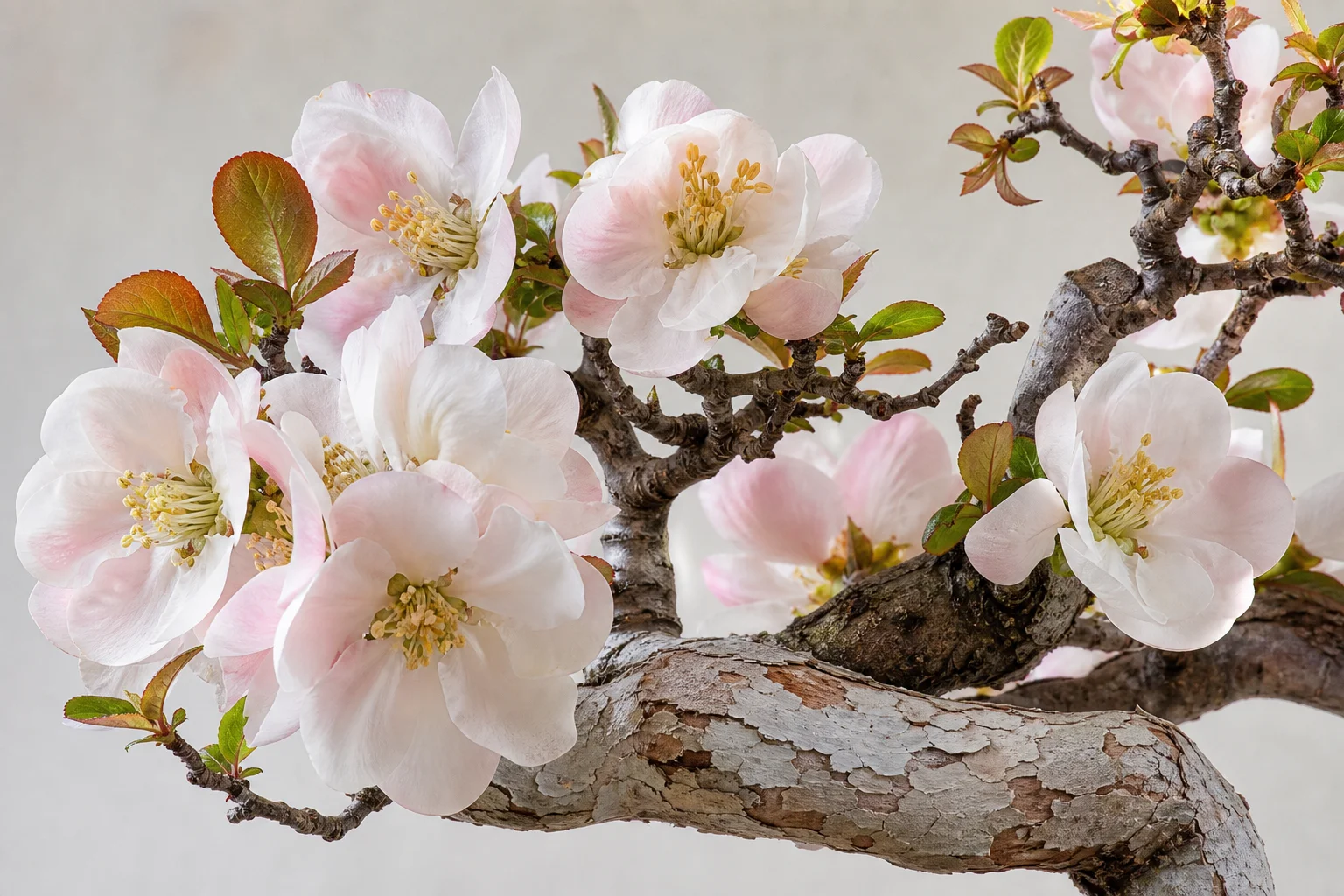
Common quince
Cydonia oblongaThe other quince. Distinct from flowering quince (Chaenomeles) — larger leaves, larger pale pink-white flowers, and aromatic golden-yellow fruit. The species that gives us quince jelly.
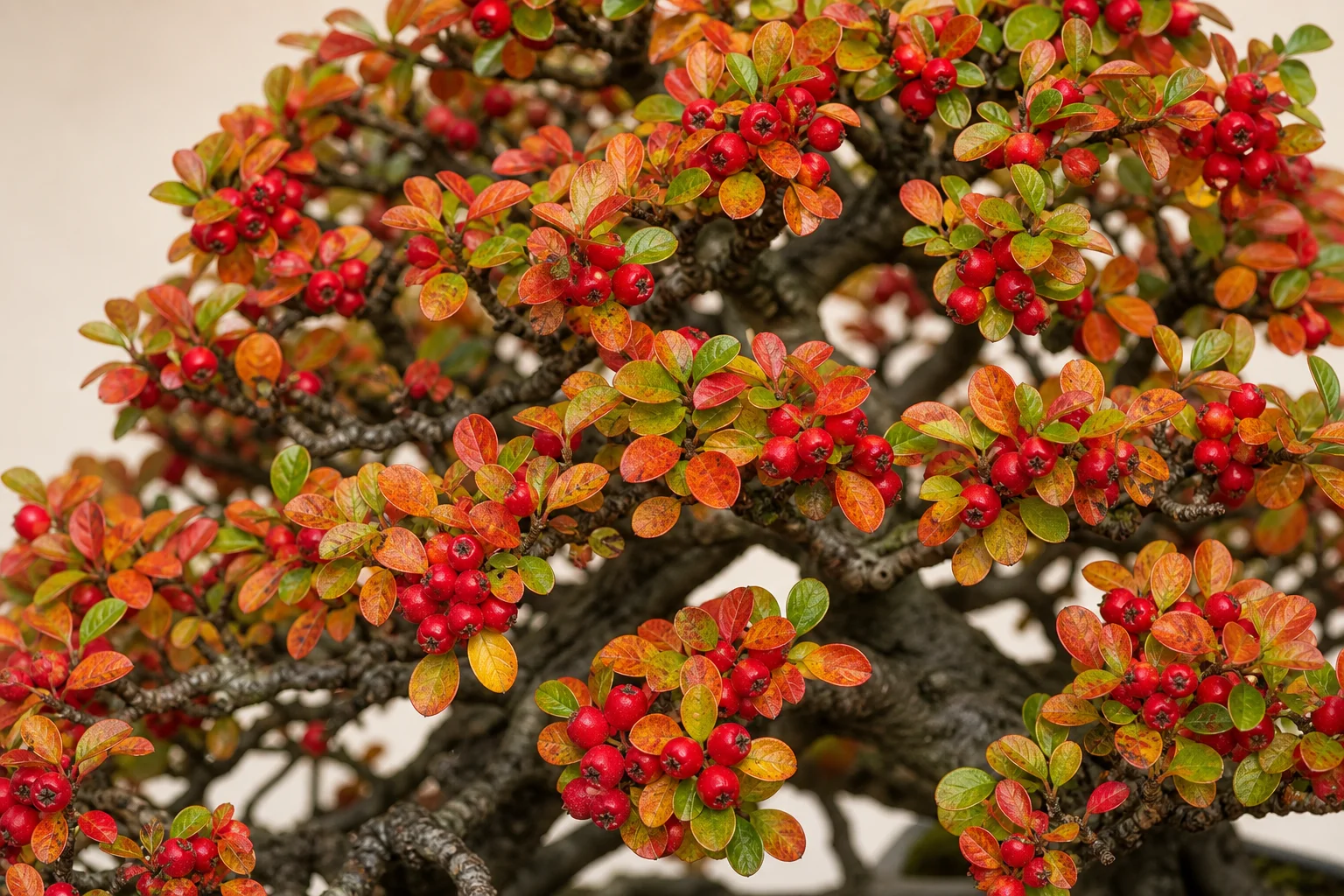
Cotoneaster
Cotoneaster horizontalisSmall leaves, spring flowers, red berries through autumn and winter — and easy. The flowering shrub that thinks it's a bonsai already.
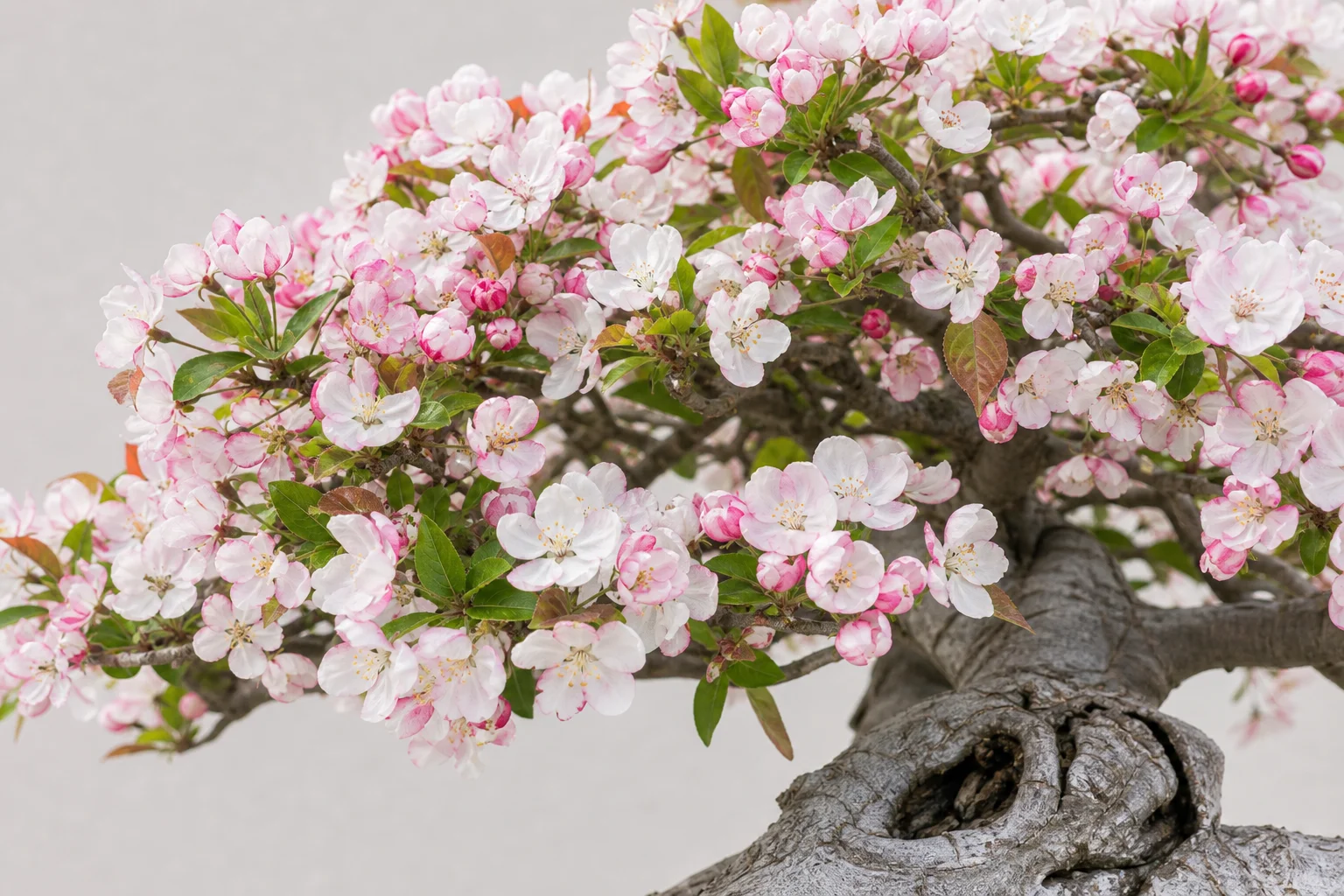
Crab apple
Malus sylvestrisPink-and-white spring blossom, small bright fruit in autumn, and the genuine theatre of a tree that performs differently every month of the year.