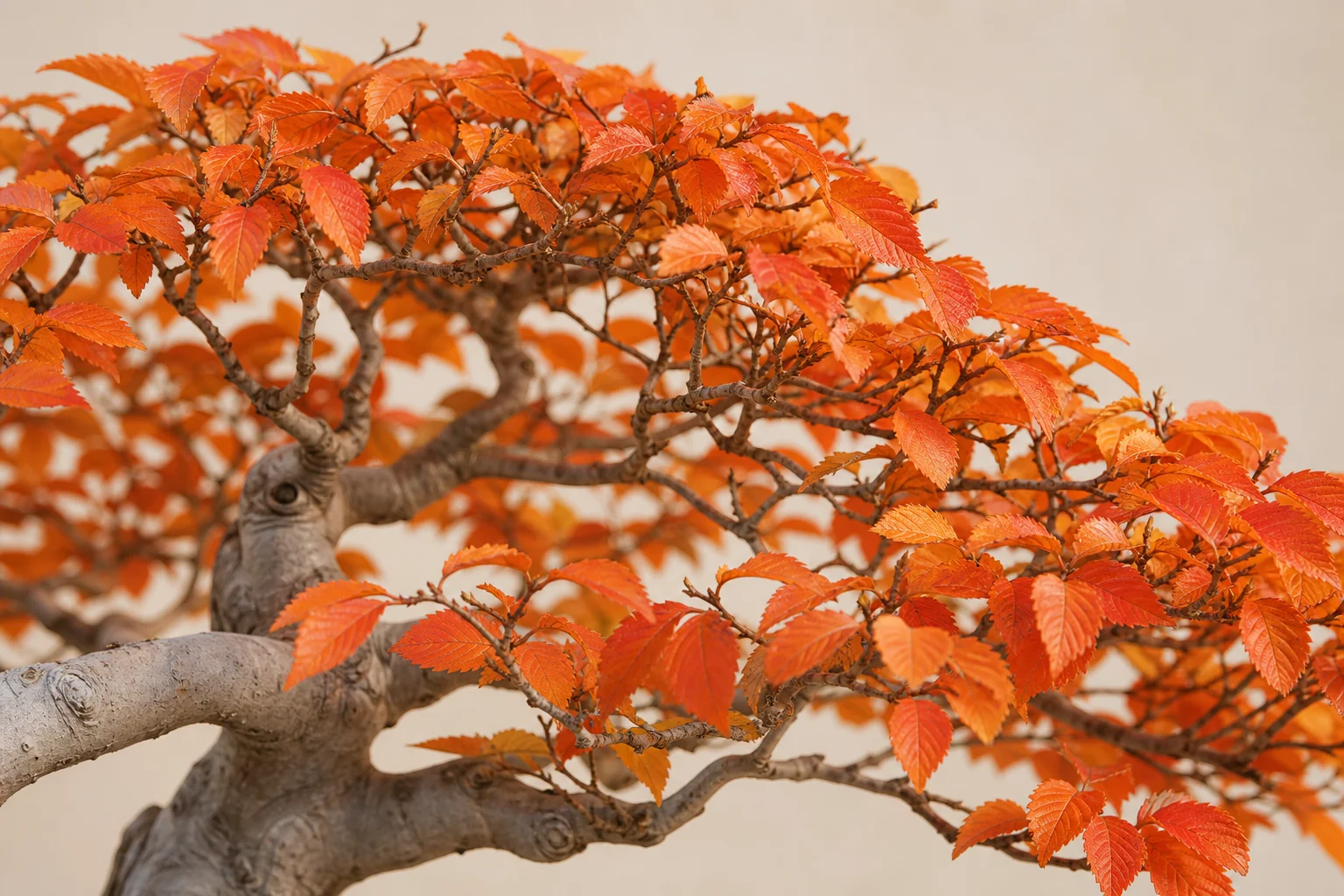
Korean hornbeam bonsai care
Carpinus turczaninowiiThe Asian hornbeam most commonly imported as refined bonsai. Smaller leaves than European hornbeam, exceptional ramification potential, brilliant autumn colour.
Water
Every 1 day
check daily in summerLiquid feed
Every 7 days
growing seasonSolid feed
Every 28 days
slow releaseRotate
Every 14 days
even canopy growthKorean hornbeam is the species you'll most often see at high-end bonsai shows in the UK. Imported from Korea and Japan as already-developed material, the species has been refined for bonsai over generations and produces some of the finest deciduous bonsai available — particularly in the broom and informal upright styles where its dense ramification and small leaves show to best effect.
Care is essentially identical to European hornbeam (Carpinus betulus, entry 10). The main practical differences are scale and provenance. Korean hornbeam leaves are noticeably smaller than European — typically 3–4cm versus 6–8cm — which makes it more suitable for shohin and refined small-to-medium bonsai. The species is also slightly less hardy than European hornbeam (H6 versus H7), needing modest winter shelter in colder UK positions but no protection through normal winters across most of England and Wales.
Most Korean hornbeam material available in the UK is imported from Asia as developed bonsai. UK-grown nursery stock is uncommon. If you find a Korean hornbeam at a bonsai show or specialist nursery, it's likely to be either a Japanese or Korean import that's already had substantial styling work done. The trade-off: more refined material, higher price than developing from local hedgerow whips of European hornbeam.
Native to Korea, eastern China, and parts of Japan. Found in mountainous mixed woodland, often as understorey beneath taller deciduous species. The Asian Carpinus group is genetically diverse; several closely related species (C. coreana, C. laxiflora, C. tschonoskii) are sometimes sold under similar names but care is essentially identical.
Seasonal calendar
Timing is for South East England. Select your region above to see adjusted guidance.
- Structural pruning while dormant
- Plan year's work
- Begin repotting late month
- Final winter pruning
- Main repotting window
- Marcescent leaves drop as buds break
- Leaves emerge
- Begin daily watering
- First slow-release feed
- Start weekly liquid feed
- Begin pinching new shoots
- Wiring window opens once leaves harden
- Defoliate refined healthy trees late month if desired
- Twice-daily watering in heat
- Continue pinching
- Reduce nitrogen feeding mid-month
- Watch for wire biting in
- Switch to low-N autumn feed
- Reduce watering
- Brilliant autumn colour (yellow to red-orange)
- Stop feeding
- Leaves turn copper-brown and persist
- Sweep heavy leaf litter only
- Structural pruning
- Marcescent leaves remain on tree
Watering
Daily through the growing season — Korean hornbeam is thirsty when in full leaf. Twice daily in summer heatwaves for trees in shallow pots.
The species tolerates inconsistent watering better than maples but consistent dryness scorches leaf margins. Spring leaf-out is particularly sensitive; ensure consistent moisture from bud break through to leaf hardening.
In winter, regular checking. Korean hornbeam retains some marcescent leaves through mild winters, similar to European hornbeam.
Tap water is fine.
Feeding
Weekly liquid feed from late April through to mid-September. Slow-release organic pellets in spring and early summer. Reduce nitrogen from late August.
The species responds well to consistent moderate feeding. Heavy feeding produces coarse foliage; light feeding produces sparse weak growth.
Soil & Repotting
Free-draining and tolerant. Korean hornbeam accepts a wide range of substrates.
60% akadama, 30% pumice, 10% lava is reliable. The species performs well in standard deciduous mixes and doesn't demand specialised substrates.
Repot every 2–3 years on young trees, every 3–4 on refined specimens. The window is mid-February through early April — wide and forgiving. Repot as buds swell.
Korean hornbeam tolerates aggressive root work — up to half the root mass on healthy trees. The species recovers quickly from root work and rarely sulks after repotting.
Pruning
Pruning is essentially the same as European hornbeam — easy, forgiving, rewarding.
Structural pruning in late winter (February). Through the growing season, let new shoots extend to four or five leaves then cut back to two. Pinch every two to three weeks in vigorous growth. The species back-buds reliably on old wood and tolerates hard cutbacks.
Defoliation works well on healthy trees (late June) and is particularly effective on Korean hornbeam because of its already-small leaves — the resulting second flush produces dramatically refined foliage suited to display.
Wiring & Styling
Wire after leaves harden in early summer or on bare branches in winter. Bark is smooth and marks slightly more visibly than European hornbeam — apply loosely and check fortnightly. Aluminium for almost all work.
Branches are flexible when young and stiffen with age. The dense ramification typical of well-developed Korean hornbeam is built mostly through pruning rather than wiring.
Broom style is the natural fit and what most refined imported material has been developed toward. Informal upright also works well. Twin-trunk, clump, and forest plantings are common and traditional. The species' smooth silver-grey bark and dense ramification suit styles that emphasise the winter silhouette.
Cascade, semi-cascade, and literati don't suit the species. Most Korean hornbeam bonsai are styled to emphasise quiet refinement rather than drama.
Winter care
Hardy across most of the UK with no protection needed. Korean hornbeam is rated H6 — slightly less hardy than European hornbeam but still tolerant of normal British winters.
In exposed northern and Scottish positions, some shelter from wind in hard winters is sensible. The species' main vulnerability is dramatic temperature swings on south-facing benches in late winter; a position out of strong winter sun reduces stress on swelling buds.
Marcescent leaves persist on the tree through much of winter — a feature shared with European hornbeam and similar deciduous species. The papery copper-brown leaves are part of the species' winter aesthetic.
Never bring indoors.
Propagation
From seed (autumn-sown, cold-stratified — slow, often taking 18+ months). From semi-hardwood cuttings in June with rooting hormone (moderate success). From air layering in May (good success on suitable branches). Most quality Korean hornbeam bonsai in the UK are imported from Asia as already-developed material rather than grown locally.
Common problems
Very healthy. Korean hornbeam is among the most trouble-free bonsai species in cultivation.
Aphids
Symptoms: Curled sticky leaves on spring shoots.
Cause: Standard spring pest pressure.
Solution: Hose off. Neem if persistent.
Powdery mildew
Symptoms: White coating on leaves in late summer.
Cause: Humid stagnant air.
Solution: Improve airflow. Remove affected leaves. Milk-water spray as preventative.
Sunburn on smooth bark
Symptoms: Vertical cracks or scorched patches on south-facing trunk.
Cause: Sudden exposure to intense sun on previously shaded smooth bark, usually after heavy pruning that opened the canopy.
Solution: Provide partial shade for a season after heavy structural work. Affected bark usually recovers but can scar permanently.
Failure to drop marcescent leaves in spring
Symptoms: Old copper-brown leaves remain on tree after new growth emerges.
Cause: Normal in some conditions.
Solution: Hand-strip remaining old leaves in early April as new buds break, if cosmetically bothered.
Loss of inner foliage
Symptoms: Outer canopy thickens while interior becomes bare.
Cause: Outer growth blocking light to inner buds.
Solution: Selectively thin outer pads in summer. The species back-buds reliably from light penetration.
Frost damage on emerging leaves
Symptoms: New spring leaves blacken and shrivel after late frost.
Cause: Korean hornbeam leaves emerge earlier than some species and can be caught by April frosts.
Solution: Move under cover overnight if -2°C or colder is forecast after bud break. Trees recover from light damage but a severe frost setback can affect the season.
Popular cultivars
The standard Korean hornbeam. Most refined imported bonsai material is this species.
Closely related Korean species, sometimes sold interchangeably with turczaninowii. Care identical.
Loose-flowered hornbeam from Japan and Korea. Slightly larger leaves than turczaninowii but otherwise similar.
Japanese hornbeam (yamashoro). Similar care, less common in UK bonsai but excellent where available.
Track your Korean hornbeam with Kentai.
Collection tracking, care logs and photo history are free — no card, no time limit.
More care guides
Other Carpinus guides: European hornbeam
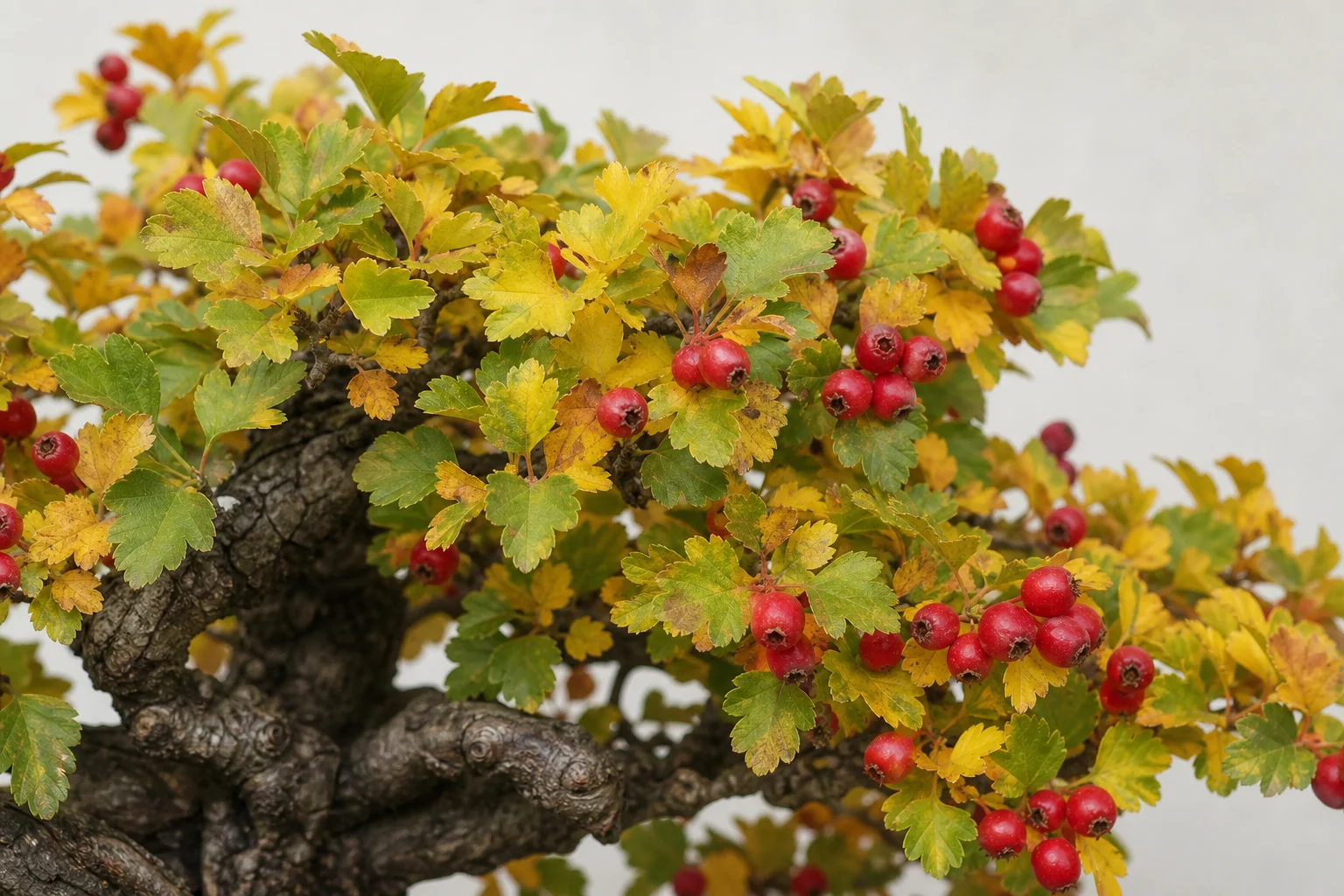
Midland hawthorn
Crataegus laevigataThe second UK native hawthorn. Similar to common hawthorn but with subtle differences worth knowing if you're collecting wild material or growing for ecology — and the parent of 'Paul's Scarlet', the double-flowered cultivar widely planted in UK streets and gardens.
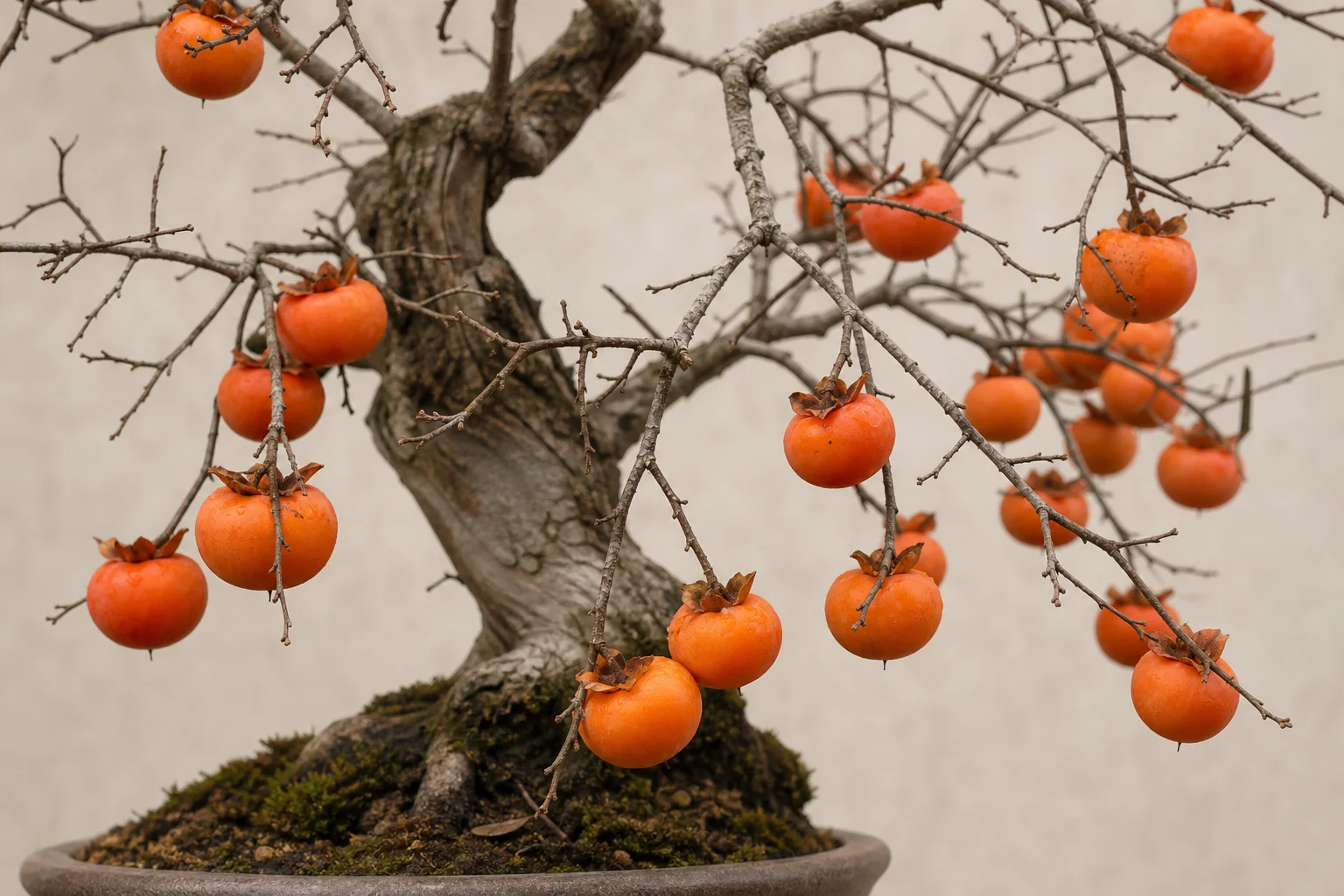
Persimmon
Diospyros kakiBright orange fruit hanging on bare branches into winter, brilliant autumn foliage colour, plated bark on mature trees — and one of the more dramatic seasonal bonsai displays in cultivation.
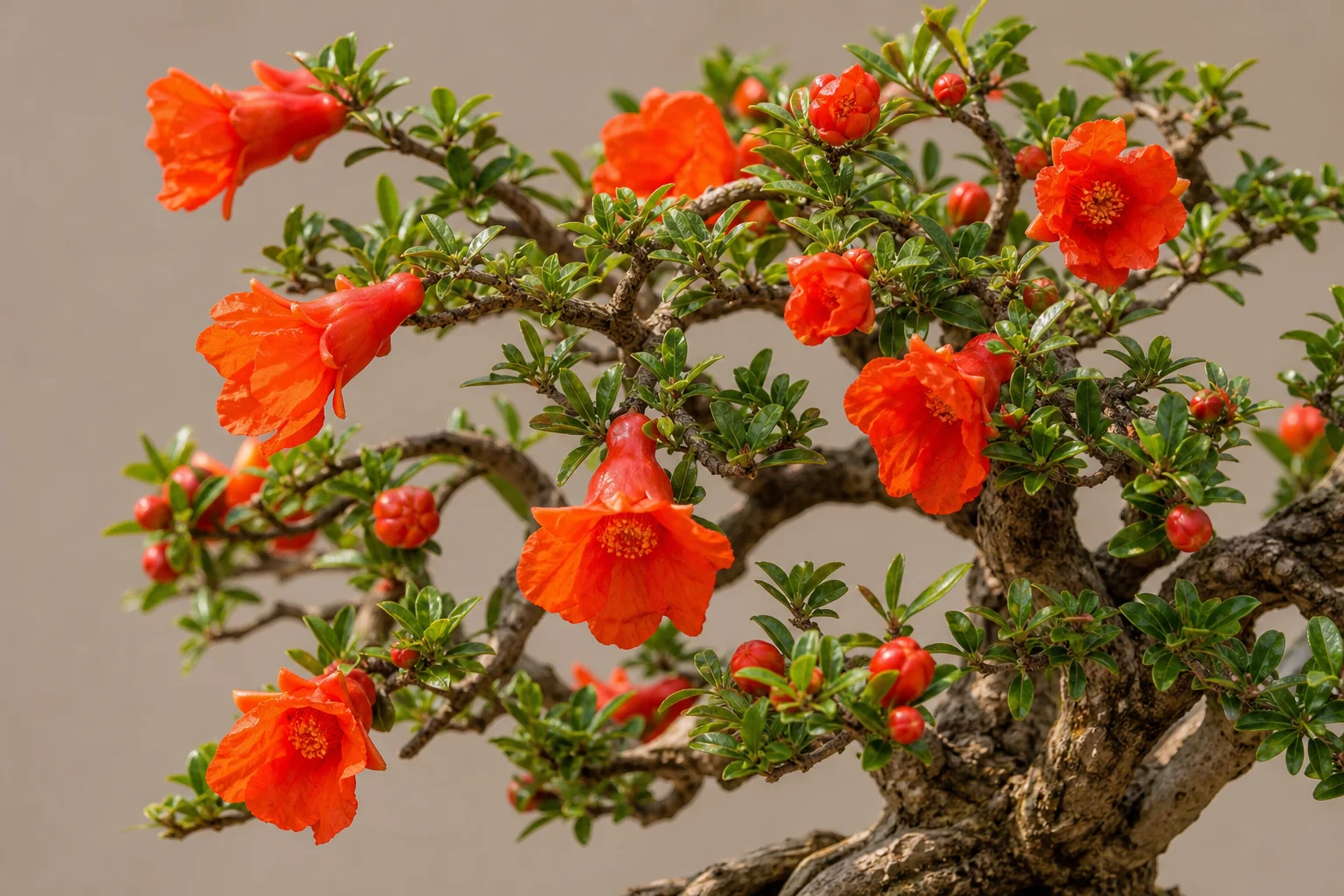
Pomegranate
Punica granatumOrange-red trumpet flowers in summer, miniature pomegranate fruit in autumn, twisted gnarled trunk character on collected ancient material. Borderline-hardy but stunning.