Common quince bonsai care
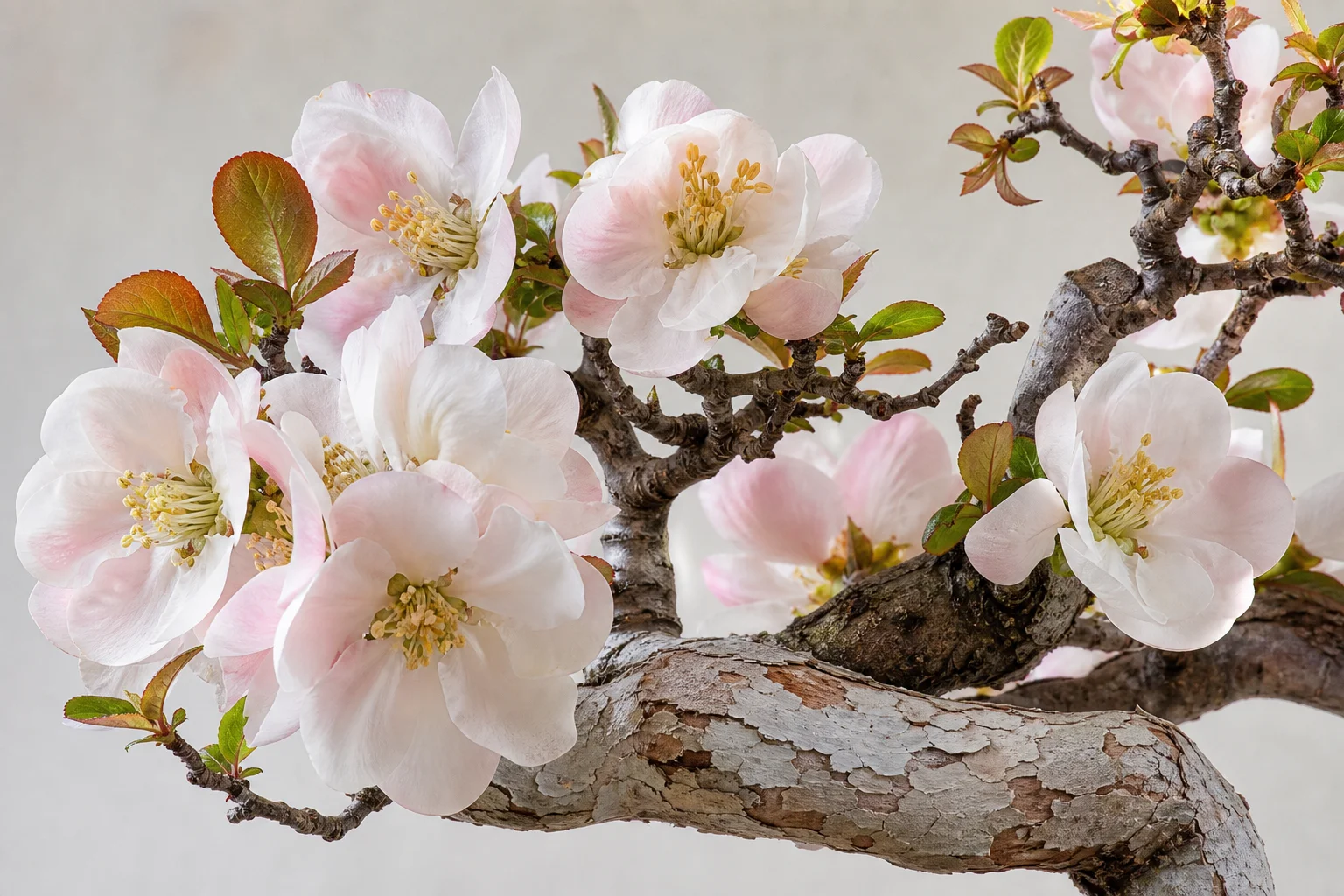
Cydonia oblongaThe other quince. Distinct from flowering quince (Chaenomeles) — larger leaves, larger pale pink-white flowers, and aromatic golden-yellow fruit. The species that gives us quince jelly.
Water
Every 1 day
check daily in summerLiquid feed
Every 7 days
growing seasonSolid feed
Every 28 days
slow releaseRotate
Every 14 days
even canopy growthTwo unrelated genera both go by the name "quince" in English. Chaenomeles is the small ornamental "flowering quince" with showy early spring flowers, small hard fruit, and refined bonsai potential. Cydonia is the large fruiting "common quince" or "true quince" — the species that produces the golden-yellow pear-shaped fruit used historically for jellies, preserves, and the medicinal cordial that gives marmalade its name (from the Portuguese "marmelo" for quince).
As bonsai, Cydonia is less common than Chaenomeles but offers genuinely different aesthetics. The leaves are larger (typically 8–12cm), the flowers are larger and more apple-blossom-like (pale pink-white in May), and the fruit is dramatically larger — fully-developed Cydonia fruit can weigh several hundred grams, making fruit display on small bonsai a challenge in itself. The fruit is strongly fragrant; a single quince in a fruit bowl will perfume a room.
The species develops attractive flaky pale bark on older trees and has naturally gnarled growth that suits informal upright bonsai compositions. Collected garden material from old orchard specimens can produce dramatic bonsai with substantial trunk character.
For UK growers, the choice between Chaenomeles and Cydonia depends on what you want. Chaenomeles for refined small bonsai with winter-into-spring flower display. Cydonia for larger compositions with substantial flowers, dramatic fruit, and a connection to traditional UK orchard heritage.
The species shares Rosaceae disease vulnerabilities with apples, hawthorns, and pears — fireblight is the main concern.
Native to western Asia — the region from northern Iran across the Caucasus and into Turkey. Cultivated for fruit for at least 4,000 years and widely planted across Europe and the Mediterranean. The Romans introduced quince across their empire including Britain, and the species has been a feature of UK orchards since at least medieval times. Quince was historically more important in UK cuisine than it is today — most modern UK gardeners know the fruit only as an occasional specialty item. As bonsai, the species has been developed in parts of Europe but is less common globally than Chaenomeles.
Seasonal calendar
Timing is for South East England. Select your region above to see adjusted guidance.
- Structural pruning while dormant
- Plan year's work
- Begin repotting late month
- Final winter pruning
- Main repotting window
- Protect emerging buds from late frost
- Leaves emerge
- Begin daily watering
- First slow-release feed
- Peak flowering — pink-white blossom
- Start weekly liquid feed
- Fruit set
- Wiring window opens
- Light post-flowering pruning
- Fruit developing rapidly
- Switch to high-K feed mid-month
- Thin fruit on small bonsai if heavy load
- Continue high-K feeding
- Fruit colouring golden yellow
- Stop feeding late month
- Fruit ripens — strongly fragrant
- Reduce watering
- Leaf drop
- Fruit may persist or be harvested
- Structural pruning
- Plan winter wiring
Watering
Daily through the growing season. Cydonia is moderately thirsty in active growth — twice daily in summer heat for trees in shallow pots.
The species tolerates inconsistent watering moderately well but consistent moisture during fruit development (July–October) prevents fruit drop and produces better fruit quality.
In winter while dormant, reduce watering significantly. Tap water of any hardness is fine.
Feeding
Weekly liquid feed from late April through to mid-September. Slow-release organic pellets in spring and early summer.
For fruiting, switch to a high-K low-N feed from mid-July through August. This supports fruit development and quality.
Stop feeding by late September.
Soil & Repotting
Free-draining and slightly acidic. The species tolerates a range of substrates.
60% akadama, 30% pumice, 10% lava is reliable. The species accepts cheaper development mixes well.
Repot every 2–3 years on young trees, every 3–4 on mature specimens. The window is mid-February through to early April. Repot as buds swell.
Cydonia tolerates moderate root work — up to a third of the root mass on healthy trees. The species recovers reasonably quickly.
Pruning
Cydonia pruning is similar to crab apple — the species flowers on previous year's wood and on short spurs that develop over years, so preserving these is important for floral display.
Structural pruning in late winter (February). Through the growing season, let new shoots extend to 5–6 leaves then cut back to 2–3 on most shoots, but leave some short shoots untouched to become flowering spurs.
After flowering and fruit set, light pinching can continue but avoid aggressive pruning that might damage developing fruit clusters.
Fruit thinning is essential on small bonsai. The species' large fruit is heavy and can break branches or stress small trees. Remove all but a few fruits when half-developed (August) — one fruit per 30cm of branch is a reasonable load on a medium bonsai, with thinning if necessary.
The species back-buds reasonably well on old wood and tolerates moderate hard cutbacks. Major structural reductions in late winter heal cleanly.
Wiring & Styling
Wire after leaves harden in early summer or on bare branches in winter. Bark is reasonably resistant to marking but can scar — apply moderately loose and check fortnightly. Aluminium for most work, copper for thicker structural branches.
Cydonia develops attractive flaky pale bark on older specimens — preserve this character during wiring rather than masking it.
Informal upright is the natural fit, particularly on collected garden material with substantial trunks. Twin-trunk and clump styles work well. The species' habit suits naturalistic compositions that emphasise gnarled trunk character and weather-shaped growth.
Cascade and semi-cascade are uncommon but possible. Formal upright doesn't suit the species.
The flowering display and fruit display are major aesthetic features — styling should ensure these are clearly visible.
Winter care
Hardy across most of the UK with no protection needed. Cydonia is rated H6 and takes typical British winters without complaint.
The species' main winter vulnerability is wet feet — saturated cold roots can cause issues. Tilt pots for drainage.
Never bring indoors.
Propagation
From seed possible but produces variable seedlings. From semi-hardwood cuttings in summer with rooting hormone — moderate success. From layering or air layering — excellent success rate. Most commercial quince trees are grafted onto rootstock (quince rootstock is widely used for pear grafting as well). Collected old garden specimens are excellent source material.
Common problems
Generally moderately healthy with the Rosaceae disease vulnerabilities. Fireblight is the most serious concern.
Fireblight (Erwinia amylovora)
Symptoms: Sudden blackening of shoots and flowers; branches die back rapidly.
Cause: Bacterial disease, spreads in warm wet weather during flowering.
Solution: Cut back well below visible damage. Disinfect tools between cuts. Severe outbreaks may require destruction.
Quince leaf blight (Diplocarpon mespili)
Symptoms: Brown spots on leaves; affected leaves yellow and drop early.
Cause: Fungal disease.
Solution: Improve airflow. Remove and bin affected leaves. Copper fungicide preventatively if recurring.
Branch damage from heavy fruit
Symptoms: Branches sag or break under the weight of developing fruit.
Cause: Cydonia fruit is dramatically larger than other bonsai-suitable fruit species — small bonsai branches can fail.
Solution: Thin aggressively when fruit is half-developed in August. One fruit per 30cm of branch is a reasonable load. Support critical branches with stakes if necessary during display.
Confusion with Chaenomeles
Symptoms: Buyer confusion at purchase, expecting the small refined Chaenomeles habit but receiving large-leaf Cydonia.
Cause: Both genera are called 'quince'.
Solution: Verify the species before purchase. Cydonia has larger leaves and produces the fruit used in quince jelly. Chaenomeles has smaller leaves and produces small hard fruit. The cultivation requirements differ — Cydonia is more like crab apple than Chaenomeles.
Aphids
Symptoms: Curled sticky leaves in spring.
Cause: Standard spring pest pressure.
Solution: Hose off. Neem if persistent.
Scale insects
Symptoms: Small brown bumps on stems.
Cause: Common Rosaceae pest.
Solution: Manual removal. Horticultural oil in winter.
Popular cultivars
The standard common quince. Most material is this.
Serbian fruit cultivar with particularly large pear-shaped fruit. Suitable for larger bonsai with substantial trunks.
Reliable fruiting cultivar widely available in UK. Good for bonsai development.
Heavy fruiting Victorian cultivar.
Pear-shaped fruit cultivar, slightly less hardy. Older garden variety.
Track your Common quince with Kentai.
Collection tracking, care logs and photo history are free — no card, no time limit.
More care guides
Cotoneaster
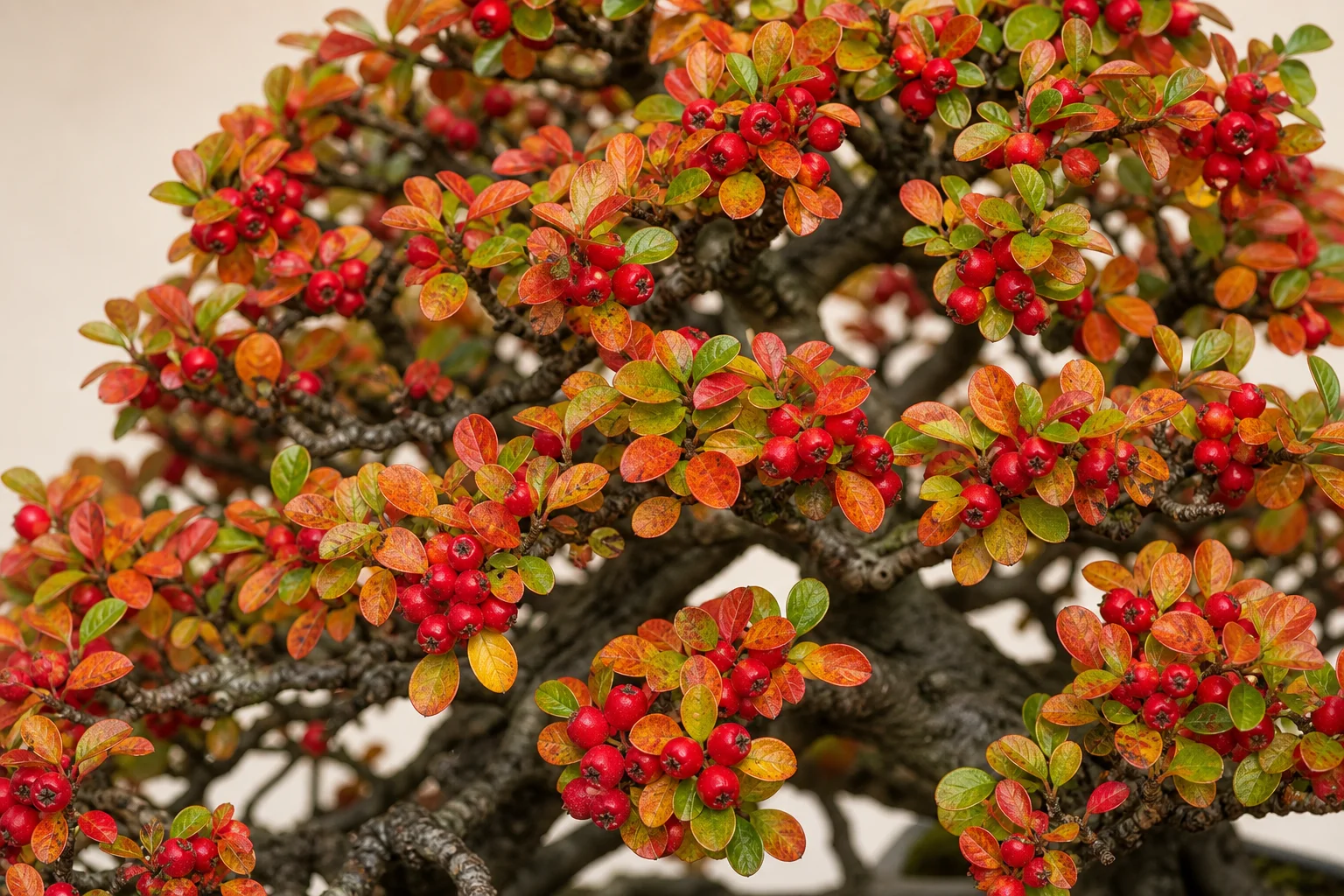
Cotoneaster horizontalisSmall leaves, spring flowers, red berries through autumn and winter — and easy. The flowering shrub that thinks it's a bonsai already.
Crab apple
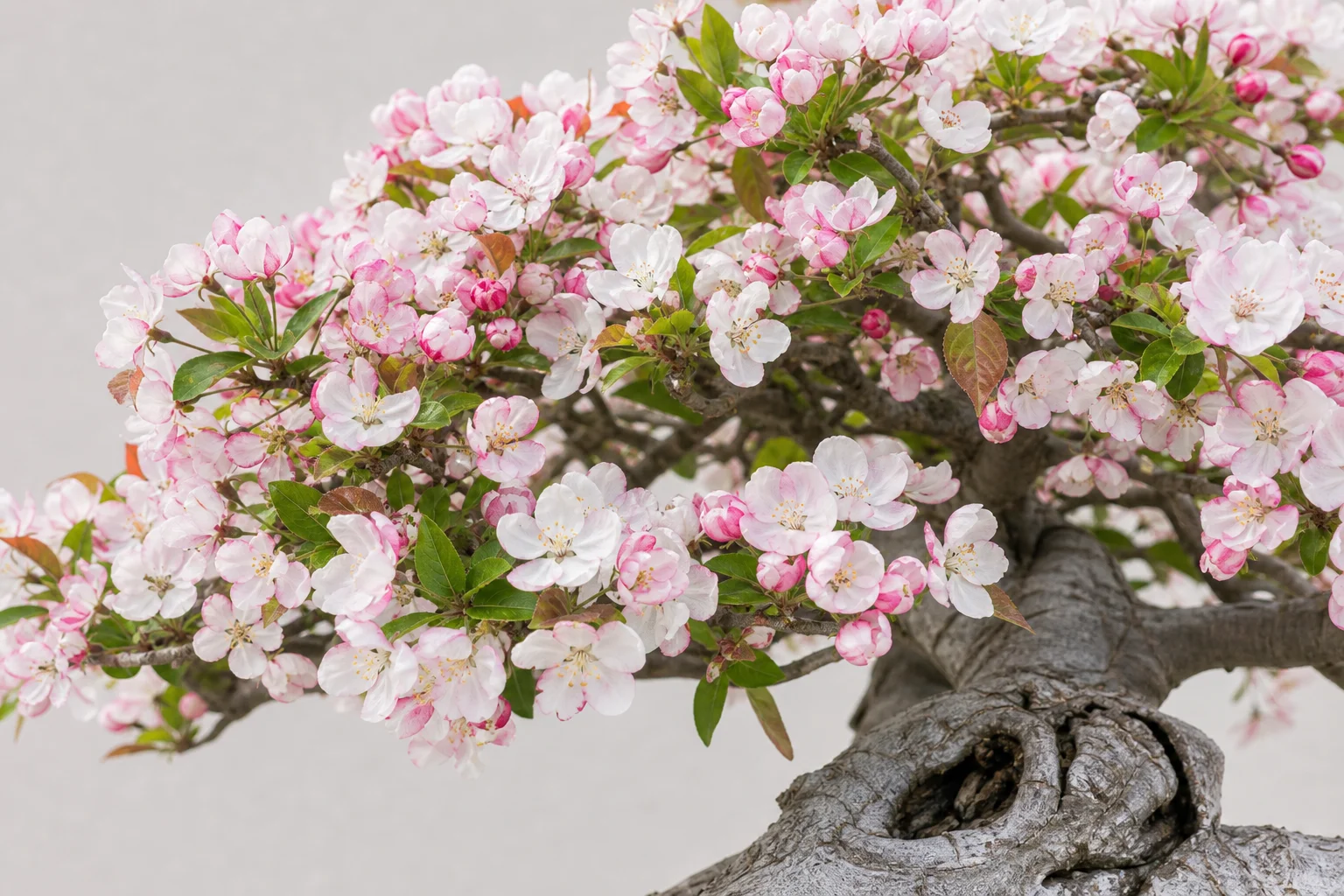
Malus sylvestrisPink-and-white spring blossom, small bright fruit in autumn, and the genuine theatre of a tree that performs differently every month of the year.
Deshojo maple
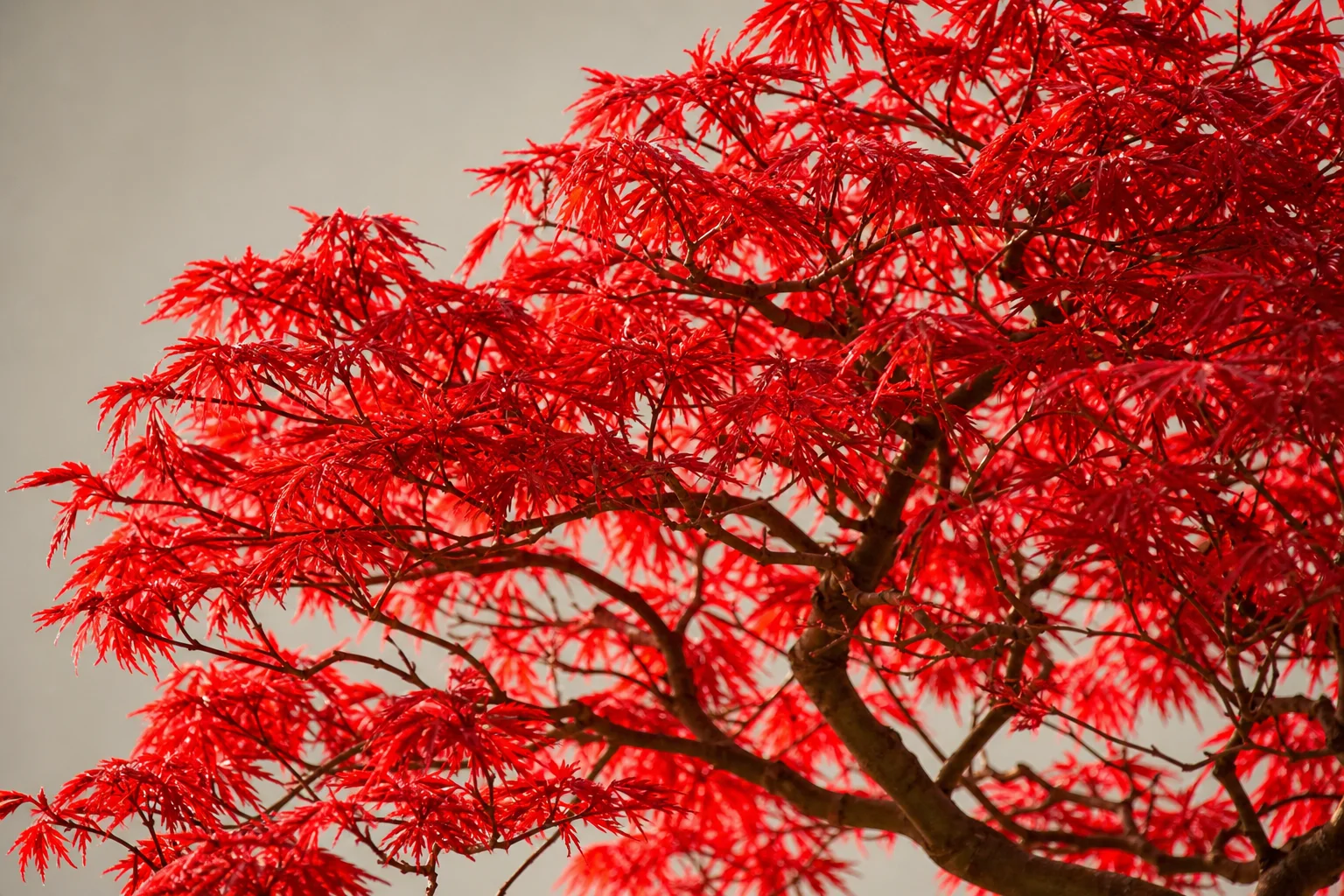
Acer palmatum 'Deshojo'Brilliant scarlet spring foliage that fades to green-bronze through summer and returns to red in autumn. The most theatrical of the common Japanese maple cultivars.