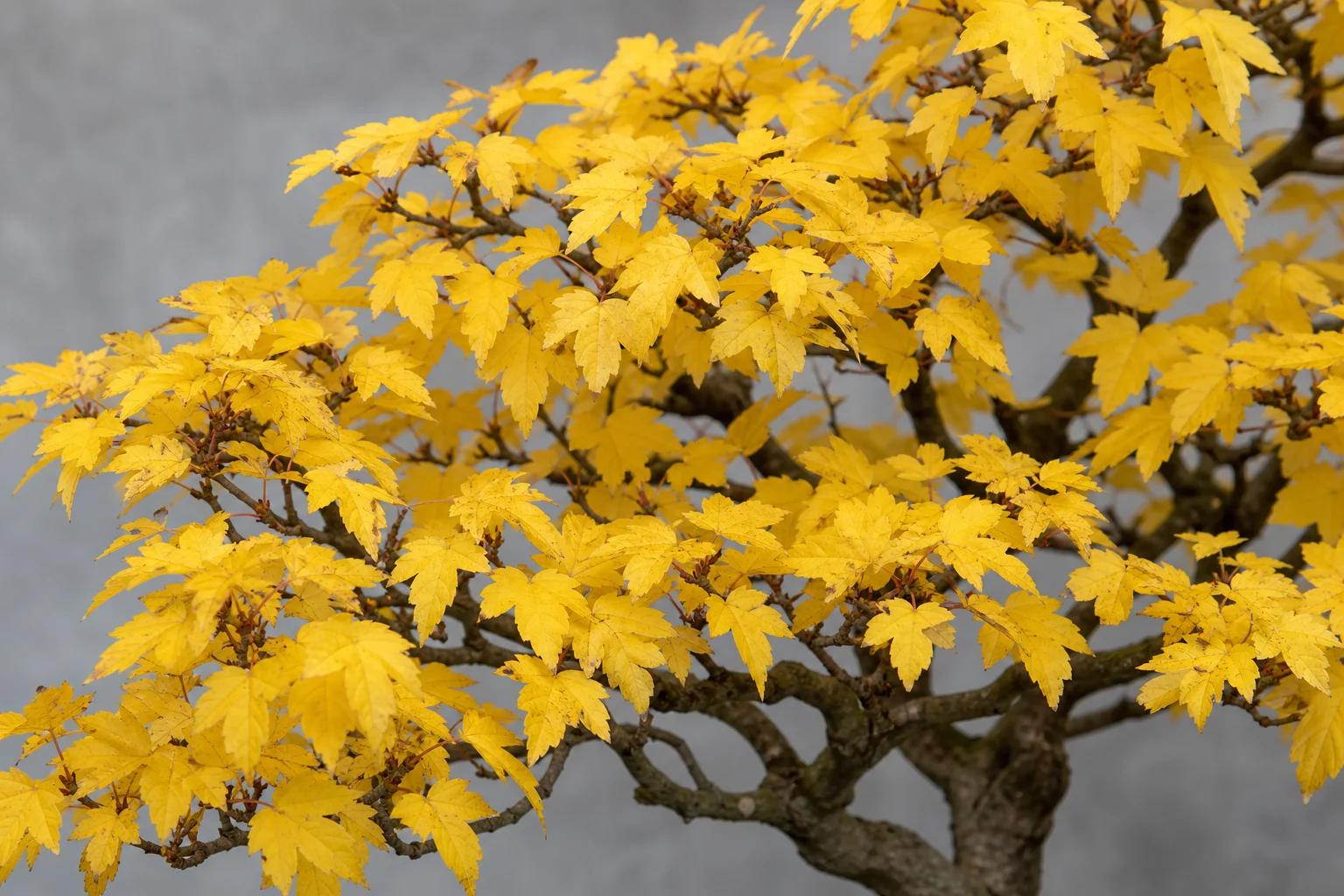
Field maple bonsai care
Acer campestreThe UK's native maple — bulletproof hardy, butter-yellow autumn colour, and free in every English hedgerow.
Water
Every 1 day
check daily in summerLiquid feed
Every 7 days
growing seasonSolid feed
Every 28 days
slow releaseRotate
Every 14 days
even canopy growthField maple is criminally underused as bonsai in the UK. It grows wild in hedgerows from Cornwall to Yorkshire, takes whatever the British weather throws at it, develops beautifully corky bark, and turns butter-yellow in autumn. You can dig collected material (with the landowner's permission) from any hedge that's about to be cut. You can buy whips from any native hedging supplier for a few pounds each. And the resulting bonsai has a quietly British character that imported species can't quite manage.
It's not flashy. The leaves are small and matt, the autumn colour is yellow rather than red, and the growth habit is rounded and modest rather than dramatic. But this is a tree that suits the understated aesthetic — the kind of bonsai that gets better and better the more time you give it, without ever demanding much in return.
Practically, field maple is easier than both Japanese and trident maples. It tolerates more cold, more sun, more wind, more drought, and more clumsy root work than either.
Native to most of Europe, including throughout the British Isles, and across to western Asia and North Africa. Naturalised in hedgerows, woodland margins, and chalk grassland. Tolerates calcareous soils that many maples sulk in — it's one of the few maples genuinely happy on chalk.
Seasonal calendar
Timing is for South East England. Select your region above to see adjusted guidance.
- Structural pruning while dormant
- Collect hedgerow material if planned
- Continue collection of dormant material
- Prepare repotting substrate
- Repot as buds swell
- Pot up any collected material into recovery boxes
- Leaves emerge
- Begin watering daily
- First slow-release feed
- Start weekly liquid feed
- Begin pinching new shoots
- Wiring window opens once leaves harden
- Continue pinching every 2-3 weeks
- Twice-daily watering in heat
- Watch for aphids on tips
- Reduce nitrogen feeding mid-month
- Continue light pinching
- Switch to low-N autumn feed
- Reduce watering frequency
- Butter-yellow autumn colour
- Stop feeding
- Leaf drop
- Sweep fallen leaves
- No special winter protection needed
- Structural pruning
- Plan collection of new material
Watering
Daily in the growing season — less anxiously than for Japanese maple. Field maples tolerate brief dryness without leaf scorch, and they tolerate wet feet better than palmatum or buergerianum. Twice daily in heatwaves is sensible but not always necessary.
Tap water of any hardness is fine. The species evolved on chalk and limestone — hard water is a non-issue.
In winter, just check that drainage holes aren't blocked and that pots aren't sitting in standing water. Otherwise, the tree handles whatever the UK climate does.
Feeding
A moderate feeder. Weekly liquid feed from late April through to mid-September. Slow-release organic pellets in spring and again in early summer. Reduce nitrogen from late August and switch to a low-N autumn feed for hardening.
Field maples don't respond to heavy feeding the way tridents do — push them too hard and you get long extensions with poor internode length. Steady, moderate feeding produces the dense ramification the species is capable of.
Soil & Repotting
Free-draining and tolerant of alkalinity. Field maples are the easiest maples to substrate — they perform well in a wide range of mixes.
60% akadama, 30% pumice, 10% lava is a reliable default. Pure pumice mixes work well too — useful if you're transitioning collected hedgerow material into bonsai pots. The species tolerates higher alkalinity than other maples, so a small proportion of limestone grit (or simply tap water from a hard-water area) won't cause problems.
Repot every 2–3 years for young material, every 4 for refined trees. The window is mid-February through early April — wider and more forgiving than the tighter palmatum window. Repot as buds swell but before they break.
Field maples tolerate aggressive root work — up to half the root mass on healthy trees. Collected hedgerow material can be repotted into bonsai mix on its first spring after digging without elaborate transition pots, provided you've dug a reasonable root ball and don't combine repotting with major branch removal in the same year.
Pruning
Easy. Field maples back-bud reliably on old wood, tolerate hard cutbacks, and shrug off the kind of pruning errors that would set back a Japanese maple by a season.
Structural pruning in late winter. Through the growing season, let shoots extend to five or six leaves then cut back to two. Pinch every two to three weeks in vigorous growth. The species responds particularly well to clip-and-grow technique — selective pruning without wiring — which makes it ideal for people who haven't yet learned to wire confidently.
Defoliation works but is rarely necessary; the species already produces relatively small leaves.
Wiring & Styling
Wire after leaves harden in early summer or on bare wood in winter. Bark is more textured than Japanese maple from a young age and marks less visibly. Aluminium for most work; copper for thicker structural branches.
The species' growth is reasonably slow compared to tridents — wire can usually stay on for three to four months without biting in, but check monthly to be safe.
Informal upright is the natural fit — field maples in the wild grow as rounded, spreading trees and that habit translates well to bonsai. Broom style works beautifully too, particularly on collected material with multiple trunks. Twin-trunk and clump plantings are common in the wild and look completely at home as bonsai.
The species' modest scale and rounded habit don't suit literati, cascade, or formal upright styles. Don't fight the tree's natural form.
Winter care
Fully hardy across the entire UK with no protection needed in normal pots. Field maples will sit out unprotected through hard British winters that would damage Japanese maples — this is genuinely their native climate.
The only concession worth making is shelter from wind for pots in exposed positions — wind desiccation can damage swelling buds in late winter. Bury pots in a mulched bed if you have a particularly exposed garden, or move to the lee of a wall.
Never bring indoors. Field maples need full UK winters to perform.
Propagation
Easiest from collected hedgerow material — find a section of hedge due for cutting back, identify a suitable trunk in February before buds swell, and dig with permission. Also from seed (autumn-sown, cold-stratified, true to species), from semi-hardwood cuttings in June (moderate success), and from air layering in May (high success).
Hedgerow-collected field maples can have decades of trunk character before you start work — by far the fastest route to a substantial bonsai for free.
Common problems
Trouble-free. Field maple is one of the healthiest species you can grow as bonsai in the UK.
Aphids
Symptoms: Sticky curled leaves on spring shoots, ants present.
Cause: Standard spring pressure.
Solution: Hose off. Neem if persistent. Resolves quickly.
Powdery mildew
Symptoms: White dusty coating on leaves in late summer.
Cause: Humid stagnant air, especially on sheltered benches.
Solution: Improve airflow. Remove and bin affected leaves. A milk-water spray (1:10) works as a preventative; sulphur-based fungicide if severe.
Tar spot
Symptoms: Black blotches on leaves late summer.
Cause: Airborne fungus, common in the UK.
Solution: Cosmetic. Sweep and bin (not compost) fallen leaves to break the cycle.
Slow growth on collected material
Symptoms: Hedgerow-collected tree fails to push strong growth in its first year in a pot.
Cause: Normal — the tree is rebuilding fine roots after losing most of its original system.
Solution: Patience. Don't repot or prune in year one — let it recover. Feed lightly, water consistently, leave alone. Most collected field maples are pushing strongly by year two.
Sun-faded autumn colour
Symptoms: Yellow autumn colour appears pale and washed out.
Cause: Mild, wet autumns reduce colour intensity for most maples.
Solution: Nothing to be done about the weather. Trees that get a sharp cold snap in October produce brighter colour than those that have a mild gradual transition.
Popular cultivars
The wild type. By far the best for bonsai — collected hedgerow material produces character that no cultivar can match.
Compact upright form, sometimes sold as nursery material. Useful starter.
Yellow-leaved form, less common. Visual novelty but no obvious advantage for bonsai.
Track your Field maple with Kentai.
Collection tracking, care logs and photo history are free — no card, no time limit.
More care guides
Other Acer guides: Arakawa maple · Deshojo maple · Full-moon maple · Japanese maple · Kiyohime maple · Sango Kaku maple · Shishigashira maple · Trident maple
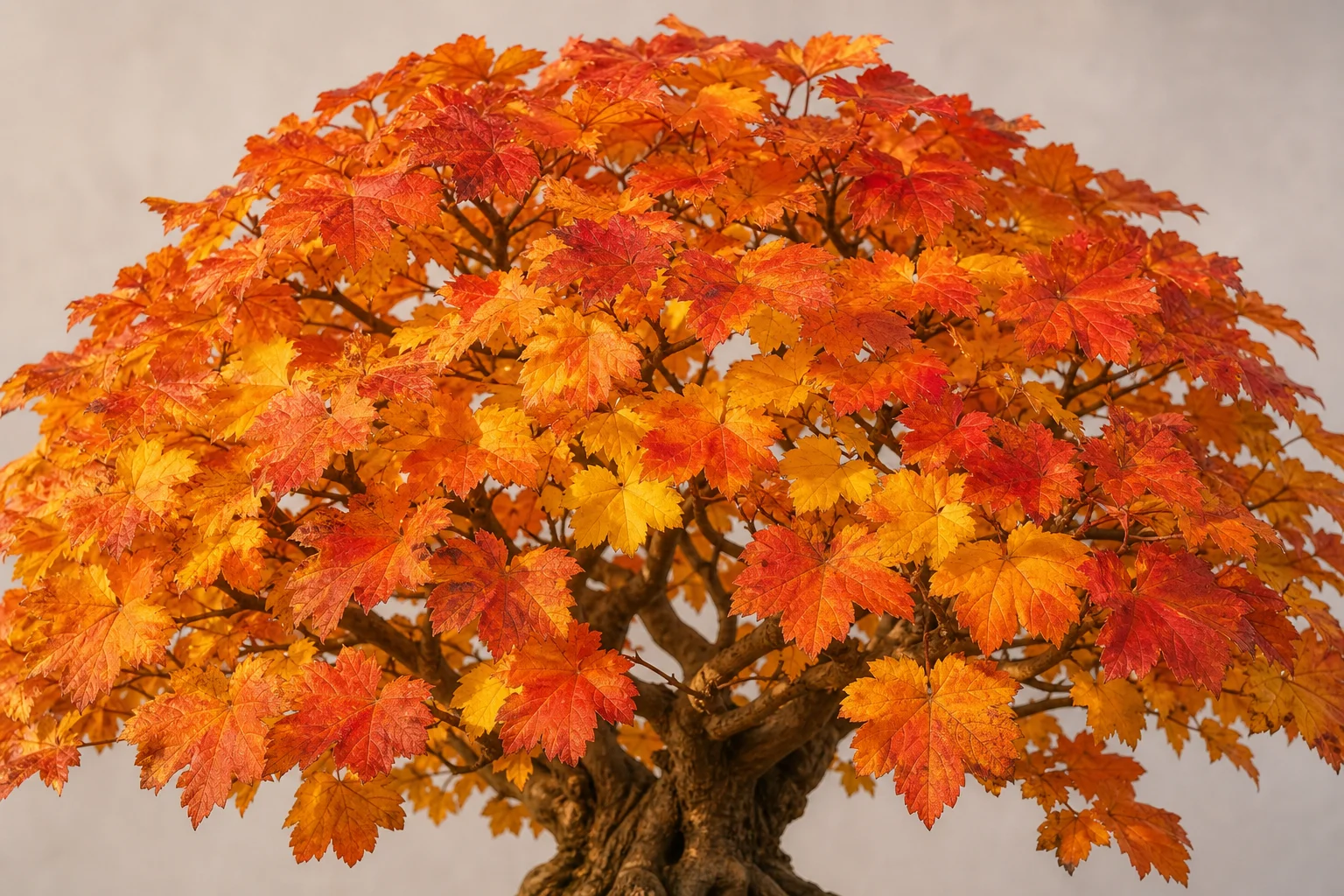
Full-moon maple
Acer japonicumThe other Japanese maple. More rounded leaves with shallower lobes than Acer palmatum, similar care, distinct enough to be its own species — and home to two of the most beautiful maple cultivars in bonsai.
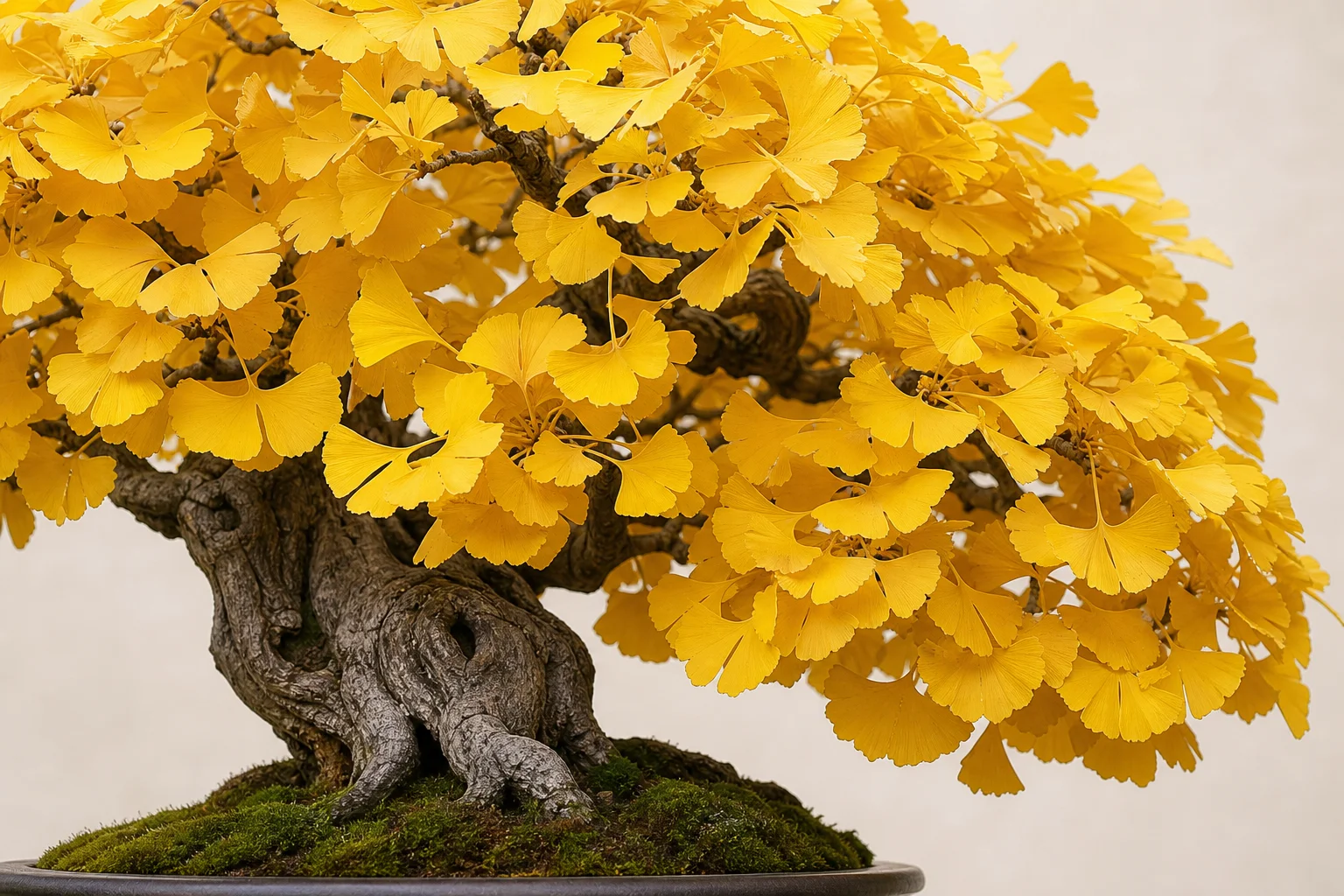
Ginkgo
Ginkgo bilobaThe living fossil. The only surviving species in an entire plant lineage 200 million years old, fan-shaped leaves unlike anything else in horticulture, and brilliant butter-yellow autumn colour. A bonsai with a genuinely unique place in the natural world.
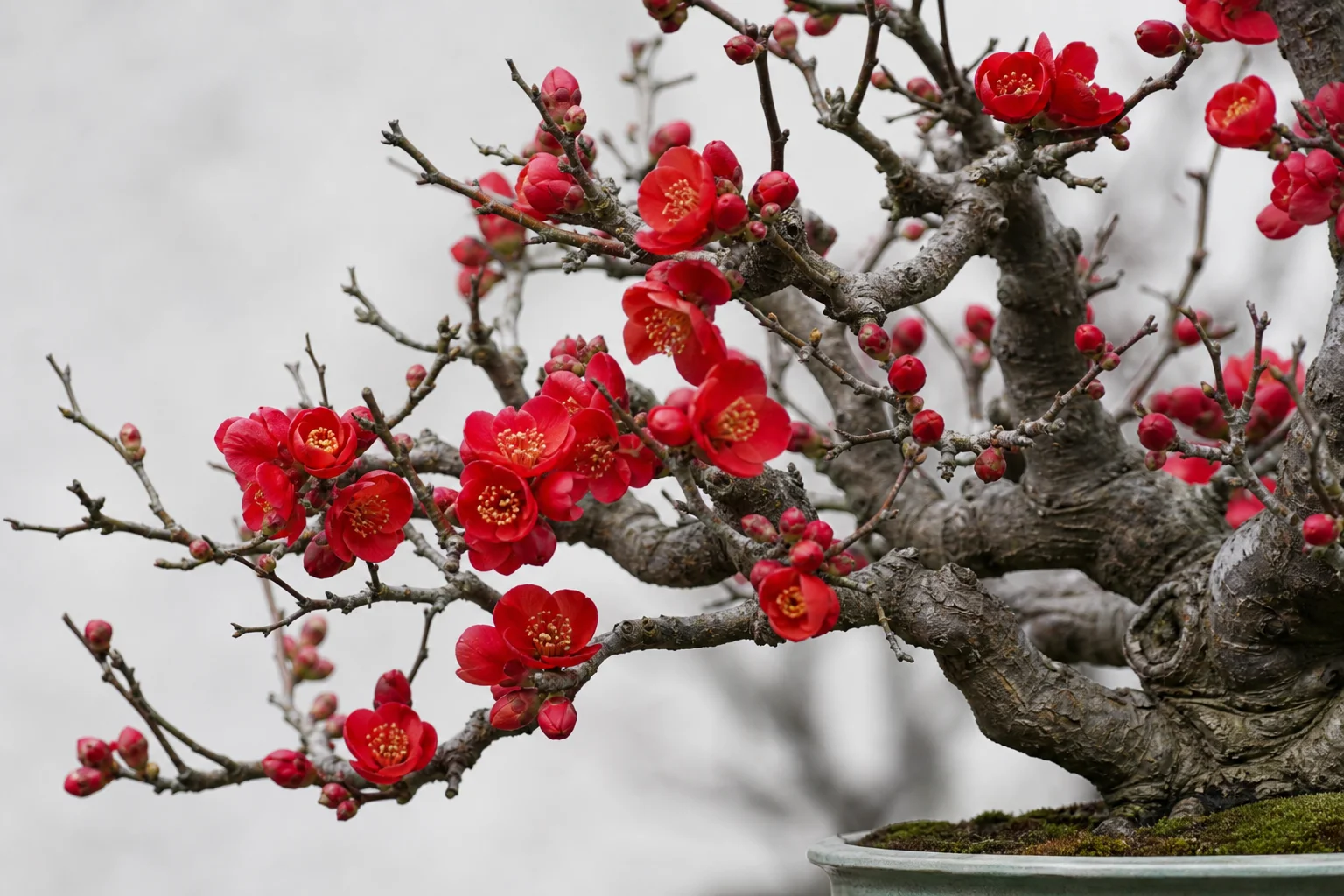
Japanese flowering quince
Chaenomeles japonicaWinter-into-spring flowers in red, orange, pink, or white. The bonsai that blooms when nothing else does.