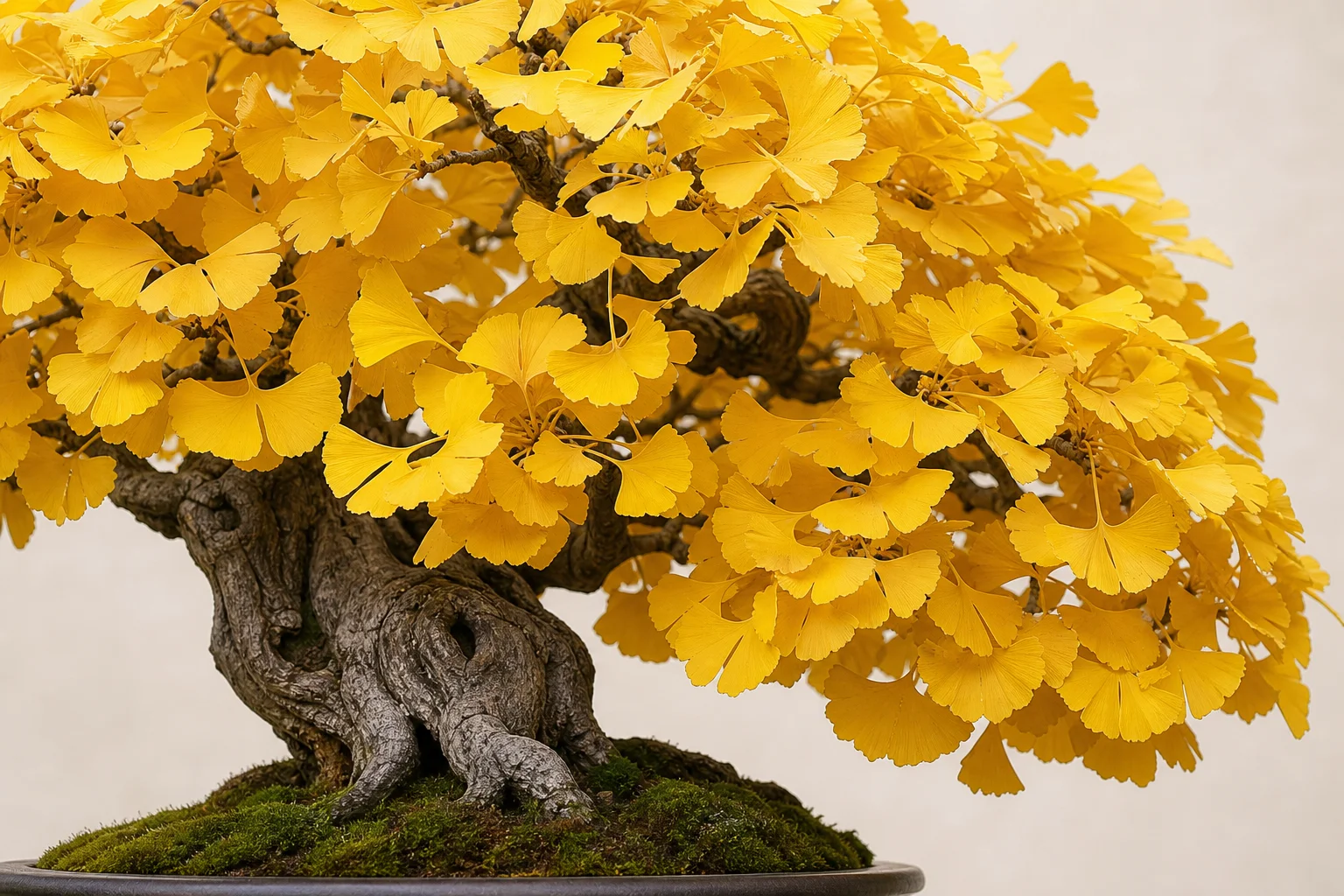
Ginkgo bonsai care
Ginkgo bilobaThe living fossil. The only surviving species in an entire plant lineage 200 million years old, fan-shaped leaves unlike anything else in horticulture, and brilliant butter-yellow autumn colour. A bonsai with a genuinely unique place in the natural world.
Water
Every 1 day
check daily in summerLiquid feed
Every 7 days
growing seasonSolid feed
Every 28 days
slow releaseRotate
Every 14 days
even canopy growthGinkgo is the bonsai that comes with extra context. The species is the sole surviving member of an entire plant lineage that flourished alongside dinosaurs and went into steep decline through the last ice ages — extinct in the wild for over 1,000 years, surviving only in cultivation in China before being reintroduced to the rest of the world via Buddhist temple gardens. Every Ginkgo on the planet today descends from a tiny number of specimens preserved in Chinese temple grounds. The species is a genuine "living fossil" in a way no other tree quite matches.
Beyond the deep history, Ginkgo as bonsai offers distinctive aesthetic features. The fan-shaped leaves (the "biloba" of the name refers to the bilobed leaf shape) are unlike any other temperate species. Autumn colour is reliably brilliant — a clean butter-yellow that turns the whole tree gold for 1–2 weeks before the leaves drop in a single brief shower. The bark develops attractive corky fissures on older specimens. And the species is essentially pest-free and disease-resistant — modern Ginkgo descended from trees that survived 200 million years of plant evolution by being genuinely tough.
For UK bonsai growers, the species offers genuine ease of cultivation paired with a slow rate of trunk development. Ginkgo grows steadily but slowly — bonsai-suitable thickness takes 15–20 years from young nursery stock — so most quality material is either purchased as established specimens or developed over decades. The slow growth is partly what gives mature Ginkgo bonsai their extraordinary trunk character; rushing the development eliminates the species' main aesthetic asset.
One practical note for buyers: Ginkgo is dioecious — separate male and female trees. Female trees produce strong-smelling fleshy fruit that some people find genuinely unpleasant. Most ornamental Ginkgo cultivars sold by UK garden centres are male-only selections (Princeton Sentry, Autumn Gold) to avoid this. For bonsai purposes, sex doesn't matter aesthetically and female trees rarely fruit at bonsai scale anyway.
Native to a small area of central China, where the species survived the last ice ages as a relict population. Now extinct in the wild but preserved in cultivation in Chinese temples for over 1,000 years; some temple specimens are verified to be 2,500+ years old. Introduced to Japan and Korea via Buddhist temples; reached Western gardens in the 18th century. The species has been planted as ornamental and street tree globally since the 19th century and shows remarkable urban tolerance. Modern bonsai cultivation is relatively recent compared to the species' longer cultivation history.
Seasonal calendar
Timing is for South East England. Select your region above to see adjusted guidance.
- Structural pruning while dormant
- Plan year's work
- Begin repotting late month
- Final winter pruning
- Main repotting window
- Preserve spur shoots during work
- Fan leaves emerge
- Begin daily watering
- First slow-release feed
- Start weekly liquid feed
- Begin selective pinching
- Wiring window opens
- Spur shoots active
- Twice-daily watering in heat
- Continue pinching
- Continue care routine
- Watch foliage harden
- Stop feeding mid-month
- Reduce watering
- Brilliant yellow autumn colour develops
- Continue reducing watering
- Spectacular leaf drop — usually over 1-2 days
- Sweep fallen leaves
- Structural pruning
- Plan winter wiring
Watering
Daily through the growing season. Ginkgo tolerates inconsistent watering better than refined deciduous species but consistent dryness reduces autumn colour intensity.
In hot summer weather, twice daily for trees in shallow pots. The species' fan-shaped leaves are slightly less prone to scorch than maple leaves but heatwaves can still cause damage.
In winter while dormant, reduce watering significantly. Tap water of any hardness is fine.
Feeding
Weekly liquid feed from late April through to mid-September. Slow-release organic pellets in spring and early summer.
Ginkgo responds to consistent moderate feeding. The species' slow growth means heavy feeding doesn't produce dramatic vigour response — restrained feeding suits the cultivar character better than aggressive regimes.
Stop feeding by mid-September.
Soil & Repotting
Free-draining and tolerant. Ginkgo accepts a wide range of substrates including slightly alkaline conditions.
60% akadama, 30% pumice, 10% lava is reliable. The species tolerates cheaper development mixes well.
Repot every 3–4 years on young trees, every 4–5 on mature specimens. The window is mid-February through to early April. Repot as buds swell.
Ginkgo tolerates moderate root work — up to a third of the root mass on healthy trees. The species recovers slowly compared to vigorous deciduous bonsai but reliably. Don't expect dramatic visible recovery in the first season after repotting.
Pruning
Ginkgo pruning is forgiving but the species' slow growth means each year's work matters. Back-budding is reliable on old wood but the new shoots are slow to develop into substantial branches.
Structural pruning in late winter (February). Through the growing season, let new shoots extend to four or five leaves then cut back to two. Pinch every 3–4 weeks — less frequently than for vigorous species, as Ginkgo extension is moderate.
The species has a distinctive growth pattern: short spur shoots that produce fan-leaves in tight clusters develop on older wood and continue producing for many years. These spurs are valuable for refined ramification — don't accidentally remove them when pruning, as new spurs take 2–3 years to develop.
Defoliation isn't a useful technique on Ginkgo. The leaves are already appropriately small and the species responds poorly to total defoliation. Selective leaf removal of largest leaves works better.
Wiring & Styling
Wire after leaves harden in early summer or on bare branches in winter. Bark develops corky fissures on older specimens — apply wire loosely and check fortnightly to avoid biting in on developing bark. Aluminium for most work.
The species' slow growth means wire often stays on for full growing seasons without biting in dramatically. Annual wire checks are sufficient on most trees.
Informal upright is the natural fit. The species' habit suits literati on tall slender material with a top of foliage — referencing the natural high-altitude or temple-grown forms of mature wild Ginkgo. Twin-trunk works well. Broom style suits older specimens with rounded crowns.
Cascade and semi-cascade are uncommon but possible. Formal upright suits some mature specimens with naturally upright habit.
The species' main aesthetic assets are the distinctive fan-shaped leaves, brilliant autumn colour, and developed trunk character on mature trees. Styling should showcase these.
Winter care
Fully hardy across the UK with no protection needed. Ginkgo is exceptionally hardy — temperatures down to -30°C don't harm established trees, and the species' urban tolerance means pollution and other environmental stresses don't matter.
The brilliant butter-yellow autumn colour develops over 1–2 weeks in October-November, then the entire tree drops its leaves in a single brief shower over 1–2 days — one of the more dramatic deciduous events in bonsai. The fallen yellow leaves are a feature; sweep them up after they've had time to be admired.
Never bring indoors.
Propagation
From seed possible — slow germination, often 18+ months, but reliable. Cuttings are difficult. Air layering works on suitable branches and is the typical route for cultivar propagation. The best route to bonsai material is purchased nursery stock (10+ years old) developed over years, or collected garden specimens.
Common problems
Essentially trouble-free. Ginkgo's 200-million-year evolutionary history has produced one of the most disease and pest-resistant trees in cultivation. Most "problems" are growth-related rather than health issues.
Slow trunk development
Symptoms: Tree grows but trunk thickens very slowly compared to other deciduous species.
Cause: Normal Ginkgo characteristic — the species evolved slow growth and resists pushing.
Solution: Patience, or develop trunk in growing pot or open ground for 5+ years before potting up. Ginkgo trunk development at bonsai scale typically takes 15–20 years from young nursery stock. The slow development is part of the species' character; rushing it eliminates the aesthetic asset.
Loss of spur shoots after pruning
Symptoms: Year's production of new leaves seems sparse after pruning work.
Cause: Spur shoots (the short shoots that produce fan-leaf clusters on older wood) were inadvertently removed.
Solution: Mark or note spur positions before pruning. New spurs develop from latent buds over 2–3 years but the loss reduces the year's display.
Frost damage on emerging leaves
Symptoms: New spring leaves blacken after late frost.
Cause: Ginkgo can leaf-out early in mild springs and is then vulnerable to April frosts.
Solution: Move under cover overnight if -2°C or colder is forecast after bud break. Trees recover from light damage; severe frost can set the season back.
Aphids
Symptoms: Rare on Ginkgo — when they appear, curled sticky young leaves.
Cause: Standard pest pressure that mostly leaves Ginkgo alone.
Solution: Hose off if found. Rarely persistent on Ginkgo.
Smell from female trees (rarely on bonsai)
Symptoms: Strong unpleasant smell from fallen fruit on female trees.
Cause: Female Ginkgo produce fleshy fruit that smells like rancid butter when overripe.
Solution: Most ornamental and bonsai material is from male trees specifically to avoid this. Female trees rarely fruit at bonsai scale anyway. If your tree produces fruit, remove immediately when ripe.
Autumn colour timing variability
Symptoms: Some years the autumn yellow colour is brief or muted.
Cause: Mild autumns produce less intense colour; sudden hard frost can cause leaves to drop while still green.
Solution: Nothing to be done about weather. Some position management helps — trees with cold exposure colour more intensely than trees in sheltered warm positions. Accept seasonal variation.
Popular cultivars
The wild type, though no truly wild Ginkgo exist. Most material is this. Variable in habit and leaf shape.
Dwarf cultivar with compact rounded habit. Excellent for bonsai — already at workable scale on small plants.
Dwarf cultivar with very small leaves. Refined and slow-growing. Sought-after for refined bonsai work.
Compact upright male cultivar. No fruit issues. Suitable for medium bonsai.
Columnar male cultivar widely planted as street tree. Wrong habit for most bonsai but available.
Male cultivar selected for particularly intense autumn colour. Widely available in UK garden centres.
Track your Ginkgo with Kentai.
Collection tracking, care logs and photo history are free — no card, no time limit.
More care guides
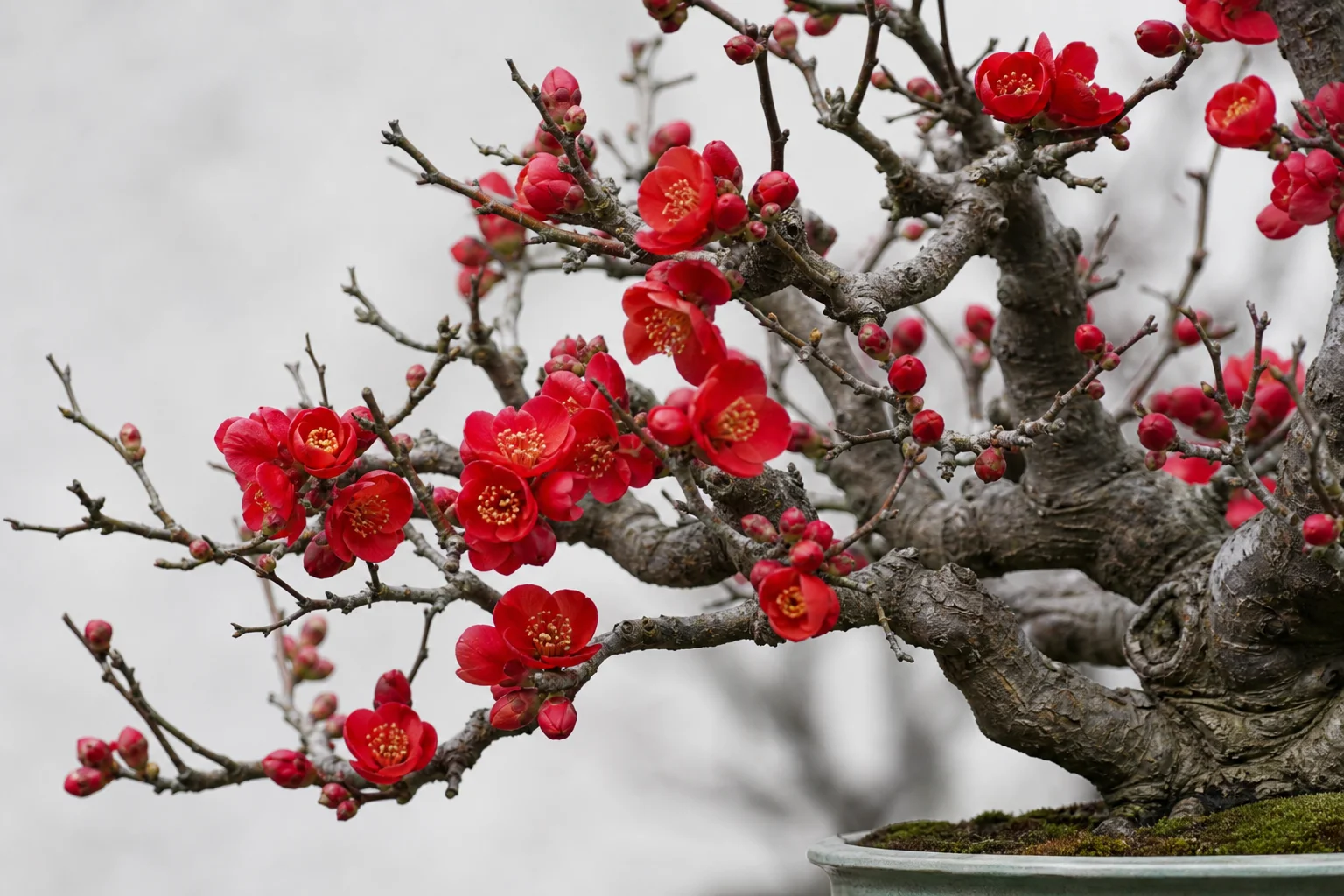
Japanese flowering quince
Chaenomeles japonicaWinter-into-spring flowers in red, orange, pink, or white. The bonsai that blooms when nothing else does.
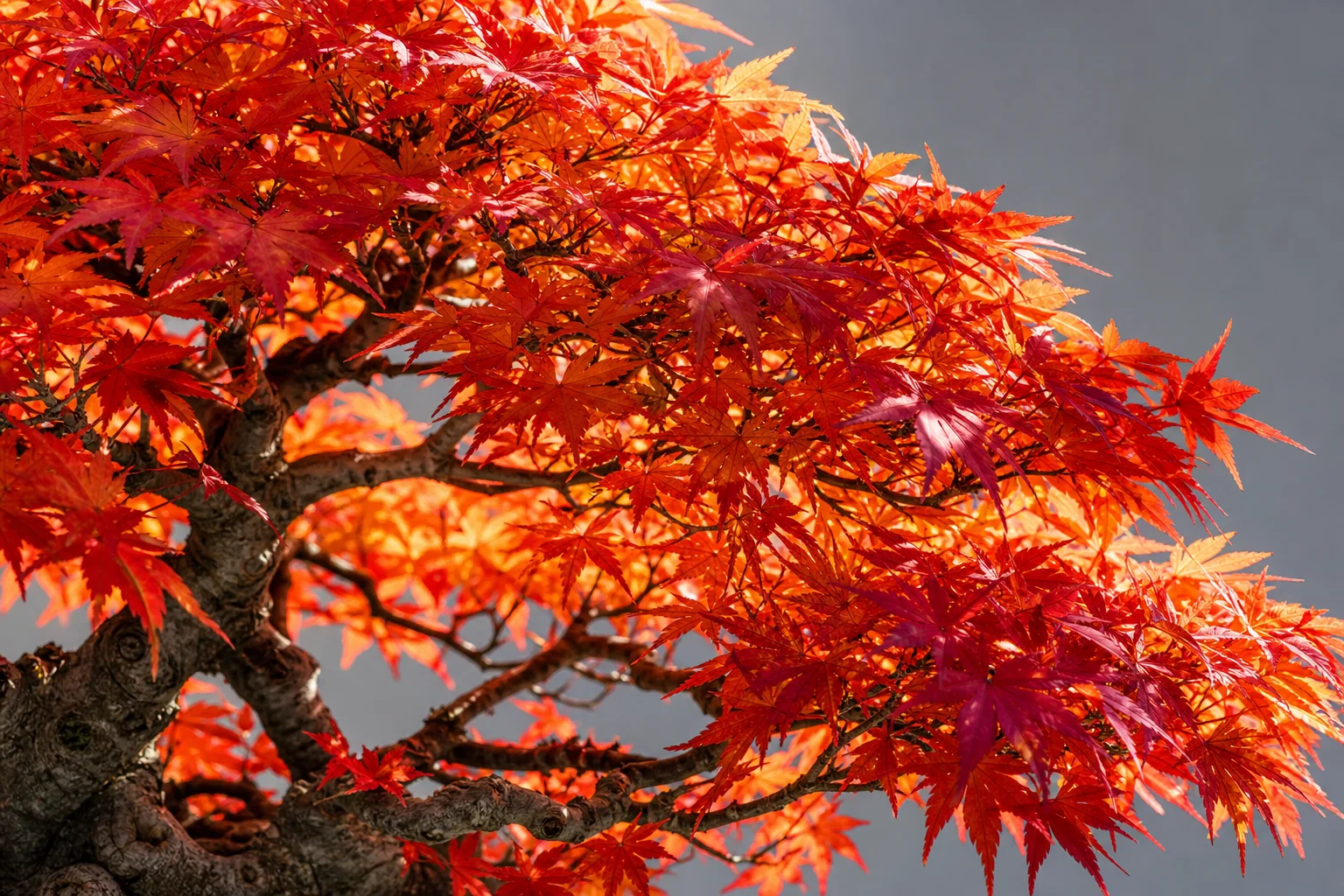
Japanese maple
Acer palmatumThe iconic deciduous bonsai — slender twigs, palmate leaves, and four genuinely different seasons.
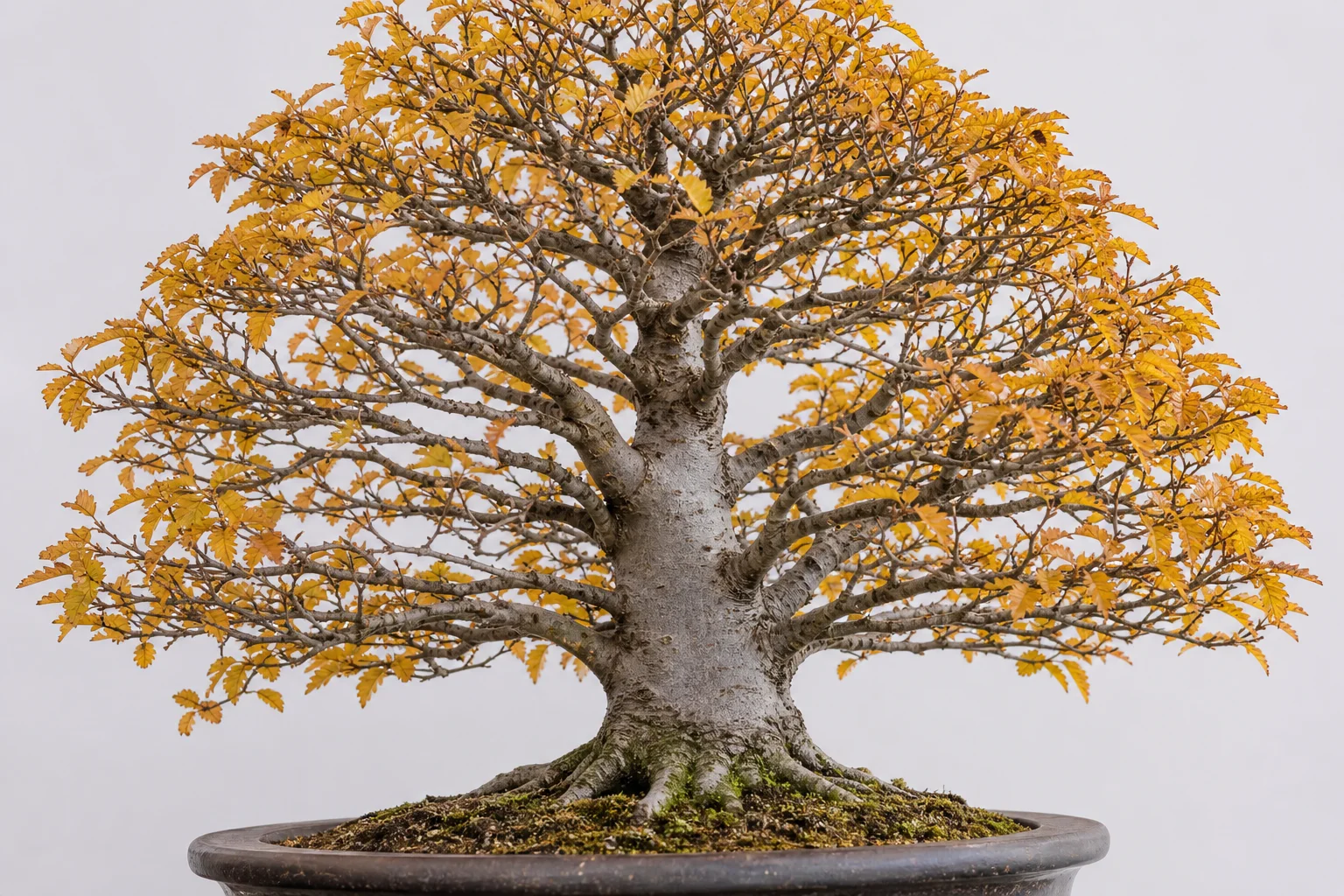
Japanese zelkova
Zelkova serrataThe broom-style classic. Natural vase-shaped habit, smooth grey bark, small serrated leaves, and an ease of cultivation that makes it among the best deciduous bonsai species for UK growers.