Cedar bonsai care
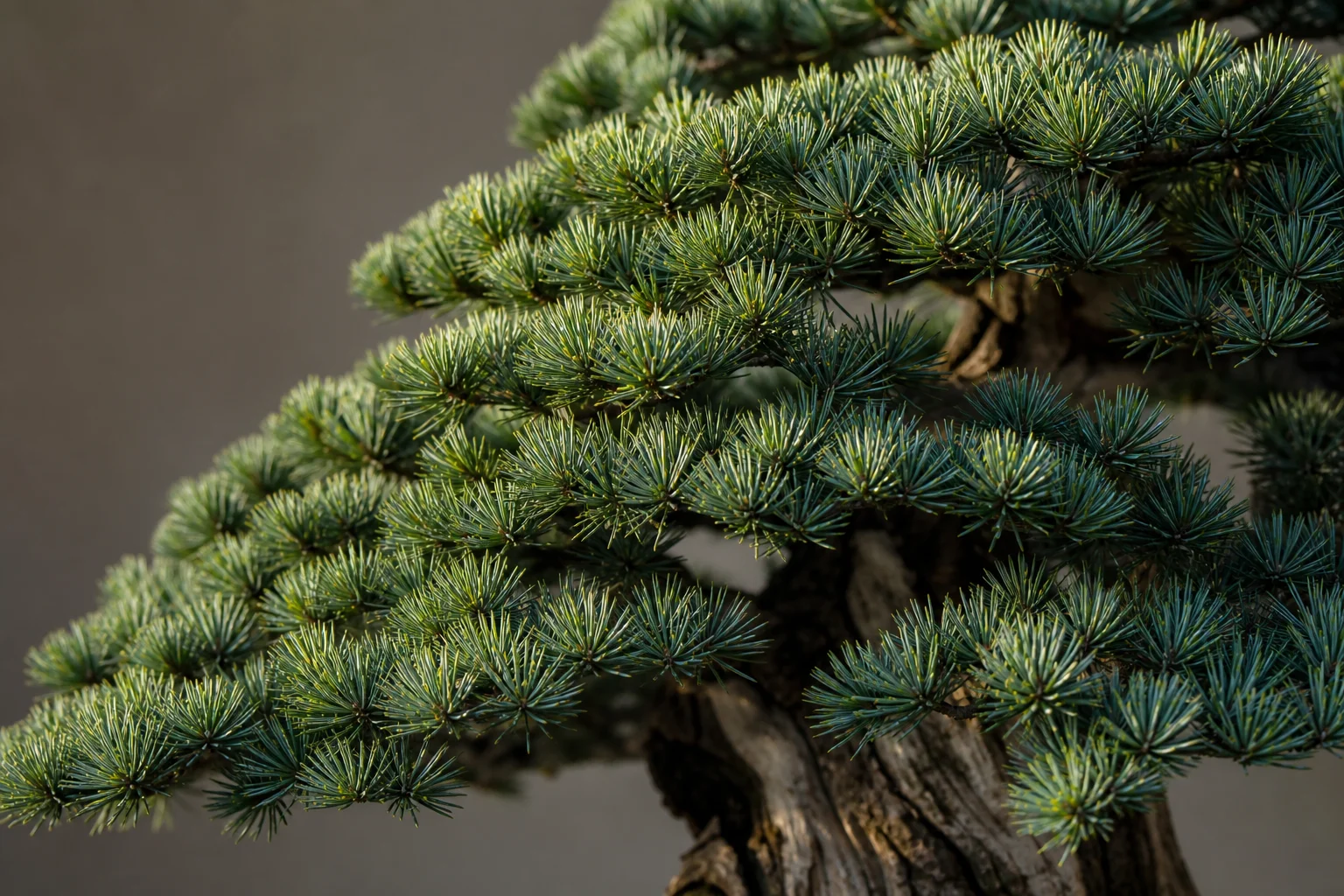
CedrusClustered needles in distinctive rosettes, horizontal branching habit, and a presence that few conifers match. Less commonly grown than pines but worth seeking out.
Water
Every 3 days
check daily in summerLiquid feed
Every 14 days
growing seasonSolid feed
Every 28 days
slow releaseRotate
Every 30 days
even canopy growthCedars are the conifers most people picture when they imagine a stately mature tree — the Cedar of Lebanon at Highclere, the Atlas cedars in Royal Parks, the deodars in Victorian parkland. The genus has three main species (with botanists occasionally arguing about whether they're really separate species or geographic forms): Cedrus libani (Cedar of Lebanon), C. atlantica (Atlas cedar), and C. deodara (deodar cedar). All three are excellent for bonsai and care is essentially identical.
The distinguishing feature is the foliage structure — needles emerge singly on first-year shoots, then on older wood they cluster in tight rosettes from short spur shoots. The result is a foliage texture unlike pines or other common conifer bonsai species: dense rosettes of relatively short needles, with new growth providing softer texture at branch tips.
Cedars are less common in UK bonsai than pines, partly because they've been less developed in Japanese tradition (cedars aren't native to Japan) and partly because they're slower to refine than junipers. But they have advantages — they're hardier than Japanese black pine in UK conditions, they back-bud more reliably than pines (though not as freely as yew), and they develop the characteristic horizontal branching habit naturally without aggressive styling.
Cultivar choice matters. The "Glauca" blue forms of Atlas cedar are dramatic but the blue colour fades over years in bonsai conditions. Standard green forms develop more naturally and look better long-term.
Cedrus libani native to mountain forests of Lebanon, Syria, and southern Turkey. C. atlantica native to the Atlas Mountains of Morocco and Algeria. C. deodara native to the western Himalayas — northern India, Pakistan, Afghanistan, Tibet. All three species evolved at high altitude on rocky, free-draining slopes and are adapted to cold winters and warm dry summers. Now planted globally as ornamental trees; well-established in UK parks and gardens since Victorian times.
Seasonal calendar
Timing is for South East England. Select your region above to see adjusted guidance.
- Structural pruning while dormant
- Heavy wiring
- Continue winter styling
- Plan spring repotting
- Watch for root activity late month
- Final winter wiring
- Repot when root tips visible
- New shoots beginning to extend
- Pinch strong shoot tips
- Start light feeding
- Continue selective pinching
- Watch foliage harden
- Maintain dry-wet watering cycle
- Leave foliage undisturbed
- Selective thinning of overly strong areas
- Last feeding mid-month
- Needle thinning — balance energy
- Stop feeding mid-month
- Wiring window opens
- Structural pruning begins
- Heavy structural work
- Position for winter
- Continue styling on dormant trees
- Minimal watering
Watering
Water carefully. Cedars are conifers and follow the same wet-dry cycling pattern as pines. Wait for the surface of the substrate to dry, then water thoroughly. Typically every 2–3 days in summer, every 4–7 days in spring and autumn, every 7–14 days in winter.
The species evolved on mountain slopes with deep but free-draining soils and resents prolonged saturation in pots. Overwatering causes root rot — the most common cause of cedar bonsai death.
Tap water of any hardness is fine. Don't wet foliage heavily in humid evening conditions during damp UK weather; it encourages fungal issues.
Feeding
Light feeding. Half-strength liquid feed every two weeks from May through to mid-September. Slow-release organic pellets in spring and early summer.
Cedars respond to feeding less dramatically than vigorous species — they grow at their own pace regardless. Heavy feeding produces long needles and weak ramification.
Stop feeding by mid-September. Continued nitrogen produces soft late growth that doesn't harden before winter.
Soil & Repotting
Very free-draining, acidic to neutral. Cedars need lean substrates and good drainage.
60% pumice, 25% akadama, 15% lava in 2–6mm grade. Slightly more pumice (70%) for material in development or recovery. Avoid akadama-dominant mixes; they hold too much water for cedar roots.
Repot every 4–6 years on established trees. The window is late March to early May — wait for active root tips. Cedars demand mycorrhizal preservation like pines — never bare-root. Remove no more than a third of the root mass on healthy trees, less on older specimens.
The species recovers more slowly from root work than vigorous deciduous species but faster than Japanese black pine. Cedars show recovery primarily through new growth in the season following repotting.
Pruning
Cedar pruning uses techniques similar to pines but with some species-specific differences.
In spring (April–May): new shoots elongate. On strong shoots, pinch the soft growing tips before needles harden — this shortens the year's extension and balances energy. Weak shoots are left alone.
Through summer: leave foliage undisturbed. Don't cut needles or trim foliage indiscriminately.
In late summer (August): selective thinning of overly strong areas. Cut back individual shoots that are growing out of proportion. Cedars back-bud from spurs more reliably than pines, so cuts often produce useful new growth.
Structural pruning in autumn or winter (October–February). Major cuts heal slowly — use cut sealant on larger wounds. The species back-buds from old wood reasonably well, though less reliably than yew and more reliably than most pines.
Needle thinning in autumn (September–October): selectively remove old needles to balance energy and let light into the interior. More needles left on weak branches; fewer on strong.
Wiring & Styling
Wire from autumn through to early spring on dormant trees. Cedar bark is reasonably resistant to marking, particularly on older wood. Use copper for structural branches and aluminium for finer work. Wood is moderately flexible — major bends usually need raffia wrapping.
Branches set well after wire removal. Wire usually stays on for one to two growing seasons.
A specific consideration: cedars naturally develop horizontal branches with foliage held in flat planes. Styling should work with this habit rather than against it. Heavy upward-arching branches look artificial; horizontal branching with slight downward drape reads as natural.
Informal upright with horizontal branching is the classic cedar style. Twin-trunk works well. Literati on tall slender material with a top of foliage suits the species. Cascade and semi-cascade are uncommon but possible.
Formal upright doesn't suit cedars — they're too irregular in habit. The species' natural appearance is best showcased by styling that emphasises horizontal branching and the foliage rosettes characteristic of the genus.
Deadwood works on cedars but is less dramatic than on yew or juniper — the wood is softer and weathers differently.
Winter care
Hardy across most of the UK with no protection needed for Lebanon and Atlas cedars. Deodar is slightly more tender (H4) and may need shelter in exposed northern positions during severe winters.
The main winter consideration for all cedars in pots is excess moisture rather than cold. Tilt pots for drainage; position out of standing water. Avoid south-facing positions where rapid temperature swings can damage trunks.
Never bring indoors.
Propagation
From seed (autumn-sown, cold-stratified) — reliable but slow. Cuttings are difficult and rarely used. Air layering possible but slow and unreliable. Most cedar bonsai material in the UK starts as young nursery stock from garden centres — Atlas cedars are widely available — and is developed over many years. Cedars are good candidates for "growing on" — buying small specimens and giving them 10–15 years before serious styling.
Common problems
Generally healthy outdoors. Cedars are more robust than Japanese black pine in UK conditions but share some vulnerabilities with the pine family.
Phytophthora root rot
Symptoms: Tree weakens, foliage dulls, eventual branch dieback or whole-tree collapse.
Cause: Saturated substrate, often combined with cold.
Solution: Largely fatal once symptoms appear. Prevention via very free-draining substrate and careful watering. The most common cause of cedar bonsai death in UK conditions.
Cedar adelgids
Symptoms: White woolly patches on twigs and at the base of needle clusters.
Cause: Sap-sucking pest related to those affecting pines.
Solution: Wash off with strong water jet. Neem oil or horticultural soap for persistent infestations. Inspect annually in late spring.
Cedar shoot blight
Symptoms: Individual shoots brown and die back, often in patches across the tree.
Cause: Various fungal pathogens, worse in damp summers.
Solution: Remove and bin affected shoots. Improve airflow. Copper fungicide preventatively in spring if recurring.
Loss of blue colouration in glauca forms
Symptoms: Blue Atlas cedar (Glauca form) gradually develops greener foliage over years.
Cause: Normal aging in bonsai — the wax bloom that produces the blue colour is less stable in stressed pot conditions.
Solution: Mostly cosmetic. The tree itself isn't harmed. Standard green forms don't suffer this issue. Some growers prefer to start with green forms specifically to avoid the gradual blue-to-green transition.
Long needles
Symptoms: Year's growth produces longer needles than desired.
Cause: Over-feeding or insufficient candle pinching in spring.
Solution: Reduce feeding for two seasons. Pinch strong new growth more aggressively in spring. Needle length will reduce gradually over 3-4 years.
Sparse foliage and bare interior branches
Symptoms: Outer canopy thick but interior of branches bare with sparse rosettes.
Cause: Outer growth blocking light to the interior.
Solution: Thin outer pads selectively in late summer. Cedar back-budding is reasonable but not as vigorous as deciduous species — interior recovery takes time.
Popular cultivars
Slightly shorter needles than Atlas cedar; develops more pronounced horizontal branching with age. The classic cedar.
Most commonly available in UK nurseries. Variable from green through to silver-blue forms.
Silver-blue foliage form. Striking when young but blue colour fades in bonsai conditions over years.
Slightly drooping habit; longer softer needles. Slightly less hardy than the other species. Beautiful weeping forms exist.
Smaller form with shorter needles. Sometimes treated as a subspecies of C. libani. Less common in UK bonsai.
Track your Cedar with Kentai.
Collection tracking, care logs and photo history are free — no card, no time limit.
More care guides
Chinese juniper (Itoigawa)
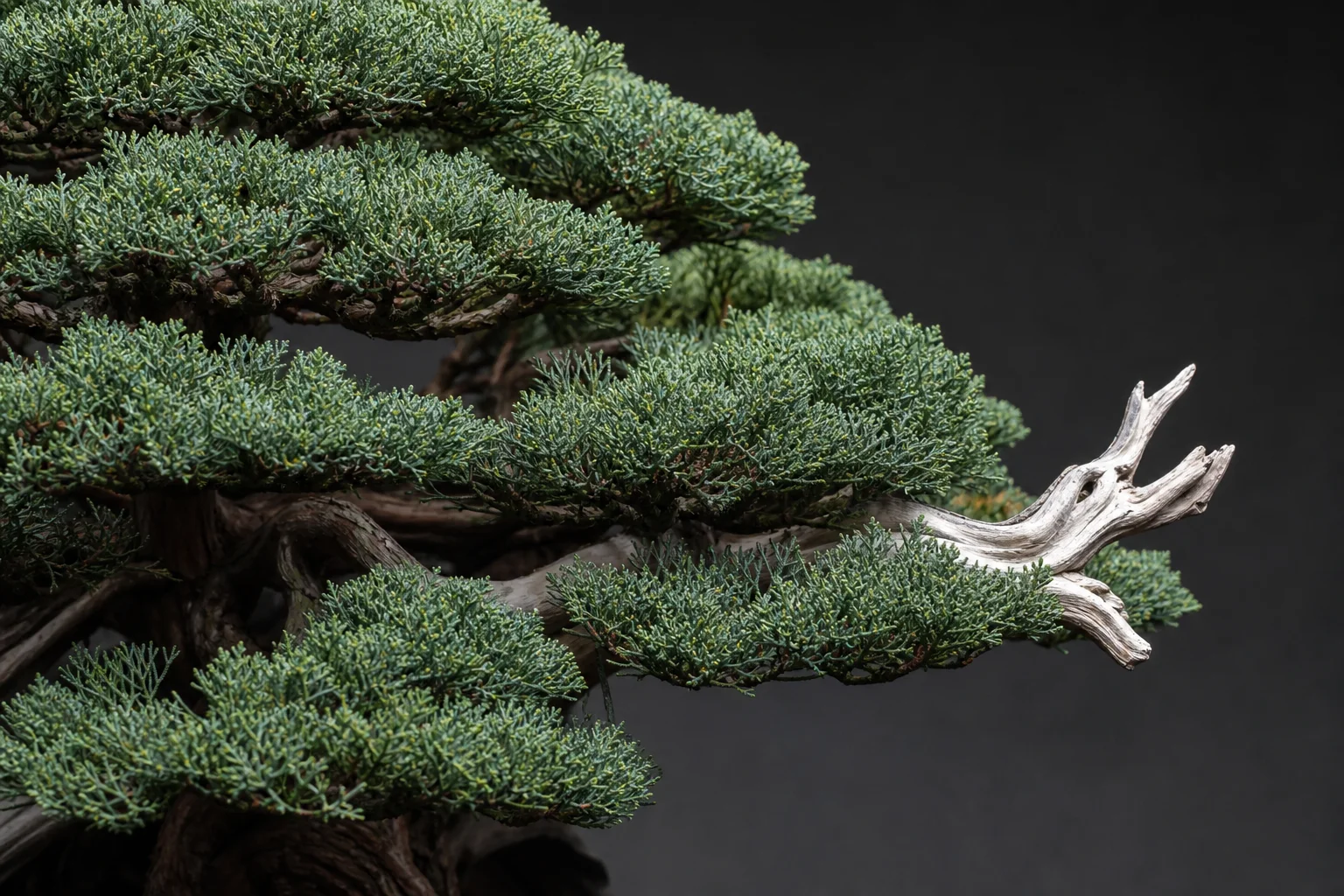
Juniperus chinensisThe connoisseur's juniper. Finer foliage, more dramatic deadwood potential, and the species behind most world-class juniper bonsai.
English yew
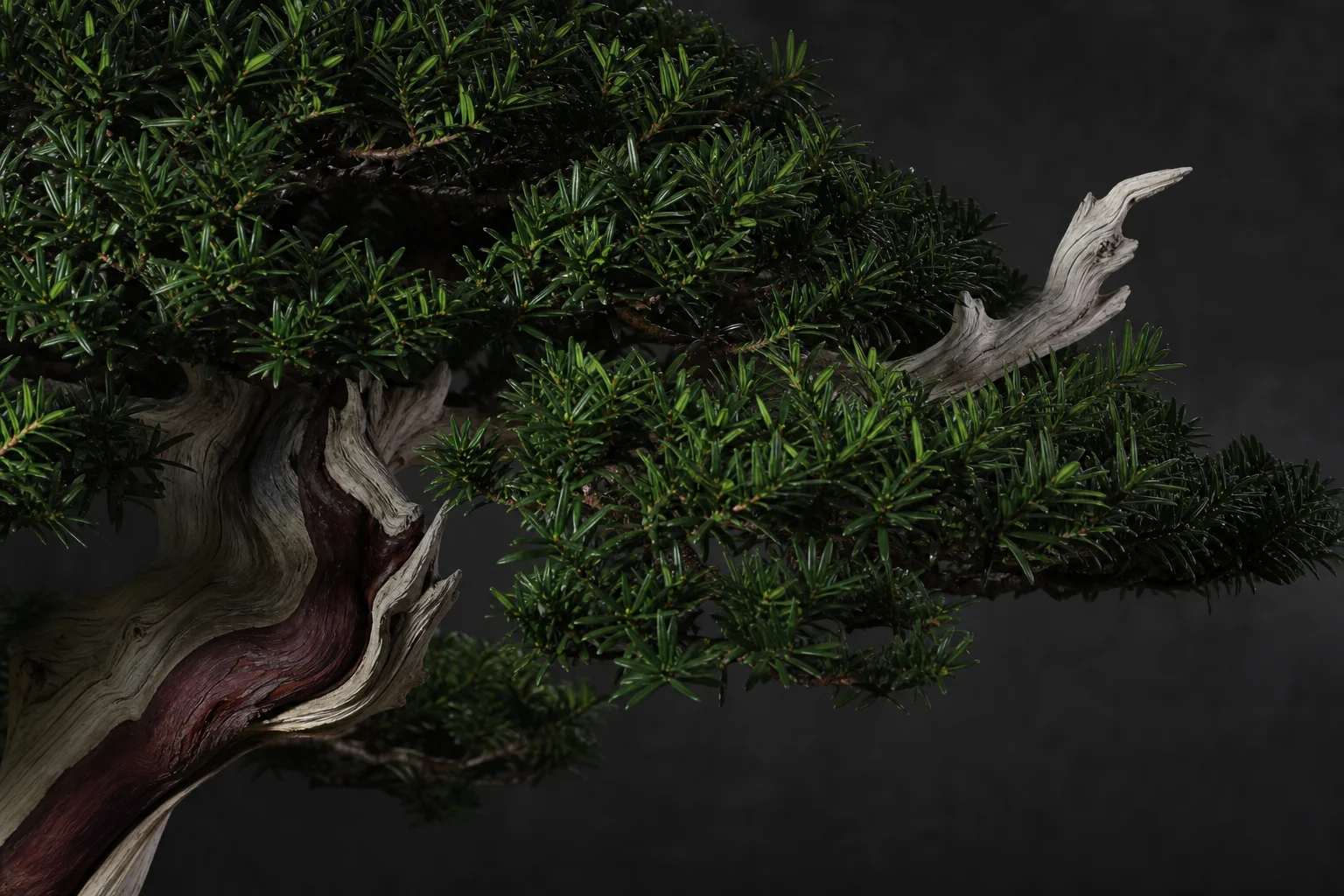
Taxus baccataThe oldest living things in Britain. Dark green needles on the youngest twigs, deep red heartwood for deadwood, and a capacity for back-budding that no other conifer matches.
European larch
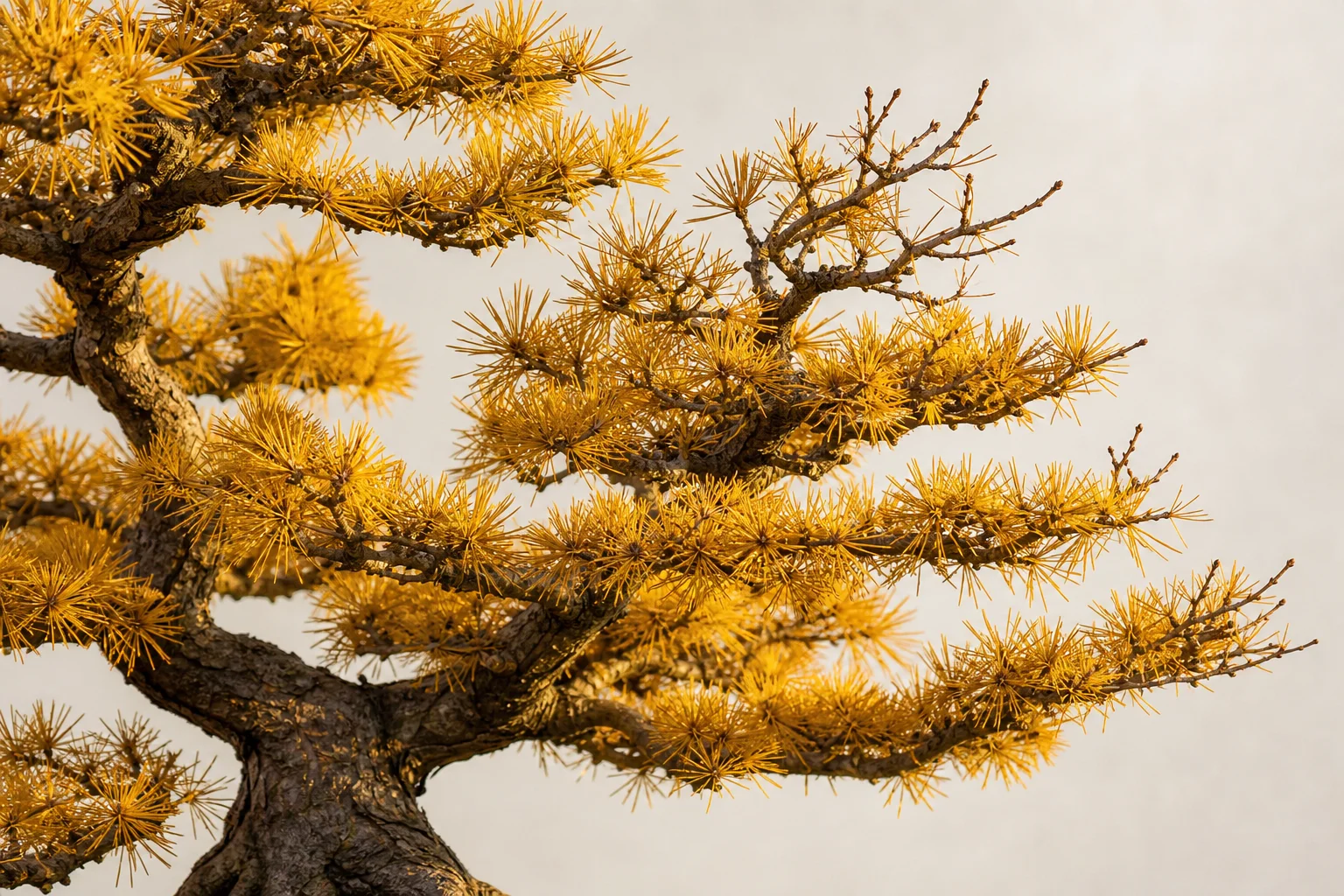
Larix deciduaThe deciduous conifer. Soft acid-green needles in spring, gold in autumn, bare in winter — and one of the toughest bonsai species in the UK.