English yew bonsai care
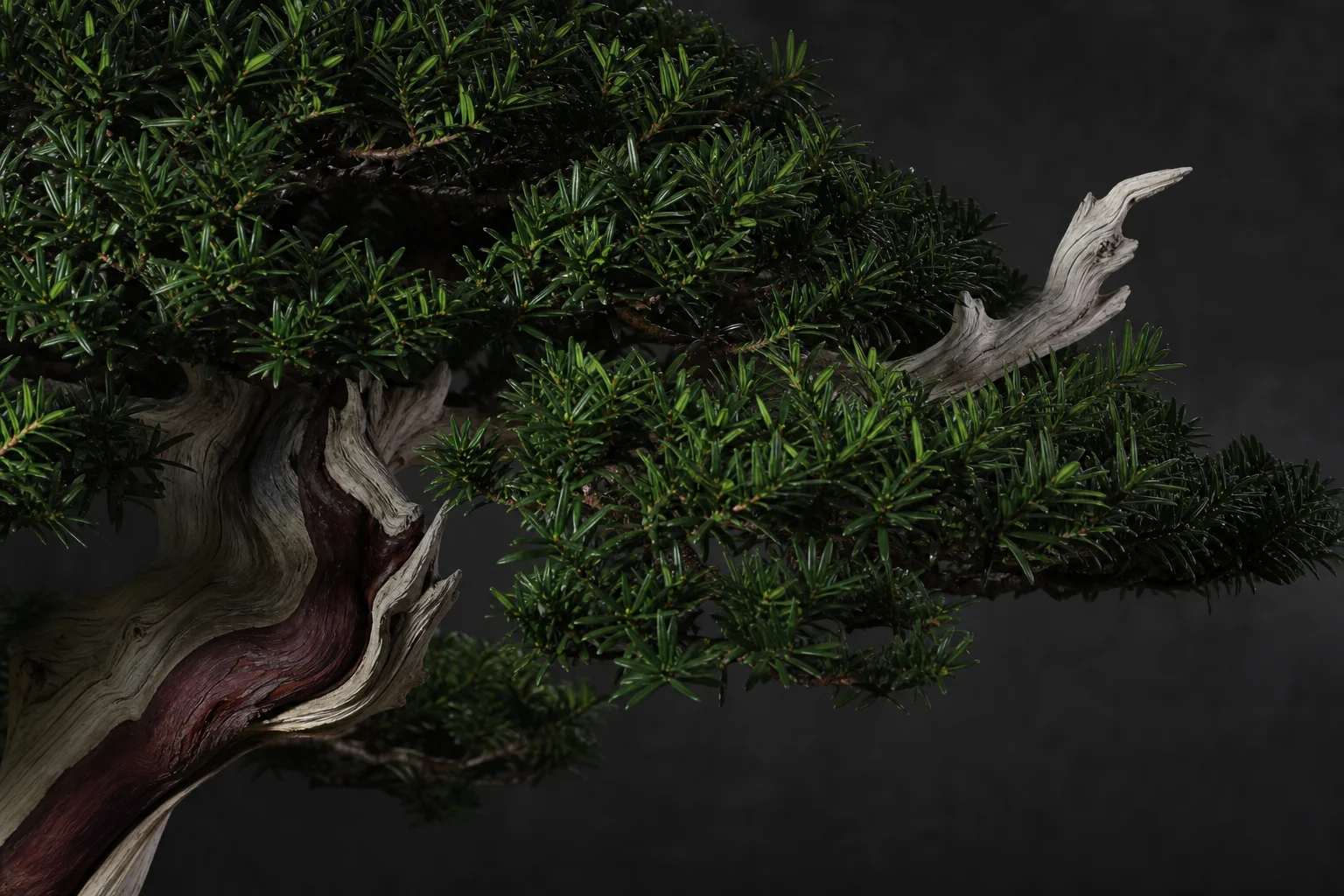
Taxus baccataThe oldest living things in Britain. Dark green needles on the youngest twigs, deep red heartwood for deadwood, and a capacity for back-budding that no other conifer matches.
Water
Every 3 days
check daily in summerLiquid feed
Every 14 days
growing seasonSolid feed
Every 28 days
slow releaseRotate
Every 30 days
even canopy growthYew is the species that breaks the rules of conifer bonsai. Where pines and most junipers refuse to back-bud on old bare wood, a healthy yew will produce new shoots from twenty-year-old branches with no foliage on them. This single biological quirk transforms what's possible — you can hard-prune a yew in ways that would kill any pine, and it will respond with vigour. It also means that collected churchyard and woodland yews with massive bare trunks can be styled into compact bonsai over a few years rather than the decades it would take with most conifers.
The wood is the second remarkable thing. Yew heartwood is a deep reddish-brown to purple-red when freshly cut, weathering to a silver-grey over years. This makes yew deadwood (jin and shari) some of the most dramatic in bonsai — a stripped yew trunk reads as ancient in a way few species can match. Combined with the species' dark glossy needles and characteristic flaking, scaly bark, the visual potential is exceptional.
The third remarkable thing is the cultural weight. Yew is the British churchyard tree par excellence, with several individuals in England, Wales, and Scotland verified to be over 2,000 years old (the Fortingall Yew in Perthshire being the most famous). A yew bonsai carries that connection — for UK growers especially, this is a species with deep roots in the landscape and the imagination.
One serious note before we go further: every part of the yew except the red flesh of the aril (the berry-like fruit) is toxic to humans, livestock, and pets. Don't eat any part of it, keep prunings out of reach of animals, and wash hands after handling — the dust from sawing or carving is particularly to be avoided.
Native throughout the British Isles and most of Europe, with isolated populations in North Africa and southwest Asia. UK populations include some of the oldest individual trees on the planet — the Fortingall Yew in Perthshire is variously estimated at 2,000–9,000 years old. The species is naturally most common on calcareous soils (chalk downs, limestone scarps) and tolerates deep shade better than almost any other conifer, often forming the under-storey beneath beech.
Seasonal calendar
Timing is for South East England. Select your region above to see adjusted guidance.
- Heavy structural pruning while dormant
- Major styling and deadwood carving
- Continue winter styling
- Wire structural branches
- Final winter wiring
- Watch for first root activity late month
- Repot when root tips visible
- New back-buds emerging on old wood — select keepers
- Begin pinching strongest growth
- Start light feeding
- Continue pinching in waves
- Wiring window closes for active growth
- Maintain consistent watering
- Continue pinching
- Take cuttings if propagating
- Foliage at darkest green
- Stop feeding mid-month
- Female trees develop red arils
- Wiring window opens again
- Reduce watering
- Heavy structural work begins
- Deadwood carving
- Continue winter styling on dormant trees
- Minimal watering
Watering
Water when the surface of the substrate has started to dry — typically every 2–3 days in summer, every 4–7 days in spring and autumn, every 7–14 days in winter. Yews tolerate a wider moisture range than pines or junipers but still demand drainage; saturated roots will eventually rot.
Tap water of any hardness is fine. Yews evolved on chalk and are unfussy about water chemistry.
The species tolerates both heavier substrates and more moisture than the demanding pines — this is part of why yew suits UK conditions so well. A yew that's slightly over-watered will sulk; a pine in the same condition will die.
Feeding
Moderate feeding. Half-strength liquid feed every two weeks from May through to mid-September. Slow-release organic pellets in spring and early summer.
Yews respond visibly to feeding (unlike pines and some junipers) — well-fed trees produce dense dark-green foliage and push strong new growth from old wood. Underfed yews look chlorotic and produce sparse foliage.
Stop feeding by late September. The species hardens well for winter with restrained late feeding.
Soil & Repotting
Free-draining but moisture-tolerant. Yews accept a wider range of substrates than most conifers.
50% akadama, 35% pumice, 15% lava in 2–6mm grade. For collected yamadori in recovery, a coarser mix with more pumice (60%) helps establish strong roots. Yews tolerate heavier substrates than pines but still prefer good drainage.
Repot every 3–4 years on established trees, every 5–7 on refined specimens. The window is late March to early May — wait for visible signs of root activity (new white tips at drainage holes or new shoot extension above).
Yews tolerate moderate root work — up to a third of the root mass on healthy established trees. Keep mycorrhizae intact where possible. Don't bare-root.
Collected yamadori material recovers reasonably well — better than pines, slower than deciduous species. Deep wooden recovery boxes with coarse substrate work well. Most collected yews push some growth in their first spring and considerably more in their second.
Pruning
Yew pruning is fundamentally different from other conifers because of the back-budding ability.
The basic seasonal pattern: pinch through the growing season, structural work in winter, back-bud assessment in spring.
Pinching (May–August): pinch out soft growing tips with fingertips as they extend. Don't use scissors on soft new growth — cut tips brown. Pinch in waves, working through the tree over several weeks, pinching strongest growth first and leaving weaker areas to catch up. This balances energy.
Hard pruning and structural work (winter, December–February): yews tolerate dramatic cutbacks. Branches can be removed back to bare wood and the species will produce new shoots from latent buds within months. Major trunk chops are possible on healthy material — something almost no other conifer permits.
Spring assessment (April–May): new back-buds emerge from old wood. Select which to keep for future branches and rub off any in unwanted positions.
The back-budding capacity is the species' single biggest advantage as bonsai. Use it. Old collected trees can be reduced and restyled in ways that wouldn't be remotely possible with pines or most junipers.
Wiring & Styling
Wire from autumn through to early spring on dormant or semi-dormant trees. Wood is moderately flexible — major bends usually need raffia wrapping or guy-wiring. Use copper for structural branches and aluminium for finer work.
Yew bark is thin and marks visibly. Apply loosely and check monthly. Wire scars on yew bark remain visible for many years.
Deadwood is a defining feature of refined yew bonsai. The red heartwood carves into dramatic features — jin, shari, uro (hollows) — and the dense wood weathers slowly, holding carved features for decades. Major deadwood work is best done in autumn or winter when the tree is less active.
Yew suits a wide range of styles. Informal upright is the classic. Literati works well on tall slender material. Cascade and semi-cascade are common — yew tolerates these styles better than most conifers because of its flexible wood. The species' shade tolerance also makes it suitable for "tree growing in a forest" compositions with understated foliage.
Substantial deadwood is the defining aesthetic feature of refined yew bonsai. Aim for compositions that contrast bleached deadwood against dark glossy foliage and red live veins — this triple contrast is something few species can deliver.
Formal upright doesn't suit the species' natural habit. Forest plantings work but are uncommon.
Winter care
Fully hardy across the UK with no protection needed. Yews tolerate the most severe British winters without complaint.
Roots in pots are slightly more vulnerable than roots in the ground, but yew root systems remain functional at lower temperatures than most species. Position pots out of standing water through winter — saturated cold roots are the main vulnerability.
Never bring indoors.
A note on red arils (the "berries"): these are the only non-toxic part of the plant and develop on female trees in autumn. They're a pleasant aesthetic feature. The seed inside the aril is highly toxic and should never be eaten. Birds eat the arils without harm and disperse the seeds.
Propagation
From seed (autumn-sown, stratified — slow, can take 18 months to germinate). From semi-hardwood cuttings in late summer (August–September) — moderate to good success rate, particularly with bottom heat. Air layering is possible. The best source of bonsai material is collected yamadori — yews are widely available in the UK from churchyard reductions, woodland thinning, and (with permission) from gardens where mature trees are being removed. The species' tolerance of dramatic collection means even very old, heavily pruned trees often recover well.
Common problems
Generally healthy outdoors. Yews have fewer problems in UK conditions than pines or most junipers.
Phytophthora root rot
Symptoms: Branch dieback or whole-tree collapse; foliage greys and yellows; soil smells sour.
Cause: Saturated substrate, sometimes combined with cold. Less common in yew than in pines but possible.
Solution: Largely fatal once symptoms appear. Prevention via free-draining substrate. Emergency repot into bone-dry substrate may save trees caught very early.
Yew gall midge (Taxomyia taxi)
Symptoms: Artichoke-like swellings on shoot tips, typically called artichoke galls.
Cause: Tiny midge lays eggs in shoot tips, causing the tree to form protective galls.
Solution: Mostly cosmetic. Prune off affected shoot tips in summer and bin (not compost). Usually a minor issue that doesn't weaken the tree.
Yew scale
Symptoms: Small brown bumps on needles and stems, sometimes with sticky honeydew and sooty mould.
Cause: Common sap-sucking pest on yews.
Solution: Manual removal where possible. Horticultural oil in winter on dormant trees. Systemic insecticide for severe infestations. Inspect new acquisitions before adding to collection.
Scorched foliage
Symptoms: Whole sections of needles turn brown and crispy, often on south-facing sides.
Cause: Sudden winter sun on previously shaded foliage, or wind desiccation on exposed positions.
Solution: Provide partial shade if recurring. Affected needles don't recover but the tree will. Position trees so foliage isn't exposed to dramatic light or wind changes between seasons.
Yellowing or sparse new growth
Symptoms: Spring growth is pale, thin, or sparse compared to previous years.
Cause: Usually under-feeding combined with substrate exhaustion in trees that haven't been repotted for many years.
Solution: Repot in spring. Resume regular feeding. Yews show feeding response visibly — well-fed trees produce dark green dense growth.
Failure to back-bud after hard pruning
Symptoms: Hard-pruned branches fail to produce new shoots from latent buds.
Cause: Either the tree wasn't healthy enough for the hard work, or the cuts were too aggressive for the section of branch.
Solution: Yews back-bud well only when healthy. Don't combine hard pruning with repotting in the same year. If a section fails to back-bud after a season, carve it to deadwood as a feature. Healthy yews almost always back-bud — failure usually indicates underlying root or vigour issues.
Popular cultivars
The native UK species. Collected churchyard and woodland material is the gold standard for serious work.
Closely related Asian species. Slightly hardier, used in Japanese bonsai. Available as nursery material in the UK.
Hybrid between English and Japanese yew, vigorous and hardy. Widely planted in UK gardens. Excellent for bonsai development.
Columnar selection. Wrong habit for most bonsai styles but used occasionally.
Spreading prostrate cultivar. Useful for cascade styling.
Track your English yew with Kentai.
Collection tracking, care logs and photo history are free — no card, no time limit.
More care guides
European larch
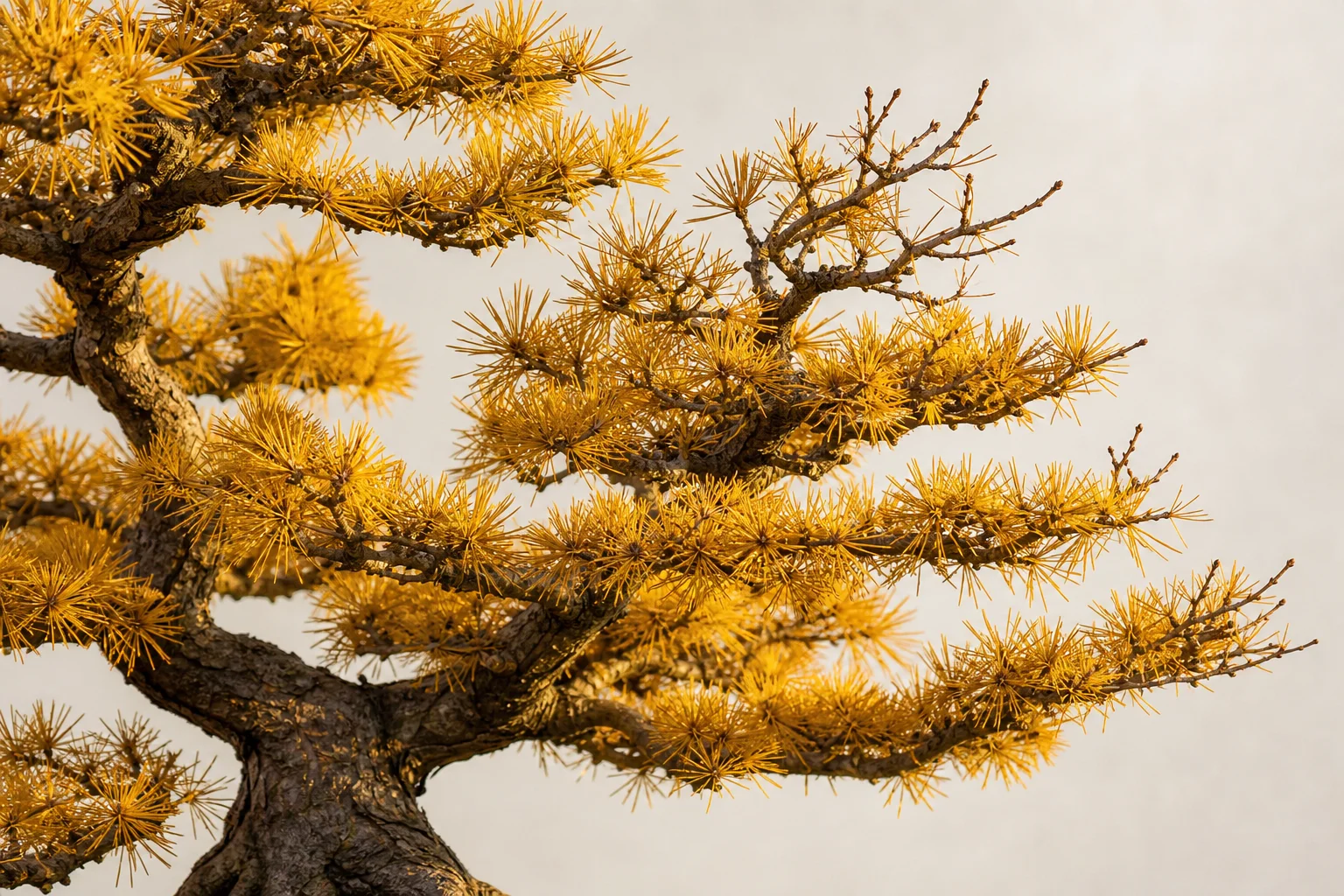
Larix deciduaThe deciduous conifer. Soft acid-green needles in spring, gold in autumn, bare in winter — and one of the toughest bonsai species in the UK.
Hinoki cypress
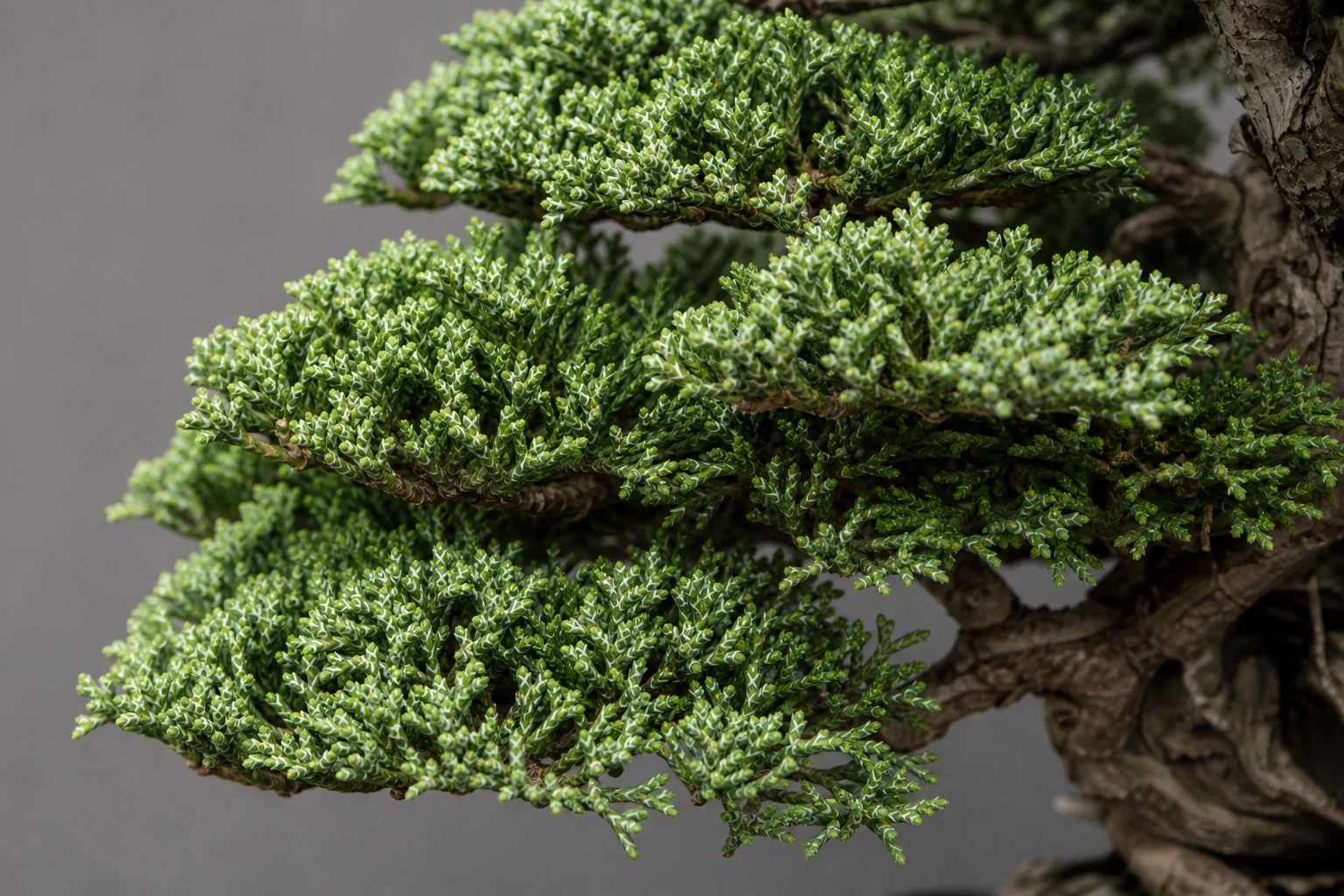
Chamaecyparis obtusaDistinctive scale-like foliage with white markings on the underside, refined ramification potential, and a tradition stretching back through Japanese temple culture. The conifer for growers who find pines and junipers too familiar.
Japanese black pine
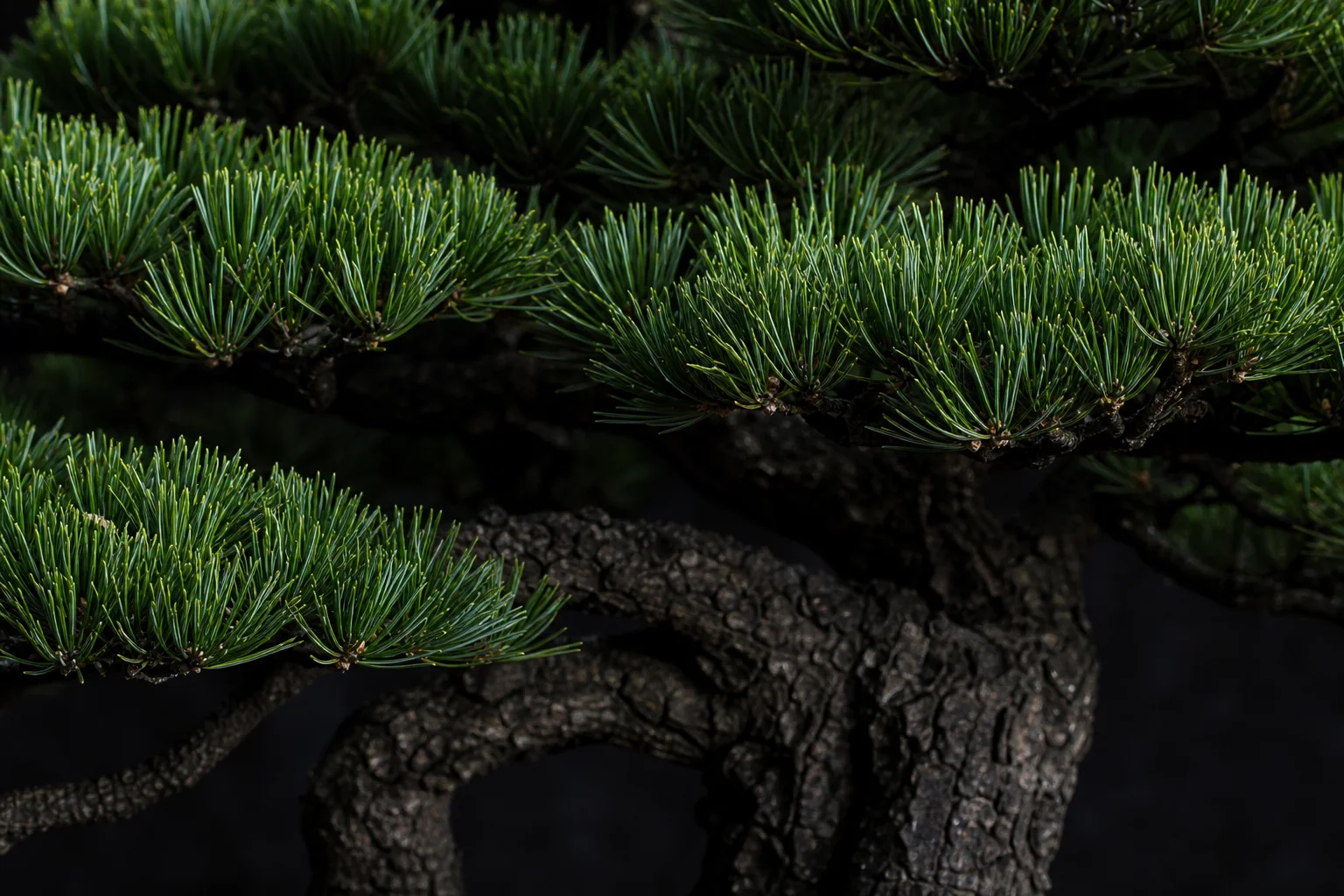
Pinus thunbergiiThe flagship bonsai pine — dark fissured bark, two-flush technique, and a steeper learning curve than any other common species.