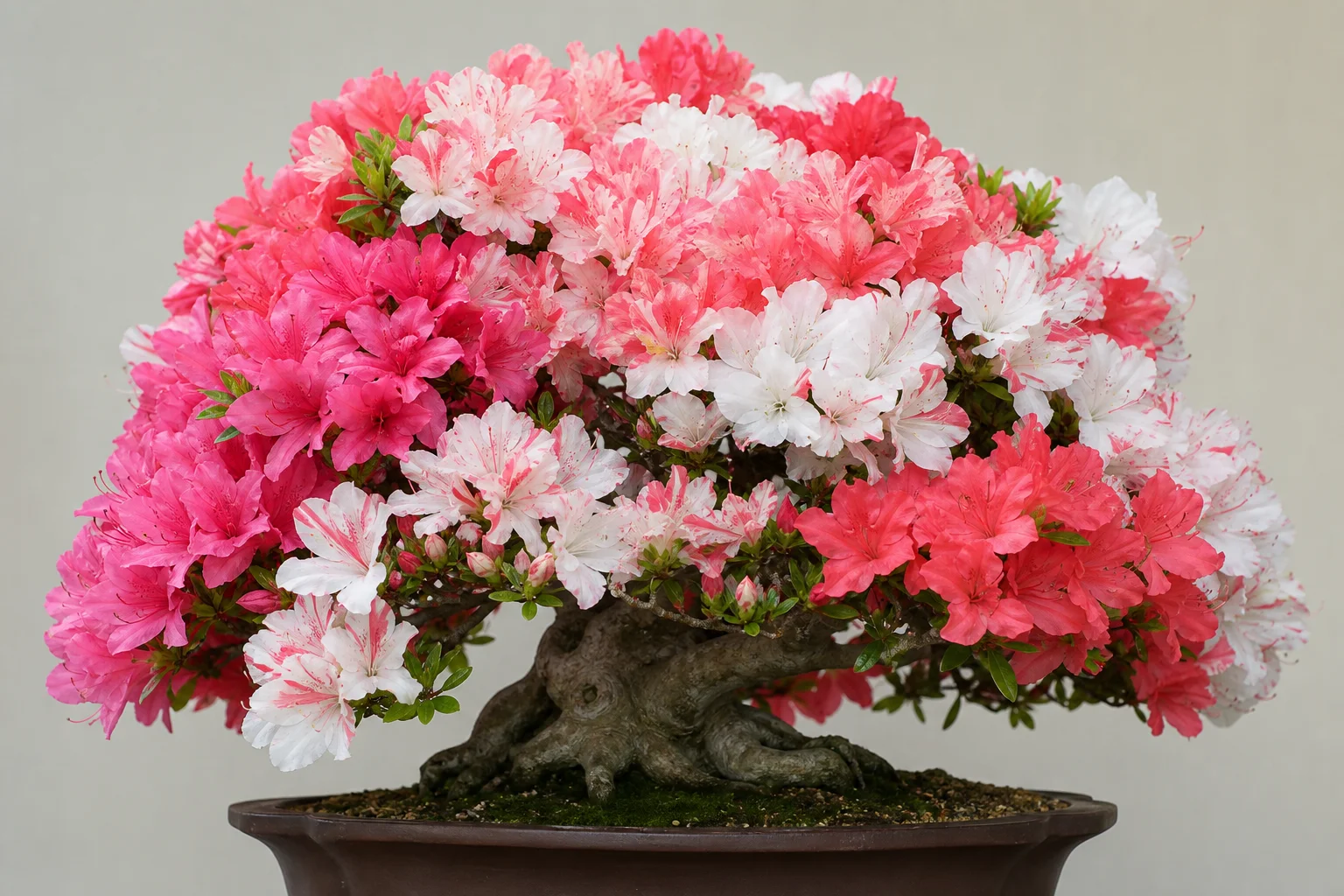
Satsuki azalea bonsai care
Rhododendron indicumThe flowering specialist. Cloud-like masses of bloom in late May to June, evergreen for the rest of the year, and a substrate and watering regime unlike anything else in bonsai.
Water
Every 1 day
check daily in summerLiquid feed
Every 7 days
growing seasonSolid feed
Every 21 days
slow releaseRotate
Every 14 days
even canopy growthSatsuki azalea is the bonsai species where the flowering display is the point. For three or four weeks in late May and early June, a mature satsuki disappears under a canopy of flowers in pink, red, white, purple, or any combination of these — many cultivars produce flowers in multiple colours on the same tree, sometimes on the same branch, due to chimeric genetic mosaicism. The display is spectacular and unmatched by any other bonsai genus.
The trade-off is that satsuki care diverges from standard bonsai practice in important ways. The substrate is different (kanuma rather than akadama), the water needs are higher (the species hates drying out), the feeding regime is different (ericaceous only, timing tied to flowering), the repotting timing is different (after flowering, not before bud break), and the pruning schedule is built entirely around the flowering cycle.
None of this is genuinely difficult, but new growers often try to apply standard bonsai care to a satsuki and end up with a weak, poorly-flowering tree. If you're going to grow satsuki, learn the species-specific approach from the start.
For UK growers there's also a climate consideration. Satsuki originate from southern Japan and want warmer summers than ours, plus protection from hard winter frosts. Most UK satsuki growers move trees into a poly tunnel or cold frame for winter, even though the species nominally tolerates UK temperatures.
Native to mountainous southern Japan — Kyushu, Shikoku, and southern Honshu. The wild species (R. indicum) has been hybridised with several related Japanese azaleas over centuries to produce the hundreds of named satsuki cultivars used in bonsai. The name satsuki refers to the fifth month of the old Japanese lunar calendar, when the species flowers.
Seasonal calendar
Timing is for South East England. Select your region above to see adjusted guidance.
- Winter protection in cold frame or poly tunnel
- Check evergreen foliage for damage
- Continue winter protection
- Watch for bud swell
- Begin moving out of full winter shelter
- Flower buds visible
- Buds swell and colour
- Daily watering resumes
- Flowering begins late month
- No feeding yet
- Peak flowering early month
- Post-flowering: deadhead, prune for structure, repot, begin feeding
The most important month of the satsuki year. Repotting, pruning, and feeding all happen here.
- Heavy feeding for next year's buds
- Light shaping pinching only
- Continue heavy feeding
- Next year's flower buds forming
- Stop feeding late month
- Buds firmly set
- Move to winter position
- Watch for first frosts
- Into winter protection
- Reduce watering
- Maintain winter protection
- Check substrate moisture
Watering
Daily through the growing season, often twice daily in summer. Satsuki absolutely will not tolerate drying out — even a single missed watering on a hot day causes leaf drop and weakens the tree for the season.
Use rainwater wherever possible. This is non-negotiable for satsuki. Hard tap water (most of southern England) is alkaline and progressively damages satsuki roots; lime in the water locks up iron and the tree develops chlorosis (yellow leaves with green veins) over months or years. Collect rainwater. If you can't, repot more frequently into fresh acidic substrate to dilute the cumulative damage.
In winter, water less frequently (every 3–5 days) but never let the substrate go bone-dry. Satsuki are evergreen and continue transpiring mildly through winter.
Feeding
Feed only with ericaceous (acidic) liquid feeds — never general balanced fertilisers. The species is calcifuge (lime-hating) and standard fertilisers progressively alkalise the substrate, which kills the tree.
The annual feeding cycle is tied to the flowering display:
Spring (March–April): No feeding. Flower buds are developing and feeding shifts energy to foliage at the expense of flowers.
Post-flowering (mid-June onwards, immediately after bloom): Resume feeding heavily — this is when next year's flower buds are forming and the tree needs nutrients. Weekly ericaceous liquid feed at full strength through to mid-September.
Autumn (late September): Stop feeding to allow wood to harden for winter.
Slow-release ericaceous pellets can supplement liquid feed from June through August. Watch for chlorosis (yellow leaves) which indicates either nutrient deficiency or alkalinity issues; correct with iron sequestrate and/or repotting.
Soil & Repotting
The substrate is the most species-specific thing about satsuki care. They require kanuma — a Japanese acidic pumice-like substrate, mined from the Kanuma region — almost exclusively. Standard akadama-based mixes don't work as well; the pH is wrong.
100% kanuma is the traditional substrate and works well. Some UK growers use 80% kanuma plus 20% akadama for moisture retention, or 70% kanuma plus 30% pumice for development material. The key is that kanuma should be the dominant component. Sieve out the dust before potting. Avoid anything containing lime, dolomite, or alkaline materials.
Repot every 2–3 years on young material, every 3–4 on mature specimens. The window is unique to this species: immediately after flowering (mid-June to mid-July in the UK), not in spring.
The reason: flower buds form during summer and autumn on the previous season's growth. Spring repotting disturbs roots during bud-development and reduces the next year's flowering. Post-flowering repotting gives the tree time to recover before bud-set.
Remove no more than a third of the root mass on healthy trees, less on older specimens. Use sharp scissors — satsuki roots are fine and tear easily. Don't bare-root. Settle into fresh kanuma, water in heavily, keep out of strong sun for 2–3 weeks afterwards.
Pruning
Satsuki pruning is entirely organised around the flowering cycle. Flowers form on previous year's growth, so pruning before flowering eliminates the display.
Spring (March–May): No pruning. Leave the tree alone.
Flowering (late May–early June): Enjoy. Don't deadhead during peak bloom.
Post-flowering pruning (mid-June, immediately after flowers fade): This is the main annual pruning. Deadhead all spent flowers (this prevents the tree from putting energy into seed). Then prune for structure and shape — branches can be removed or shortened, new growth can be guided. You have about a 6-week window before the tree starts setting next year's flower buds.
Summer (July–August): Light pinching of any unwanted strong shoots. No heavy work.
Autumn–winter: No pruning. Flower buds are dormant on the tree through winter and any cutting now removes next year's flowers.
Satsuki back-bud reliably on old wood — even hard cutbacks in June recover well. This is the species' main forgiveness — heavy structural pruning works, but only in the right window.
Wiring & Styling
Wire after flowering (June–July) or in winter on dormant trees. Satsuki bark is fragile — among the easiest to damage in bonsai. Apply wire loosely and check every two weeks during growing season. Major bends should always be raffia-wrapped.
Older satsuki develop multiple thin trunks from base sprouting. These can be wired into elegant compositions but the slim, fragile branches require extra care.
Informal upright is the most common style. The species also suits twin-trunk and clump plantings — many old satsuki naturally develop multiple trunks from the base. Cascade and semi-cascade work on suitable material.
The species' character favours styles that emphasise the canopy as a flowering mass rather than the trunk as a feature. This is different from most bonsai species — for satsuki, the bloom is the centerpiece, and styling should support it.
Some Japanese satsuki specialists style trees to look ordinary or even awkward for 11 months of the year specifically so that the flowering month is visually unexpected. This is a sophisticated aesthetic approach worth considering.
Winter care
Less hardy than most outdoor bonsai. The species nominally tolerates UK winters but in practice benefits from significant protection. Below -5°C, into a cold frame, unheated greenhouse, or sheltered porch. Most serious UK satsuki growers keep trees in a poly tunnel from November through March.
The risk is twofold: hard frost damages flower buds (reducing next year's display), and the evergreen foliage can be desiccated by cold dry winds. Shelter from both.
In severe winters (below -10°C sustained), satsuki indoors-but-cool is safer than outdoor exposure. Don't bring into a heated room — they need cold dormancy, just not deep freeze.
Propagation
From semi-hardwood cuttings in early summer with rooting hormone — moderate success. Air layering works well in late spring. From seed produces variable seedlings (most named cultivars are clonal and don't come true). Most quality UK satsuki bonsai is grafted nursery stock from specialist nurseries or imported Japanese material.
Common problems
Several specific satsuki problems are worth knowing. Most relate to substrate pH and watering.
Chlorosis (iron deficiency)
Symptoms: Leaves turn pale yellow with green veins; eventual leaf drop in severe cases.
Cause: Alkaline substrate or alkaline water (the typical UK problem). Lime locks up iron.
Solution: Switch entirely to rainwater. Repot into fresh kanuma. Apply iron sequestrate as a foliar spray and soil drench. Severe cases may take a full season to recover. Long-term: never use hard tap water on satsuki.
Petal blight
Symptoms: Flowers develop brown spots, collapse into slimy mush during bloom.
Cause: Fungal disease (Ovulinia azaleae). Worsened by wet weather during flowering.
Solution: Improve airflow during flowering. Remove and bin affected flowers. Avoid overhead watering during bloom. Fungicide spray as flowers open if problem is recurring. UK wet springs make this a real issue in some years.
Failure to flower
Symptoms: Tree produces foliage and grows well but doesn't flower, or flowers very poorly.
Cause: Multiple possible causes: pruning at the wrong time (removed flower buds), repotting at the wrong time (disturbed bud development), too much shade, alkaline substrate, lack of late-summer feeding.
Solution: Check all four: prune only after flowering (June), repot only after flowering, ensure morning sun, maintain kanuma substrate and rainwater, and feed heavily July–September. Correction may take a full year to show results.
Leaf drop in summer
Symptoms: Older leaves yellow and drop in midsummer despite watering.
Cause: Either a missed watering at some point (satsuki memory their stresses), or chlorosis, or root damage.
Solution: Check substrate pH if recurring. Maintain consistent moisture. A satsuki that's been allowed to dry will drop leaves a week or two later as the damage shows.
Spider mites
Symptoms: Leaves develop fine pale stippling, sometimes with fine webbing.
Cause: Hot dry conditions.
Solution: Hose foliage thoroughly. Improve humidity around the tree. Neem if persistent.
Azalea lace bug
Symptoms: Pale stippling on upper leaf surface, dark tarry spots on underside, leaves looking pale and tired.
Cause: Sap-sucking insect specific to azaleas.
Solution: Inspect leaf undersides weekly in summer. Systemic insecticide if severe. Improve airflow — lace bugs prefer still sheltered conditions.
Popular cultivars
Spider-flowered classic. Strap-like petals in red or pink. One of the most distinctive satsuki cultivars.
Compact habit, small leaves, profuse pink flowers. Excellent for shohin and mid-sized bonsai.
Multi-coloured flowers (white, pink, striped, sometimes all on one tree). One of the most spectacular cultivars for chimeric variation.
Large red-pink flowers, vigorous growth. Popular for development.
Refined small-flowered cultivar with striking colour breaks. Sought-after.
Compact form, deep pink flowers, excellent for refined work.
Track your Satsuki azalea with Kentai.
Collection tracking, care logs and photo history are free — no card, no time limit.
More care guides
Common box
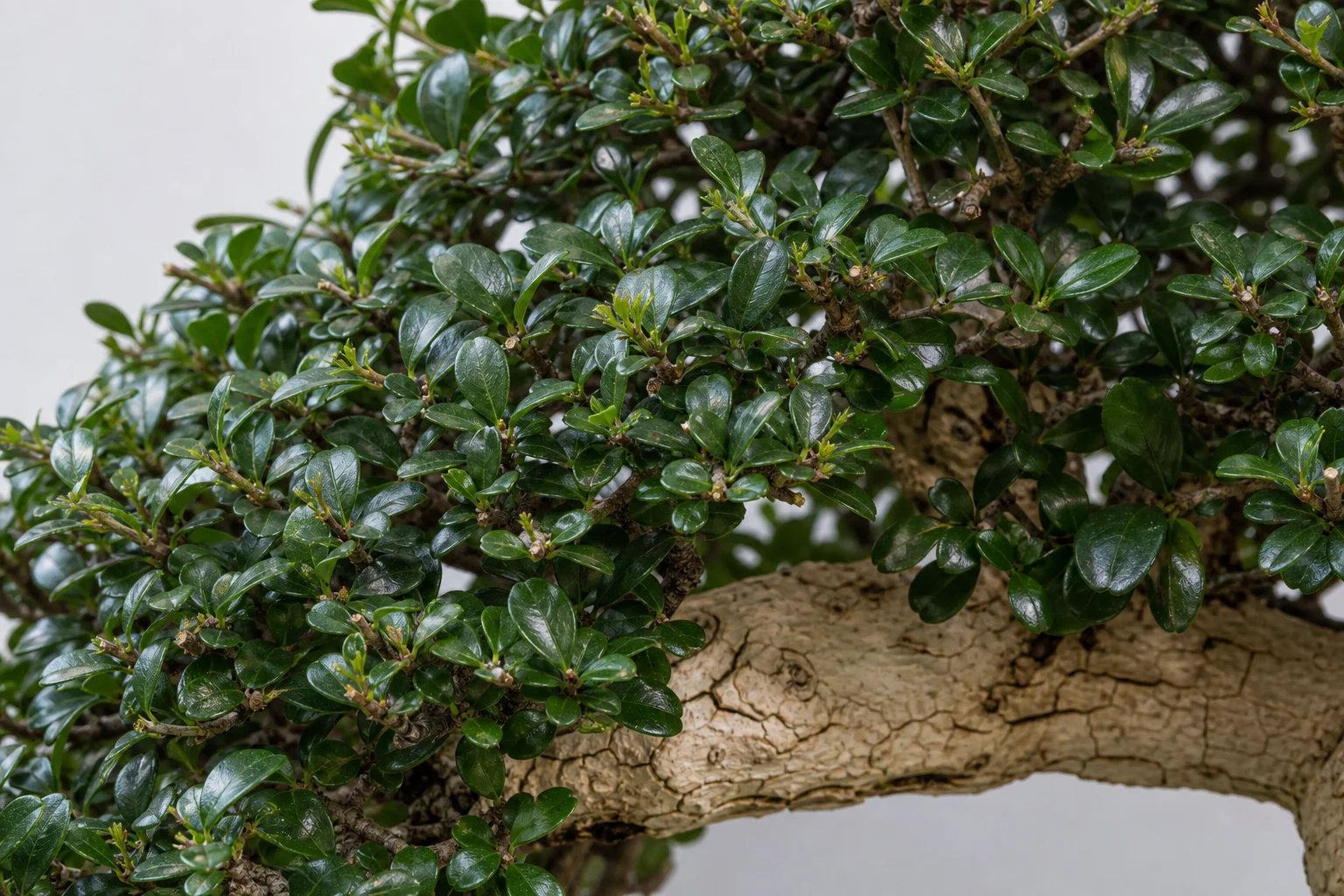
Buxus sempervirensDense small leaves, pale fissured bark, an evergreen presence year-round — and a serious UK disease and pest situation that every grower must understand before starting.
Olive
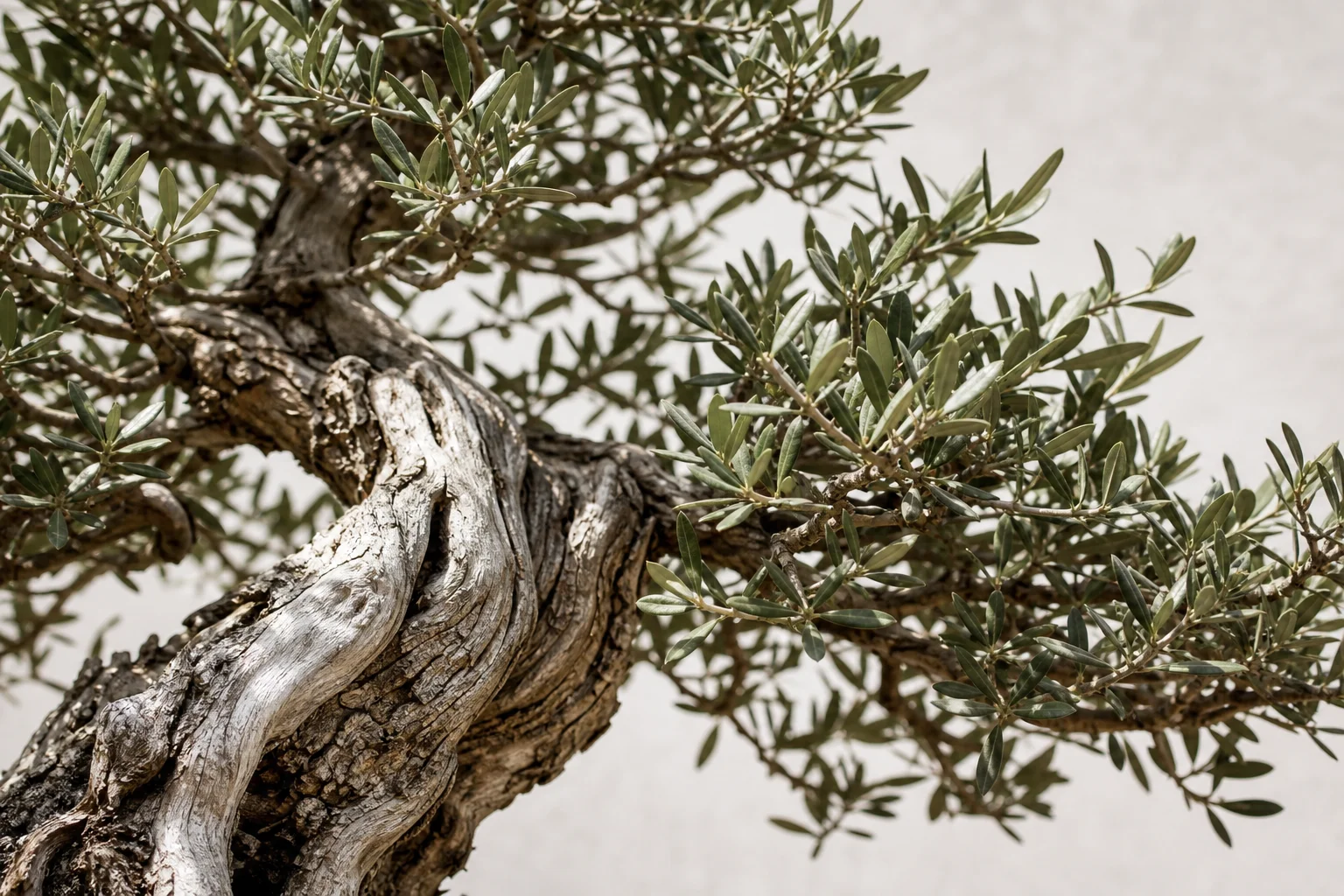
Olea europaeaSilver-grey foliage, gnarled trunk character on collected material, and the Mediterranean climate the UK is increasingly providing. Borderline-hardy but workable.
Privet
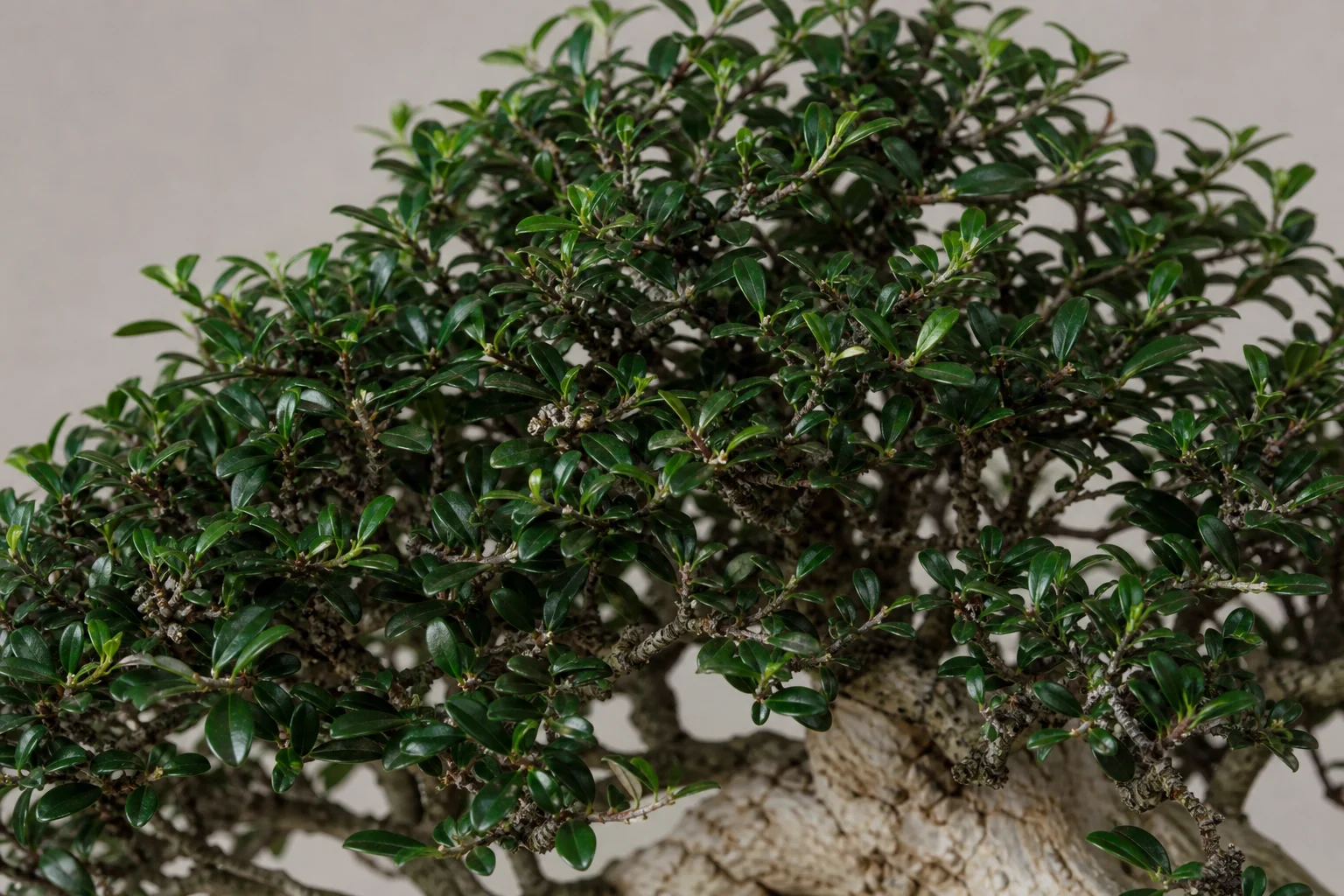
LigustrumThe bonsai species snobs avoid and beginners should embrace. Free in every overgrown UK garden, bulletproof in pots, develops quickly, looks excellent.