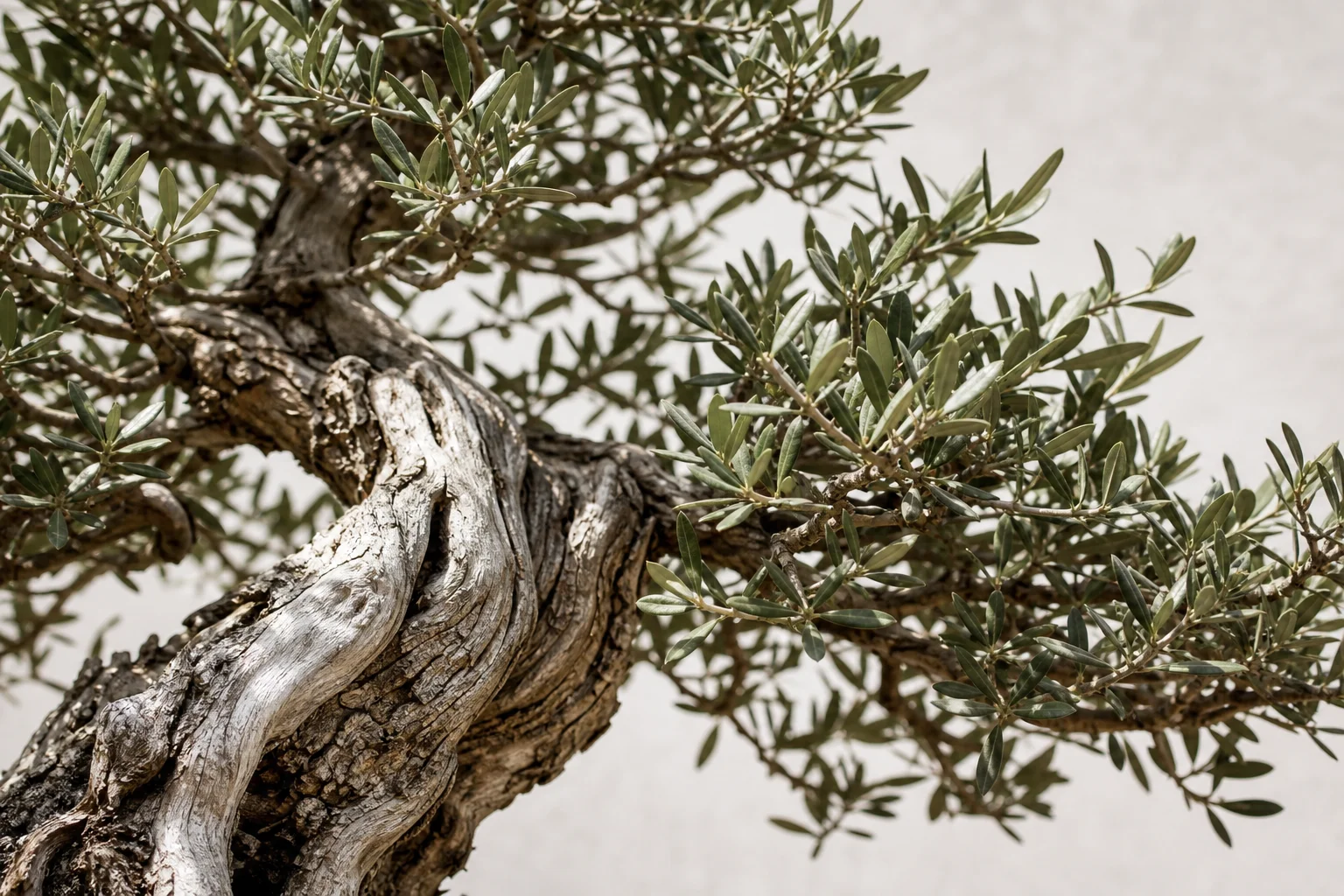
Olive bonsai care
Olea europaeaSilver-grey foliage, gnarled trunk character on collected material, and the Mediterranean climate the UK is increasingly providing. Borderline-hardy but workable.
Water
Every 3 days
check daily in summerLiquid feed
Every 14 days
growing seasonSolid feed
Every 28 days
slow releaseRotate
Every 14 days
even canopy growthOlive is the species that benefits most from climate change in UK bonsai cultivation. A decade ago, growing olives outside year-round in the UK was risky outside the warmest southwest gardens; now they thrive in most of southern and central England with only modest winter shelter, and Mediterranean-style summers mean they grow vigorously through July and August where they once struggled.
The species is one of the great trees for trunk character. Wild olives (Olea europaea sylvestris) collected from the rocky terrain of Andalusia, Greece, and Italy have trunks that look ancient at fifty years and read as positively prehistoric at two hundred. This is the species behind some of the most dramatic European bonsai specimens — gnarled, deeply fissured, deadwood-rich trees that bring real geological weight to a bonsai collection.
The practical reality for UK growers is mixed. Olive does well in southern and central England with sensible winter management (move under cover when temperatures drop below -5°C). In Scotland and exposed northern positions, it's genuinely borderline — possible but requiring greenhouse or cold frame protection from November through March. Collected ancient Mediterranean material is widely available from European bonsai dealers but expensive; UK-grown material is easier to source but lacks the trunk character of imported yamadori.
Native to the Mediterranean basin — Spain, Italy, Greece, the Levant, North Africa — where it's been cultivated for olive oil for at least 6,000 years. Wild populations (subsp. sylvestris) retain the species' natural characteristics; cultivated forms have been selected for fruit production rather than ornamental qualities. The wild form has smaller leaves and a denser habit, making it superior for refined bonsai work.
Seasonal calendar
Timing is for South East England. Select your region above to see adjusted guidance.
- Maintain winter shelter
- Light watering only
- Continue winter care
- Plan spring repotting
- Begin return to outdoor position late month if mild
- Structural pruning possible
- Buds break with warmth
- Begin slightly more regular watering
- Repotting window
- Start light feeding
- Active growth phase
- Pinch new shoots
- Wiring window opens
- Maximum growth
- Maintain consistent watering
- Continue pinching
- Structural pruning possible after growth hardens
- Stop feeding mid-month
- Reduce watering
- Plan move to winter shelter for late month
- Last hardening period
- Into winter shelter before hard frost
- Reduce watering significantly
- Fully dormant under shelter
- Minimal watering
Watering
Water moderately. Olives are drought-tolerant and resent waterlogging. Water when the surface of the substrate has dried — typically every 2–4 days in summer growing season, every 5–7 days in spring and autumn, every 7–14 days in winter while dormant.
The species evolved on rocky Mediterranean slopes with deep but free-draining soils. Overwatering produces yellow foliage, weak growth, and eventual root rot. Underwatering is rarely a problem — olives signal thirst by slight leaf curling well before any damage occurs.
In hot dry weather, more frequent watering is appropriate but always check the substrate first rather than watering on schedule.
Tap water of any hardness is fine.
Feeding
Light to moderate feeding. Half-strength liquid feed every two weeks from May through to mid-September. Slow-release organic pellets in spring and again in early summer.
Olives respond well to consistent moderate feeding. Heavy feeding produces coarse growth, long internodes, and reduced silver-grey foliage colour. The species' characteristic silvery sheen is partly a low-fertility adaptation; over-fed trees lose this distinctive appearance.
Stop feeding by late September. The species needs time to harden wood before winter.
Soil & Repotting
Very free-draining, tolerant of alkalinity and lean conditions. Olives prefer leaner substrates than most temperate species.
60% pumice, 25% akadama, 15% lava in 2–6mm grade. For collected ancient material in recovery boxes, more pumice (70%) and less akadama works well. Add a small proportion of crushed limestone or oyster shell (5%) if your water is soft — olives evolved on calcareous soils and tolerate (even prefer) some alkalinity.
Repot every 3–4 years on established trees, every 5–6 on ancient collected material. The window is late spring after risk of severe cold has passed — typically late April to early May. This is later than for hardy deciduous species and reflects the olive's preference for warm conditions during root work.
Olives tolerate moderate root work — up to a third of the root mass on healthy trees. Comb the roots out carefully and prune cleanly. Don't bare-root.
Newly imported collected material recovers slowly. Pot into deep wooden boxes with coarse free-draining substrate and provide consistent warmth (greenhouse or sheltered position) for the first 12–18 months. Most ancient olives push some growth in their first spring but considerably more in their second and third years.
Pruning
Olive pruning is forgiving. The species back-buds reliably on old wood — even very old trunks will produce new shoots when needed. Hard cutbacks heal well and rarely die back.
Structural pruning in late winter (February–March) or after summer growth has hardened (August–September). Through the growing season, let new shoots extend to four or five pairs of leaves, then cut back to two pairs. Pinch every three to four weeks in moderate growth.
The species is naturally vigorous and produces long internodes if left alone — consistent pinching is essential for refined ramification. Trees in development can be allowed to run longer; refined trees need regular attention.
Defoliation can be used on very healthy refined trees in mid-summer to reduce leaf size, but isn't usually necessary — the species' natural small leaves on the wild form are already well-proportioned for bonsai.
Wiring & Styling
Wire after new growth hardens in early summer or on bare wood in winter. Olive bark thickens and develops the species' characteristic fissured plating over decades — wire marks visibly on young thin bark but less visibly on older thicker sections. Apply loosely and check fortnightly.
Wood is moderately flexible. Major bends usually need raffia wrapping and gradual progression — olive wood can split with aggressive bending.
Deadwood is a defining feature of mature olive bonsai, particularly on collected material. The wood is dense, weathers to a silver-grey, and holds carved features for decades. Substantial jin and shari work is traditional and effective.
Informal upright with substantial trunk character is the classic olive style. Twin-trunk and clump forms work brilliantly — olives often grow as multi-trunk specimens in the wild. Literati works on tall slender material with a top of foliage. Cascade and semi-cascade are uncommon but possible on suitable material.
Formal upright doesn't suit the species. Aim for compositions that emphasise the gnarled, weathered character of collected material — deadwood, twisting trunk lines, and silver-grey foliage contrasting against bleached wood.
Winter care
The single most important practical question for UK olive bonsai growers. The species is rated H4 — hardy through southern UK winters in mild years but vulnerable in severe cold.
Below -5°C sustained, move to an unheated greenhouse, cold frame, or sheltered porch. The goal is to keep roots from freezing solid, not to provide warmth — olives need cool dormancy and shouldn't be kept in heated rooms.
In southern England in normal winters, modest shelter (against a wall, out of wind, off the ground) is often sufficient. In the Midlands and north, plan winter protection from late November through March. In Scotland and Northern Ireland, the species is genuinely borderline and requires reliable cold-frame or greenhouse protection.
Reduce watering through winter — saturated cold roots are a serious risk. Slightly drier is better than slightly wetter in cold weather.
Never keep indoors during dormancy. Heated rooms break the cold rest the species needs.
Propagation
From seed possible but slow and produces variable seedlings. From semi-hardwood cuttings in summer (July–August) — moderate success with rooting hormone. From air layering in late spring (May) — good success on suitable branches. The best route to substantial bonsai material is collected wild olives from Mediterranean specialist dealers; the second-best is well-developed UK garden olives that have been growing for 20+ years.
Common problems
Generally healthy in UK cultivation. Olive's traditional Mediterranean diseases (olive fly, olive knot) are uncommon in the UK climate.
Frost damage to soft growth
Symptoms: Tips of new growth blacken and die back after unexpected cold.
Cause: Late autumn growth or early spring growth caught by sudden cold.
Solution: Move under cover overnight if freezing is forecast on unhardened growth. Cut back affected tips to healthy wood once danger has passed. Olives recover from moderate frost damage but severe cold can kill the tree.
Root rot from winter waterlogging
Symptoms: Tree weakens through winter or fails to push growth in spring; substrate sour-smelling.
Cause: Cold saturated substrate.
Solution: Reduce winter watering. Ensure pots drain freely and aren't sitting in standing water. Emergency repot into bone-dry substrate may save trees caught early.
Scale insects
Symptoms: Small brown bumps on stems and undersides of leaves, sticky residue.
Cause: Common pest, particularly on imported Mediterranean material.
Solution: Manual removal with alcohol-dipped cotton bud. Horticultural oil in winter. Systemic insecticide for severe infestations. Inspect imported material carefully on arrival.
Leaf yellowing in spring
Symptoms: Leaves yellow and drop after winter; often coincides with return to outdoor position.
Cause: Sudden environmental change from sheltered winter conditions to bright cool spring.
Solution: Acclimatise gradually over 2 weeks. Increase shelter on cold nights initially. New leaves emerge as conditions stabilise.
Failure to back-bud after hard pruning
Symptoms: Section of branch pruned hard fails to produce new buds.
Cause: Tree wasn't healthy enough for hard work, or pruning was done in cold conditions.
Solution: Olives back-bud well on healthy trees in warm conditions. Plan hard pruning for early summer when the tree is actively growing. Don't combine major pruning with repotting in the same year.
Long internodes and coarse growth
Symptoms: Year's growth produces long stretches between leaves and oversized leaves.
Cause: Overfeeding combined with insufficient pinching.
Solution: Reduce feeding to a quarter-strength weekly schedule for a season. Pinch new shoots earlier and more aggressively. Internode length will reduce gradually with consistent technique.
Popular cultivars
Standard cultivated olive. Larger leaves and more vigorous than the wild form. Acceptable for bonsai but less ideal.
The wild form — smaller leaves, denser habit, thornier. Far superior for bonsai. Most collected Mediterranean yamadori is this form.
African olive subspecies. Slightly more tender. Less common in UK bonsai.
Columnar Italian cultivar. Wrong habit for bonsai but occasionally seen.
Track your Olive with Kentai.
Collection tracking, care logs and photo history are free — no card, no time limit.
More care guides
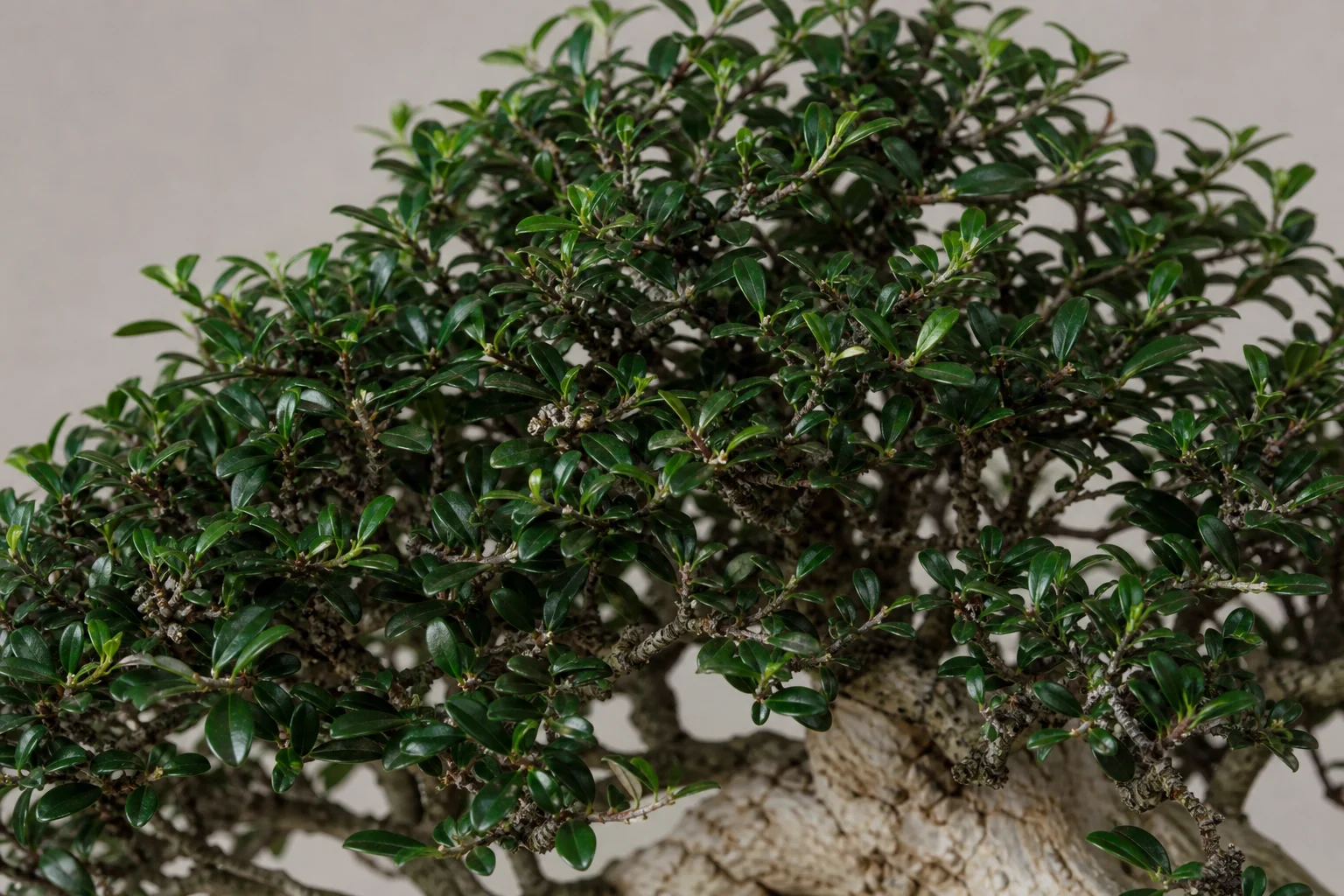
Privet
LigustrumThe bonsai species snobs avoid and beginners should embrace. Free in every overgrown UK garden, bulletproof in pots, develops quickly, looks excellent.
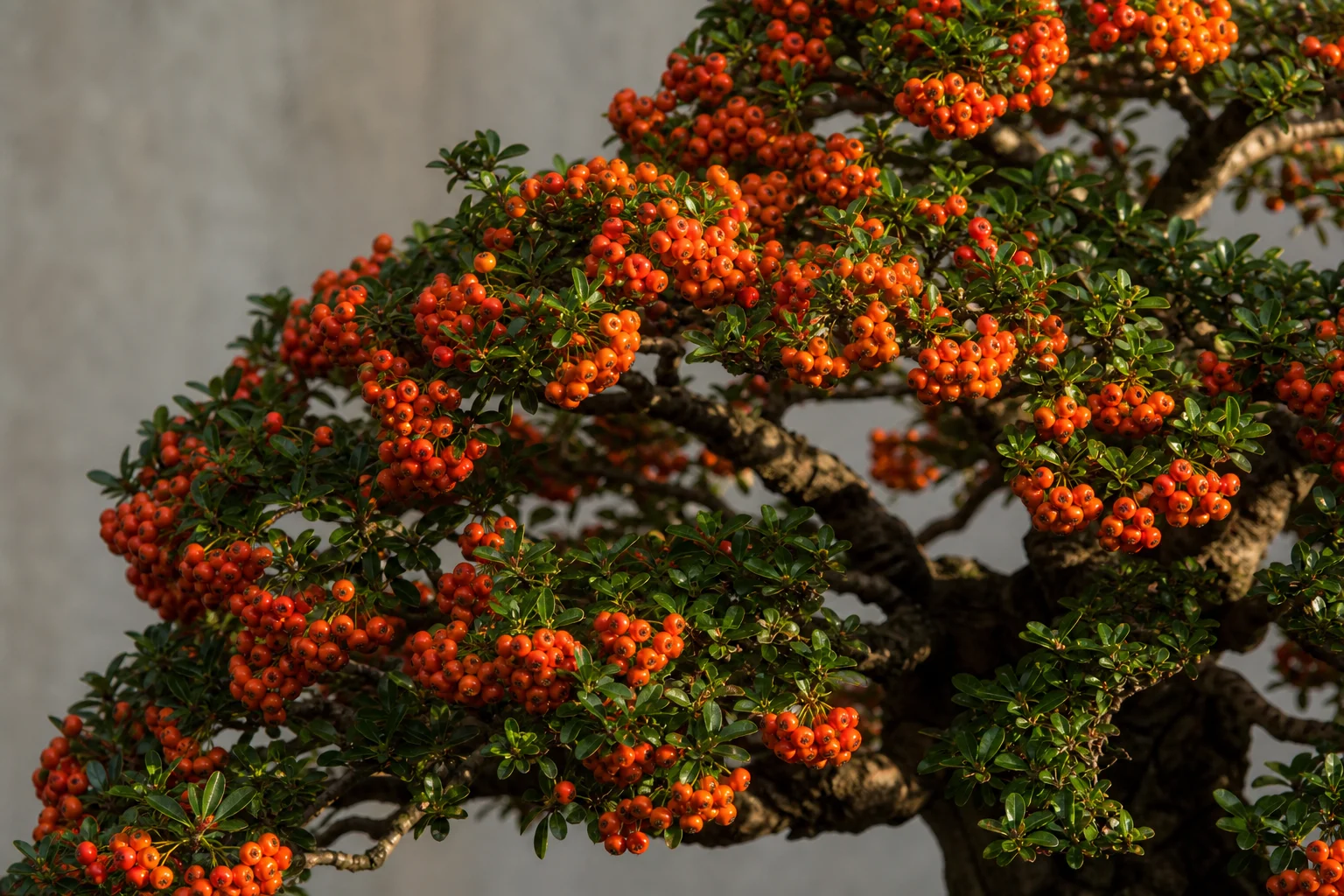
Pyracantha
Pyracantha coccineaEvergreen, thorny, and covered in red or orange berries from autumn through winter. The bonsai that earned the name firethorn.
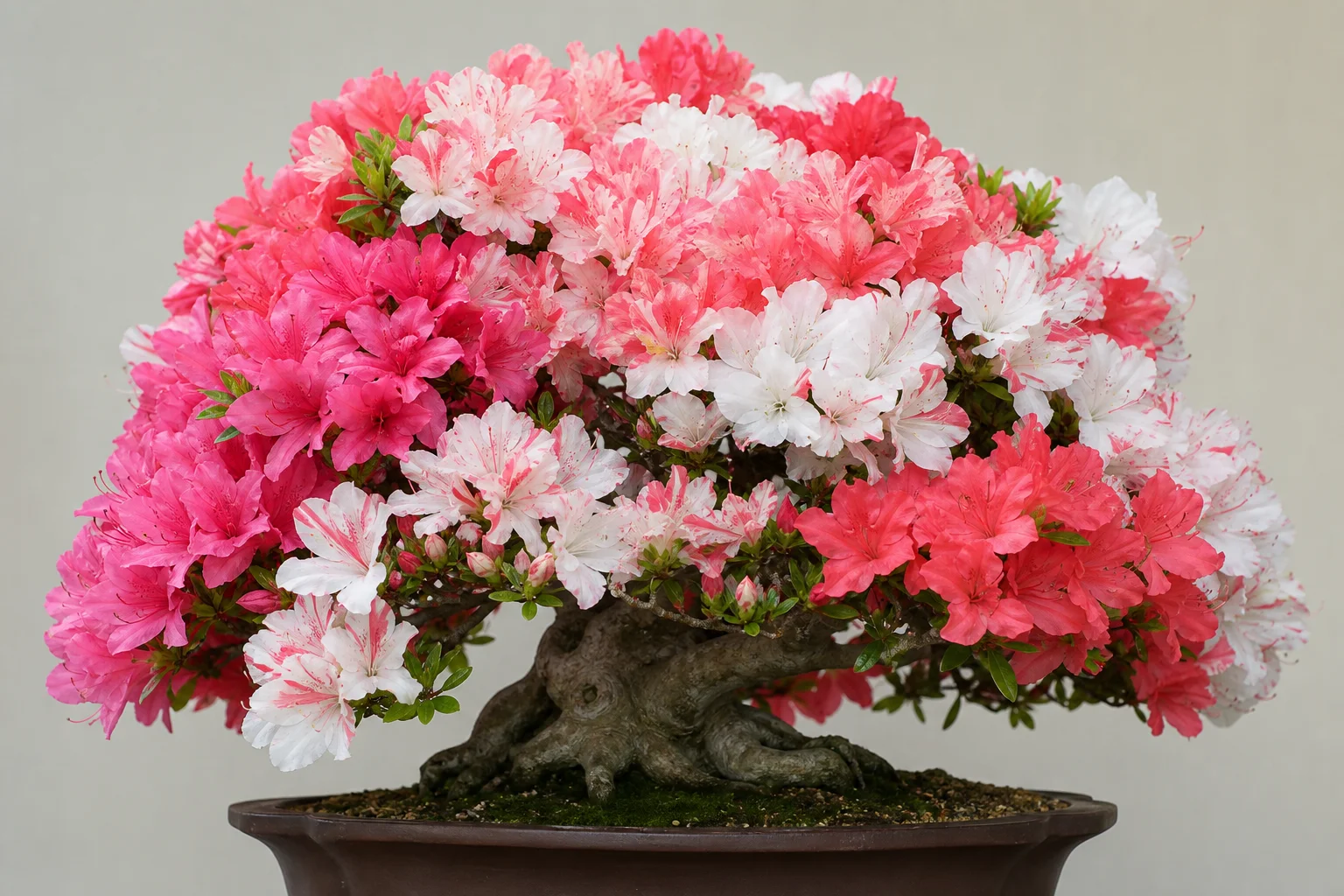
Satsuki azalea
Rhododendron indicumThe flowering specialist. Cloud-like masses of bloom in late May to June, evergreen for the rest of the year, and a substrate and watering regime unlike anything else in bonsai.