Hinoki cypress bonsai care
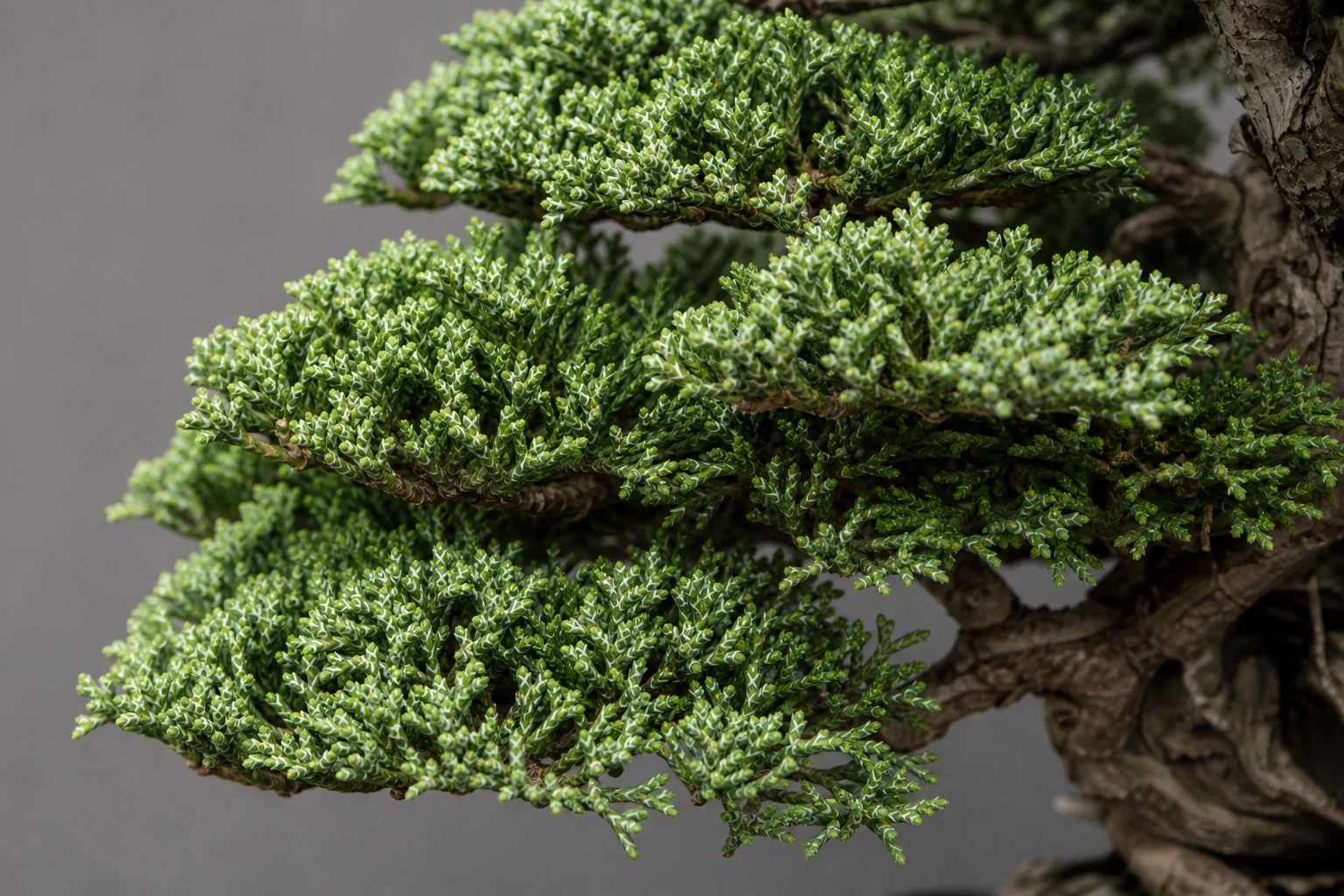
Chamaecyparis obtusaDistinctive scale-like foliage with white markings on the underside, refined ramification potential, and a tradition stretching back through Japanese temple culture. The conifer for growers who find pines and junipers too familiar.
Water
Every 3 days
check daily in summerLiquid feed
Every 14 days
growing seasonSolid feed
Every 28 days
slow releaseRotate
Every 30 days
even canopy growthHinoki cypress is the conifer that occupies a unique place in Japanese aesthetic tradition — temple architecture, ceremonial wood, sacred forests in the Kiso region — and translates that cultural weight directly into bonsai. The foliage isn't pine-needle or juniper-scale exactly; it's flat sprays of overlapping scale-like leaves with distinctive white markings on the underside that form X or Y shapes when examined closely. This unique foliage texture, combined with the species' fine ramification and slow steady growth, produces some of the most refined evergreen bonsai available.
The cultivar landscape matters more for Hinoki than for most species. The wild-type Chamaecyparis obtusa grows into a substantial forest tree and is rarely used for bonsai. Instead, dwarf cultivars selected for bonsai over generations dominate: 'Nana Gracilis' (compact, slow, the most widely available), 'Nana' (even smaller), 'Kosteri' (very dwarf, twisted habit), 'Chabo-hiba' (the traditional bonsai cultivar in Japan), and various others. Buying decisions matter — material from a Hinoki cultivar selected for bonsai versus wild-type material from a garden centre have dramatically different potential.
The species is moderately tricky in UK conditions. Hinoki prefers slightly cooler, more humid summers than southern England often provides, and the species can suffer from inner branch dieback when conditions are too dry. Northern UK suits it better than the south on average. Watering and humidity management matter more for Hinoki than for tougher conifers like junipers.
Native to central and southern Japan, including the famous Kiso region where the species is harvested for traditional Japanese carpentry. The Japanese name 'Hinoki' appears in classical texts and the wood holds particular cultural significance — used historically for the construction of shrines, temples, and the Imperial palace. As bonsai, the species has been developed for centuries, with the most refined cultivars selected specifically for bonsai work in Japan over multiple generations.
Seasonal calendar
Timing is for South East England. Select your region above to see adjusted guidance.
- Structural pruning while dormant
- Major wiring on dormant trees
- Continue winter styling
- Plan spring repotting
- Watch for root activity late month
- Final winter wiring
- Repot when root tips visible
- Begin light watering increase
- New growth begins extending
- Start light feeding
- Begin finger-pinching
- Continue pinching in waves
- Thin interior foliage
- Maintain consistent watering
- Continue pinching
- Last feeding mid-month
- Begin assessing where structural pruning is needed
- Stop feeding mid-month
- Reduce watering as growth slows
- Wiring window opens
- Structural pruning begins
- Heavy structural work
- Shelter from desiccating winds
- Continue styling on dormant trees
- Minimal watering
Watering
Water when the surface of the substrate has dried. Typically every 2–3 days in summer, every 4–7 days in spring and autumn, every 7–14 days in winter.
Hinoki is slightly more moisture-tolerant than junipers but less so than yew. The species likes consistent moisture during active growth and resents both prolonged dryness (causes inner foliage browning) and saturation (causes root rot).
Avoid overhead watering in damp humid conditions — the dense foliage holds moisture in still air and encourages fungal issues.
Use rainwater where available; the species tolerates hard tap water but performs slightly better on rainwater over years.
Feeding
Light feeding. Half-strength liquid feed every two weeks from May through to mid-September. Slow-release organic pellets in spring and early summer.
Hinoki responds to feeding more conservatively than vigorous deciduous species. Heavy feeding produces uncharacteristically long shoots and loses the dense compact character that makes refined Hinoki bonsai valuable.
Stop feeding by mid-September.
Soil & Repotting
Very free-draining, slightly acidic. Hinoki demands drainage even more strictly than yew.
70% pumice, 20% akadama, 10% lava in 2–6mm grade. For collected or developing material, slightly higher pumice content. Avoid akadama-dominant mixes; they hold too much water for Hinoki roots.
Repot every 4–6 years on established trees. The window is late March to early May — wait for visible root activity before disturbing.
Hinoki tolerates root work less well than most bonsai species — comparable to Japanese white pine. Never bare-root. Remove no more than a quarter of the root mass on healthy trees, less on older specimens. Mycorrhizal preservation matters.
The species recovers slowly from root work. A tree repotted in spring may not push strong growth until the following year. Patience is essential.
Pruning
Hinoki pruning is finger-pinching only on healthy foliage — never use scissors on living growth. Cut foliage browns at the cut edge and the damage persists.
The technique: pinch out extending soft growth tips between thumb and finger as they elongate. Work in waves through the tree from late May through August, pinching strongest growth first and leaving weaker areas to catch up.
Structural pruning (removing entire branches or sections back to bare wood) is done in late autumn or winter — October through February. The species back-buds from old wood reasonably well but less reliably than yew. Major reductions need to be planned carefully.
A specific Hinoki issue: the species' dense growth habit tends to shade out interior buds and produce 'doughnut' trees with bare interior and foliage only on the outer surface. Counter this with regular interior thinning — remove some foliage from the inside of pads to maintain light and air penetration.
Wiring & Styling
Wire from autumn through to early spring on dormant or semi-dormant trees. Hinoki wood is moderately flexible but brittle on heavier branches — major bends usually need raffia wrapping. Use copper for structural branches and aluminium for finer work.
Hinoki bark marks visibly. Apply loosely and check fortnightly. The slow growth means wire can stay on for extended periods (often a full season) without biting in.
Deadwood works on Hinoki but is less dramatic than on yew or juniper — the wood is softer and weathers differently.
Informal upright is the classic Hinoki style. The species also suits literati on tall slender material with foliage clustered near the top. Cascade and semi-cascade work well on dwarf cultivars with suitable habit. Twin-trunk forms are traditional and effective.
Formal upright doesn't suit the species' habit. Forest plantings of multiple Hinoki are spectacular but require careful management of inner branch loss.
The species' refined foliage and slow growth suit quiet, considered compositions rather than dramatic styling.
Winter care
Hardy across most of the UK in normal winters. The species is rated H5 — slightly less hardy than yew or larch but tolerant of typical British winters in most of England, Wales, and southern Scotland.
In exposed northern and Scottish positions, light shelter in severe winters is sensible. The species' main winter vulnerability isn't cold but desiccation — exposed positions in strong winter wind can dry out the scale-like foliage faster than the roots can replace water.
Never bring indoors.
Propagation
Almost exclusively grown grafted in commercial cultivar production. Cuttings of dwarf cultivars are difficult but possible. From seed produces wild-type Hinoki rather than the dwarf cultivars used for bonsai. Most UK Hinoki bonsai material is purchased as nursery stock and developed over many years, or imported from Japan as already-developed bonsai.
Common problems
Mostly healthy. The main issues are physiological rather than pest or disease.
Brown tips from scissor cuts
Symptoms: Cut foliage browns at the edges and the damage persists for the year.
Cause: Hinoki responds badly to scissor cuts on living foliage.
Solution: Use fingertip pinching only on growing tips. Save scissors for cutting bare branches or removing whole sections of foliage.
Interior browning and dieback (doughnut tree)
Symptoms: Inner foliage browns and dies; outer canopy remains healthy but the tree becomes hollow.
Cause: Outer growth blocks light to interior; in severe cases, inner branches die back entirely.
Solution: Annual mid-summer thinning of outer pads. Remove some foliage from inside the pads to maintain light penetration. Once interior is bare it's slow to recover — Hinoki back-budding is moderate at best.
Desiccation in winter wind
Symptoms: Whole sections of foliage turn brown after exposed cold weather; sometimes the damage doesn't appear until spring.
Cause: Strong wind dries the scale-like foliage faster than roots can replace water during cold weather when root activity is limited.
Solution: Shelter from prevailing wind in winter. Affected foliage often doesn't recover but the tree itself usually does.
Phytophthora root rot
Symptoms: Tree weakens, foliage dulls, eventual whole-tree collapse.
Cause: Saturated substrate.
Solution: Largely fatal. Prevention via very free-draining substrate and careful watering. Hinoki is moderately sensitive to root rot.
Slow recovery from root work
Symptoms: Tree pushes weak growth after repotting and may not recover full vigour for a full season.
Cause: Normal species behaviour — Hinoki recovers slowly.
Solution: Patience. Don't combine repotting with major structural work. Don't repot more often than necessary.
Cypress aphid (Cinara cupressivora)
Symptoms: Sticky honeydew on foliage; sometimes sooty mould; occasional patches of foliage death.
Cause: Common sap-sucking pest on cypress family species.
Solution: Hose off. Neem oil if persistent. Severe infestations may require systemic insecticide.
Popular cultivars
The standard bonsai cultivar. Compact, slow growth, refined scale foliage. Most widely available.
Even smaller than Nana Gracilis. Slower but produces more refined bonsai. Less commonly available.
Very dwarf cultivar with distinctive twisted growth. Excellent for shohin work where available.
Traditional Japanese bonsai cultivar. Historically the standard for serious Hinoki bonsai; less common outside Japan.
Related species with similar foliage. Less commonly used for bonsai but suitable.
North American species widely planted in UK. Sometimes used for bonsai but more difficult than C. obtusa — vulnerable to Phytophthora lateralis.
Track your Hinoki cypress with Kentai.
Collection tracking, care logs and photo history are free — no card, no time limit.
More care guides
Japanese black pine
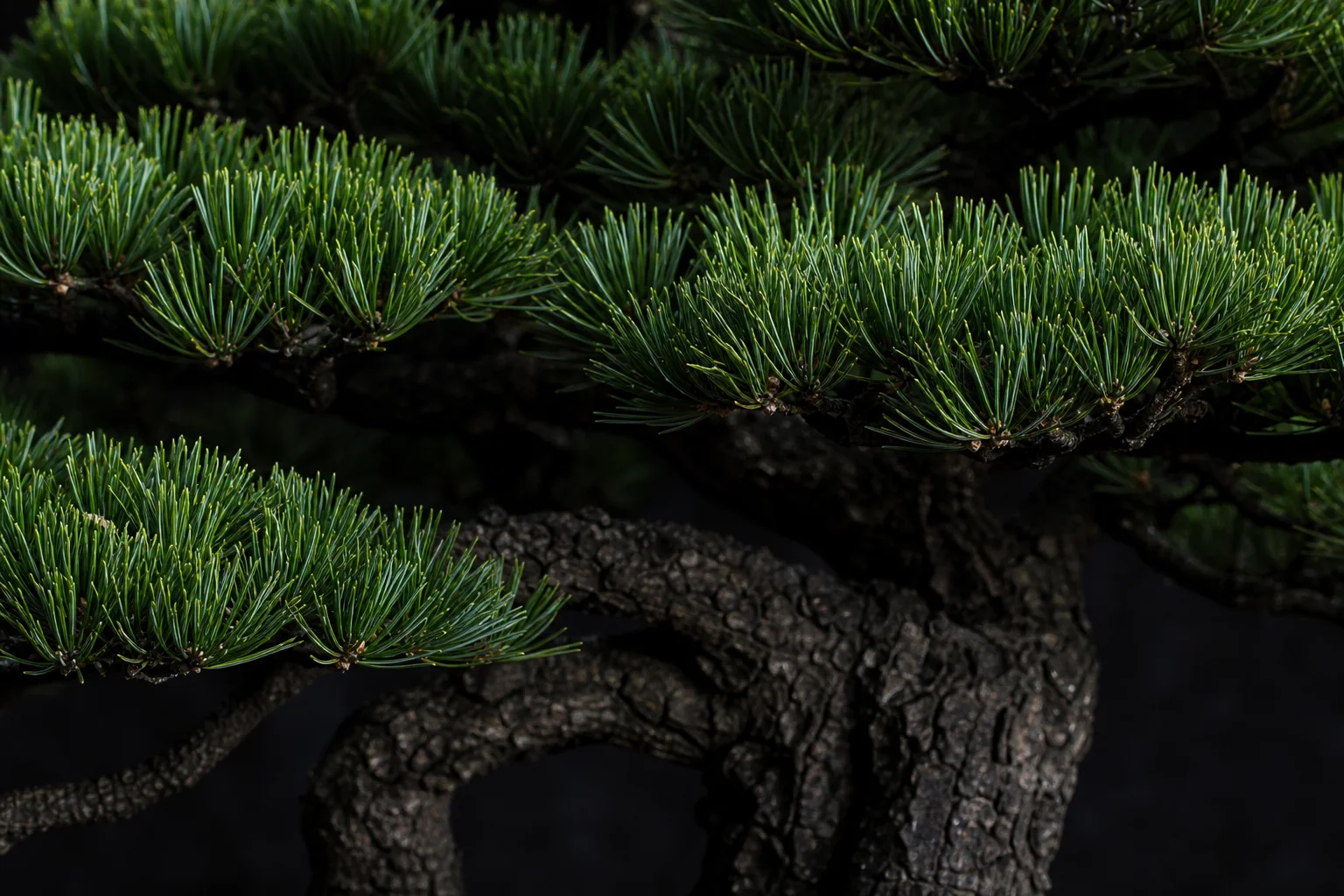
Pinus thunbergiiThe flagship bonsai pine — dark fissured bark, two-flush technique, and a steeper learning curve than any other common species.
Japanese white pine
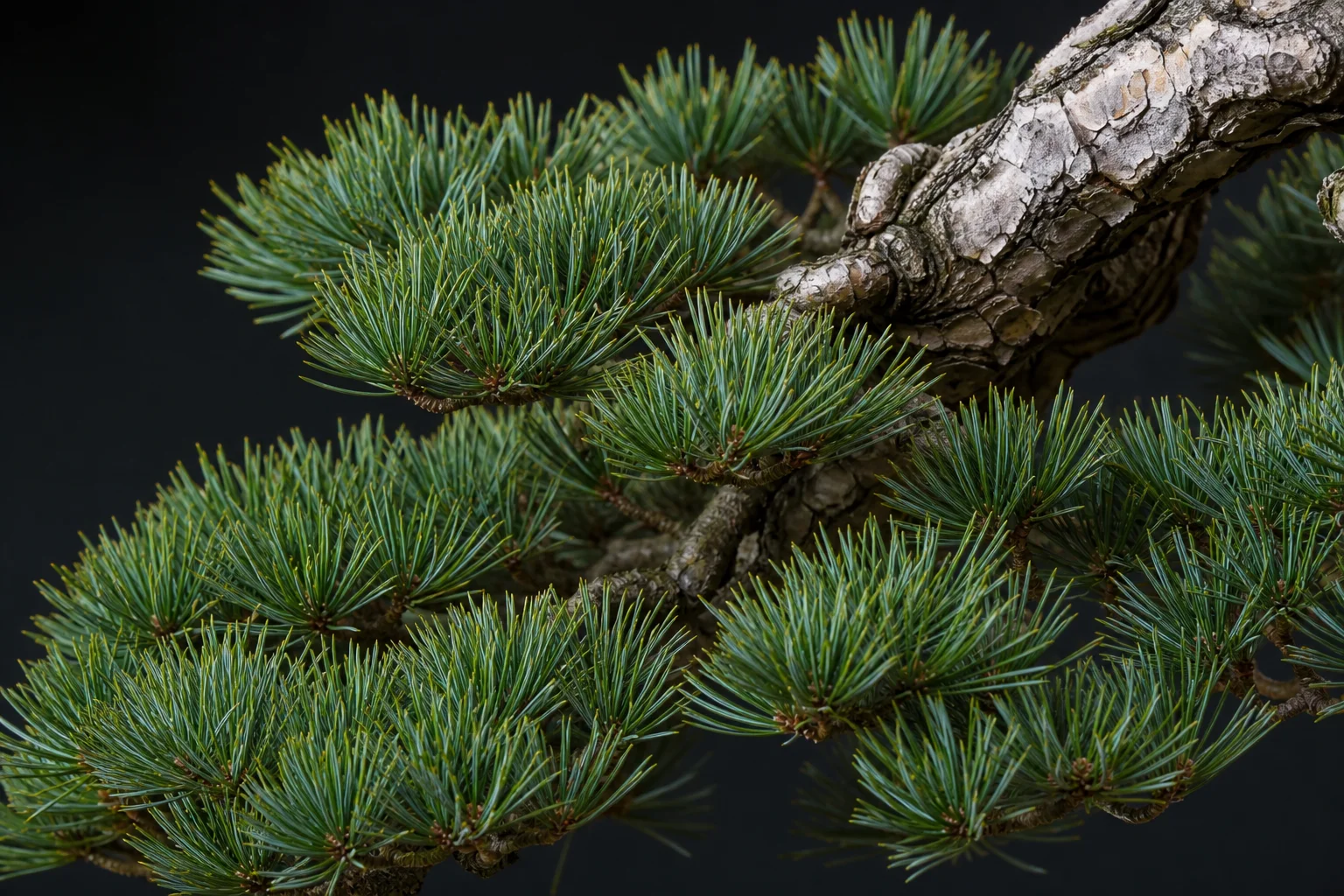
Pinus parvifloraThe other classic Japanese pine. Five blue-green needles per bundle, single-flush growth, and a refined elegance that no other pine quite matches.
Juniper procumbens 'Nana'
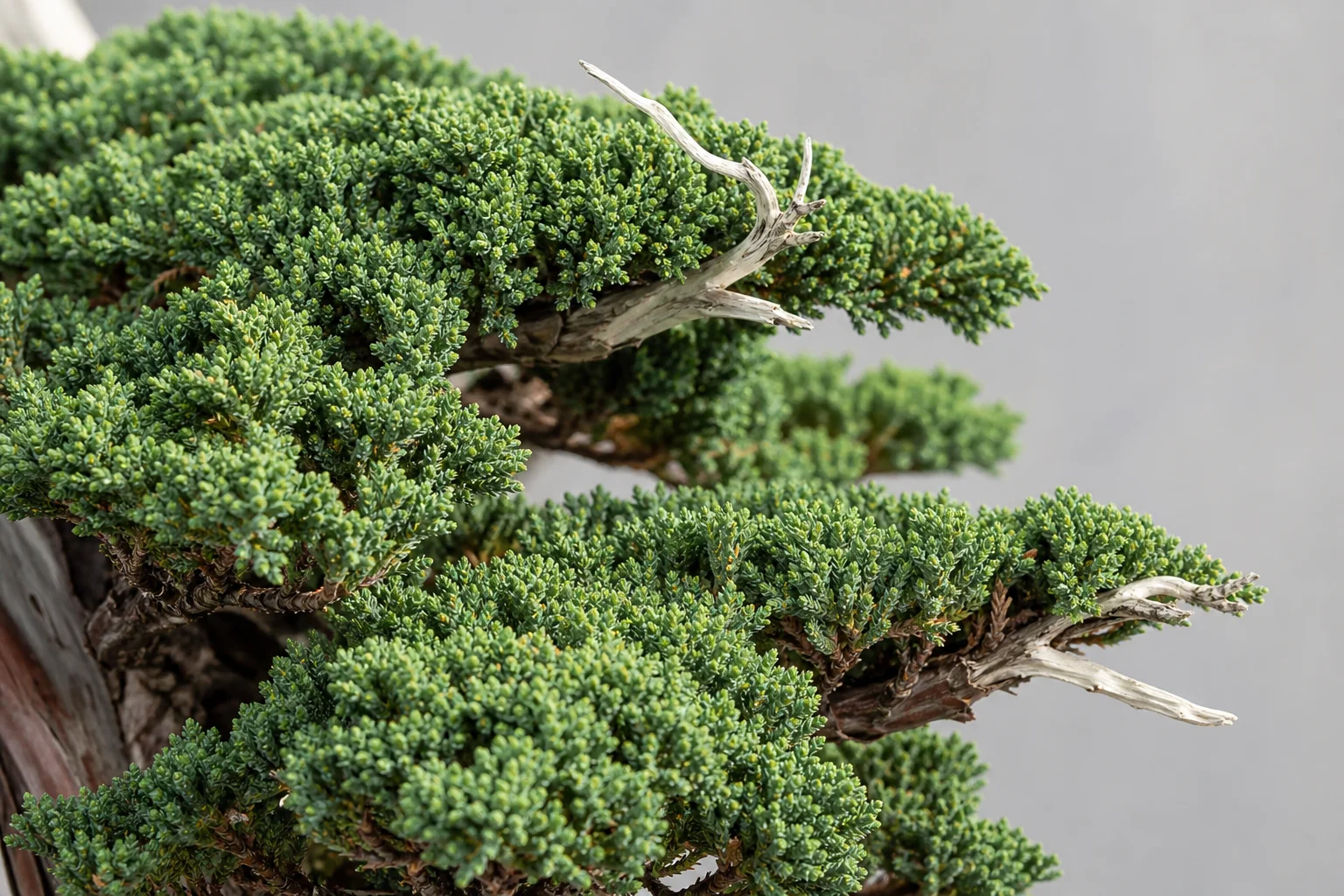
Juniperus procumbens 'Nana'The classic mall bonsai, often the first tree people own — and often killed by being kept indoors. Outside, hardy, sun-loving and beautiful.