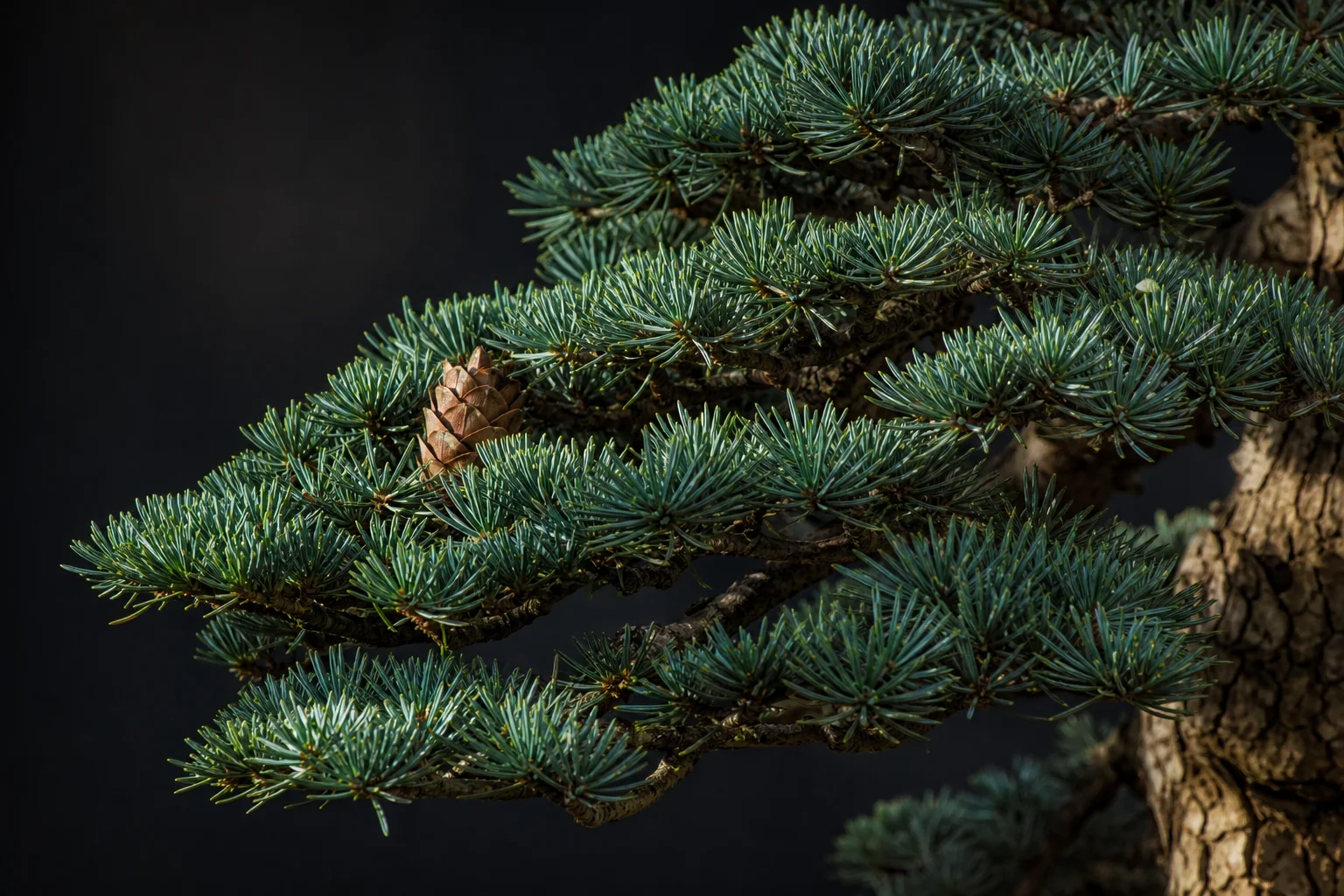
Spruce bonsai care
PiceaStiff sharp needles arranged singly on woody pegs, distinctive cone display on mature trees, exceptional hardiness. The less-developed conifer worth considering.
Water
Every 3 days
check daily in summerLiquid feed
Every 14 days
growing seasonSolid feed
Every 28 days
slow releaseRotate
Every 30 days
even canopy growthSpruce occupies a strange position in bonsai. Wild spruces are among the most iconic trees of northern landscapes — forming the boreal forests of Scandinavia, Canada, and Siberia — and the species' aesthetic appeal as a "mountain tree" form is obvious. Yet spruces are notably under-developed as bonsai compared to pines and junipers, partly because the species' growth pattern doesn't respond to the well-established pine techniques (decandling doesn't work), and partly because Japanese bonsai tradition has favoured other conifers.
This means there's less established literature and fewer techniques to follow for spruce than for pines. The flip side is that the species is hardy across the entire UK, including Scotland and exposed northern positions, where Japanese black pine genuinely struggles. For UK growers in cooler regions, spruce is a legitimately useful conifer.
Several species sit under 'spruce' for bonsai purposes. Picea abies (Norway spruce) is widely planted in UK and most accessible as nursery stock. Picea glauca (white spruce, particularly the dwarf 'Conica' form) is sometimes used. Picea jezoensis (Yezo spruce, from northern Japan and Russia) is the spruce most developed in Japanese bonsai. Picea sitchensis (Sitka spruce) is widely planted in Scottish forestry and collected mountain specimens can produce dramatic bonsai. Picea abies 'Nidiformis' (bird's nest spruce) is a dwarf cultivar suited to shohin work.
The species is more refined-foliage than pines but less so than Hinoki cypress or yew. Needles are sharp — handling spruce involves more discomfort than handling cypress.
Spruce species are spread across the cooler temperate and boreal regions of the Northern Hemisphere. Picea abies native to Scandinavia and central/eastern Europe; widely planted in UK forestry. Picea glauca native to northern North America. Picea jezoensis native to northern Japan, the Russian Far East, and Korea. Picea sitchensis native to western North America; widely planted in UK upland forestry where it's the dominant commercial timber species.
Seasonal calendar
Timing is for South East England. Select your region above to see adjusted guidance.
- Structural pruning while dormant
- Heavy wiring on dormant trees
- Continue winter styling
- Plan spring repotting
- Watch for root activity late month
- Final winter wiring
- Repot when root tips visible
- New shoots beginning to extend
- Pinch soft new shoot tips
- Start light feeding
- Continue selective pinching
- Watch foliage harden
- Maintain dry-wet watering cycle
- Leave foliage undisturbed
- Selective thinning of overly strong areas
- Last feeding mid-month
- Needle thinning — balance energy
- Stop feeding mid-month
- Wiring window opens
- Structural pruning begins
- Heavy structural work
- Position for winter
- Continue styling on dormant trees
- Minimal watering
Watering
Water when the surface of the substrate has dried. Typically every 2–3 days in summer, every 4–7 days in spring and autumn, every 7–14 days in winter.
Spruce is moderately drought-tolerant compared to deciduous species but less so than junipers. The species likes consistent moisture during active growth without saturation.
Avoid overhead watering in damp conditions where airflow is limited; wet foliage encourages needle cast and other fungal issues.
Tap water of any hardness is fine.
Feeding
Light feeding. Half-strength liquid feed every two weeks from May through to mid-September. Slow-release organic pellets in spring and early summer.
Heavy feeding produces long needles and weak branches. Spruce responds to restrained feeding better than vigorous regimes.
Stop feeding by mid-September.
Soil & Repotting
Very free-draining, slightly acidic to neutral. Spruce demands drainage like pines.
60% pumice, 25% akadama, 15% lava in 2–6mm grade. Slightly higher pumice content (70%) for collected mountain material in recovery. Avoid akadama-dominant mixes.
Repot every 4–6 years on established trees. The window is late March to early May — wait for visible root activity.
Spruce tolerates root work less well than yew but slightly better than Japanese white pine. Mycorrhizal preservation matters. Don't bare-root. Remove no more than a quarter of the root mass on healthy trees.
The species recovers reasonably from root work but pushes weak growth the season following major repotting.
Pruning
Spruce pruning differs from pine pruning. Decandling doesn't work — removing all new growth shoots can severely weaken or kill the tree.
The technique is pinching, similar to junipers and cedars. In spring as new shoots elongate, pinch out the soft tips between thumb and finger before needles harden. Pinch in waves through the tree, strongest growth first. Don't use scissors on living growth — cut needles brown at the cut.
Through summer, leave foliage undisturbed. Late summer or autumn — selective thinning of overly strong areas. Cut back individual shoots to woody portions where back-budding is possible.
Structural pruning in autumn or winter (October–February). Major cuts heal slowly. The species back-buds from old wood reluctantly — plan major reductions carefully.
Needle thinning in autumn (September–October): selectively remove old needles to balance energy and let light into interior. More needles on weak branches; fewer on strong.
Wiring & Styling
Wire from autumn through to early spring on dormant trees. Spruce bark is moderately resistant to marking. Use copper for structural branches and aluminium for finer work. Wood is moderately flexible — major bends need raffia wrapping.
Branches set well after wire removal. Wire usually stays on for one to two growing seasons. The slow growth means wire monitoring can be less frequent than on vigorous species.
Informal upright is the natural fit. Literati works well — spruce's natural high-altitude form (single tall trunk with crown foliage) translates directly into the literati aesthetic. Cascade and semi-cascade work on suitable material. Twin-trunk and forest plantings are particularly fine — spruce forests are the natural form in the wild and miniature representations are striking.
Formal upright doesn't suit the species. The natural habit produces irregular branching that fights the formal upright structure.
Winter care
Hardy across the entire UK including the most exposed Scottish positions. Spruce is the conifer most adapted to extreme cold among common bonsai species — Picea abies and P. glauca survive temperatures below -40°C in their native range and shrug off any British winter.
The main winter consideration is excess moisture rather than cold. Tilt pots for drainage. Position out of standing water during prolonged wet weather.
Never bring indoors.
Propagation
From seed (autumn-sown, cold-stratified) — reliable but slow. Cuttings difficult and rarely used. Air layering possible but unreliable. Most UK spruce bonsai material starts as young nursery stock from garden centres (particularly the dwarf cultivars), as collected upland material (Scottish forestry plantings provide opportunities), or imported as Yezo spruce from Japan.
Common problems
Generally healthy in UK conditions. The species' wide distribution in UK forestry means common pests and diseases are well-known.
Phytophthora root rot
Symptoms: Tree weakens, needles dull and grey, eventual branch dieback or whole-tree collapse.
Cause: Saturated substrate.
Solution: Largely fatal once symptoms appear. Prevention via very free-draining substrate and careful watering.
Green spruce aphid (Elatobium abietinum)
Symptoms: Old needles (not new growth) drop in spring; bare interior branches.
Cause: Sap-sucking pest that feeds on older foliage from autumn through spring. Currently widespread in UK.
Solution: Inspect needles for small green aphids in autumn and spring. Systemic insecticide if found. Affected interior branches may not recover; the species back-buds reluctantly. Common on Picea abies and Picea sitchensis.
Spruce gall adelgids
Symptoms: Pineapple-like galls at shoot tips, particularly on Picea glauca.
Cause: Sap-sucking pest related to those affecting pines and cedars.
Solution: Prune off galls and dispose. Spring insecticide may reduce population. Cosmetic but persistent.
Sudden response to decandling attempt
Symptoms: Whole sections of foliage die back; tree weakens dramatically.
Cause: Attempting pine-style decandling on spruce. Spruce doesn't respond to the technique used on pines.
Solution: Don't decandle spruce. Use pinching instead. Decandled trees may not recover; if they do, expect a full season of weakness.
Long needles
Symptoms: Year's growth produces longer needles than desired.
Cause: Over-feeding or insufficient pinching in spring.
Solution: Reduce feeding for two seasons. Pinch strong new growth more aggressively before needles harden.
Inner branch dieback
Symptoms: Interior branches lose needles and die back over years.
Cause: Outer growth shading interior combined with aphid pressure on older needles.
Solution: Inspect and treat aphids in autumn. Selective thinning of outer pads to let light in. Once interior is bare, recovery is slow because spruce back-buds reluctantly from old wood.
Popular cultivars
The standard UK forestry species. Widely available as nursery stock. Vigorous, hardy, well-suited to UK conditions. Hardiness H7.
The spruce most developed in Japanese bonsai tradition. Smaller needles, more refined habit. Less common in UK but available from specialist suppliers.
North American species. Slightly more refined than Norway spruce. Dwarf cultivars are popular for bonsai.
Widely planted in UK upland forestry. Collected mountain material can produce dramatic bonsai but recovery from collection is slow.
Dwarf cushion-forming cultivar. Excellent for shohin and unusual styling. Widely available as garden centre stock.
Compact conical cultivar. Available from any garden centre. Suitable for bonsai development but somewhat artificial habit.
Track your Spruce with Kentai.
Collection tracking, care logs and photo history are free — no card, no time limit.
More care guides
Cedar
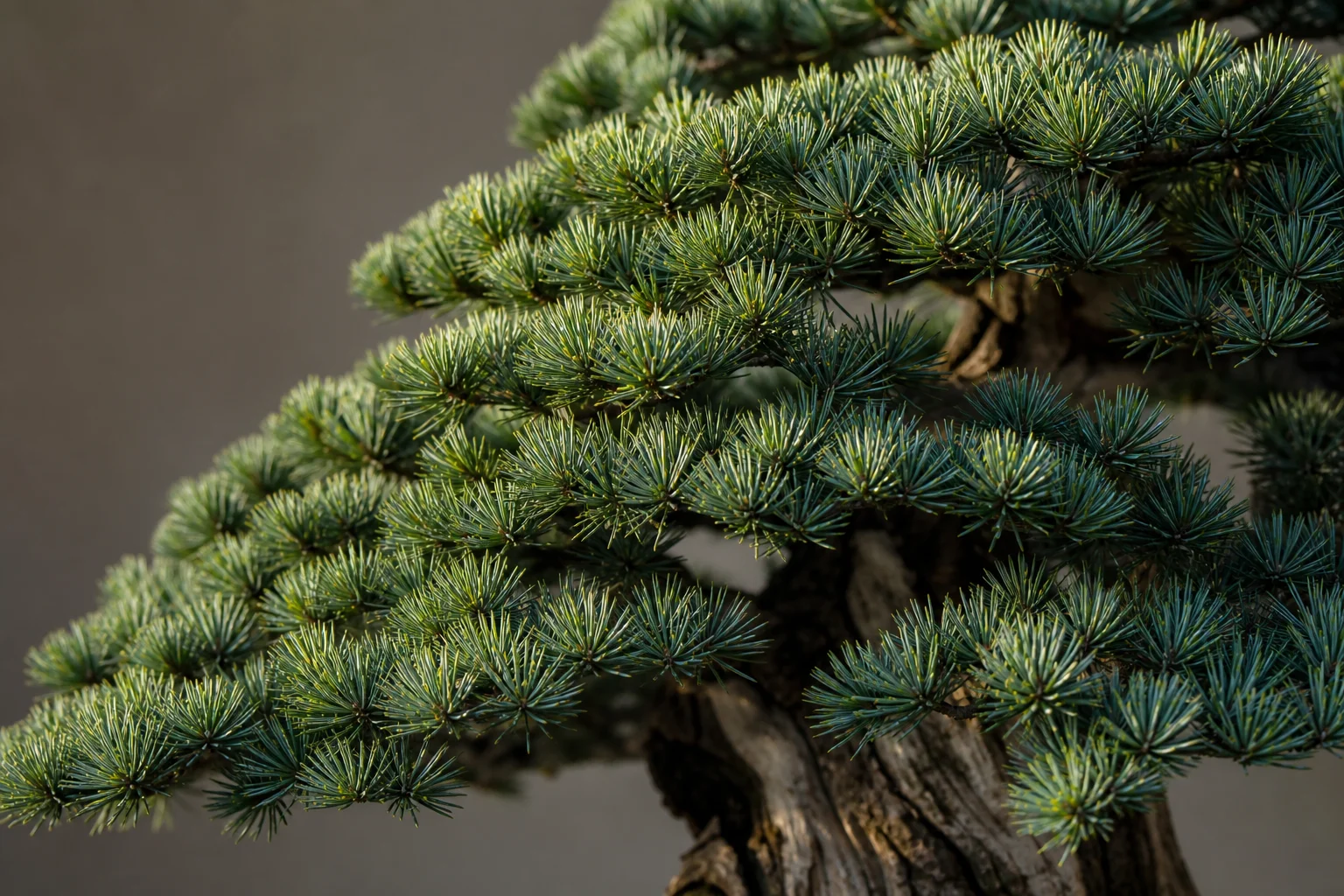
CedrusClustered needles in distinctive rosettes, horizontal branching habit, and a presence that few conifers match. Less commonly grown than pines but worth seeking out.
Chinese juniper (Itoigawa)
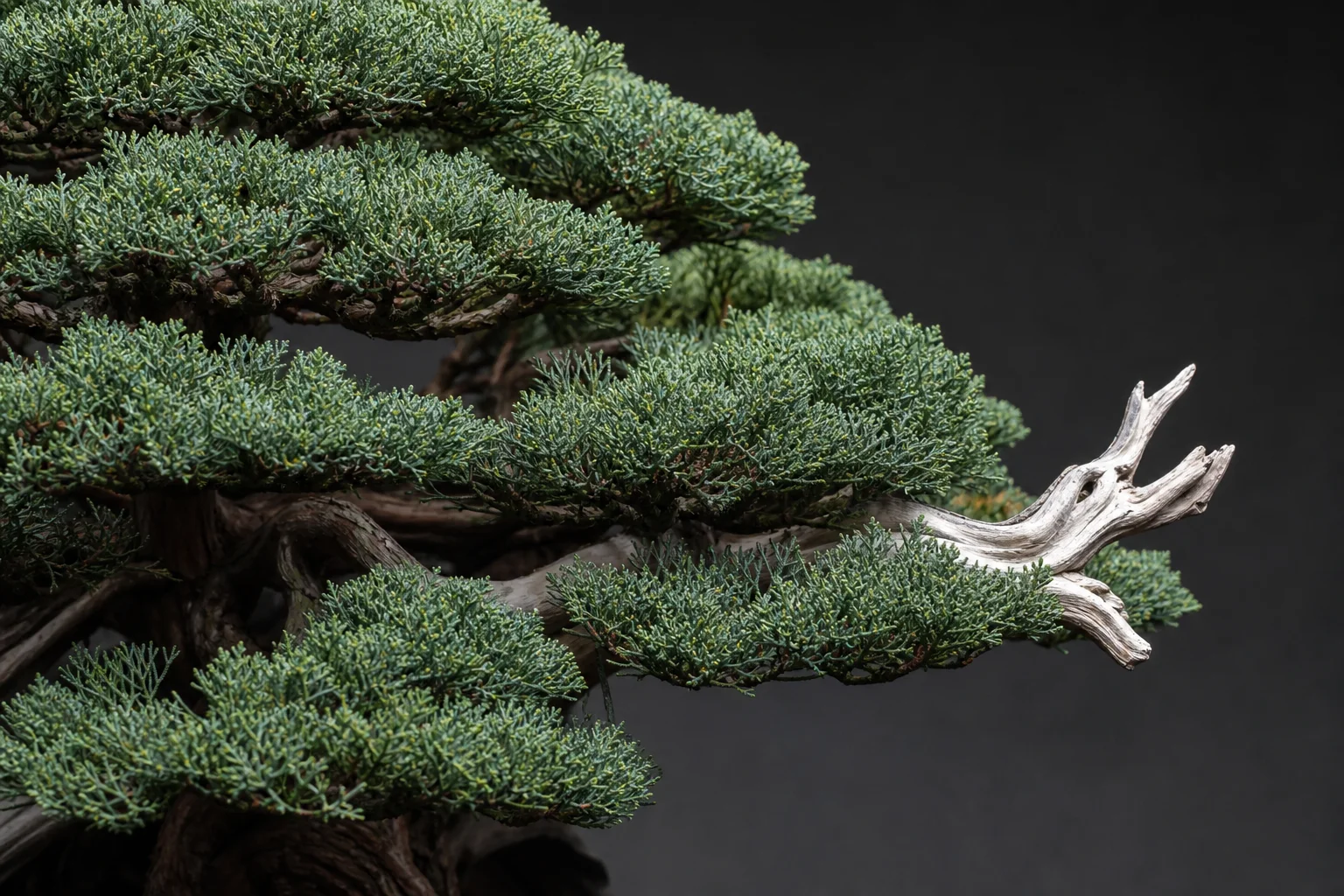
Juniperus chinensisThe connoisseur's juniper. Finer foliage, more dramatic deadwood potential, and the species behind most world-class juniper bonsai.
English yew
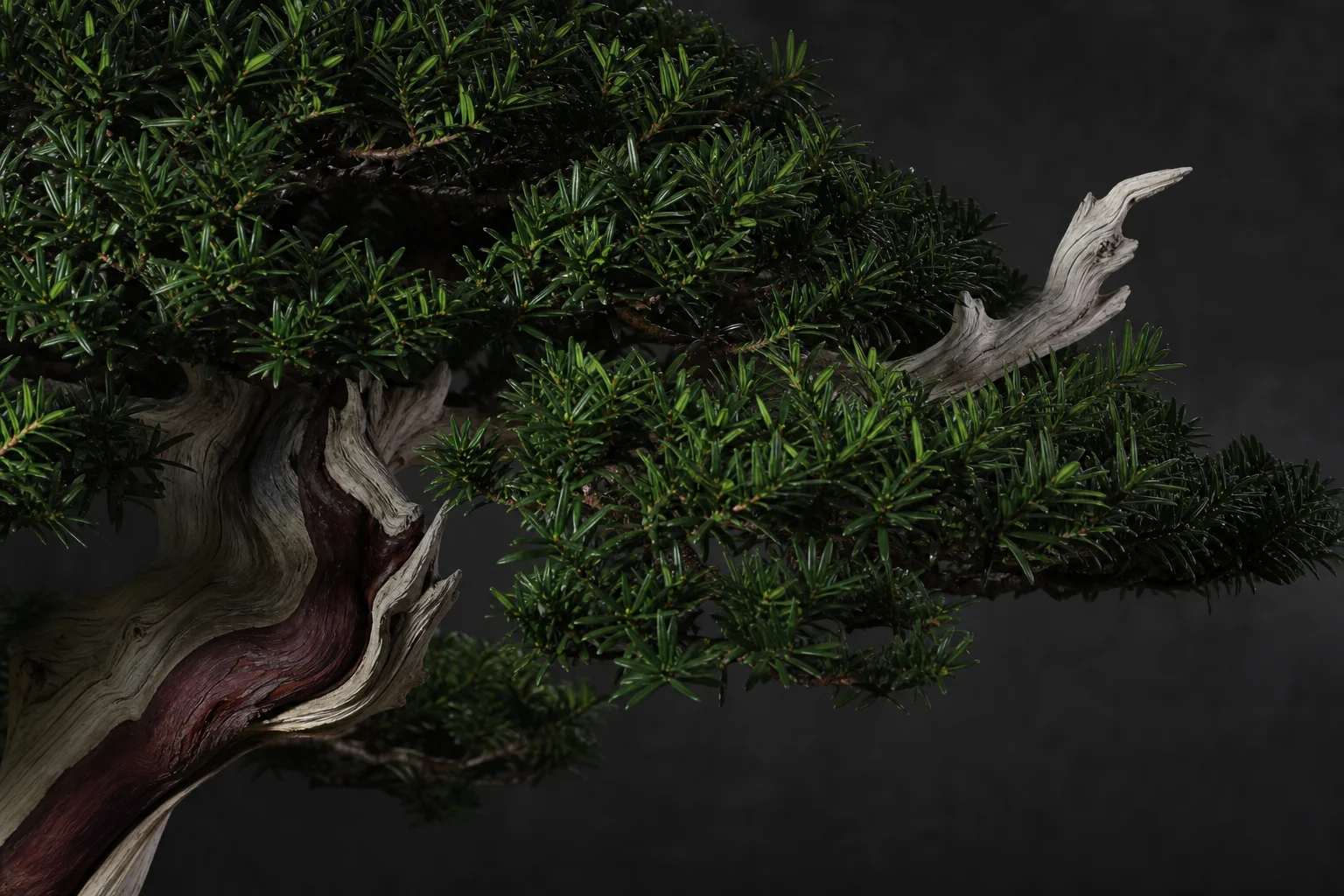
Taxus baccataThe oldest living things in Britain. Dark green needles on the youngest twigs, deep red heartwood for deadwood, and a capacity for back-budding that no other conifer matches.