Persimmon bonsai care
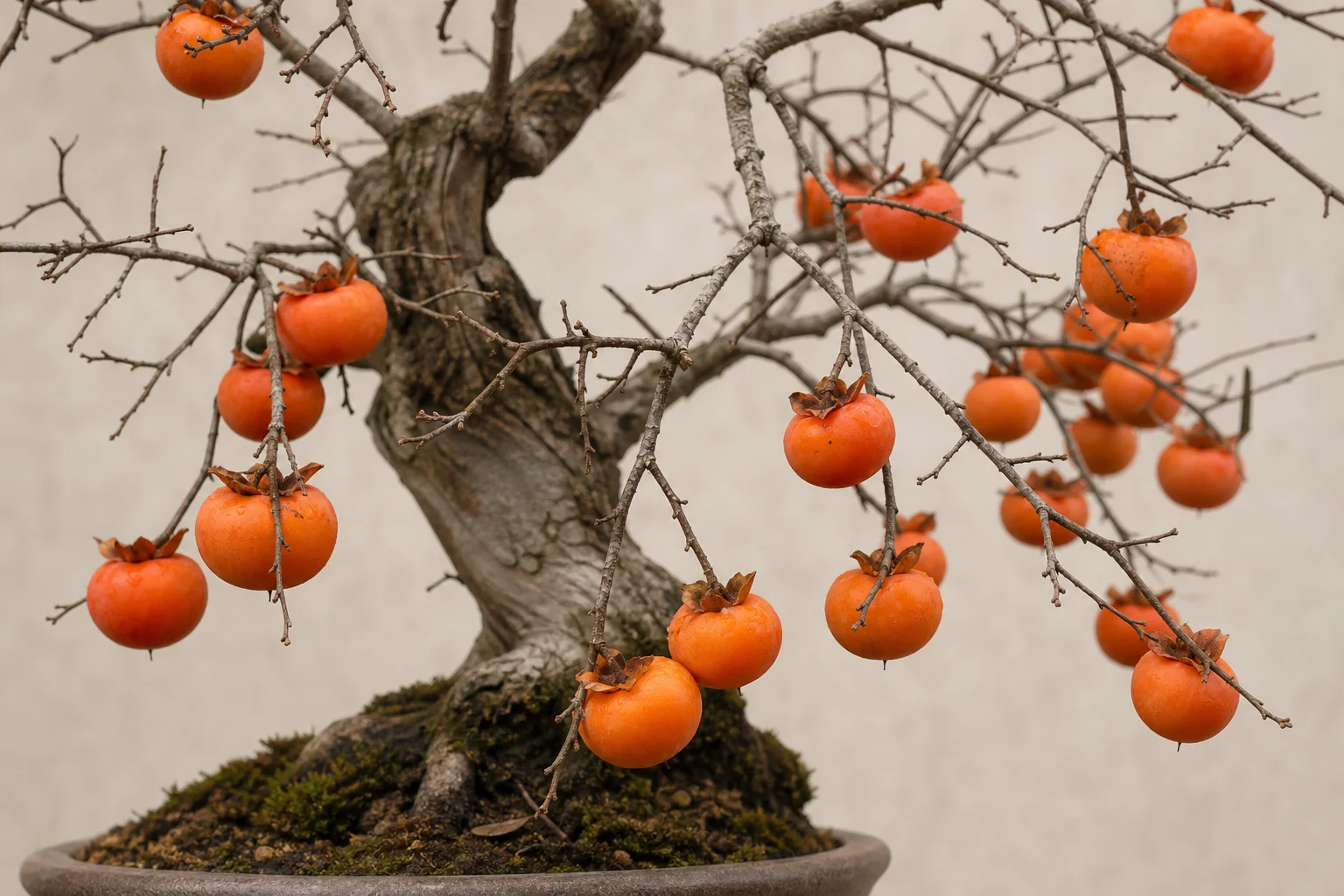
Diospyros kakiBright orange fruit hanging on bare branches into winter, brilliant autumn foliage colour, plated bark on mature trees — and one of the more dramatic seasonal bonsai displays in cultivation.
Water
Every 1 day
check daily in summerLiquid feed
Every 7 days
growing seasonSolid feed
Every 28 days
slow releaseRotate
Every 14 days
even canopy growthPersimmon as bonsai is the species you choose when fruit display matters. The autumn-into-winter spectacle of bright orange persimmons hanging on bare branches against the autumn sky is one of the most striking sights in bonsai — the fruits persist through October, November, and often into December, providing colour and visual interest long after most deciduous bonsai have lost their leaves.
The species has a particular cultural significance in East Asian bonsai tradition, where the fruit display is associated with autumn celebrations and harvest seasons. Diospyros kaki is the Japanese persimmon (kaki), with the Japanese word giving us the international common name for the fruit. The species has been cultivated in China for at least 2,000 years and in Japan for over 1,000.
Several challenges apply for UK growers. The species is borderline hardy — Diospyros kaki is rated H5 and needs winter protection in colder UK regions. Fruit-bearing requires the tree to reach a certain maturity (typically 7–10 years from seed, 4–5 years from grafted nursery stock) and consistent care; young trees flower sporadically and fruit set is unreliable. The species is dioecious in some forms (separate male and female trees) though most cultivated varieties are self-fertile. And the fruit can be heavy on small bonsai — thinning is sometimes necessary to prevent branch damage.
For UK growers wanting the persimmon experience without the borderline hardiness, Diospyros virginiana (American persimmon) is much hardier (H7) and produces smaller but reliable fruit on bonsai. The aesthetic isn't quite as Asian-traditional but the species is dramatically easier in cooler UK regions.
Diospyros kaki native to China, with long cultivation history in China, Japan, and Korea. The species was introduced to Western gardens in the 19th century. Diospyros virginiana is native to eastern North America. Both species belong to the ebony family (Ebenaceae), and several Diospyros species produce the timber known as ebony. Major fruit cultivars exist (Hachiya, Fuyu, Jiro) but bonsai-suitable varieties are often selected for smaller fruit and refined habit.
Seasonal calendar
Timing is for South East England. Select your region above to see adjusted guidance.
- Maintain winter shelter if needed
- Fruit display continues on protected trees
- Structural pruning while dormant
- Begin repotting late month
- Main repotting window
- Plan return to outdoor position
- Bud break
- Begin daily watering
- First slow-release feed
- Flowering — small bell-shaped flowers
- Start weekly liquid feed
- Fruit set
- Wiring window opens
- Light post-flowering pruning
- Fruit developing
- Switch to high-K feed mid-month
- Thin fruit on small trees if heavy load
- Continue high-K feeding
- Fruit colouring orange
- Stop feeding late month
- Peak fruit display, brilliant autumn foliage
- Reduce watering
- Leaf drop reveals fruit on bare branches
- Plan winter shelter
- Fruit may still hold on tree
- Into winter shelter before hard frost
Watering
Daily through the growing season. Persimmon is moderately thirsty in active growth — twice daily in summer heat for trees in shallow pots.
The species tolerates inconsistent watering somewhat better than fruiting Rosaceae species like crab apple, but consistent moisture during fruit development (June through September) produces better fruit set and prevents premature fruit drop.
In winter while dormant or in shelter, reduce watering significantly. Tap water of any hardness is fine.
Feeding
Moderate to heavy feeding during growth. Weekly liquid feed from late April through to mid-September. Slow-release organic pellets in spring and again in early summer.
For fruiting, switch to a high-K low-N feed (tomato-style fertiliser) from mid-July through August. This supports fruit development and quality.
Stop feeding by late September.
Soil & Repotting
Free-draining and slightly acidic. The species tolerates a range of substrates within reasonable parameters.
60% akadama, 30% pumice, 10% lava is reliable. The species accepts cheaper development mixes well, useful for trees being grown on for maturity before fruit display.
Repot every 2–3 years on young trees, every 3–4 on mature specimens. The window is late winter to early spring — mid-February through to early April. Repot as buds swell.
Persimmon tolerates moderate root work — up to a third of the root mass on healthy trees. The species recovers reasonably quickly.
A specific consideration: don't repot in years when a heavy fruit display is desired. Repotting redirects energy to root regrowth and reduces fruit production for that season.
Pruning
Persimmon pruning has timing considerations because the species flowers on current year's growth — fruiting wood is built each year from new growth on spurs that develop on 2-year-old branches.
Structural pruning in late winter (February–March) before bud break. Through the growing season, let new shoots extend to 4–5 leaves then cut back to 2 on most shoots — but leave some short shoots untouched, as these become flowering spurs.
After flowering and fruit set (June), light pinching can continue. After the main fruit display in autumn (October–November), light cleanup pruning is acceptable.
The species back-buds well on old wood and tolerates moderate hard cutbacks. Major structural reductions in late winter heal cleanly.
Fruit thinning may be necessary on small bonsai — heavy fruit can break branches or stress small trees. Remove some fruit when half-grown (August) to leave a balanced load on the tree.
Wiring & Styling
Wire after leaves harden in early summer or on bare branches in winter. Bark is reasonably resistant to marking on older trees but thin on young wood — apply loosely on young material and check fortnightly. Aluminium for most work, copper for thicker structural branches.
The species develops plated grey-brown bark with age — wire marks visibly on mature bark, less so on young wood.
Informal upright is the natural fit. Twin-trunk and clump styles work well. The species' habit suits naturalistic compositions that allow the fruit display to be clearly visible.
Cascade and semi-cascade are uncommon but possible on suitable material. Forest plantings work but require careful management of fruit display across multiple trees.
The fruit display is the species' main aesthetic asset — styling should ensure fruiting branches are positioned for clear viewing rather than hidden in the canopy.
Winter care
Borderline hardy in the UK for D. kaki — H5 rating. Hardy through southern English winters in mild years but vulnerable in severe cold below -10°C.
Below -10°C sustained, move to unheated greenhouse, cold frame, or sheltered position. The goal is cool dormancy, not warmth. Persimmon needs cold dormancy to flower properly the following year.
In southern England, modest shelter (against a wall, off the ground) is usually sufficient in normal winters. In the Midlands and north, plan winter protection from late November through March. In Scotland and exposed northern positions, the species needs reliable greenhouse protection — D. virginiana (American persimmon) is a better choice for cold regions.
Reduce watering significantly through winter.
The dramatic fruit display continues into winter on protected trees — bright orange fruits on bare branches in November and December are a defining persimmon feature.
Propagation
From seed possible — slow and produces variable seedlings, not true to cultivar. From semi-hardwood cuttings is difficult — most persimmon material is grafted onto seedling rootstock in commercial production. Air layering works moderately on suitable branches. The best route to fruiting bonsai is buying a grafted plant from a known fruiting cultivar at 4+ years old.
Common problems
Generally healthy. The species has fewer disease and pest problems in UK conditions than many Rosaceae species.
Frost damage to soft growth
Symptoms: New growth blackens after unexpected cold; fruit display lost.
Cause: Late frosts catching unhardened spring growth or early autumn frost catching tender wood.
Solution: Move to shelter when freezing is forecast. Cut back affected wood once danger passes. Established persimmons recover from moderate damage but young trees can lose substantial growth.
Premature fruit drop
Symptoms: Developing fruit falls in late summer before maturing.
Cause: Water stress, inadequate feeding, or naturally heavy fruit load that the tree self-thins.
Solution: Maintain consistent watering and feeding. Some natural fruit drop in June is normal ('June drop'). Excessive later drop usually indicates water or feeding issues.
Failure to fruit on young trees
Symptoms: Tree flowers but produces no fruit, or doesn't flower at all.
Cause: Young trees (under 4 years old) often don't fruit. Some cultivars need cross-pollination.
Solution: Patience — buy grafted plants from known fruiting cultivars rather than seedlings. Self-fertile cultivars (Fuyu, Jiro) fruit more reliably on isolated bonsai. The species often needs to reach 5+ years before reliable fruiting.
Scale insects
Symptoms: Small brown bumps on stems and undersides of leaves.
Cause: Common pest, particularly on imported material.
Solution: Manual removal with alcohol-dipped cotton bud. Horticultural oil in winter. Systemic insecticide for severe infestations.
Branch damage from heavy fruit load
Symptoms: Branches sagging or breaking under fruit weight.
Cause: Persimmon fruit is heavy relative to the tree size; small bonsai branches can fail.
Solution: Thin fruit when half-developed in August. Support heavy branches if necessary. Some growers use cosmetic supports during the display period.
Difficulty growing in cold UK regions
Symptoms: Tree weakens or dies in northern UK despite reasonable care.
Cause: D. kaki is genuinely borderline at H5 — Scotland and northern England are challenging for this species.
Solution: For cooler regions, switch to Diospyros virginiana (American persimmon, H7) for similar fruit display with much easier cultivation. The aesthetic is slightly less Asian-traditional but the species is dramatically easier in cold UK conditions.
Popular cultivars
The traditional persimmon for bonsai. Self-fertile and non-self-fertile cultivars exist.
Self-fertile cultivar with non-astringent fruit. Reliable for bonsai display.
Astringent persimmon cultivar with elongated fruit. Traditional for fruit production; suitable for larger bonsai.
Self-fertile cultivar with squat round fruit. Excellent for medium bonsai with good fruit set.
Hardier alternative for UK growers in cold regions. H7 hardiness. Smaller fruit, slightly different aesthetic but dramatically easier cultivation.
Related Eurasian species with smaller fruit. Used as rootstock for grafted persimmons. Suitable for bonsai but less commonly developed.
Track your Persimmon with Kentai.
Collection tracking, care logs and photo history are free — no card, no time limit.
More care guides
Pomegranate
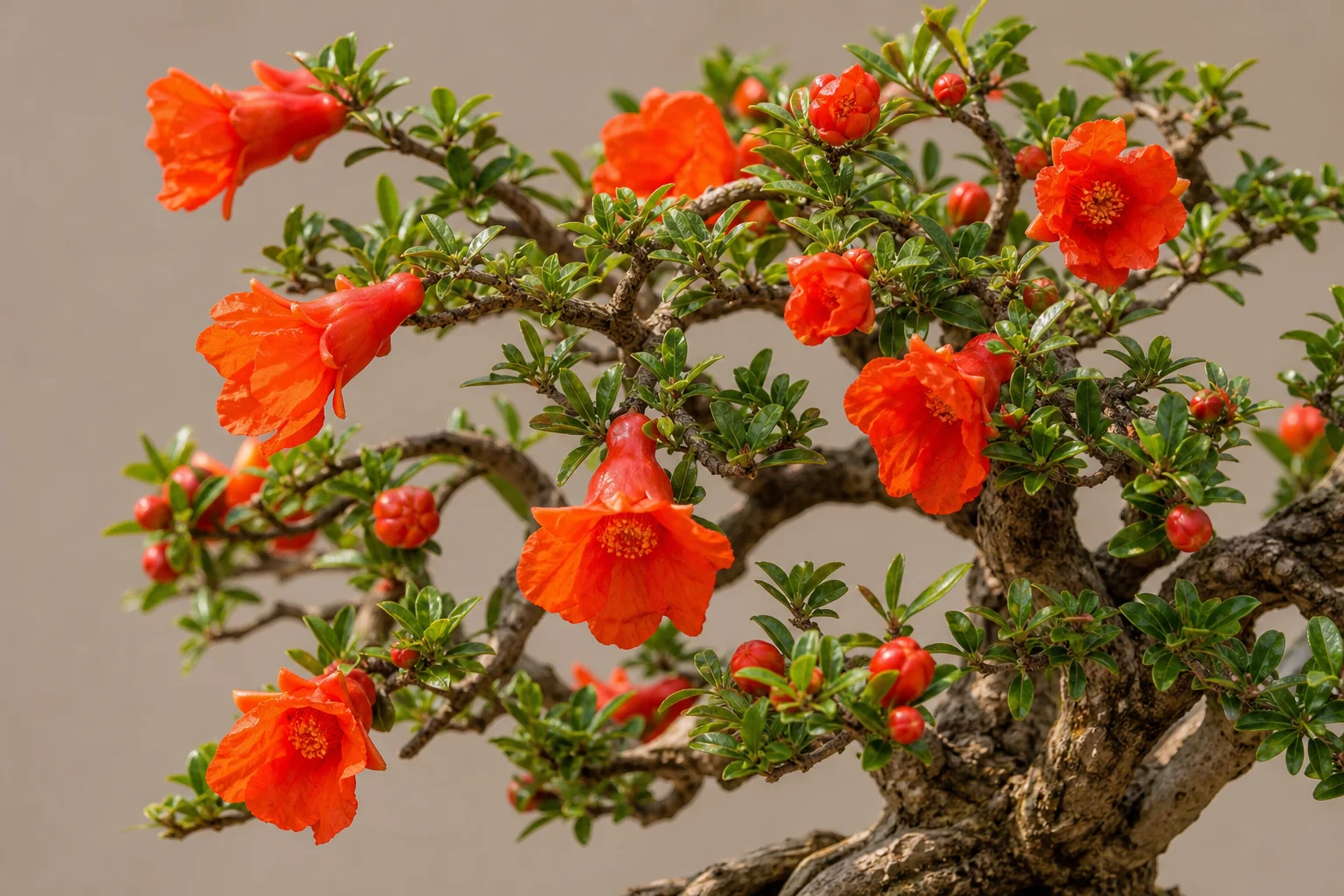
Punica granatumOrange-red trumpet flowers in summer, miniature pomegranate fruit in autumn, twisted gnarled trunk character on collected ancient material. Borderline-hardy but stunning.
Sango Kaku maple
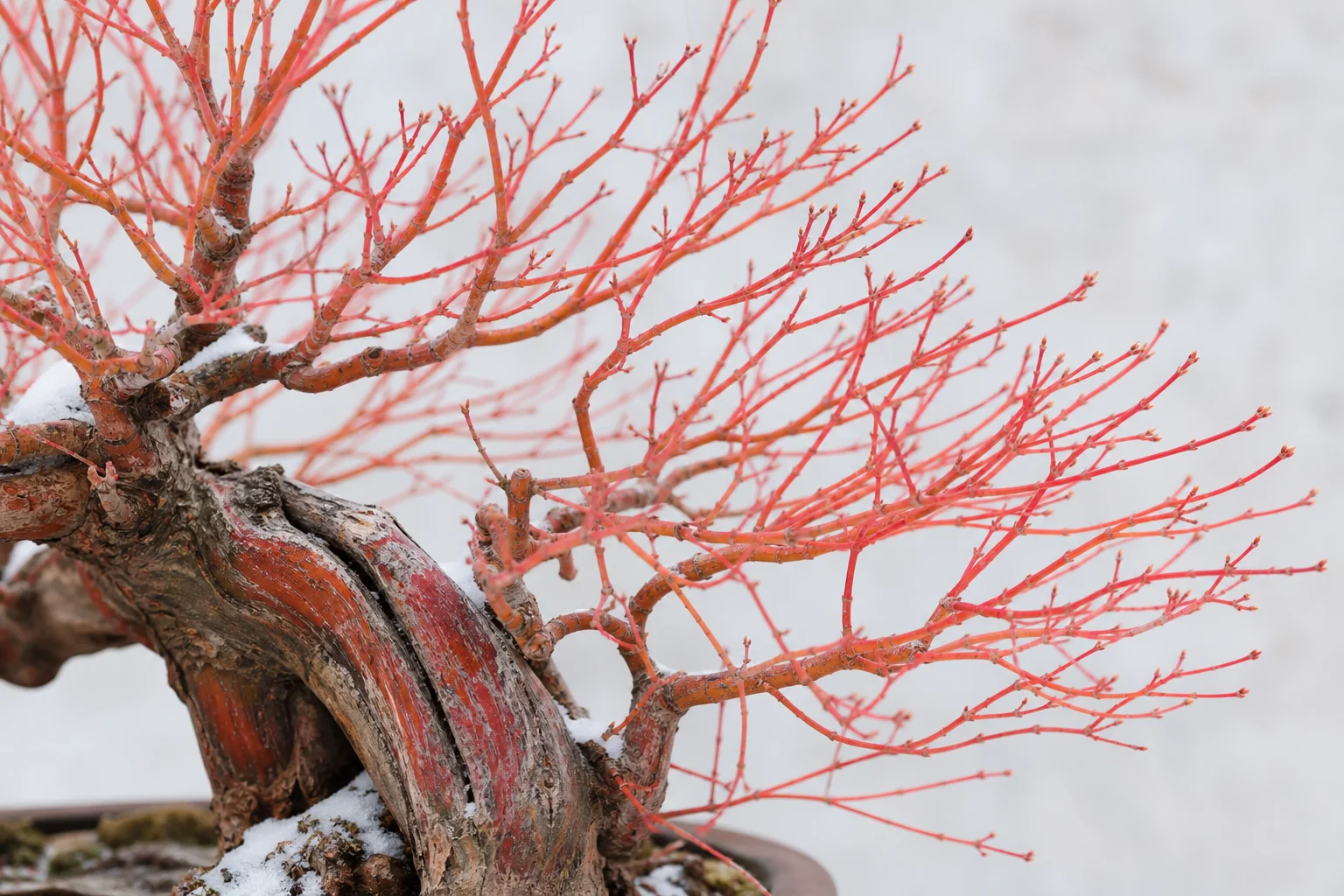
Acer palmatum 'Sango Kaku'The coral-bark maple. Year-round interest from bright coral-red young bark on the previous year's growth — at its most intense in winter when bare twigs glow against snow.
Shishigashira maple
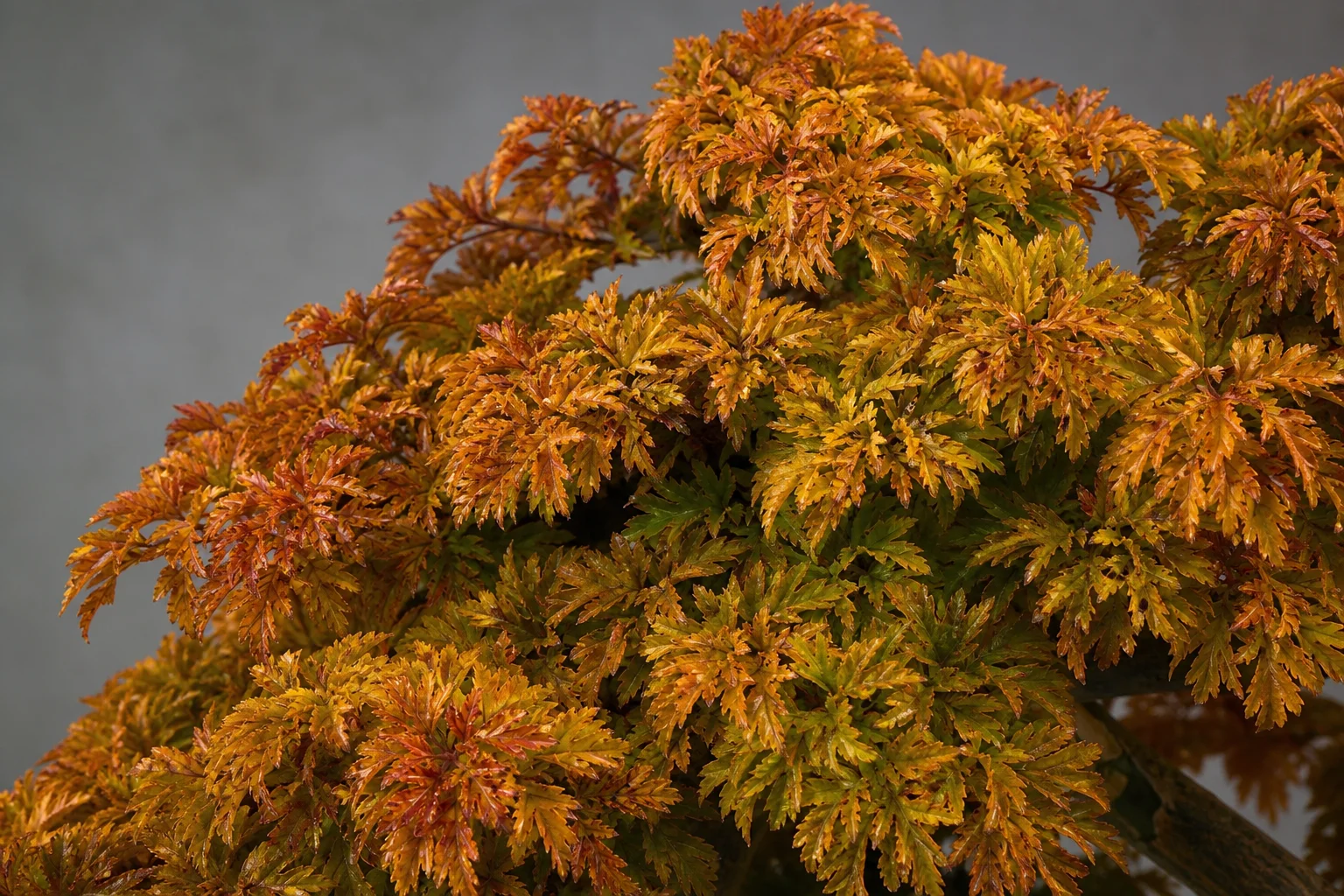
Acer palmatum 'Shishigashira'The crinkled-leaf maple. Tightly curled, deeply lobed small leaves clustered densely on short shoots — a cultivar whose habit looks bonsai-trained before any work is done.