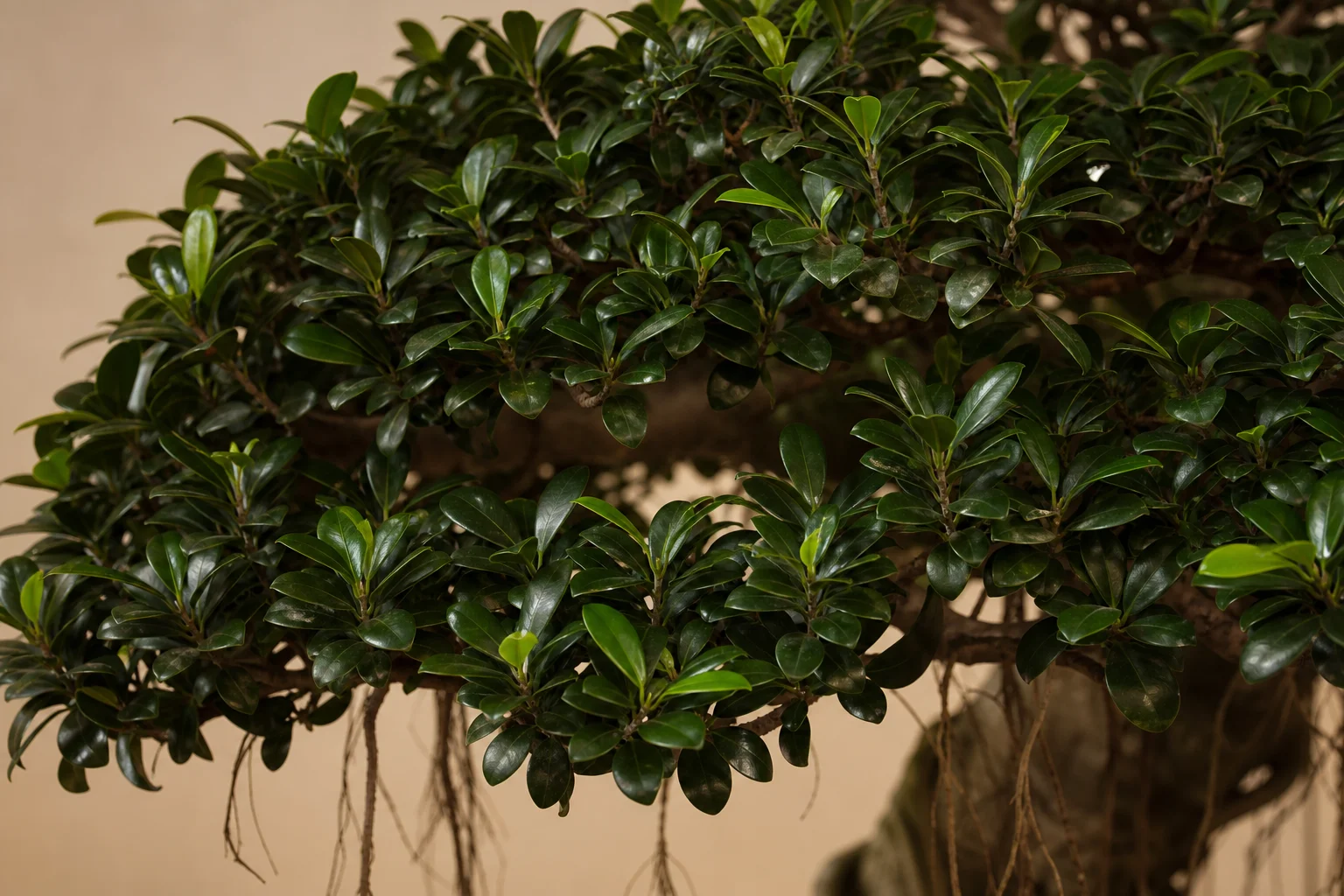
Ficus retusa bonsai care
Ficus microcarpaThe best indoor bonsai. Tolerant of household conditions, fast-growing, and the only common bonsai species that truly thrives without a winter dormancy.
Water
Every 2 days
check daily in summerLiquid feed
Every 14 days
growing seasonSolid feed
Every 28 days
slow releaseRotate
Every 14 days
even canopy growthIf you don't have outdoor space and want a real bonsai (not a juniper that you'll watch decline for a year), Ficus retusa is the right answer. The species is genuinely well-adapted to indoor conditions: it doesn't need cold dormancy, tolerates lower light than most tropicals, handles dry indoor air better than most ficus species, and produces aerial roots that develop into character features over a few years.
The "Ginseng ficus" you'll see at every garden centre and supermarket is the same species — F. microcarpa, sold as F. retusa — but mounted as a graft onto a bulbous Ficus ginseng rootstock. These are mass-produced in tropical nurseries and shipped flat-packed. The grafted form isn't ideal long-term (the graft union rarely looks elegant as the tree matures) but it's an inexpensive way to start, and the foliage portion can be propagated into a much better-shaped tree over time.
Ficus is the bonsai species where impatience is least punished. They grow fast, back-bud reliably, recover from over- and under-watering, accept hard pruning, and forgive most beginner errors.
Native to subtropical and tropical Asia, India, and the western Pacific. Wild trees grow as massive banyan-style figs with extensive aerial root systems supporting horizontal branches. The species is naturalised through much of the tropics and is the standard street tree in many Asian cities.
Seasonal calendar
Timing is for South East England. Select your region above to see adjusted guidance.
- Monitor watering in heated rooms
- Light feeding monthly at quarter strength
- Watch for spider mites from dry air
- Maintain humidity
- Increase light if possible
- Begin spring feeding pattern
- Repotting window opens
- Full feeding resumes
- Move outdoors mid-month if planned
- Main pruning and styling
Acclimatise gradually to outdoor conditions over 2 weeks.
- Vigorous growth period
- Frequent pinching
- Maximum growth
- Wiring window
- Continue pinching
- Take cuttings from prunings
- Begin reducing feeding
- Plan move back indoors mid-month
- Indoor for the cold season by month-end
- Acclimatise gradually
- Reduce watering as growth slows
- Watch for environmental stress drop
- Monthly light feeding
- Maintain humidity in heated rooms
Watering
Water when the surface of the substrate has dried — typically every 2–3 days indoors in winter (when central heating dries the air), every 1–2 days in summer or near bright windows. Ficus is forgiving of inconsistent watering; brief dryness causes some leaf yellowing and drop but the tree recovers.
When you water, water thoroughly until it runs from the drainage holes. Drain any standing water from the saucer.
The species' single most common problem is winter leaf drop from sudden environmental changes — moving from a bright window to a darker spot, central heating turning on, a draught from a door. None of these are emergencies; the tree adjusts within a few weeks.
Feeding
Year-round feeding, but reduced in winter. Liquid feed every two weeks from April through to October at half strength; monthly through winter at quarter strength. Slow-release organic pellets in spring and summer.
Ficus is a vigorous feeder when growing actively (April through October, when it's effectively summer indoors with good light). In winter — low light, shorter days — growth slows and feeding should reduce accordingly.
A common error is to stop feeding entirely in winter, then resume at full strength in spring. The tree responds with a burst of leggy growth. A gentler reduction through winter and gradual increase through spring produces tighter growth.
Soil & Repotting
Free-draining but slightly moisture-retentive. Ficus tolerates a wide range of substrates.
50% akadama, 30% pumice, 20% lava is reliable. The species also performs well in cheaper mixes — generic bonsai soil is fine for trees in development. Avoid pure organic potting mix, which holds too much water indoors.
Repot every 2 years on young vigorous trees, every 3–4 on mature specimens. The window is essentially year-round when grown indoors — ficus doesn't have a true dormant period and can be repotted whenever convenient. Late spring (April–May) is most traditional and gives the strongest recovery.
The species tolerates aggressive root work. Up to half the root mass can be removed on healthy trees. Bare-rooting is possible if necessary. After repotting, keep the tree in slightly lower light for a week or two and water carefully until new growth confirms recovery.
Pruning
Ficus pruning is the easiest in bonsai. The species back-buds reliably on old wood, tolerates hard chops, and produces aerial roots from pruning wounds in humid conditions.
Through the growing season, let new shoots extend to 6–8 leaves then cut back to 2. Pinch every 2–3 weeks in active growth. Trees in development can be allowed to run longer.
Major structural pruning happens at any time the tree is actively growing — typically May through September. Don't be precious. A ficus cut back hard will be pushing new buds within 2–3 weeks.
A specific ficus technique: cuttings from prunings root easily. A heavy pruning session can produce a dozen propagules for free.
Wiring & Styling
Wire after leaves harden in late spring or on bare wood any time. Bark is forgiving — better than maple, similar to elm. Branches are flexible and take wire well. Aluminium for most work.
A particular feature of ficus: branches will sometimes thicken so quickly during a growth flush that wire bites in within weeks. Check fortnightly during active growth.
Almost any style. Informal upright, banyan-style with aerial roots, root-over-rock, and forest plantings all work well. The species' tropical character makes it particularly suited to styles that wouldn't work for temperate species — dense tropical canopies, multiple trunks with merged bases, and aerial root features that read as banyan-like maturity.
Aerial roots can be encouraged by high humidity and selective wounding. They're a defining feature of refined ficus bonsai and worth developing.
Winter care
Indoor permanently. Minimum temperature 10°C — keep away from cold windows in winter, draughts from doors, and unheated rooms.
Light: bright indirect to direct light is ideal. South-facing window with a sheer curtain in summer, full south-facing winter sun. The species tolerates lower light than most ficus but doesn't thrive in it.
Humidity: indoor humidity in heated UK winter rooms is low (often 30–40%). Ficus prefers higher humidity (50–70%). A humidity tray (pebbles, water) under the pot, regular misting, or grouping with other plants all help.
Some growers move their ficus outdoors for the UK summer (mid-May through to mid-September). This produces stronger growth and tighter foliage but requires careful re-acclimation in both directions to avoid leaf drop.
Propagation
Easy from cuttings — almost any pruned branch will root in water or moist substrate. Air layering works exceptionally well and is the best route to a refined trunk on a new tree. From seed possible but rarely used.
Common problems
Generally healthy when grown correctly. Most problems are environmental (light, humidity, temperature) rather than pest or disease.
Leaf drop from environmental change
Symptoms: Sudden loss of leaves within days of moving the tree or after central heating starts.
Cause: Ficus responds to changes in light, humidity, or temperature by dropping leaves. Not usually serious.
Solution: Don't panic. Maintain consistent watering and don't repot. New leaves typically appear within 3–6 weeks. Future moves should be gradual.
Spider mites
Symptoms: Fine stippling on leaves, fine webbing on undersides, yellow speckling.
Cause: Dry indoor air, especially in heated winter rooms.
Solution: Raise humidity (humidity tray, regular misting). Wipe leaves with damp cloth. Neem oil if persistent. Inspect weekly in winter.
Scale insects
Symptoms: Small brown bumps on leaves and twigs, sticky residue.
Cause: Common pest on indoor ficus, especially on imported material.
Solution: Manual removal with cotton bud dipped in alcohol. Systemic insecticide for severe infestations. Inspect new acquisitions before introducing to your collection.
Mealybugs
Symptoms: White cottony masses in leaf joints and on undersides.
Cause: Common indoor pest, often introduced on new plants.
Solution: Wipe off with alcohol-dipped cotton bud. Neem oil if widespread. Quarantine new acquisitions for 2 weeks before joining the collection.
Black sooty mould
Symptoms: Black powdery coating on leaves.
Cause: Grows on honeydew secreted by scale or aphids.
Solution: Treat the underlying pest problem. Wipe sooty deposits from leaves with damp cloth.
Failure to develop aerial roots
Symptoms: Tree grows well but no aerial roots form.
Cause: Aerial roots require high humidity to initiate.
Solution: Increase humidity. A clear plastic bag over a wired-in target zone can create a humid microclimate to encourage aerial roots. Once roots are growing, they can be guided down to the soil and incorporated into the trunk over time.
Popular cultivars
Standard tropical fig. Most refined ficus bonsai are this species.
Not a true cultivar — these are F. microcarpa foliage grafted onto Ficus ginseng for the bulbous rootstock. The standard cheap supermarket bonsai. Adequate for learning but the graft union is rarely elegant long-term.
Mottled pale-and-dark bark cultivar, popular in Taiwan. Distinct visual character but otherwise similar care.
Smaller leaves, more compact habit. Useful for refined work.
Related species, less ideal as bonsai — leaves drop more readily and the species is less forgiving of environmental changes.
Track your Ficus retusa with Kentai.
Collection tracking, care logs and photo history are free — no card, no time limit.
More care guides
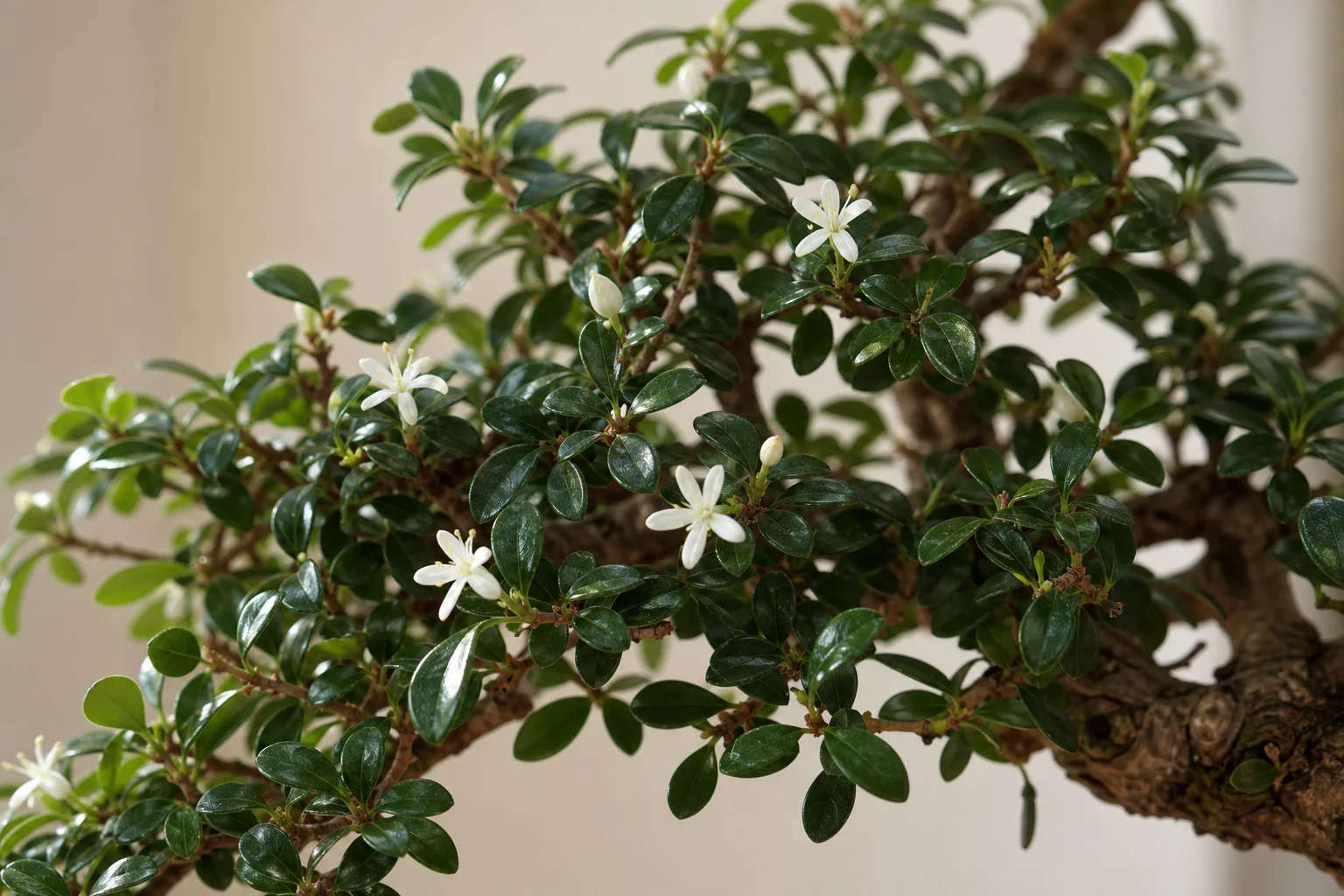
Fukien tea
Carmona retusaSmall dark glossy leaves, tiny white flowers year-round, small red berries — the popular indoor bonsai widely sold as starter material despite being one of the more challenging species to maintain.
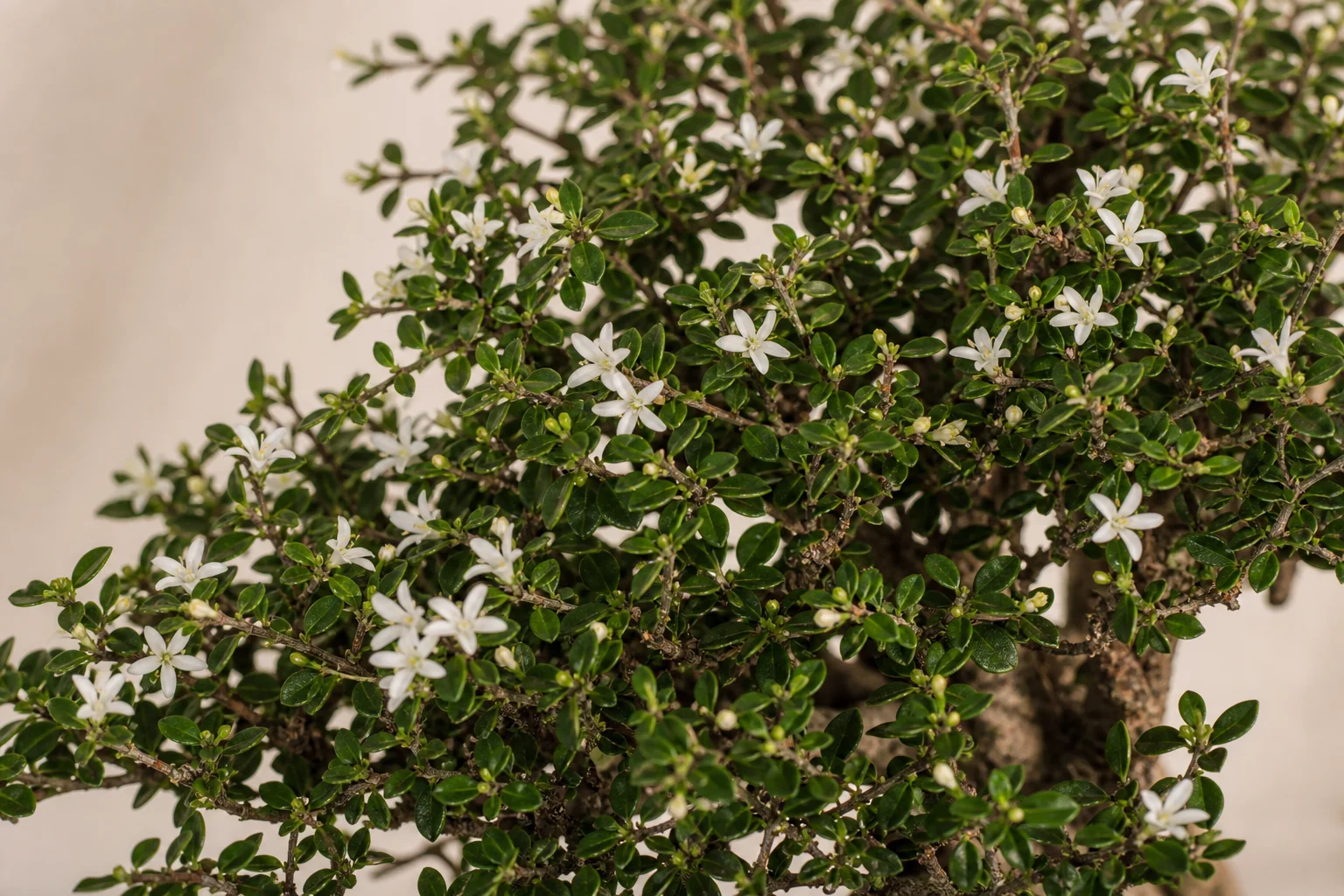
Serissa
Serissa japonicaSmall white star-shaped flowers year-round, tiny dark leaves, refined twiggy habit — and a reputation as the most temperamental indoor bonsai you can buy. The drama queen of the indoor world.
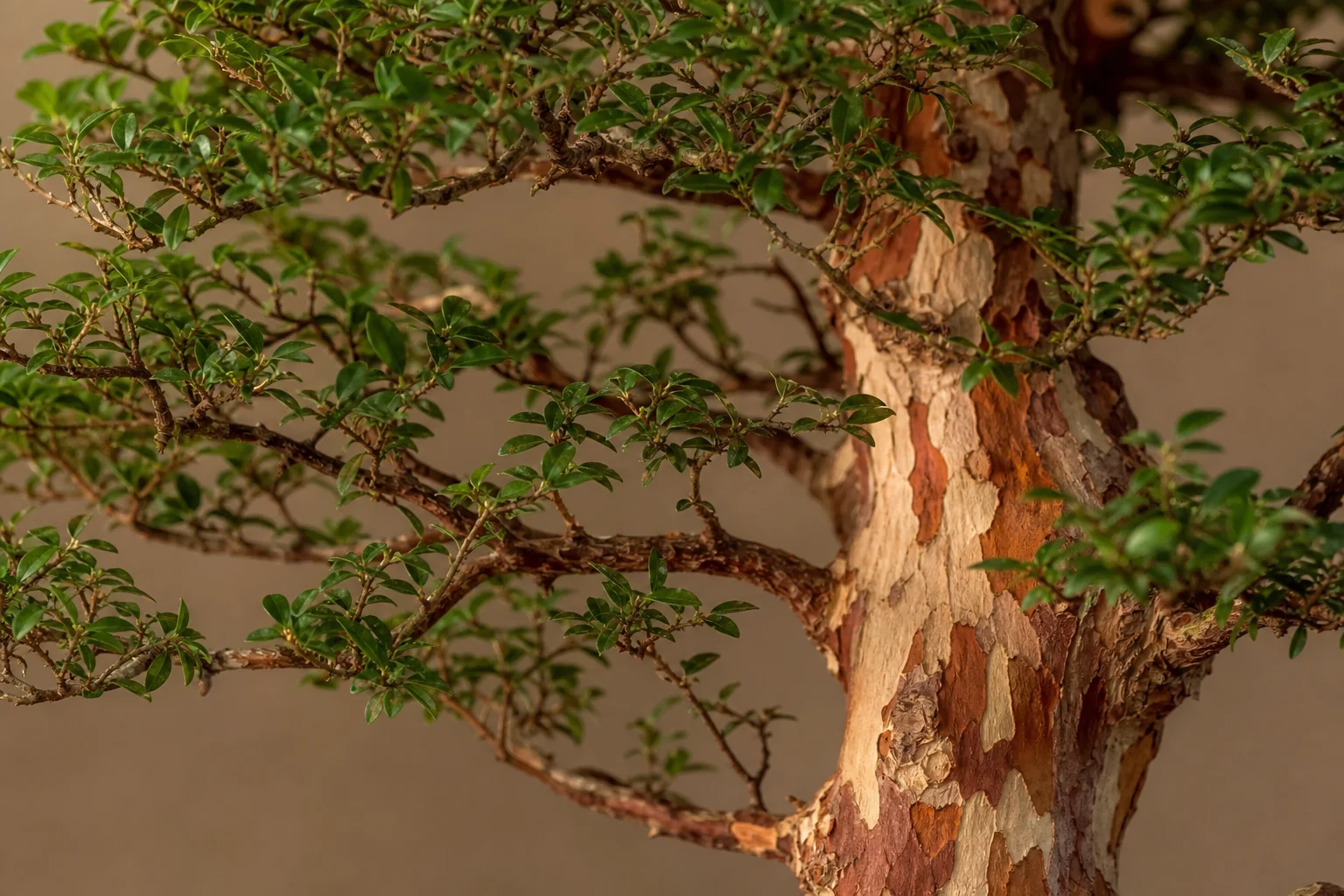
Chinese sweet plum
Sageretia theezansThe other indoor bonsai. Distinctive peeling bark, tiny leaves, and a more refined character than the mass-market ficus.