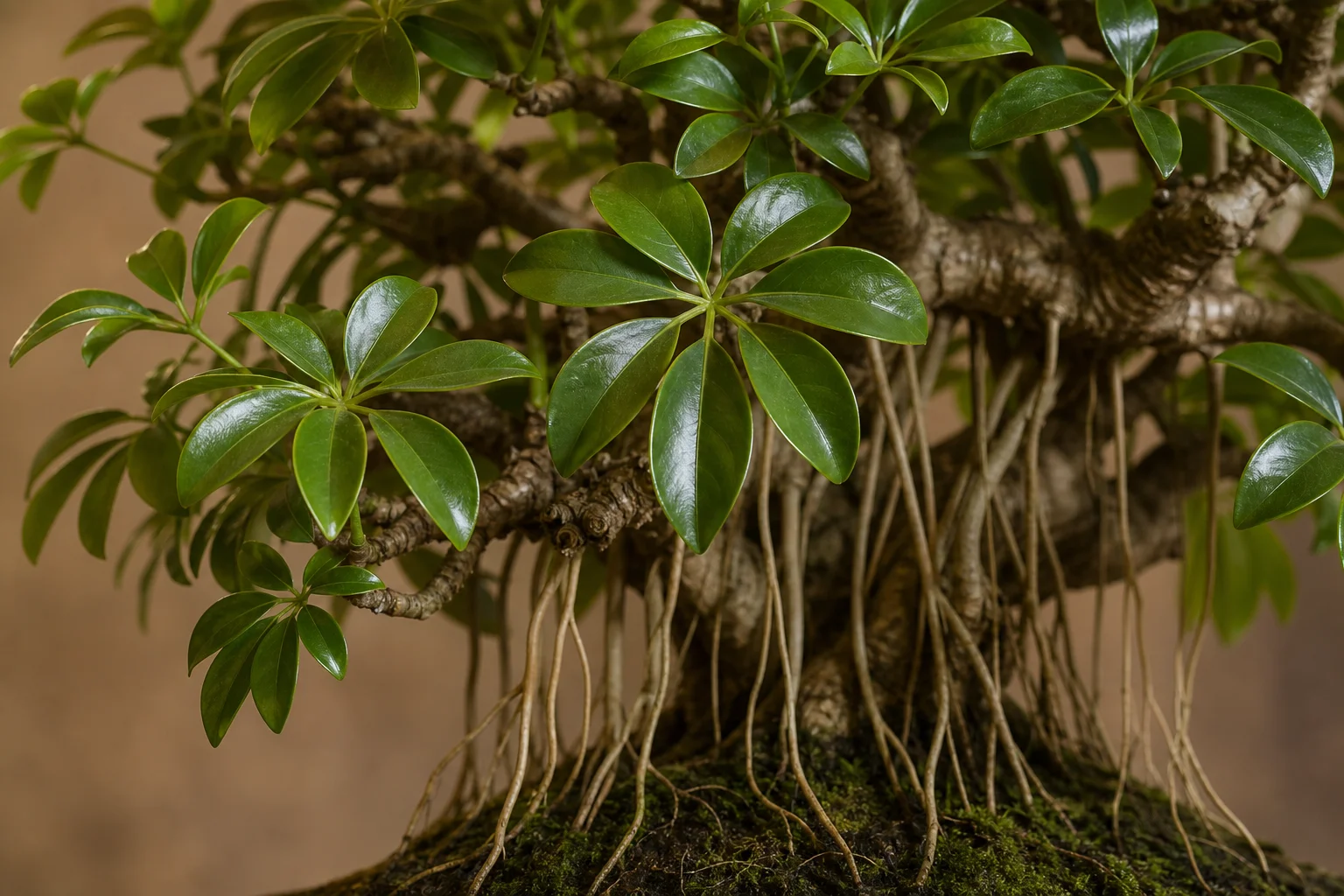
Dwarf umbrella tree bonsai care
Schefflera arboricolaThe banyan-style indoor bonsai. Aerial roots, compound leaves arranged in umbrella patterns, almost impossible to kill — and one of the few species that genuinely lives up to its "easy indoor bonsai" marketing.
Water
Every 3 days
check daily in summerLiquid feed
Every 14 days
growing seasonSolid feed
Every 28 days
slow releaseRotate
Every 14 days
even canopy growthSchefflera arboricola is the species you should reach for if you want an indoor bonsai that actually thrives in a UK home without elaborate management. The plant tolerates the low-humidity, variable-light, somewhat-neglected conditions of typical UK indoor environments better than nearly any other bonsai-suitable species. It develops dramatic aerial roots in modest humidity that build up genuinely banyan-tree-like trunks. It tolerates lower light than ficus while still producing healthy growth. It recovers from missed watering, accepts hard cutbacks, and produces new shoots from old wood almost anywhere a cut is made.
The defining aesthetic feature is the aerial root system. In conditions of even moderate humidity (60%+ for several hours daily, easily achieved with a humidity tray), Schefflera produces hanging air roots from branches that reach down toward the substrate and thicken into woody trunk-like structures when they connect with soil. Over years, this produces compositions that look like miniature banyan trees — multi-trunked tropical specimens with a tangle of supporting roots. This is the species' main appeal for serious bonsai work.
The umbrella-pattern compound leaves (typically 7–9 leaflets radiating from a single point) are larger than ideal for traditional bonsai aesthetics but reduce noticeably with refinement and consistent pruning. The species' true strength isn't refined small-scale Japanese-tradition bonsai but rather banyan and root-over-rock compositions where the aerial root habit can be properly displayed.
For new growers wanting an indoor bonsai that will succeed: Schefflera, ficus, and jade are the three to choose from. Schefflera gives you banyan-style possibilities the other two can't match.
Native to Taiwan and Hainan (southern China). Different from the larger Schefflera actinophylla (umbrella tree), which is a much bigger plant. The "dwarf" in the common name refers to mature plant size — arboricola tops out at around 4 metres in the wild versus 15+ metres for actinophylla — but the leaves are similar between the species. Long cultivated as ornamental house plant; the bonsai application is relatively recent globally but well-established in tropical bonsai traditions of Taiwan and Hawaii.
Seasonal calendar
Timing is for South East England. Select your region above to see adjusted guidance.
- Reduced watering and feeding
- Maintain temperature above 12°C
- Watch for spider mites if humidity is low
- Light monthly feeding
- Increase watering as light improves
- Begin bi-weekly feeding
- Repotting window opens
- Main pruning and styling
- Active growth phase
- Wire and styling work
- Move outdoors mid-month if planned
- Vigorous growth
Acclimatise gradually over 2 weeks to avoid leaf scorch.
- Maximum growth
- Encourage aerial roots with humidity
- Continue work
- Watch for aerial root development
- Begin reducing feeding mid-month
- Plan move back indoors
- Indoor by month-end before cool nights
- Acclimatise gradually
- Reduce watering as growth slows
- Establish winter routine
- Monthly light feeding
- Maintain warm position
Watering
Water moderately. Every 3–5 days in active growth conditions, every 7–10 days in low-light winter conditions. Let the surface of the substrate dry between waterings.
The species tolerates inconsistent watering remarkably well — far better than ficus, sageretia, or Fukien tea. A missed week in midsummer causes some leaf droop but rarely lasting damage. The species is genuinely forgiving on watering frequency.
Humidity affects aerial root development directly. In low humidity (below 40%), the plant grows but air roots don't develop or wither once formed. For the banyan-style aesthetic, raise humidity with a tray of pebbles and water under the pot, or by grouping with other plants. Aerial roots will visibly extend toward the substrate within weeks of better humidity.
Tap water of any hardness is fine.
Feeding
Light feeding. Half-strength liquid feed every two weeks from April through October. Reduce to monthly through winter at quarter strength.
The species responds well to consistent moderate feeding without demanding it. Underfed Schefflera produces pale weak growth; well-fed plants produce vigorous compound leaves and strong air root development.
Soil & Repotting
Free-draining but moisture-retentive. The species accepts a wide range of substrates.
50% akadama, 30% pumice, 20% lava is reliable. Generic bonsai mixes work fine. The species tolerates richer substrates than most bonsai species and accepts proportions of organic compost without harm.
Repot every 2–3 years. The window is essentially year-round indoors but late spring (April–May) is most traditional. Schefflera tolerates aggressive root work — up to half the root mass on healthy trees, and aerial roots can be carefully repositioned during repotting.
When repotting an established Schefflera with developed aerial roots, plan to maintain the aerial root structure that gives the tree its character. Don't simply remove aerial roots — bury their tips in the new substrate so they become structural roots, or work them around feature rocks.
Pruning
Schefflera pruning is among the easiest in indoor bonsai. The species back-buds reliably on old wood, tolerates aggressive cutbacks (including dramatic trunk chops), and recovers rapidly.
Prune anytime the plant is actively growing — typically March through October. Through the growing season, let new compound leaves develop, then cut back to maintain shape. The species produces new shoots from below the cut almost without fail.
Hard trunk chops on overgrown material produce vigorous response — useful for restyling collected or overgrown specimens. The species also produces basal shoots readily, which can be encouraged into multi-trunk compositions.
A specific technique for banyan-style work: in conditions of high humidity, you can encourage aerial root development by misting daily and selectively wrapping moss around branches where you want air roots to form. Within 2–3 months, roots emerge from the moss-covered sections and can be guided toward the substrate.
Wiring & Styling
Wire after new growth hardens. Schefflera wood is moderately soft on young branches and stiffer on older trunks. Aluminium for almost all work. Check fortnightly during active growth.
The species' habit produces relatively few major branches with large leaves — wire is often used to position whole trunks or major branches rather than to refine fine ramification. Major bends on older wood need raffia wrapping.
Banyan style is the natural fit and Schefflera's defining aesthetic. Multi-trunk and clump styles work brilliantly — encouraged by the species' propensity for basal shoots. Root-over-rock plantings are exceptional. Informal upright works on suitable material.
Cascade and semi-cascade are uncommon but possible. Formal upright doesn't suit the species. Forest plantings are dramatic, particularly when combined with stones to create island-like compositions.
The aerial roots are the species' main aesthetic asset — styling should encourage and showcase them rather than fighting the species' natural habit.
Winter care
Indoor permanently in the UK. Minimum temperature 10°C; happier above 15°C. The species tolerates lower temperatures than many tropical bonsai but resents cold drafts.
Light: bright indirect to direct light. South-facing window with sheer curtain in summer; full south-facing winter sun. The species tolerates lower light than ficus or Fukien tea — east or west-facing windows work for maintenance, though growth is slower.
Some growers move Schefflera outdoors for summer (mid-June to mid-September) — this produces stronger growth and better aerial root development. Re-acclimate gradually in both directions.
Propagation
Easy from semi-hardwood cuttings any time during active growth, with rooting hormone — very high success rate. Air layering is essentially the natural propagation method for established trees — wrap moss around a branch in moderate humidity and roots form within months. From seed possible but rarely used.
Common problems
Mostly trouble-free. The species is among the most disease-resistant indoor bonsai.
Spider mites in dry indoor air
Symptoms: Fine stippling on compound leaves; eventual leaf yellowing.
Cause: Dry heated winter air.
Solution: Raise humidity. Wipe foliage with damp cloth. Neem if persistent. Schefflera is less susceptible than Fukien tea or Sageretia but still vulnerable in very dry conditions.
Scale insects
Symptoms: Small brown bumps on stems and undersides of leaflets.
Cause: Common indoor pest.
Solution: Manual removal with alcohol-dipped cotton bud. Systemic insecticide if severe.
Mealybugs
Symptoms: White cottony masses in leaf joints and on stems.
Cause: Common indoor pest, particularly in dry conditions.
Solution: Wipe off with alcohol-dipped cotton bud. Neem if widespread.
Aerial roots failing to develop
Symptoms: No air roots visible despite years of growth.
Cause: Inadequate humidity.
Solution: Raise humidity to 60%+. Humidity tray under pot, misting daily, grouping plants. Air roots appear within weeks of better conditions.
Oversized compound leaves
Symptoms: Leaves larger than ideal for bonsai scale.
Cause: Normal species characteristic, exacerbated by heavy feeding or low light.
Solution: Restrict feeding. Maximise light. The species' leaves are inherently larger than refined bonsai species like Sageretia — accept the slightly stylised character rather than fighting it. Defoliation can reduce leaf size on healthy specimens.
Leaf drop after environmental change
Symptoms: Some leaves drop within days of moving the tree.
Cause: Less dramatic than Fukien tea or Sageretia but still happens.
Solution: New leaves appear within weeks. Future changes should be gradual.
Popular cultivars
Standard dwarf umbrella tree. Most material is this. Variable in leaf size and habit.
Variegated cultivar with green and yellow leaflets. Striking but variegation can be unstable in low light.
Compact slow-growing form. Smaller leaflets, more refined habit. Excellent for bonsai.
Variegated cultivar with creamy-yellow margins. Decorative.
Larger relative species. Same care but bigger leaves and faster growth — less suitable for traditional bonsai scale.
Track your Dwarf umbrella tree with Kentai.
Collection tracking, care logs and photo history are free — no card, no time limit.
More care guides
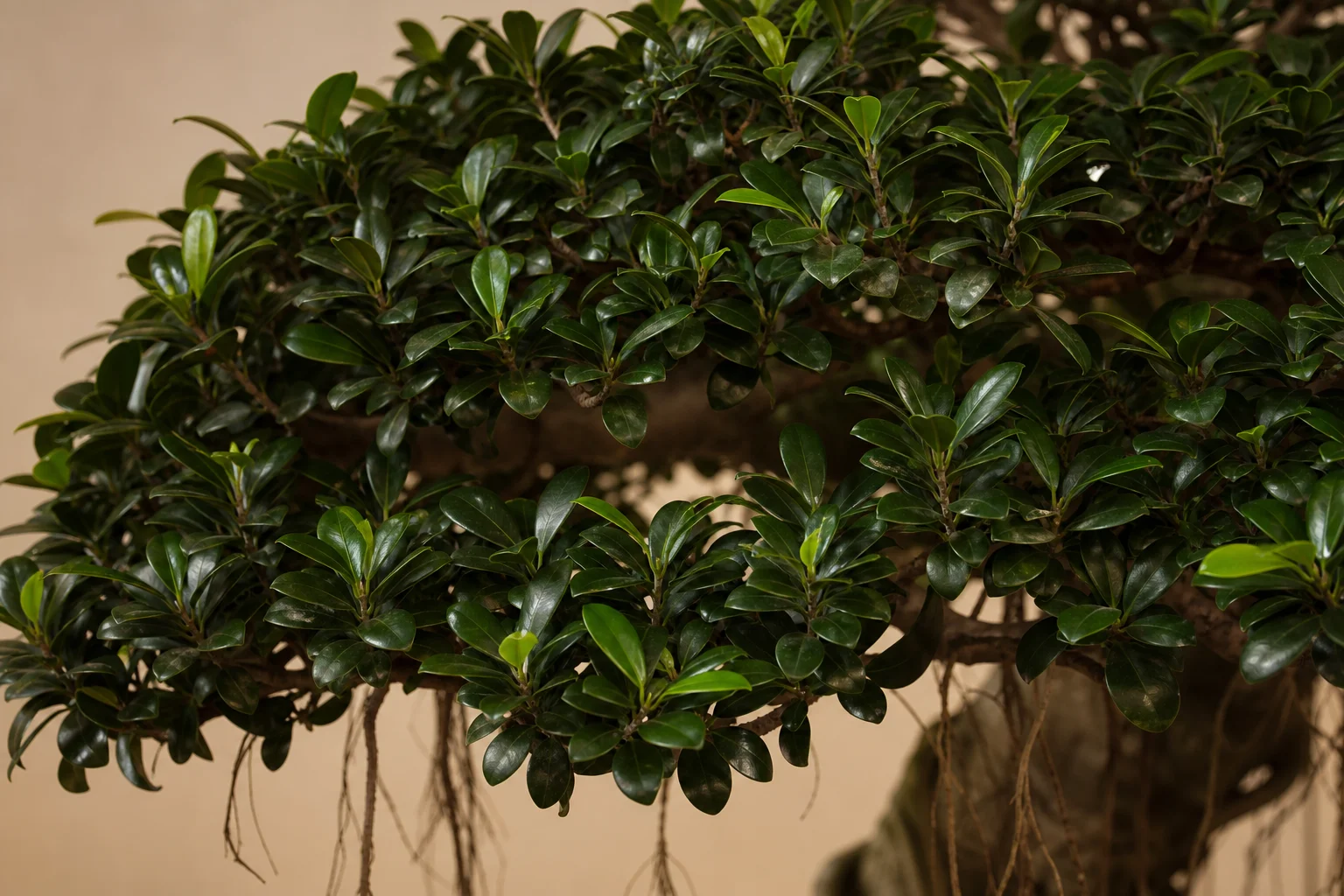
Ficus retusa
Ficus microcarpaThe best indoor bonsai. Tolerant of household conditions, fast-growing, and the only common bonsai species that truly thrives without a winter dormancy.
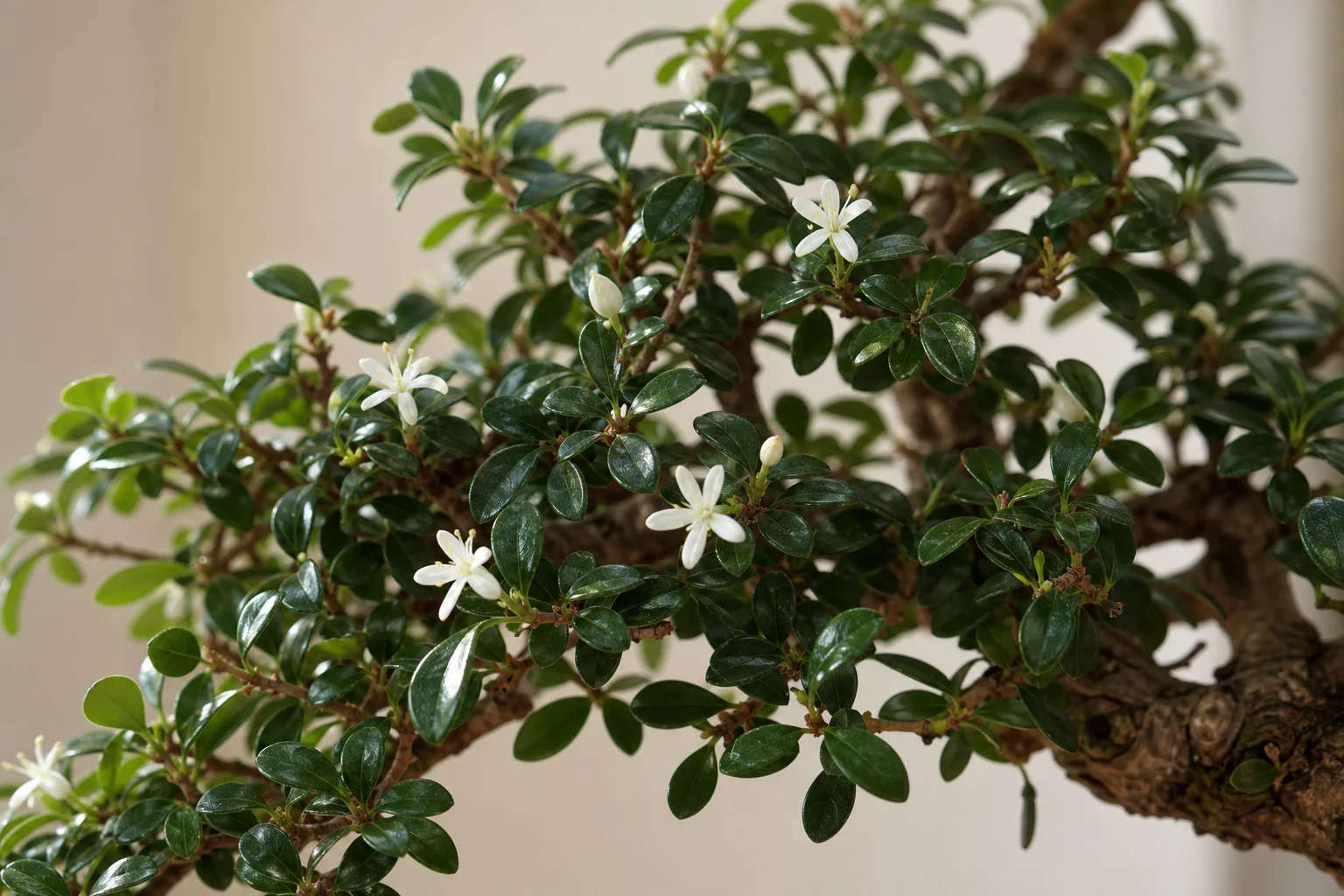
Fukien tea
Carmona retusaSmall dark glossy leaves, tiny white flowers year-round, small red berries — the popular indoor bonsai widely sold as starter material despite being one of the more challenging species to maintain.
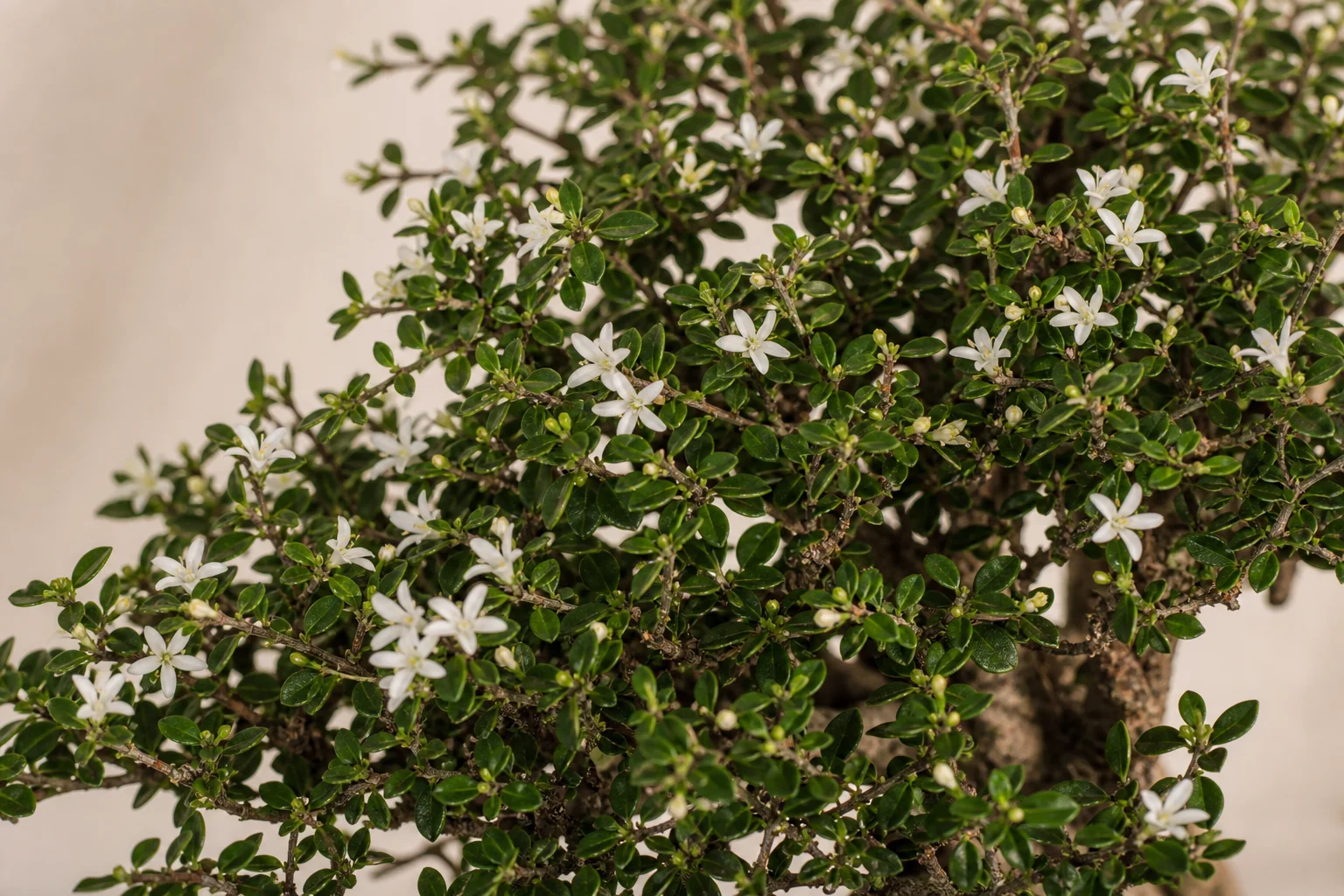
Serissa
Serissa japonicaSmall white star-shaped flowers year-round, tiny dark leaves, refined twiggy habit — and a reputation as the most temperamental indoor bonsai you can buy. The drama queen of the indoor world.