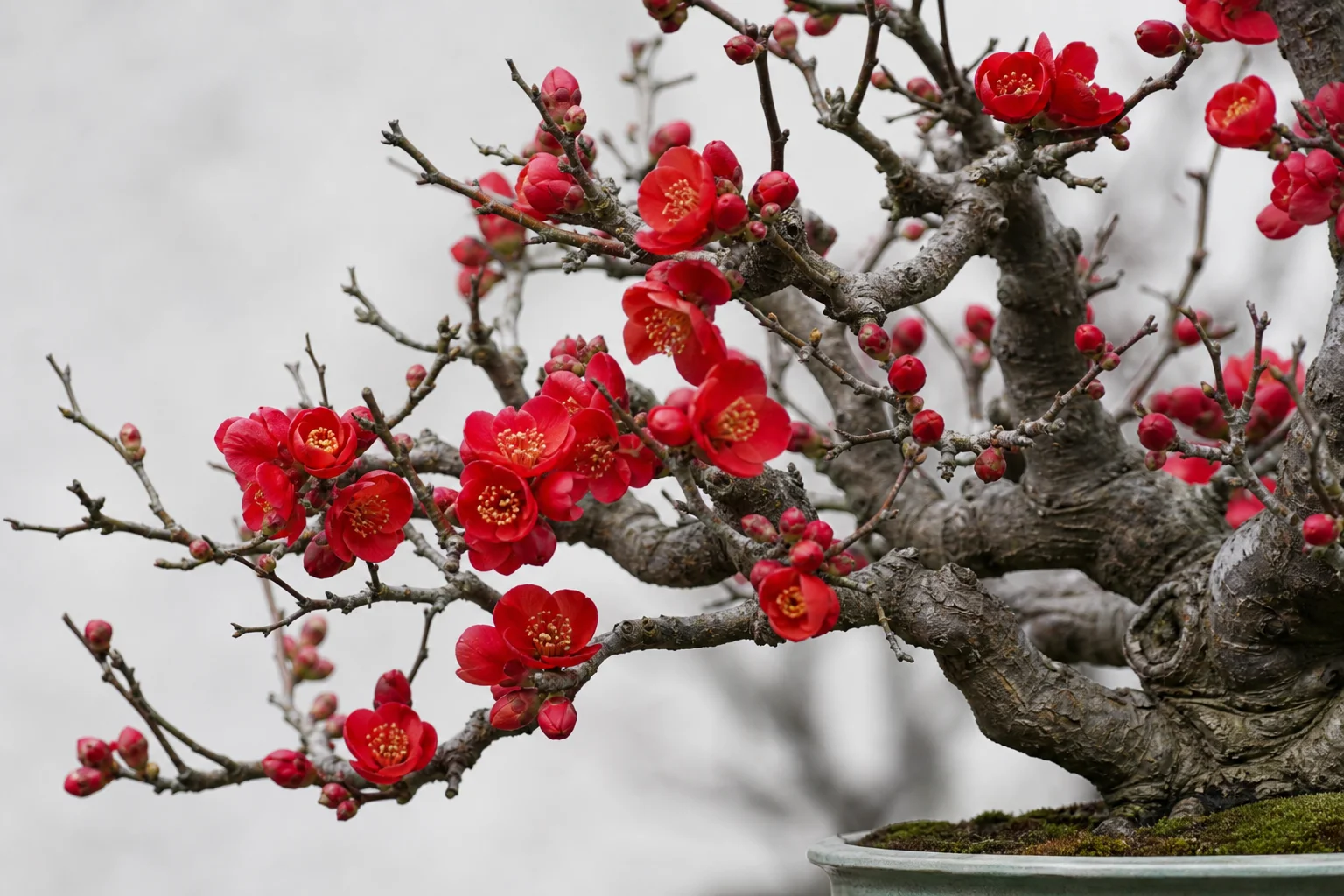
Japanese flowering quince bonsai care
Chaenomeles japonicaWinter-into-spring flowers in red, orange, pink, or white. The bonsai that blooms when nothing else does.
Water
Every 1 day
check daily in summerLiquid feed
Every 7 days
growing seasonSolid feed
Every 28 days
slow releaseRotate
Every 14 days
even canopy growthFlowering quince is the bonsai that breaks the winter. Depending on the cultivar and the year, blooms appear from late January through April — often while bare branches are still leafless, occasionally on plants that still bear last autumn's small yellow fruits. A flowering quince in full bloom in February, while every other tree in the garden is dormant, is one of the great quiet pleasures of UK bonsai.
The genus offers significant variety. Chaenomeles japonica is the dwarf species — smaller habit, slightly smaller flowers, naturally compact. Chaenomeles speciosa and the hybrid Chaenomeles × superba are larger, with broader colour range. For bonsai purposes, all three work; japonica is most often grown for small bonsai and speciosa/superba for larger trees.
Care is moderate. The species is hardy and forgiving in most respects but the flowering cycle drives pruning timing, the thorns require respect, and a couple of specific Rosaceae diseases can occasionally cause problems. None of these is difficult for a beginner to manage.
Native to Japan (japonica) and central China (speciosa). Cultivated as bonsai in both countries for centuries — the species is called boke in Japanese bonsai contexts and has a long tradition particularly in flowering bonsai displays. Widely planted in UK gardens as flowering shrubs; bonsai-quality nursery material is widely available.
Seasonal calendar
Timing is for South East England. Select your region above to see adjusted guidance.
- First blooms possible in mild years and warm regions
- Light structural pruning only
- Peak winter flowering on early cultivars
- Repot before main spring flowering if needed
- Main flowering for most cultivars
- Late buds opening
- Post-flowering main pruning
- Repot after flowering ends
- First feed
- Strong growth
- Start weekly liquid feed
- Wiring window opens
- Pinch new shoots
- Twice-daily watering in heat
- Continue light pinching
- Begin tapering nitrogen
- Watch for fireblight
- Small fruit may form
- Continue light feeding
- Occasional autumn flower flush
- Autumn colour
- Leaf drop
- Small yellow fruit may persist
- Light structural pruning if needed
- Flower buds visible on most cultivars
Watering
Daily through the growing season. Quinces are thirsty in full leaf and during flowering. A pot allowed to dry during flowering reduces the display dramatically — blooms shrivel within hours of moisture stress.
Twice daily in summer heat. In winter, regular checking — quinces hold late-formed flower buds through winter that need consistent moisture to develop properly.
Tap water of any hardness is fine.
Feeding
Weekly liquid feed from late April (post-flowering) through to mid-September. Slow-release organic pellets in spring and again in early summer. For flowering and fruiting, ensure adequate phosphorus and potassium — high-N feeds produce foliage at the expense of next year's display.
A specific note: many quinces produce a second small flush of blooms in autumn (October). Continued light feeding through September supports this; if you prefer to focus on next spring's main display, taper feeding from mid-August.
Soil & Repotting
Free-draining and slightly acidic to neutral. Quinces are unfussy about substrate.
60% akadama, 30% pumice, 10% lava is reliable. The species tolerates a wide range of mixes.
Repot every 2 years for young trees, every 3 for mature specimens. The window is immediately after flowering (March–April) or in late winter before flowering (January–February). Avoid disturbing the tree during bloom or in the few weeks before bud opening.
The species tolerates moderate root work — up to a third of the root mass on healthy trees. Comb roots radially, prune cleanly. Recovery is good.
Pruning
Quince pruning is built entirely around the flowering cycle. Flowers form on previous year's wood, so aggressive pruning of last year's growth eliminates this year's display.
Late winter (before flowering): Light structural pruning only. Avoid removing flowering wood unless necessary.
Immediately after flowering (April): Main annual pruning. Cut back flowering shoots to 2–3 buds (encourages new flowering wood for next year). Remove unwanted branches structurally.
Through summer: Pinch new growth back to maintain shape, but leave some shoots to extend — these become next year's flowering wood.
Autumn: Light tidying only. Don't remove the developing flower buds.
The species back-buds reliably on old wood, so hard cutbacks recover well in time — they just lose the immediate next year's flowering display. Plan accordingly.
Wear gloves. Quince thorns are sharp.
Wiring & Styling
Wire after leaves harden in early summer or on bare branches in late autumn or winter (avoiding flower bud development period). Quince bark is fairly forgiving. Aluminium for most work; copper for thicker structural branches.
The species' growth is moderate — wire usually stays on for 3–6 months without biting in.
Informal upright is the most common style. Cascade and semi-cascade work well — many quinces have a naturally sprawling habit. Twin-trunk, clump, and forest plantings are all natural fits for the species' multi-stem habit.
Root-over-rock plantings work well. The thorny habit and dense ramification of quince makes it particularly effective for compositions that emphasise both flower and structure.
Avoid formal upright and literati — neither suits the species' natural form.
Winter care
Fully hardy across the UK with no protection needed. Flowering quinces handle British winters without complaint. Some growers shelter pots from prevailing wind in late winter to prevent flower buds from being damaged by wind desiccation — this is worth doing if you're in an exposed position.
Never bring indoors.
Propagation
From cuttings — semi-hardwood in early summer with rooting hormone, moderate success. Air layering works well. From seed produces variable seedlings (cultivars don't come true). Most quality bonsai material is grown from cultivated nursery stock or developed from young garden centre material.
Common problems
Mostly healthy. Shares some Rosaceae diseases but generally robust.
Fireblight (Erwinia amylovora)
Symptoms: Sudden blackening of shoots and flowers, looking scorched.
Cause: Bacterial disease of Rosaceae.
Solution: Cut back well below visible damage. Disinfect tools between cuts. Burn affected wood. Severe infections may require destruction of the tree.
Quince leaf blight (Diplocarpon mespili)
Symptoms: Dark spots on leaves, yellowing, early leaf drop.
Cause: Fungal disease, common in wet UK summers.
Solution: Improve airflow. Remove and bin affected leaves. Copper fungicide preventatively in spring. Severe cases may need repeated treatments.
Aphids
Symptoms: Curled sticky young leaves and shoots in spring.
Cause: Standard spring pest pressure.
Solution: Hose off. Neem if persistent.
Powdery mildew
Symptoms: White coating on leaves in late summer.
Cause: Humid stagnant air.
Solution: Improve airflow. Remove affected leaves. Milk-water spray as preventative.
Failure to flower
Symptoms: Tree grows well but doesn't flower.
Cause: Almost always over-pruning the previous summer — last year's growth was removed before flower buds could form.
Solution: Leave some shoots to extend through summer rather than pinching every shoot. There's an inherent trade-off between refined ramification and floral display.
Bird damage to flower buds
Symptoms: Buds disappear or are damaged in winter.
Cause: Bullfinches and other birds eat developing flower buds.
Solution: Net the tree from December through to flowering if bird damage is recurring. Some cultivars are more susceptible than others. A real issue in some UK gardens.
Popular cultivars
Dwarf Japanese quince. Compact habit, orange-red flowers, naturally suited to bonsai scale.
Chinese flowering quince. Larger habit, broader colour range, suitable for larger bonsai.
Hybrid between japonica and speciosa. Wide cultivar range. Common in UK garden centres.
Dwarf cultivar of C. japonica with very small leaves and tiny red flowers. Famous in Japanese shohin bonsai. Slow but rewarding.
Pink-flowered hybrid, vigorous and reliable.
Crimson flowers with golden anthers. Striking and widely available.
Track your Japanese flowering quince with Kentai.
Collection tracking, care logs and photo history are free — no card, no time limit.
More care guides
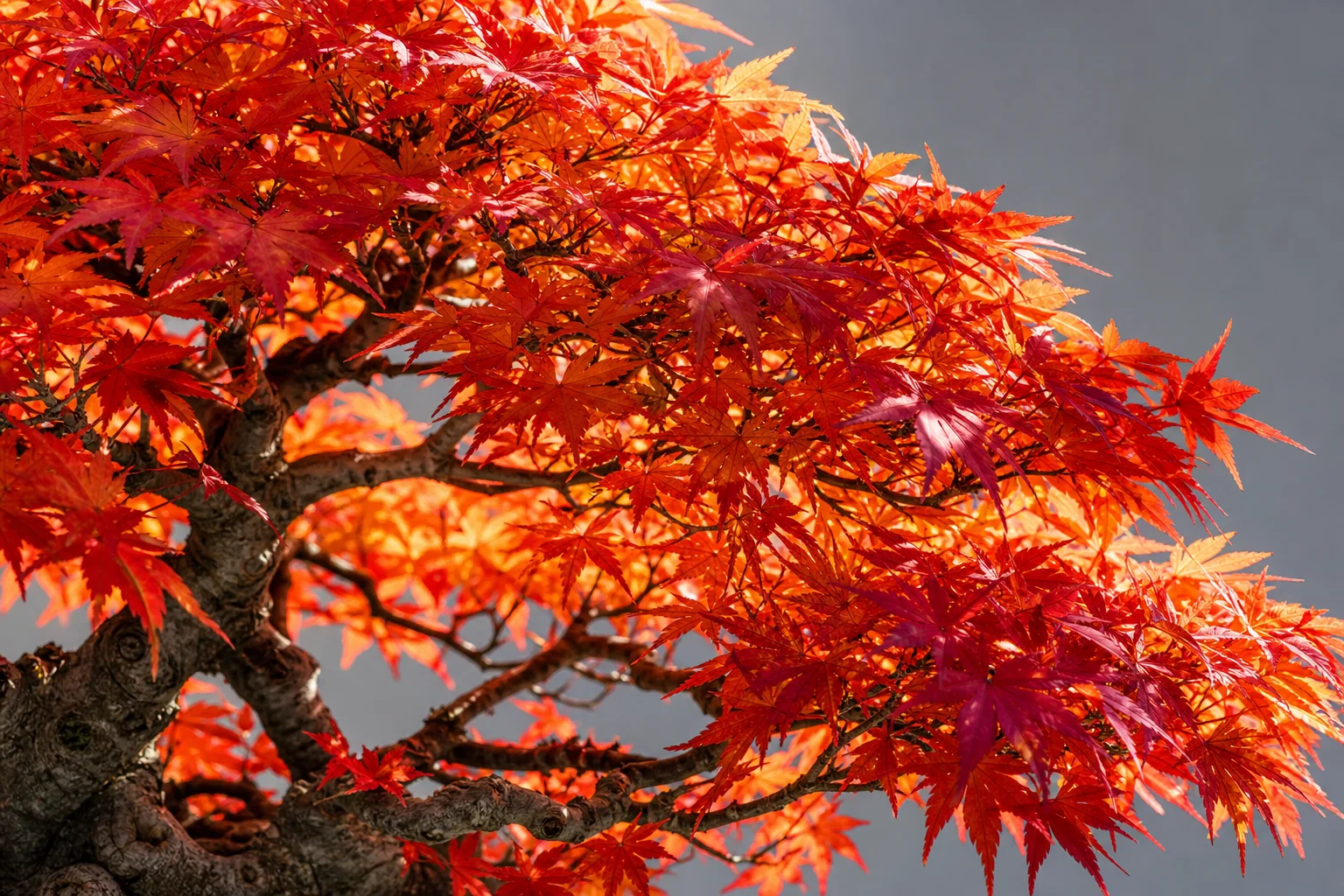
Japanese maple
Acer palmatumThe iconic deciduous bonsai — slender twigs, palmate leaves, and four genuinely different seasons.
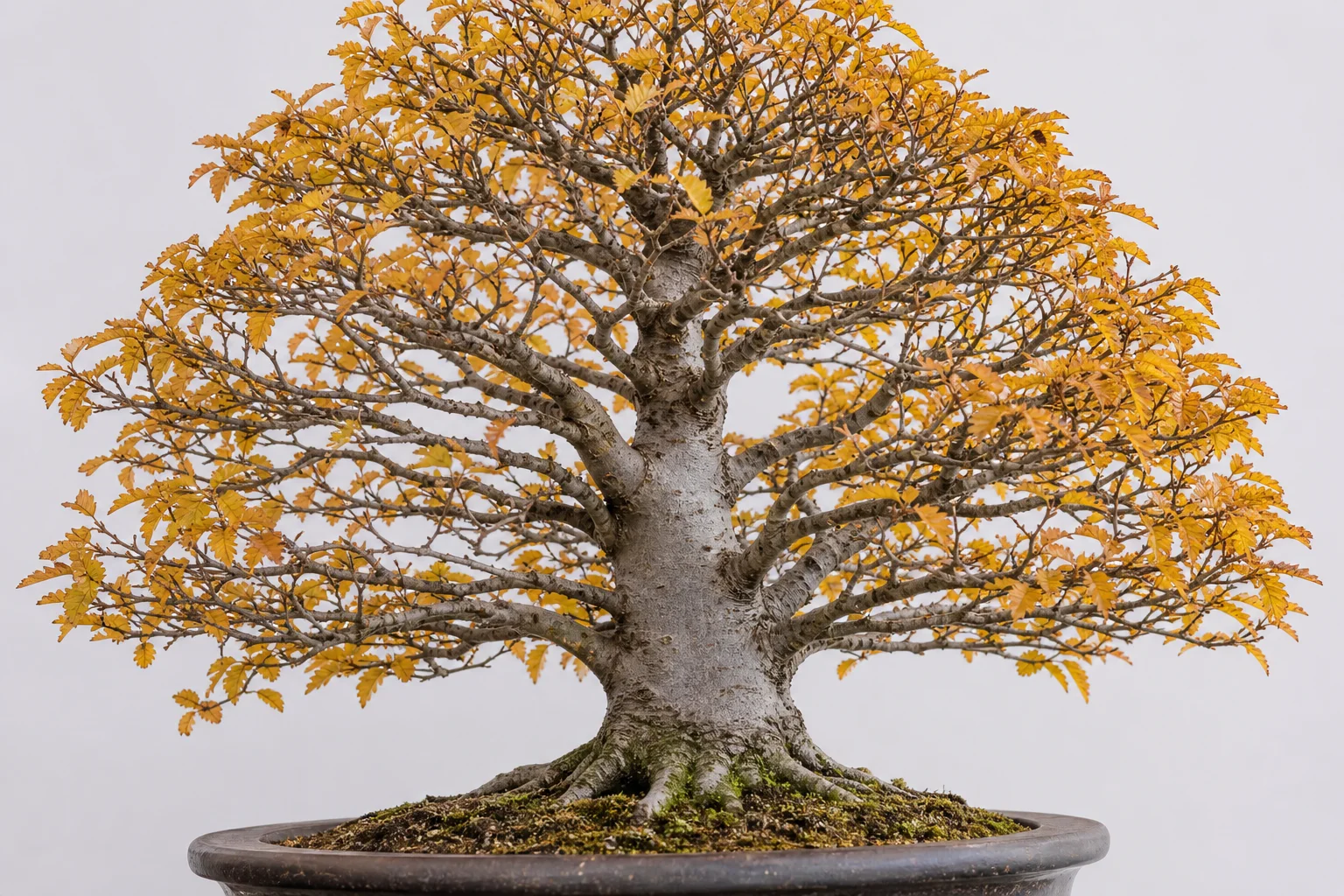
Japanese zelkova
Zelkova serrataThe broom-style classic. Natural vase-shaped habit, smooth grey bark, small serrated leaves, and an ease of cultivation that makes it among the best deciduous bonsai species for UK growers.
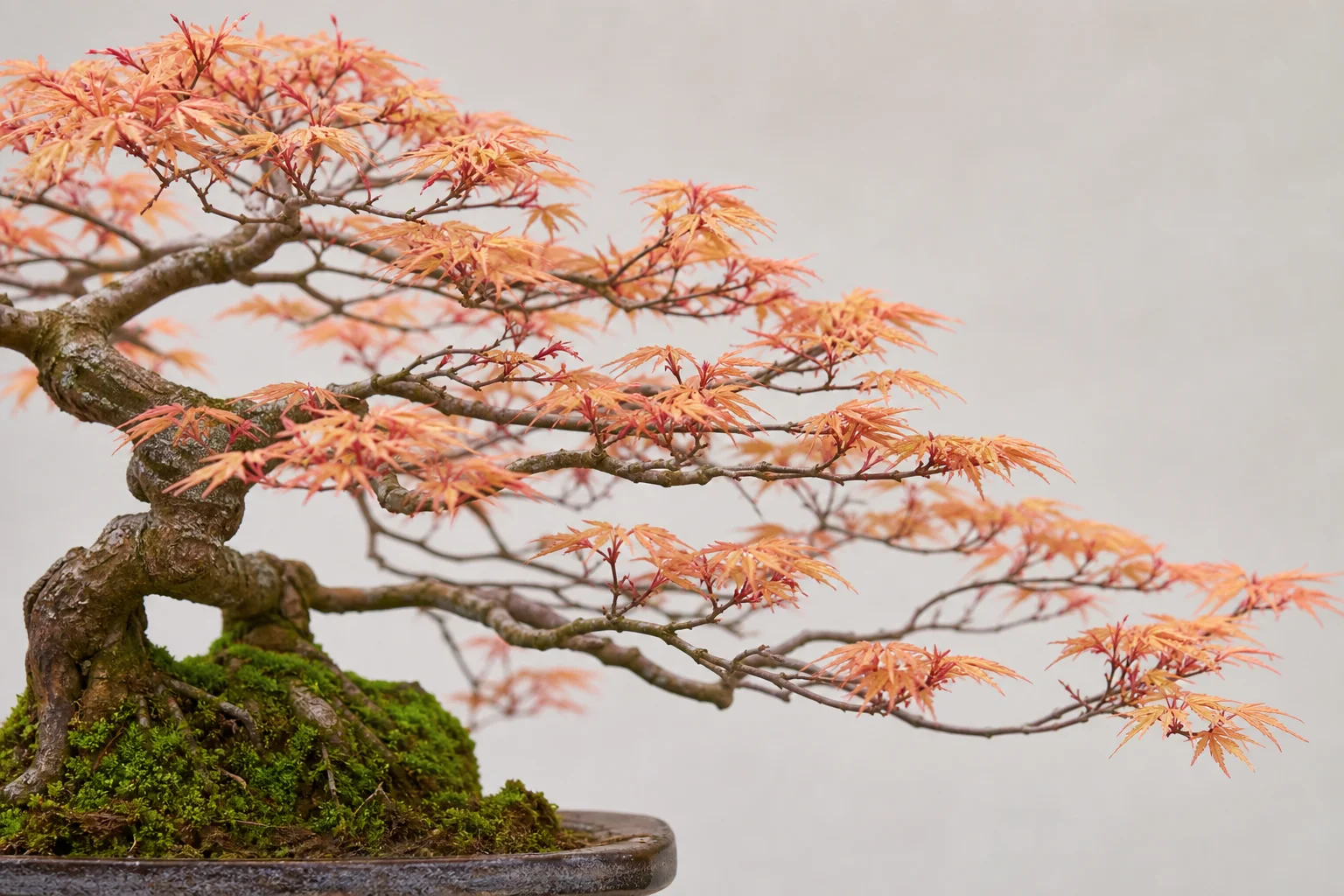
Kiyohime maple
Acer palmatum 'Kiyohime'The dwarf Japanese maple. Tiny leaves, naturally spreading low habit, orange spring colour — and the cultivar that makes shohin bonsai possible without years of refinement.