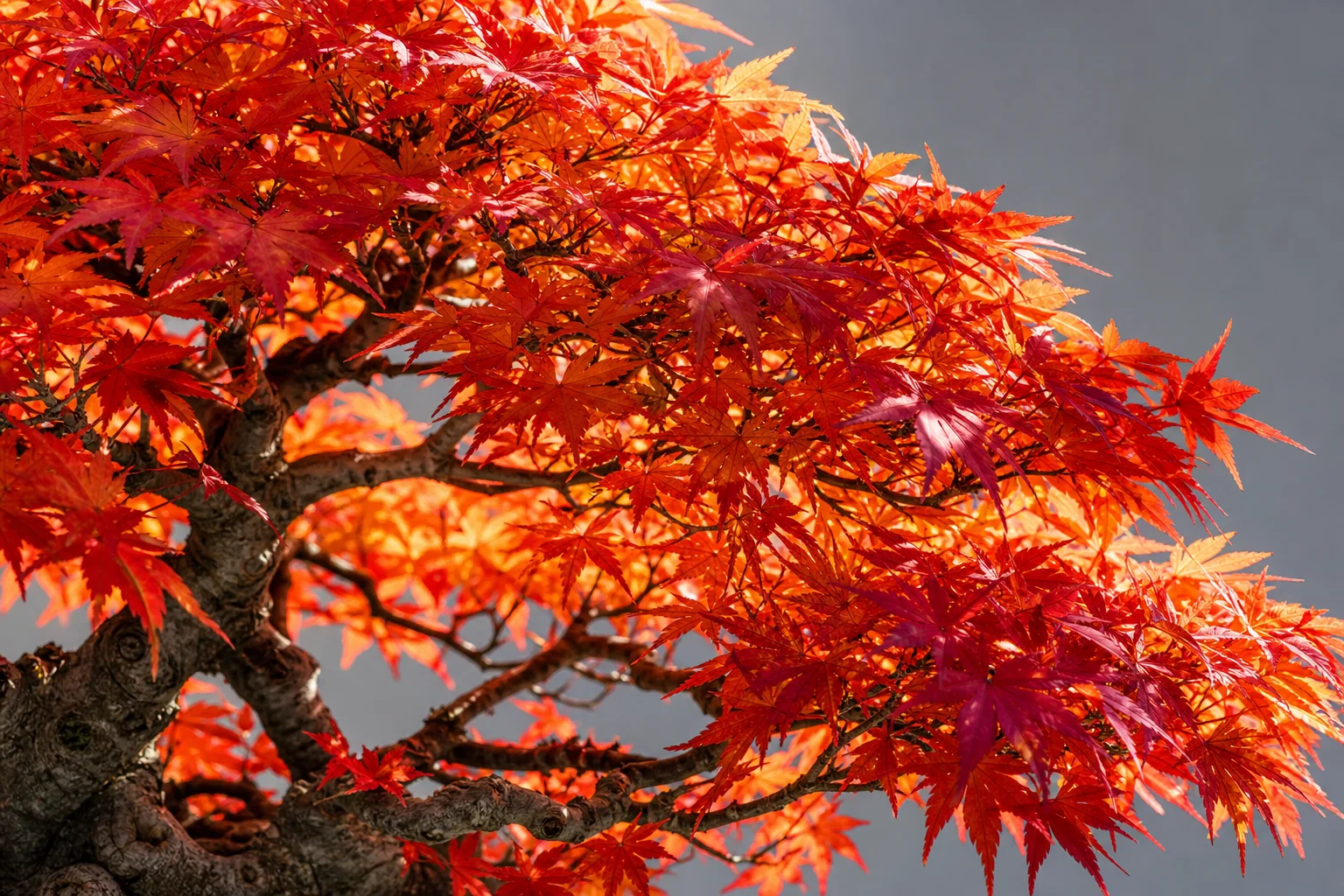
Japanese maple bonsai care
Acer palmatumThe iconic deciduous bonsai — slender twigs, palmate leaves, and four genuinely different seasons.
Water
Every 1 day
check daily in summerLiquid feed
Every 7 days
growing seasonSolid feed
Every 28 days
slow releaseRotate
Every 14 days
even canopy growthAcer palmatum is the tree most people picture when they think of bonsai, and for good reason. Few species reward patient ramification work so visibly. A well-developed Japanese maple has a delicate twig structure that's clearly visible in winter, soft fresh green in spring, dense canopy in summer, and fiery autumn colour that holds for two or three weeks if the weather behaves.
It is, however, not quite a beginner tree. Maples in pots are more vulnerable than maples in the ground — to dry roots, to wet roots, to afternoon sun, to late frosts on opening buds, to wind. None of these is hard to manage once you understand them, but a forgotten watering on a hot July afternoon can scorch leaves badly, and a frozen pot in February can kill a tree outright. Treat it as a tree that wants attention rather than one that tolerates neglect.
Native to Japan, Korea, and parts of eastern China and Russia. In Japan it grows as an understorey tree in mixed deciduous forest, which is why it prefers dappled light rather than full exposure. Cultivated as bonsai for centuries; the modern hobby owes much of its iconography to nineteenth-century Japanese specimens.
Seasonal calendar
Timing is for South East England. Select your region above to see adjusted guidance.
- Structural wiring on bare branches
- Check pot drainage and winter protection
Fully dormant. Good month for hard pruning if frosts pause.
- Final structural pruning
- Prepare repotting substrate
Watch for bud swell in mild years — late month.
- Repot as buds swell
- Move out of winter protection by mid-month
The repotting window. Don't miss it.
- Leaves open
- Begin daily watering checks
- First slow-release feed
Late frosts can still scorch fresh leaves — protect if -2°C forecast.
- Start weekly liquid feed
- Pinch new shoots back to 2 leaves once hardened
- Watch for aphids
- Continue pinching
- Wiring window opens once leaves harden
- Defoliate refined trees (late month)
Only defoliate healthy, well-fed specimens.
- Twice-daily watering in heat
- Move to dappled shade if scorching
Highest-risk month for leaf scorch. Mist foliage in evenings.
- Continue watering
- Reduce nitrogen-heavy feed end of month
- Switch to low-N autumn feed
- Reduce watering frequency
First hints of autumn colour in cooler areas.
- Peak autumn colour
- Sweep fallen leaves promptly (tar spot)
- Leaf drop complete
- Apply winter protection plan
- Clean pot surface
Move trees out of wind. Below -5°C, into shelter.
- Structural pruning
- Monitor for wet/frozen roots
- Wiring on bare branches
Watering
Maples need consistently moist, well-drained soil through the growing season. In practice this means checking every morning from late April through October. Water thoroughly when the surface of the soil starts to feel dry — water until it runs freely from the drainage holes, then water again a minute later.
In July and August you may need to water twice a day, especially for trees in shallow pots or trees in full leaf after a defoliation. A pot that goes bone-dry for half a day in summer will scorch the leaf margins, and once scorched they don't recover that season.
Equally, don't keep the soil wet in winter. From November to February the tree is dormant and a saturated pot in cold weather invites root rot. Tilt pots slightly so meltwater drains; if you've had heavy rain followed by a freeze, check that drainage holes aren't blocked with ice.
Use rainwater where possible. Hard tap water (most of southern England) gradually shifts the soil alkaline over years, which maples dislike. If you only have tap, that's fine — just repot on a slightly shorter cycle.
Feeding
Maples are moderate feeders. Begin liquid feeding once leaves have fully opened and hardened off — typically mid-to-late April in southern England, early May further north. Use a balanced liquid feed at half the recommended strength, weekly through to mid-August. After that, switch to a low-nitrogen autumn feed (high P and K) for three or four weeks to help the wood ripen for winter, then stop.
Slow-release organic pellets (biogold, green king or similar) work well as a supplement — apply in spring and again in early summer, but stop in late July. Continued high-nitrogen feeding into autumn pushes soft late growth that won't harden before frost and produces coarser internodes.
On young, developing material you can push harder. On refined trees where you're maintaining ramification rather than building it, feed lightly — overfeeding is the fastest way to get long internodes and oversized leaves on a finished tree.
Soil & Repotting
Japanese maples want a free-draining, slightly acidic, moisture-retentive substrate. The Japanese standard is akadama-dominant, and there's no good reason to argue with that for this species.
For refined trees: 70% akadama, 20% pumice, 10% lava (kiryu or similar). Sieve out the dust. For young trees in development where you want faster root growth: 50% akadama, 30% pumice, 20% lava — coarser grade. Avoid composted bark or peat-based mixes; they break down too fast and stay wet.
Repot every 2–3 years for young, vigorous trees; every 3–5 years for mature, refined specimens. The single most important factor is timing: repot just as the buds swell and show colour but before they break into leaf. In southern England this window is typically late February to mid-March. In Scotland and the north, mid-to-late March. Miss the window and you'll either disturb dormant roots in cold soil (slow recovery) or work on a tree that's already pushing energy into new leaves (severe setback).
When repotting, work the root ball out, comb the roots radially with a root rake, and cut back no more than a third of the root mass on healthy trees. Older trees tolerate less root work — be conservative. Wash the cut surfaces with water, settle the tree into fresh substrate, and water in heavily. Keep the freshly repotted tree out of wind and direct sun for two or three weeks.
Do not repot in autumn. The advice you sometimes see online about autumn repotting comes from warmer climates and doesn't apply here — UK winters are too wet and the tree can't establish new roots before dormancy.
Pruning
Structural pruning happens in winter while the tree is dormant and you can see the silhouette clearly — December or January is ideal. Major cuts heal faster if made just before spring sap rise. Use a concave cutter for branches over pencil-thickness, and seal larger wounds; maples can die back from poorly sealed cuts.
Through the growing season, the main job is shoot pinching. Once a new shoot has hardened to four or five leaves, pinch it back to two. This is what builds the fine ramification maples are famous for. Don't pinch every shoot — leave some to extend if the tree needs vigour, especially in weaker areas of the canopy.
Defoliation (removing all leaves in early summer to force a second flush with smaller leaves) is a refining technique, not a developing one. Only defoliate healthy, well-fed trees and only every 2–3 years. Late June is the window in the UK. Don't defoliate a tree you've just repotted, or one showing any sign of stress.
Wiring & Styling
Wire after leaves have hardened in early summer (June) or in winter on bare branches (December–January). Bark marks easily — maples scar faster than almost any other bonsai species — so use anodised aluminium wire, apply it loosely, and check weekly through the growing season. Remove wire as soon as it begins to bite, not when it's already cut in.
Smooth-bark cultivars (deshojo, kiyohime) mark even faster. On these, raffia-wrap the branch before wiring anything substantial.
Maples lend themselves to most informal styles — informal upright (moyogi) is the classic, but broom (hokidachi) suits cultivars with a naturally upright habit like Acer palmatum 'Kiyohime'. Twin-trunk, clump, and forest plantings (yose-ue) are all traditional. Cascade and semi-cascade are rare for maples and don't really suit their natural growth habit.
Aim for a soft, flowing line in the trunk and a canopy that breaks slightly under its own weight — that "old tree in a meadow" feel rather than anything sharp.
Winter care
Roots in a pot are vulnerable in ways that roots in the ground are not. A Japanese maple in the ground in the UK is fully hardy; the same tree in a pot can be killed by a hard frost.
From November onwards, move trees out of wind. Below -5°C, get them into an unheated greenhouse, cold frame, or sheltered porch. The goal is to protect the roots and the swelling buds from desiccating wind and prolonged hard freezes — not to keep them warm. Bringing a maple indoors over winter will kill it within a season or two; it needs the cold to set buds properly.
A simpler alternative: bury the pot in a sheltered raised bed, mulched with bark or leaf mould. The tree's foliage is gone by then so the pot can sit anywhere shaded.
Propagation
From cuttings (semi-hardwood, June, with rooting hormone — variable success), from seed (autumn-sown, cold-stratified — true to species but not to cultivar), or by air layering (May–June on hardwood, ringed bark, sphagnum, plastic, take a year). Air layering is the most reliable way to get a substantial nursery-stock tree into a quality bonsai trunk quickly.
Common problems
Maples are reasonably trouble-free if watered correctly and not stressed. Most problems trace back to too much sun, irregular watering, or saturated winter roots.
Leaf scorch
Symptoms: Brown, crispy leaf margins; worst on outer/upper leaves; appears suddenly after hot weather.
Cause: Combination of afternoon sun, drying wind, and a pot that went too dry.
Solution: Move to morning sun and afternoon shade. Mulch the soil surface. Don't defoliate to 'reset' — the tree needs its remaining leaves to recover. Water more attentively. Affected leaves won't recover this season but the tree will.
Verticillium wilt
Symptoms: Individual branches die back over weeks; leaves wilt then dry; dark streaks visible in cut wood.
Cause: Soil-borne fungus, often introduced through contaminated substrate or tools.
Solution: No cure. Remove affected branches well below the visible damage, disinfect tools between cuts. If the whole tree is affected, dispose of it (not on the compost) and disinfect the pot. Don't replant a maple in the same substrate.
Aphids
Symptoms: Curled, sticky young leaves in spring; ants on the tree; tiny green or black insects on shoot tips.
Cause: Normal spring pest pressure, especially after mild winters.
Solution: Blast off with a hose. If persistent, neem oil or insecticidal soap in the evening (never in sun). Encourage ladybirds. Repeat weekly until clear.
Tar spot (Rhytisma acerinum)
Symptoms: Large black blotches with yellow halos on leaves, late summer.
Cause: Common airborne fungus; cosmetic on most trees.
Solution: Sweep up and bin (not compost) all fallen leaves to break the cycle. The tree itself isn't seriously harmed. Improve air circulation around the bench.
Spider mites
Symptoms: Fine pale stippling on leaves; very fine webbing under leaves in hot, dry conditions; leaves drop early.
Cause: Dry air, heat, dust. Worst on trees kept too sheltered.
Solution: Mist foliage daily. Hose leaves underside in evening. Neem if severe. Improve airflow.
Frozen pot in winter
Symptoms: Tree fails to leaf out in spring, or leafs out then collapses.
Cause: Roots killed by a hard freeze in an exposed pot.
Solution: Largely unrecoverable. Prevent: move trees out of wind below 0°C, into shelter below -5°C. Mulch pots heavily if leaving outside.
Popular cultivars
Brilliant red spring foliage that greens through summer. A bonsai classic. Smooth bark — wire with care.
Rough, corky bark even on young trees. Adds apparent age quickly.
Naturally compact, broom-style habit with small leaves. Trains itself toward an upright twiggy crown.
Tiny leaves, dwarf habit. Excellent for shohin (small) bonsai.
Soft peachy-orange spring colour, good ramification, hardy.
Vivid red spring leaves, smaller and slower than Deshojo. Cultivar of choice for refined red-spring trees.
Track your Japanese maple with Kentai.
Collection tracking, care logs and photo history are free — no card, no time limit.
More care guides
Other Acer guides: Arakawa maple · Deshojo maple · Field maple · Full-moon maple · Kiyohime maple · Sango Kaku maple · Shishigashira maple · Trident maple
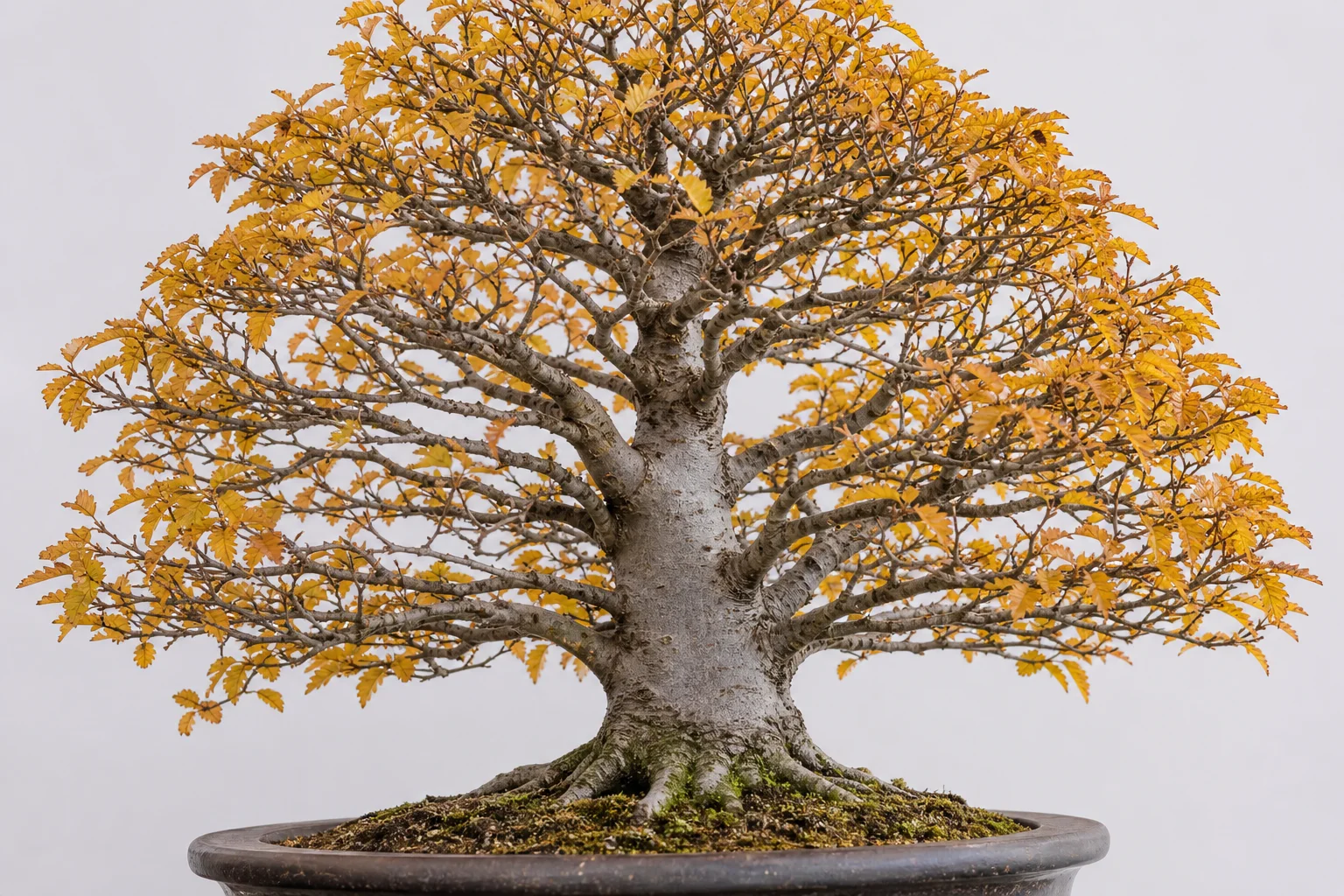
Japanese zelkova
Zelkova serrataThe broom-style classic. Natural vase-shaped habit, smooth grey bark, small serrated leaves, and an ease of cultivation that makes it among the best deciduous bonsai species for UK growers.
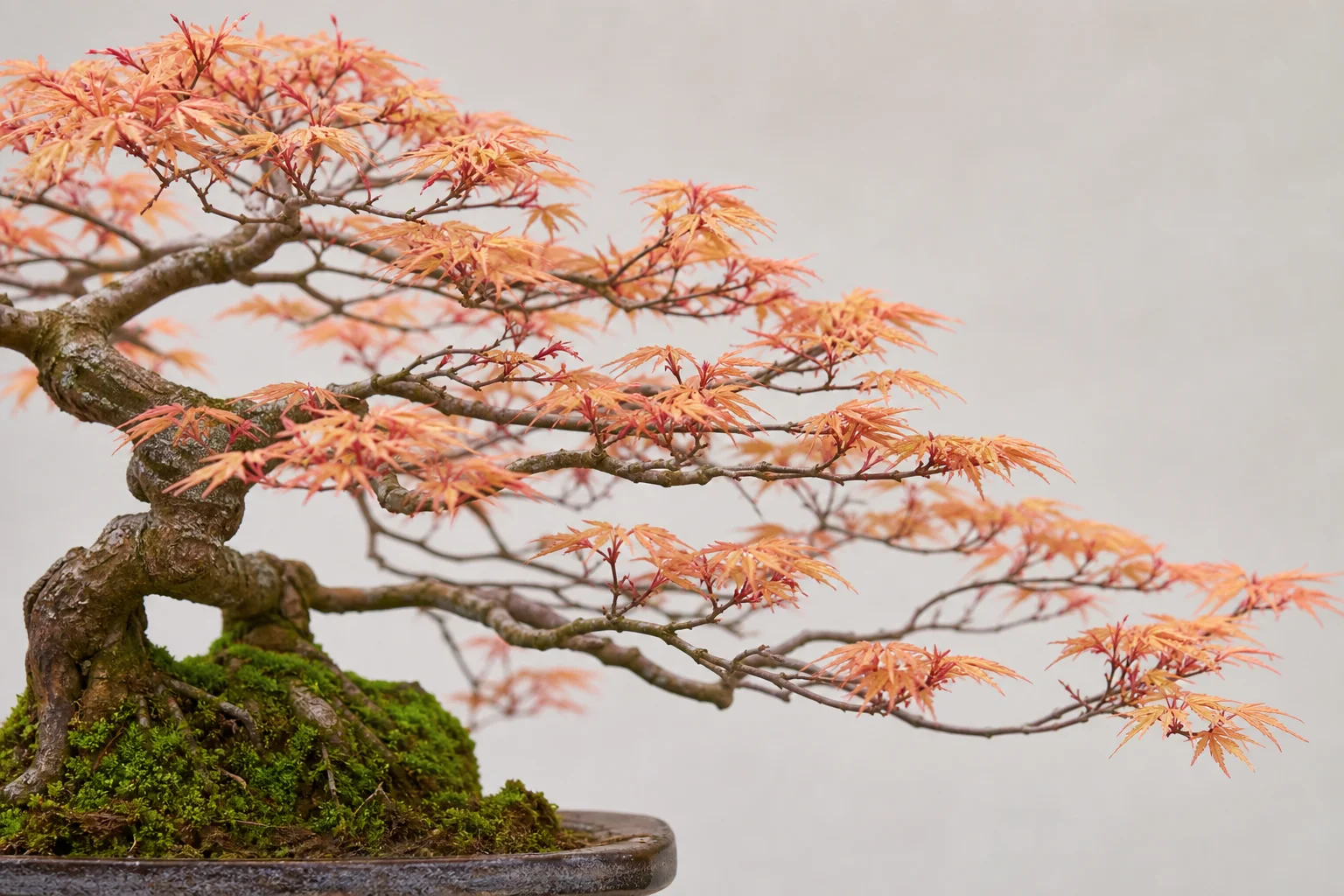
Kiyohime maple
Acer palmatum 'Kiyohime'The dwarf Japanese maple. Tiny leaves, naturally spreading low habit, orange spring colour — and the cultivar that makes shohin bonsai possible without years of refinement.
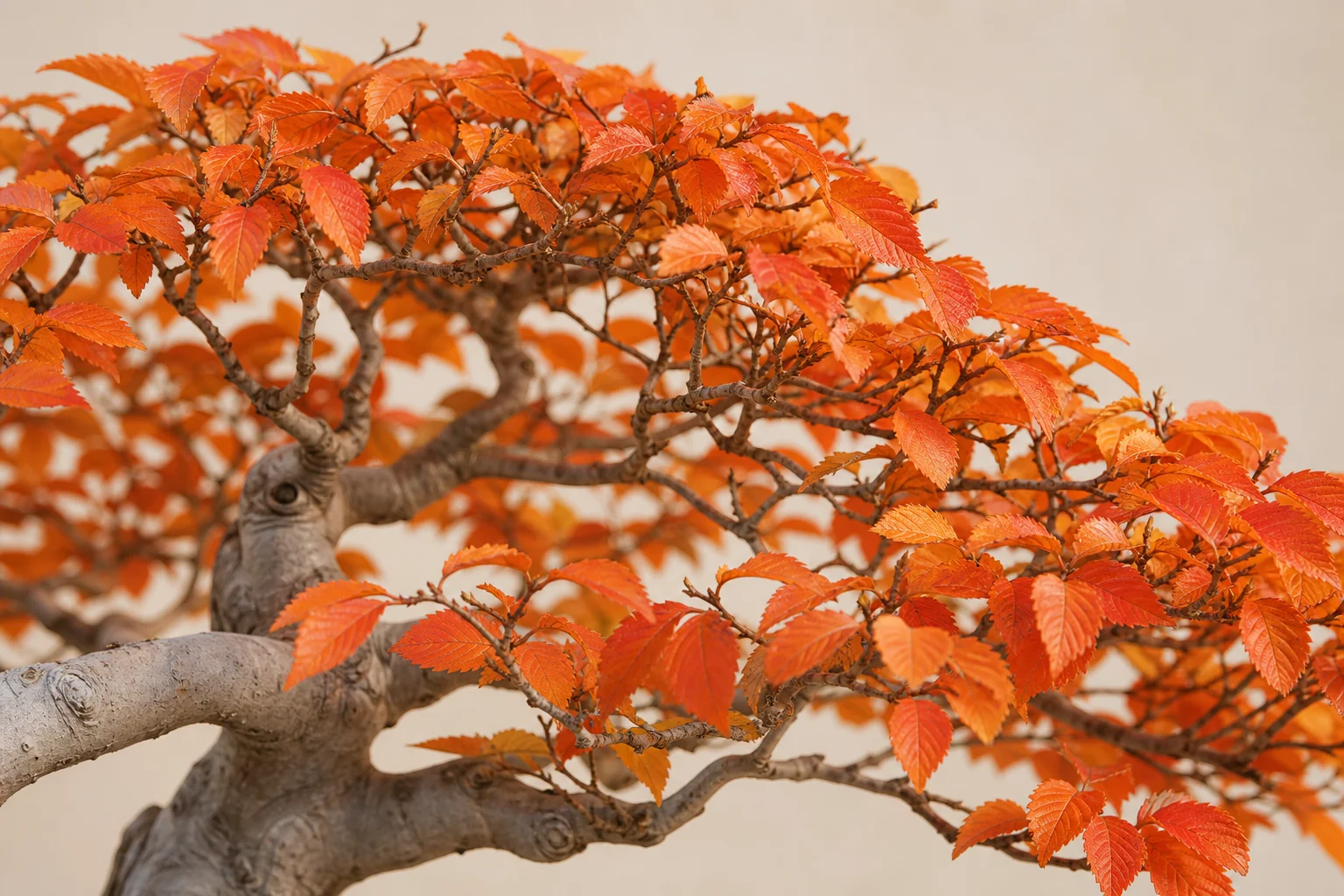
Korean hornbeam
Carpinus turczaninowiiThe Asian hornbeam most commonly imported as refined bonsai. Smaller leaves than European hornbeam, exceptional ramification potential, brilliant autumn colour.