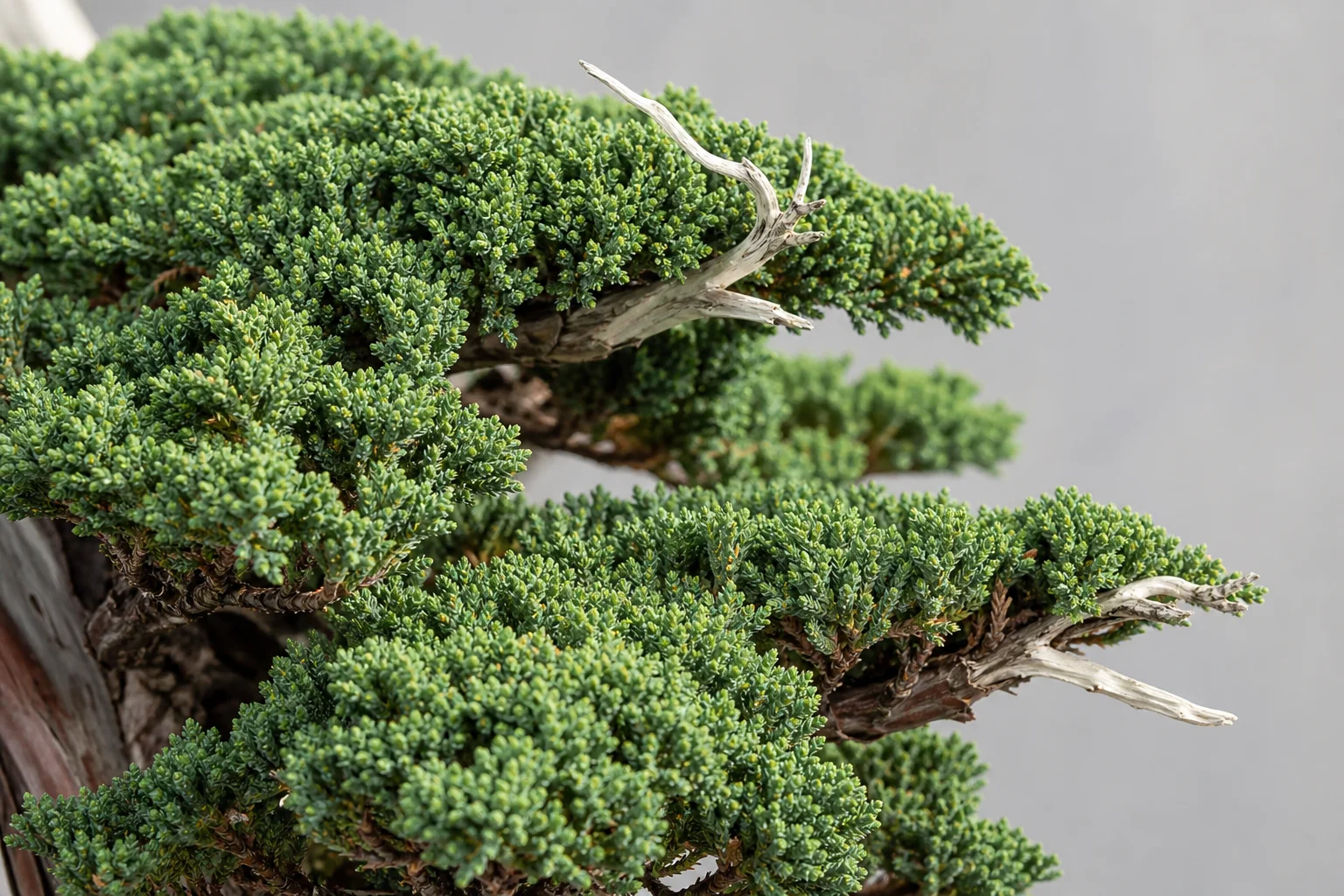
Juniper procumbens 'Nana' bonsai care
Juniperus procumbens 'Nana'The classic mall bonsai, often the first tree people own — and often killed by being kept indoors. Outside, hardy, sun-loving and beautiful.
Water
Every 2 days
check daily in summerLiquid feed
Every 14 days
growing seasonSolid feed
Every 28 days
slow releaseRotate
Every 30 days
even canopy growthJuniperus procumbens 'Nana' is probably the most commonly sold bonsai in the world. Most garden centre "starter" bonsai are this species, and most of them die within a year because they're sold with the label "indoor bonsai" when in fact they're emphatically not.
Kept outdoors year-round in full sun, given a free-draining substrate and watered when the soil starts to dry, J. procumbens is one of the easier species in cultivation. It tolerates cold well, doesn't mind dry air, recovers from pruning, and wires beautifully into the cascading, windswept and informal styles it suits naturally. Kept on a windowsill, it slowly browns from the inside out and dies over six to eighteen months. The single biggest favour you can do a juniper is to put it outside and leave it there.
A prostrate, ground-hugging juniper native to coastal mountains of southern Japan. The 'Nana' cultivar is a particularly compact form selected for its dense, scale-and-needle foliage and short internodes. Wild J. procumbens grows in lean, rocky, sun-baked positions — which tells you most of what you need to know about its preferences.
Seasonal calendar
Timing is for South East England. Select your region above to see adjusted guidance.
- Structural pruning if needed
- Wire setting work
Fully dormant. Good month for heavy bend work — branches are most flexible.
- Continue winter styling work
- Watch pot drainage
- Wait for root activity before repotting
Don't rush — junipers want to be repotted later than deciduous trees.
- Repot once new root tips are visible
- Begin moving into full sun
- Start light liquid feeding
- Check daily watering as growth begins
- Begin pinching soft growing tips
- Monitor for spider mites in dry weather
- Continue pinching in waves
- Water carefully — don't let soil stay wet between waterings
- Wiring window
- Cuttings can be taken late month
- Continue pinching
- Reduce feeding mid-month
- Prime month for styling and wiring
- Reduce watering frequency
- Finish wiring before winter
- Move to position with morning sun, sheltered from wind
- Structural pruning if needed
- Begin winter wiring work
Watering
Junipers want to dry slightly between waterings — not completely, but the surface should feel dry before you water again. In most UK summers this means every 1–2 days; in winter, every 3–5 days. Overwatering is the more common killer than underwatering: roots in saturated, cold substrate rot fast, and root problems on a juniper aren't visible above ground until the foliage starts greying out, by which point it's usually too late.
When you do water, water thoroughly — until it runs from the drainage holes. Light, frequent watering keeps only the top of the substrate wet and encourages shallow rooting.
Junipers tolerate hard tap water without complaint.
Feeding
Feed lightly. Liquid feed every two weeks during the growing season (May–September) at half strength. Slow-release organic pellets in spring and early summer. Stop feeding by mid-September.
Junipers respond more to consistent light feeding than to heavy doses; an overfed juniper produces coarse, juvenile-looking needle foliage instead of the refined scale foliage you want.
Soil & Repotting
Very free-draining is the priority. Junipers tolerate poor substrates better than they tolerate wet feet.
50% pumice, 30% akadama, 20% lava for trees in pots smaller than 20cm. For larger trees and trees in development, you can shift to 60% pumice and 20% each akadama and lava — more drainage, more air to the roots. Don't use any organic-rich potting mix; junipers will rot in it.
Repot every 3–5 years. The window is later than for deciduous trees — wait for clear signs of root activity (new white root tips visible at the drainage holes, or new shoot extension above) before disturbing the roots. In the UK this typically means late March to mid-April for the south; April through to early May further north.
Junipers don't tolerate aggressive root pruning. Remove no more than a quarter of the root mass on healthy trees; less on older or weaker specimens. Don't bare-root a juniper — leave the inner core of the root ball undisturbed and work only the outer roots.
Keep the freshly repotted tree out of strong sun and wind for at least three weeks afterwards.
Pruning
Junipers are pinched, not cut. Pinch out the soft growing tips through the growing season — June through August — using your fingers (clean nails, no scissors on foliage; scissors brown the tips). Pinch each shoot back to where you want growth to extend from. Don't pinch the whole tree at once — work in waves through the season so the tree always has some active growth driving sap flow.
Major branch removal happens in late winter or early spring, before new growth begins. Cuts heal slowly on junipers — leave deadwood (jin and shari) where you can rather than cutting flush, since deadwood is a feature of the species.
A common beginner mistake: heavy scissor-cutting through the foliage pad. This browns every cut tip and the tree looks scorched for months. Use fingertips on green growth, scissors only on woody branches.
Wiring & Styling
Wiring is fundamental to juniper styling and the species takes wire very well. Apply in late summer (August–September) for shaping completed through winter, or in winter on dormant trees. The bark is reasonably forgiving but wire can still mark if left too long — check every couple of months and remove before it bites in.
Junipers will hold a position better than most species — wired branches retained for 6–12 months will usually stay in place after the wire comes off.
Informal upright, cascade, semi-cascade, windswept, literati, root-over-rock. Junipers suit dramatic, asymmetric styles and benefit enormously from deadwood features — jin (stripped dead branches) and shari (stripped trunk areas) make a juniper read as ancient and weather-beaten. Most refined juniper bonsai feature substantial deadwood.
Avoid formal upright (chokkan) and broom (hokidachi) — they don't suit the species' natural growth habit.
Winter care
Properly hardy in the UK with minimal protection. Down to -10°C they need no help at all if grown outdoors in a normal pot. In a hard freeze (below -10°C sustained for several days, rare in most of the UK), shelter from wind helps.
The bigger winter risk is sudden temperature swings on south-facing benches — a sunny February day can warm a pot enough to start sap flow, and a hard freeze that night damages the partially-active roots. A position that gets winter morning sun rather than afternoon sun is ideal.
Never bring a juniper indoors. Even for a few weeks. Even "just over Christmas". Junipers need cold dormancy and the indoor environment is fatally dry for them.
Propagation
From semi-hardwood cuttings in late summer (August–September) — very high success rate, the standard propagation method. Air layering is possible but slow. Junipers are rarely grown from seed for bonsai because seedlings produce juvenile needle foliage for years before maturing to scale foliage.
Common problems
Junipers are generally healthy outdoors but have a few specific problems worth knowing. The species' biggest enemies are not pests but watering errors and the wrong location.
Slow death indoors
Symptoms: Foliage gradually greys, browns and drops over months. Tree appears to 'hang on' for a long time before clearly dying.
Cause: Junipers cannot live indoors. They need cold dormancy, full sun, and outdoor air. By the time visible symptoms appear, the root system is usually failed.
Solution: Move outdoors immediately and hope. A tree that's been indoors for less than 3–4 months may recover with patience. Longer than that, recovery is unlikely. Don't treat this as a problem to solve with fertiliser or repotting — the only fix is being outside.
Spider mites
Symptoms: Foliage greys and looks dusty; fine webbing visible if you tap a branch over white paper.
Cause: Hot, dry, still air — worst in heatwaves and on trees in sheltered positions.
Solution: Hose foliage thoroughly underneath as well as on top. Repeat every 3 days for two weeks. Improve air circulation around the tree. Neem oil if severe. Mites are the most common pest on healthy junipers.
Phytophthora root rot
Symptoms: Sudden whole-branch or whole-tree collapse; foliage greys uniformly; soil smells sour.
Cause: Saturated substrate, often combined with cold temperatures. Most common in winter or after a wet spring.
Solution: Usually fatal once symptoms appear. Prevention is the only real treatment: free-draining substrate, restraint with watering, and pots with adequate drainage. If caught very early on one branch, removing affected wood and repotting into bone-dry mix can occasionally save the tree.
Tip browning
Symptoms: Tips of foliage pads turn brown within days of pruning.
Cause: Junipers were cut with scissors instead of pinched.
Solution: Cosmetic — the tree isn't harmed, the brown tips just look bad for a couple of months until new growth covers them. Pinch with fingertips next time.
Juniper rust (Gymnosporangium)
Symptoms: Bright orange jelly-like galls appear on branches in wet spring weather.
Cause: Fungal disease with an alternate host (usually hawthorn or apple). Common in mixed gardens.
Solution: Remove galls promptly and bin (not compost). Move tree away from any nearby Rosaceae if possible. Copper fungicide as a preventative in spring if the problem recurs annually.
Loss of interior foliage
Symptoms: Foliage retreats to the tips of branches; the inner canopy goes brown and bare.
Cause: Inadequate light reaching the interior — usually because outer pads have grown too dense.
Solution: Thin outer pads to let light penetrate. Don't panic if interior wood looks bare — junipers will back-bud weakly from old wood given light and time, but it's slower than on deciduous species. Better to prevent than fix.
Popular cultivars
The standard. Dense, compact, scale foliage on mature growth.
Brighter green than 'Nana' and slightly more vigorous. Less commonly available as bonsai.
Track your Juniper procumbens 'Nana' with Kentai.
Collection tracking, care logs and photo history are free — no card, no time limit.
More care guides
Other Juniperus guides: Chinese juniper (Itoigawa)
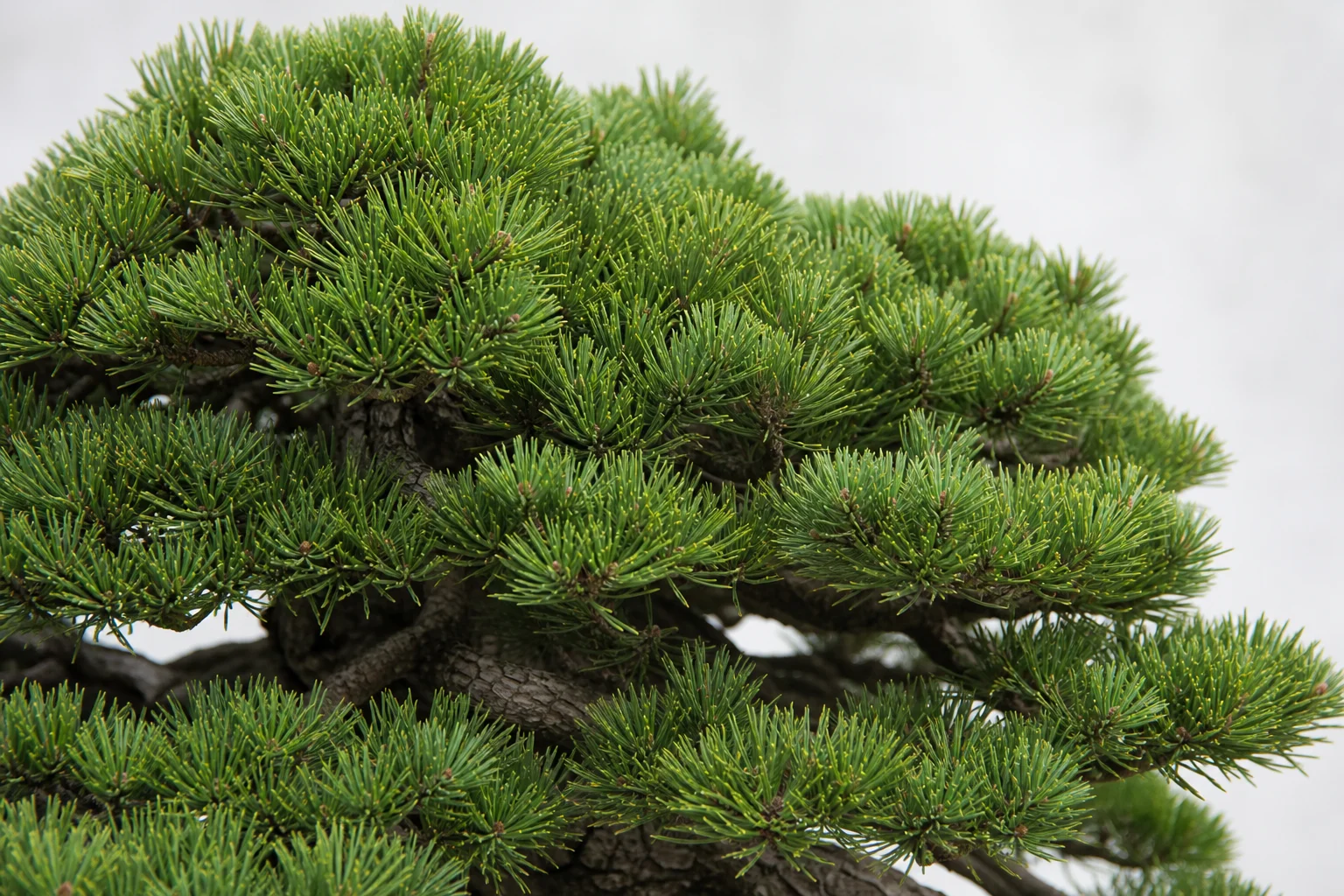
Mugo pine
Pinus mugoThe easy pine. Bulletproof, widely available, and the best beginner conifer in the UK.
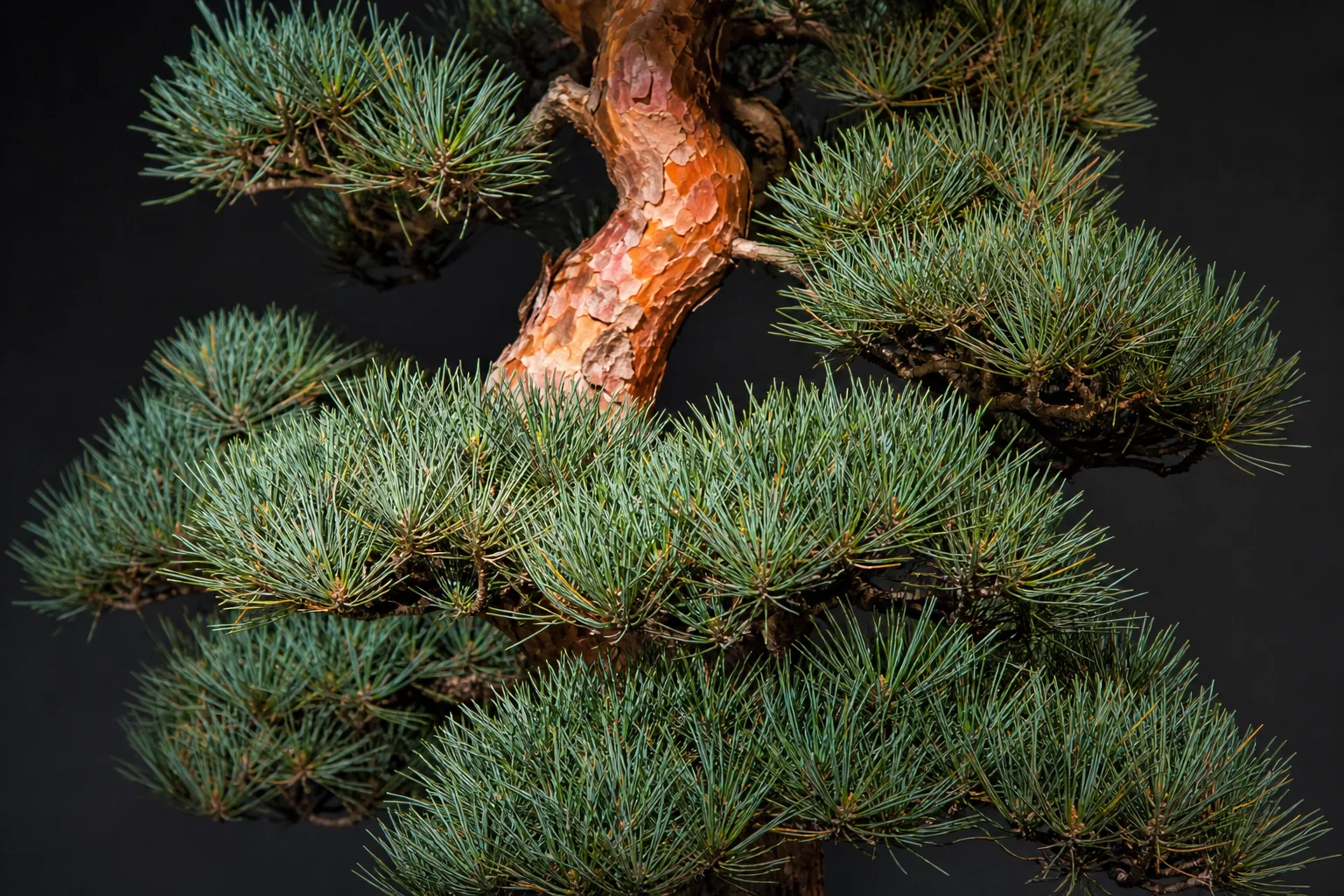
Scots pine
Pinus sylvestrisThe UK's native pine — orange-flaked bark, blue-green needles, and a natural affinity with rocky, windswept styling.
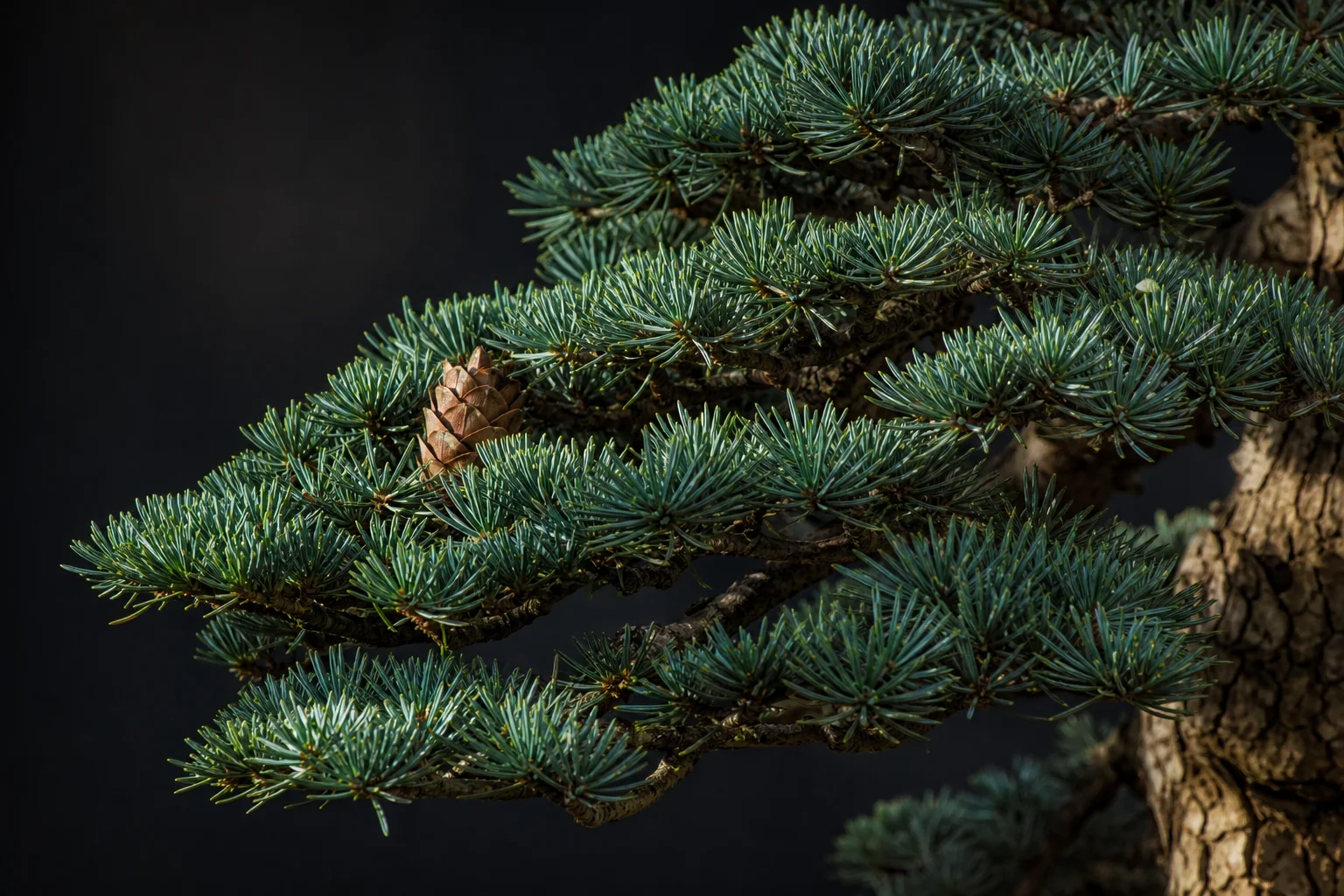
Spruce
PiceaStiff sharp needles arranged singly on woody pegs, distinctive cone display on mature trees, exceptional hardiness. The less-developed conifer worth considering.