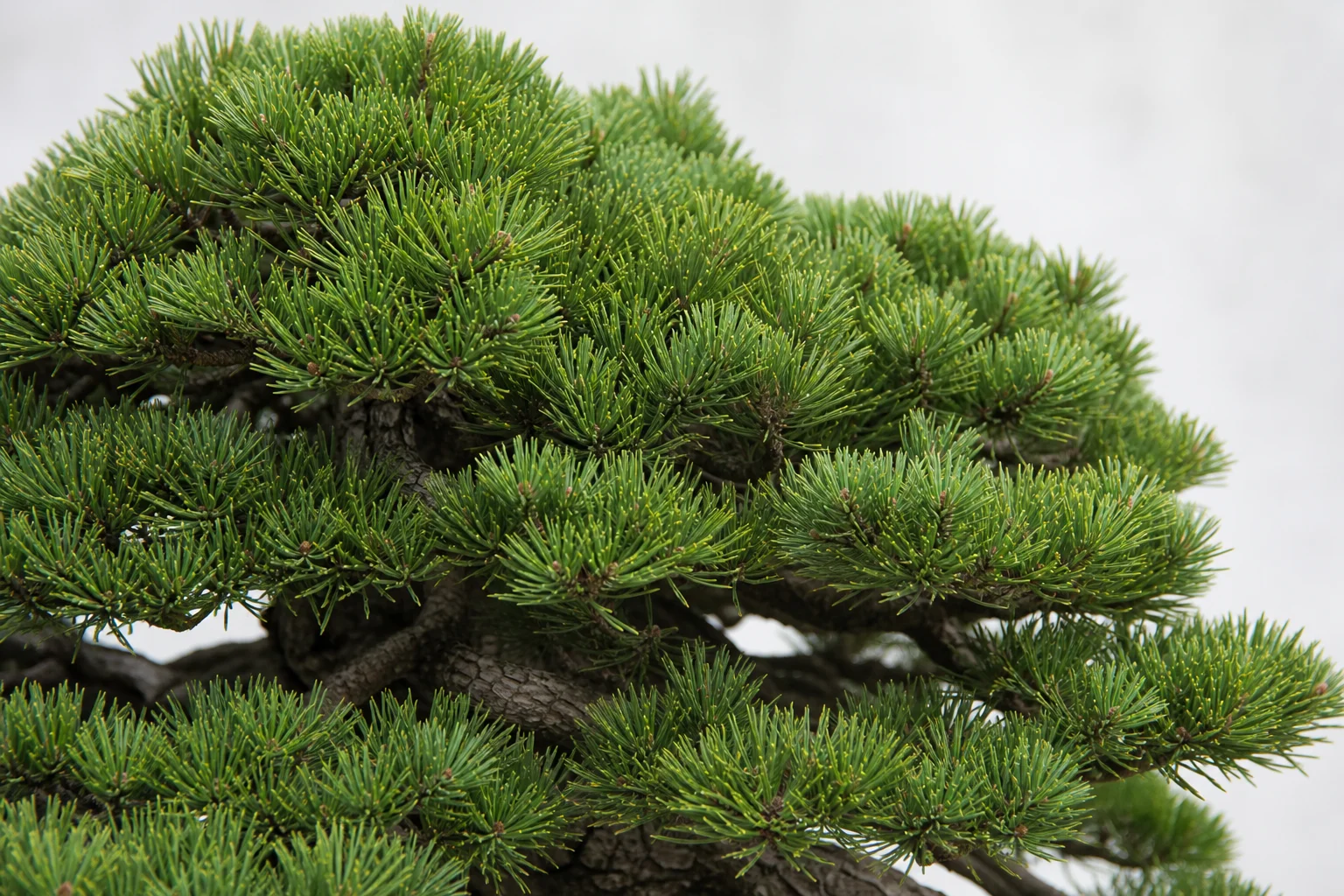
Mugo pine bonsai care
Pinus mugoThe easy pine. Bulletproof, widely available, and the best beginner conifer in the UK.
Water
Every 4 days
check daily in summerLiquid feed
Every 14 days
growing seasonSolid feed
Every 28 days
slow releaseRotate
Every 30 days
even canopy growthIf you want to learn to grow a pine bonsai without the steep learning curve of Japanese black pine or the patience demands of Scots pine, mugo is the answer. It's available everywhere as garden centre stock (often labelled "dwarf mountain pine" and sold for rockeries), it's almost impossible to kill through bad weather, and it tolerates the kind of pruning errors that would set back a JBP by years.
The trade-off is aesthetic. Mugo pines don't develop the deep fissured bark of Scots pine, don't have the disciplined refinement of JBP, and aren't traditionally celebrated as a top-tier bonsai species in Japan or China. But for a tree in your garden that you want to look genuinely good after a decade of work — without specialist nurseries, without imported material, without learning decandling — mugo is hard to beat.
There's also a technique advantage. Mugo responds well to a different pruning approach than JBP or Scots, sometimes called "candle cutting" — cutting candles back at a different time and in a different way, which the species tolerates and which produces shorter needles without the precise timing demands of decandling.
Native to mountainous central and southern Europe — Alps, Carpathians, Pyrenees, Balkans. Adapted to high-altitude conditions: poor stony soils, full exposure, long cold winters, and significant snow load. Grows as a sprawling shrub or small tree depending on subspecies; the "mugo" subspecies most commonly sold is the shrubby form.
Seasonal calendar
Timing is for South East England. Select your region above to see adjusted guidance.
- Structural pruning if needed
- Heavy wiring on dormant trees
- Continue styling work
- Plan spring repotting
- Watch for root activity
- Buy garden centre stock for development
- Repot if root tips active
- First slow-release feed
- Candles extending — leave undisturbed
- Begin light liquid feeding
- Candle shortening from mid-month
- Continue light feeding
- Complete candle work first week
- Maintain dry/wet watering cycle
- Last feeding early month
- Watch for late wire-biting
- Needle plucking — balance energy
- Stop feeding
- Wiring window opens
- Begin structural assessment
- Heavy wiring season
- Deadwood work
- Continue styling on dormant trees
- Minimal watering
Watering
Water cautiously. Less often than you think — every 3–5 days in spring and autumn, every 2–4 days in summer, every 7–14 days in winter. Mugo pines are mountain trees adapted to lean conditions and they will rot in pots kept constantly damp.
Wait for the surface of the substrate to dry, then water thoroughly until it runs from the drainage holes. Don't water on a fixed schedule — judge by the substrate.
Tap water of any hardness is fine. Foliage handles overhead watering well except in very humid summer evenings.
Feeding
Light feeding works best. Half-strength liquid feed every two weeks from May through August. Slow-release pellets once in April and once in June. Stop feeding by early September.
Heavy feeding produces long needles and weak ramification, the opposite of what you want. Mugo pines look better fed lean.
Soil & Repotting
Very free-draining, acidic to neutral. Mugo will tolerate slightly less aggressive drainage than JBP or Scots but still wants more air than deciduous species.
60% pumice, 25% akadama, 15% lava in 2–6mm grade. For garden-centre material being transitioned to bonsai, a coarser mix with 70% pumice helps establish a stronger root system quickly. Avoid organic-heavy potting mixes.
Repot every 4–5 years on established trees. The window is late March to early May — wait for visible root activity. Mugo pines tolerate root work moderately well — better than JBP, less well than deciduous species. Remove no more than a third of the root mass on healthy trees. Preserve mycorrhizae.
For garden-centre nursery stock being transitioned to bonsai: don't repot in the same year you collect or buy. Let the tree settle in its existing pot for a full season, then repot the following spring once you know it's healthy.
Pruning
Mugo pine pruning uses a different technique from JBP. The species responds to candle work but at a different time of year and with different results.
Spring (May): Let candles extend fully. Don't decandle in the JBP style — mugo pines often won't produce a second flush reliably from full decandling, especially in the UK.
Candle shortening (mid-June to early July): Once needles on this year's candles have started to emerge but before they harden, cut candles back by half to two-thirds with sharp scissors. This shortens the year's growth and encourages back-budding from latent buds. Strong candles can be cut harder than weak ones — this is how you balance energy.
Needle plucking (September): Thin old needles to let light into the interior. More on weak branches, fewer on strong.
Structural pruning (winter): Major cuts on dormant trees.
This approach is more forgiving than JBP decandling and works reliably in UK conditions.
Wiring & Styling
Wire from October through February on dormant trees. Mugo branches are strong but reasonably flexible — major bends are possible without breaking, though raffia-wrapping helps on thick wood. Use copper for structural work, aluminium for finer branches. Bark thickens with age but doesn't develop the deep fissures of Scots pine.
Branches set slowly. Wire usually needs to stay on for at least one full growing season, often longer.
Informal upright is the natural fit — most mugo pines have an informal sprawling habit that translates well. Cascade, semi-cascade and twin-trunk work. Literati is harder because mugo trunks are rarely as elegant as Scots pine trunks. Forest plantings of young mugos work beautifully.
The species' natural shrub-like habit suits styles that emphasise multi-trunk character and dense canopy rather than refined individual specimens.
Winter care
Fully hardy across the UK with no protection needed. Mugo pines evolved on alpine peaks and shrug off anything the UK climate produces.
The only winter concern is keeping pots out of standing water — saturated cold pots invite root rot. Tilt slightly for drainage. Otherwise, no special protection.
Never bring indoors.
Propagation
From seed (autumn-sown, cold-stratified) for true-species material. Cultivars are propagated from cuttings (summer semi-hardwood) or grafts. Most mugo pine bonsai start as garden centre nursery stock — buy in spring, let settle for a season, begin styling the following winter. Specialist UK nurseries also stock collected alpine material occasionally; these are the best starting points for serious work.
Common problems
Generally trouble-free. Mugo pines are healthier in UK conditions than JBP and slightly hardier than Scots pine.
Phytophthora root rot
Symptoms: Tree weakens, needles dull and grey, eventual collapse.
Cause: Saturated substrate.
Solution: Prevention via free-draining substrate. Less common in mugo than JBP but still possible. Emergency repot into dry pumice if caught early.
Adelgids
Symptoms: White woolly patches on needles and twigs.
Cause: Common sap-sucking pest on mountain pines.
Solution: Wash off with strong water jet. Neem if persistent. Inspect annually in spring.
Long needles
Symptoms: Year's growth produces needles longer than wanted.
Cause: Overfeeding, or insufficient candle shortening.
Solution: Reduce feeding next season. Cut candles harder in June. Needle length will reduce over 2–3 years of consistent technique.
Sparse foliage and bare interior
Symptoms: Outer canopy thick but interior of branches bare.
Cause: Outer growth blocking light to inner buds.
Solution: Open up canopy by removing some outer growth. Thin needles on strong outer pads. Interior will back-bud weakly from old wood given light and time.
Failure to back-bud after hard pruning
Symptoms: Tree pruned back hard does not produce new buds on bare wood.
Cause: Mugo pines back-bud less reliably on old wood than JBP or even Scots pine.
Solution: Plan ahead — leave foliage on branches you want to keep alive. If you must hard-prune, do so in autumn while the tree is still strong, and feed well the following season to maximise back-budding potential.
Popular cultivars
The shrubby form widely sold as dwarf mountain pine. Most garden centre stock is this. Variable but useful for development.
Tree form rather than shrub. Better trunk character than the shrub form but less commonly available.
Compact cultivar with short needles and dense habit. Excellent for refined bonsai work.
Very dwarf cultivar, almost too small for general bonsai but excellent for shohin and mame.
Compact rounded habit, slow growth. Good starter cultivar.
Track your Mugo pine with Kentai.
Collection tracking, care logs and photo history are free — no card, no time limit.
More care guides
Other Pinus guides: Japanese black pine · Japanese white pine · Scots pine
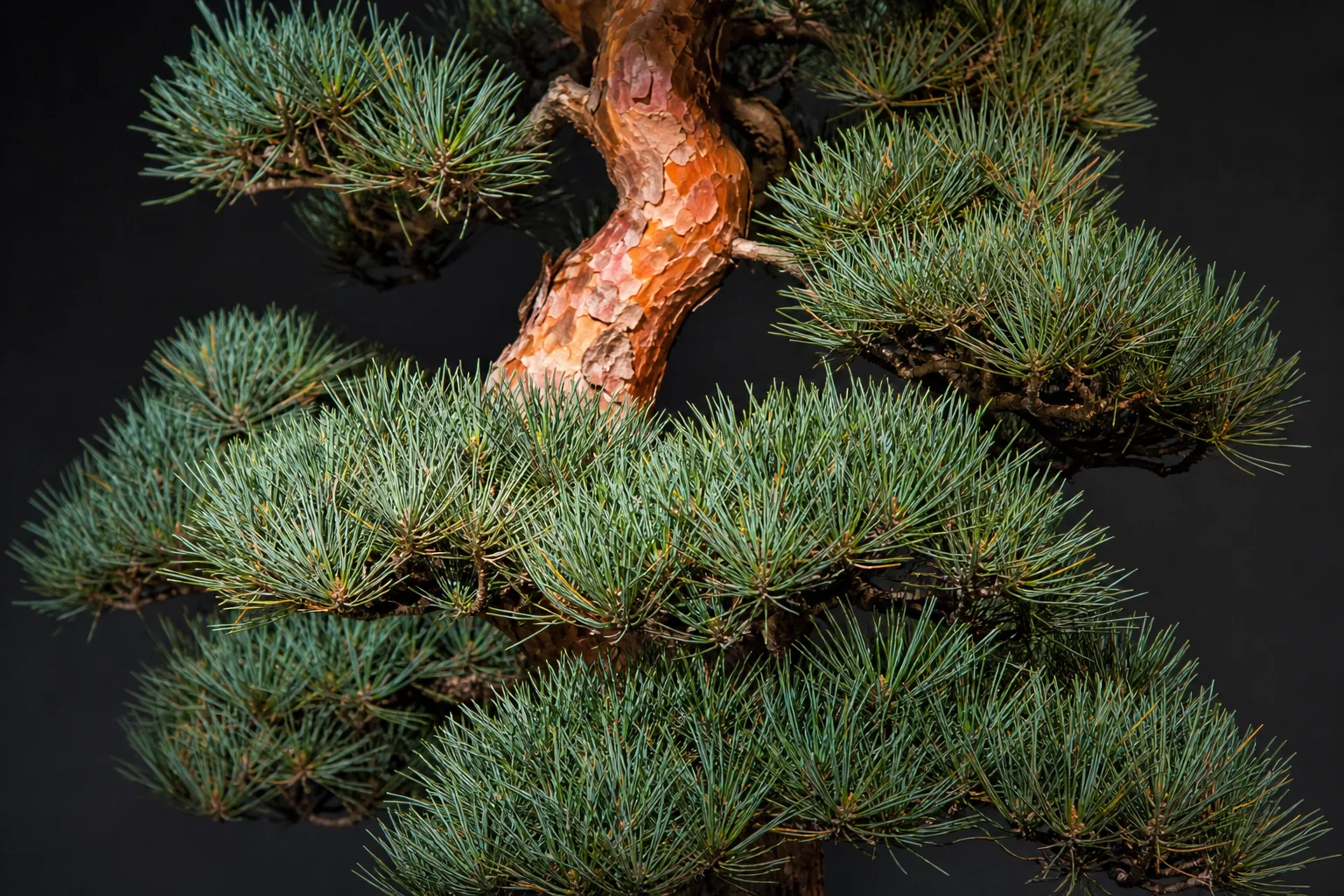
Scots pine
Pinus sylvestrisThe UK's native pine — orange-flaked bark, blue-green needles, and a natural affinity with rocky, windswept styling.
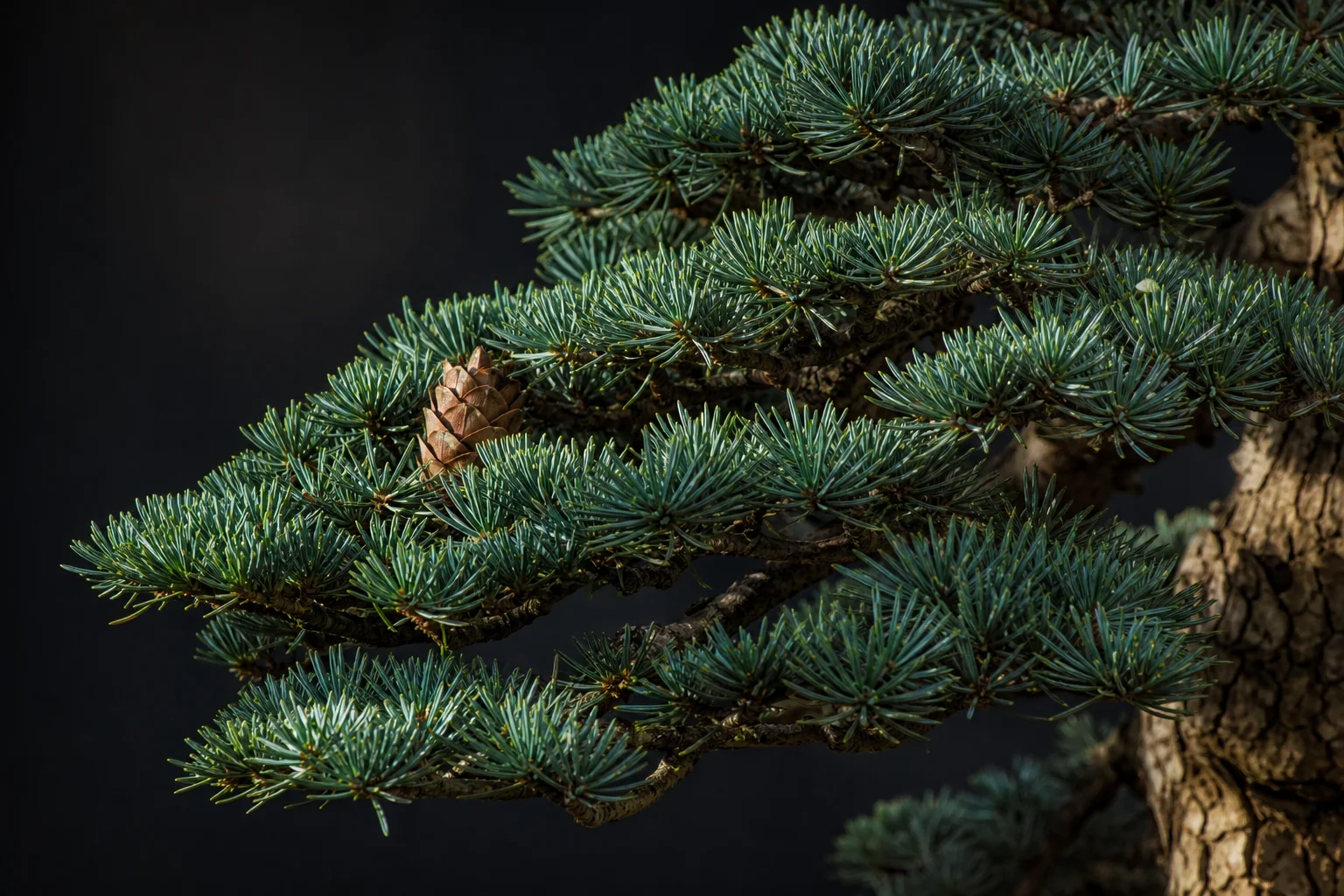
Spruce
PiceaStiff sharp needles arranged singly on woody pegs, distinctive cone display on mature trees, exceptional hardiness. The less-developed conifer worth considering.
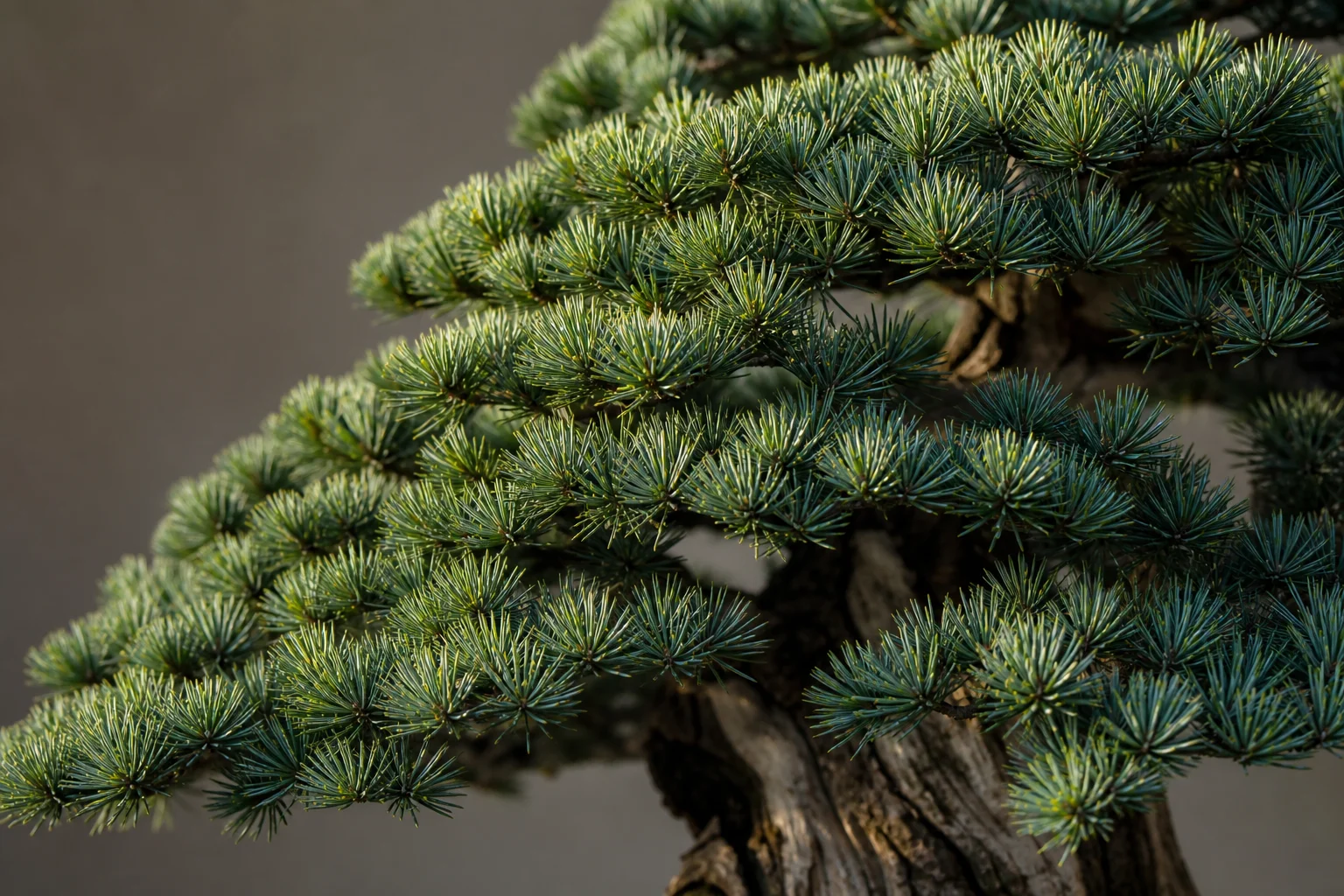
Cedar
CedrusClustered needles in distinctive rosettes, horizontal branching habit, and a presence that few conifers match. Less commonly grown than pines but worth seeking out.