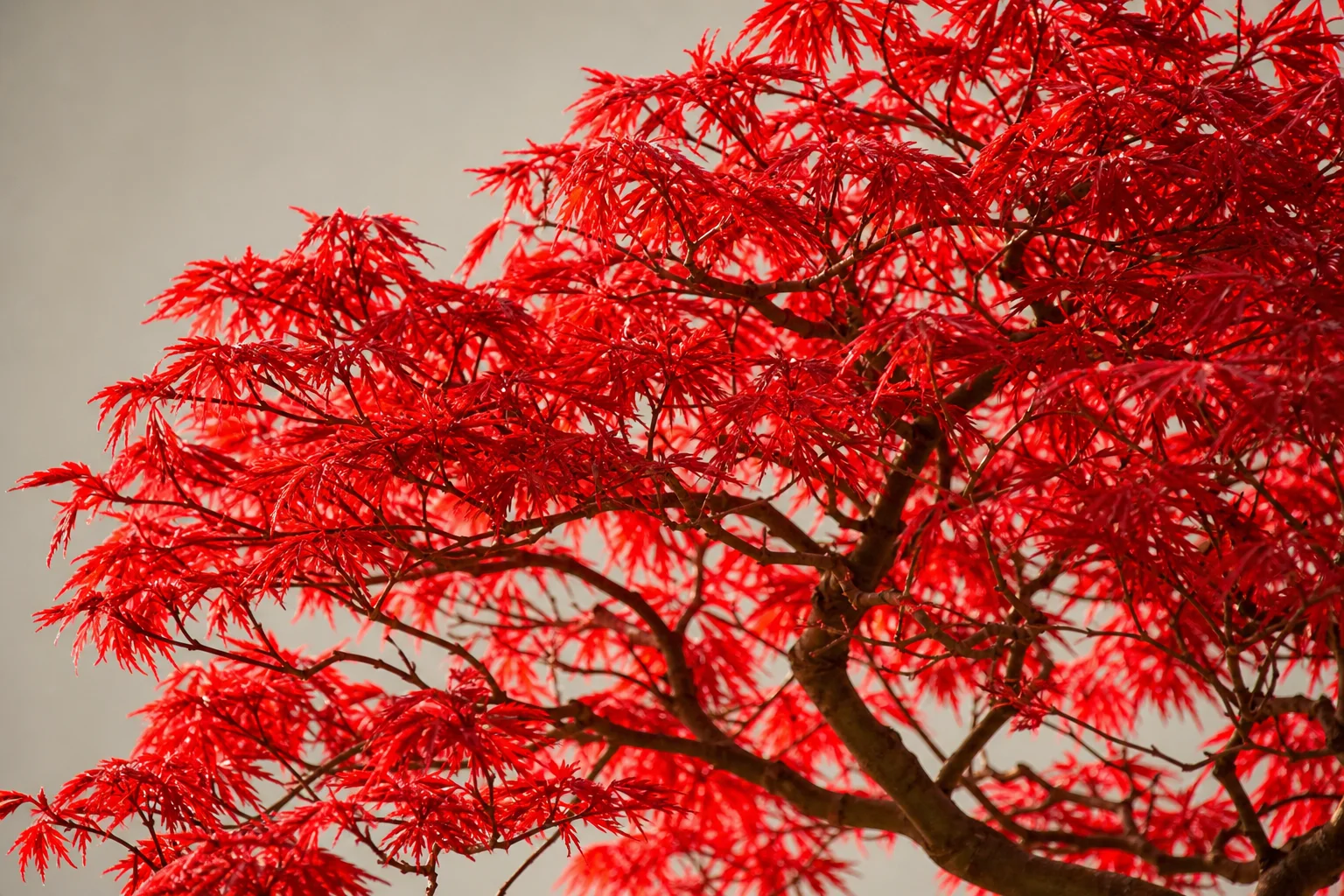
Deshojo maple bonsai care
Acer palmatum 'Deshojo'Brilliant scarlet spring foliage that fades to green-bronze through summer and returns to red in autumn. The most theatrical of the common Japanese maple cultivars.
Water
Every 1 day
check daily in summerLiquid feed
Every 7 days
growing seasonSolid feed
Every 28 days
slow releaseRotate
Every 14 days
even canopy growthDeshojo is the cultivar that converts skeptics. The spring leaf emergence is genuinely spectacular — new growth comes out a vivid scarlet that lasts for 4–6 weeks before transitioning through coppery-bronze to green by midsummer. Then autumn brings the red back, often even more intensely than spring. A Deshojo bonsai in late April provides one of the more striking sights in the bonsai calendar.
The cultivar comes with two real care challenges that distinguish it from base palmatum. First, the red foliage is more sun-sensitive than green — full afternoon sun in midsummer reliably produces leaf scorch on the curled red edges, and even spring sun on emerging red leaves can cause damage. Position with morning sun and afternoon shade as a baseline.
Second, Deshojo is more prone to fungal issues than base palmatum, particularly powdery mildew on the soft red foliage. Air circulation matters more here than for most maples; benched closely with other plants in still humid conditions, Deshojo will struggle.
Despite these challenges, the cultivar is widely available, develops trunk character at a reasonable rate, and rewards careful management with one of the most reliably dramatic seasonal displays in bonsai.
Japanese cultivar of long standing — the name relates to a Kabuki theatre character. Multiple closely related red-foliage palmatum cultivars exist (Seigen, Beni Maiko, Corallinum, Chishio), each with subtle differences in colour intensity, leaf size, and habit. Deshojo and Seigen are sometimes confused commercially — both are valid cultivars but Deshojo holds its spring colour slightly longer.
Seasonal calendar
Timing is for South East England. Select your region above to see adjusted guidance.
- Structural pruning while dormant
- Plan year's work
- Begin repotting late month
- Final winter pruning
- Main repotting window
- Protect from late frost
- Brilliant red foliage emerges
- Begin daily watering
- First feed
- Peak red foliage display
- Start half-strength liquid feed
- Begin pinching
- Transition to bronze-green begins
- Wiring window opens
- Watch for mildew
- Twice-daily watering in heat
- Position out of strong afternoon sun
- Reduce nitrogen mid-month
- Continue pinching
- Stop feeding mid-month
- Red autumn colour beginning
- Peak autumn red display
- Reduce watering
- Leaf drop
- Sweep fallen leaves promptly
- Structural pruning
- Position out of intense winter sun
Watering
Daily through the growing season. The cultivar is more sensitive to drying than base palmatum — the red foliage shows water stress with rapid leaf scorch.
In hot summer weather, twice daily for trees in shallow pots. Position with morning sun and afternoon shade is essential — full sun exposure during hot weather will scorch the leaves, particularly during the bronze-green transition phase when chlorophyll content is changing.
In winter, regular but reduced watering. Use rainwater where possible.
Feeding
Weekly half-strength liquid feed from late April through to mid-September. Slow-release organic pellets in spring and early summer.
Heavy nitrogen feeding produces vigorous foliage but reduces the intensity of red colour. Restrained feeding gives better colour. Avoid high-nitrogen feeds entirely in late summer — soft growth at this stage produces poor autumn colour.
Stop feeding by mid-September.
Soil & Repotting
Free-draining and slightly acidic. Standard Japanese maple substrate.
60% akadama, 30% pumice, 10% lava in 2–6mm grade. Rainwater strongly preferred — Deshojo is more prone to chlorosis from alkaline conditions than some palmatum cultivars.
Repot every 2 years on young trees, every 3 on mature specimens. The window is mid-February through to early April — repot as buds swell.
Deshojo tolerates moderate root work — up to a third of the root mass. The cultivar is slightly more sensitive than base palmatum; don't combine repotting with major pruning in the same year.
Pruning
Standard Japanese maple technique with attention to preserving the seasonal colour display.
Structural pruning in late winter (February). Through the growing season, allow new shoots to extend to 4–5 leaves then cut back to 2. Pinch every two to three weeks.
A specific Deshojo technique: the bronze-green transition foliage that follows the red spring display can be encouraged or prolonged through selective leaf removal. Removing the older leaves on a shoot causes new red emergence to follow, extending the red display through summer. This is called "shojin" or refined display work and is most often used in trees being prepared for exhibition.
Defoliation works on healthy trees but should be used cautiously — the cultivar is slightly less robust than base palmatum and recovery from full defoliation can be slow. Partial defoliation (removing largest leaves) is more reliable.
Wiring & Styling
Wire after leaves harden in early summer or on bare branches in winter. Bark is thin and marks visibly — apply loosely and check fortnightly. Aluminium for almost all work.
The cultivar develops trunk character at a moderate rate — faster than Shishigashira but slower than base palmatum.
Informal upright is the natural fit. Twin-trunk and clump styles work well. The cultivar's vigorous habit means it adapts to most maple-suitable styles.
Cascade and semi-cascade are uncommon but possible on suitable material. Forest plantings of multiple young Deshojo are particularly spectacular when all trees colour together in spring.
The spring colour is the cultivar's main aesthetic asset — styling should ensure the foliage can be clearly seen from typical viewing angles rather than hidden behind structural elements.
Winter care
Hardy across most of the UK with no protection needed in normal winters. In exposed northern positions, light shelter in severe winters is sensible.
The main winter consideration is wind exposure on the smooth bark — the cultivar can suffer trunk damage on south-facing benches with strong winter sun followed by hard frosts. Position with some shade from intense winter sun.
Never bring indoors.
Propagation
Always grafted onto Acer palmatum rootstock. Cuttings rarely succeed. The graft union usually shows as a slight bulge near the base — most quality Deshojo bonsai have the graft positioned low enough to be hidden by surface roots or substrate.
Common problems
Slightly more disease-prone than base palmatum, particularly to powdery mildew on the soft red foliage. Air circulation and position matter more than for hardier cultivars.
Leaf scorch on red foliage
Symptoms: Brown crispy patches on red leaves, especially mid-summer.
Cause: Excess sun, particularly in midsummer afternoon. The red foliage is more sun-sensitive than green.
Solution: Position with morning sun and afternoon shade. Even partial shade in midsummer is better than full exposure. Once scorch has occurred, affected leaves don't recover — wait for the green transition or next year's growth.
Powdery mildew on soft red foliage
Symptoms: White coating on leaves, particularly in late summer or in still humid conditions.
Cause: Fungal disease, encouraged by poor air circulation and high humidity.
Solution: Improve airflow around benches. Remove worst-affected leaves. Milk-water spray (1:10) as preventative. Sulphur-based fungicide if severe. The cultivar is more susceptible than base palmatum.
Chlorosis from alkaline water
Symptoms: Pale yellow leaves with green veins; the cultivar's characteristic red colour appears washed out.
Cause: Iron deficiency from hard tap water.
Solution: Use rainwater. Repot into fresh acidic substrate. Sequestered iron supplement helps short-term. Deshojo is more sensitive than base palmatum to alkaline conditions.
Verticillium wilt
Symptoms: Individual branches die back over weeks; dark streaking in cut wood.
Cause: Soil-borne fungus.
Solution: No cure. Remove affected branches well below visible damage. Disinfect tools between cuts.
Poor spring colour intensity
Symptoms: Spring foliage emerges duller red or transitions to green faster than expected.
Cause: Excess shade producing weak colour, or heavy late-season feeding the previous autumn producing soft growth.
Solution: Provide morning sun (the cultivar still needs decent light despite being shade-tolerant). Restrict autumn feeding. Colour intensity is largely cultivar-specific but conditions affect it noticeably.
Aphids on red foliage
Symptoms: Curled sticky red leaves in spring; ants on the tree.
Cause: Aphids find the soft red foliage particularly attractive.
Solution: Hose off carefully (the soft red foliage damages easily under strong water jets). Neem oil if persistent.
Popular cultivars
The classic scarlet-foliage cultivar. The most widely available and the standard for bonsai work.
Closely related cultivar with similar spring colour. Slightly less intense red than Deshojo but earlier-emerging. Often confused commercially with Deshojo.
Pink-red spring foliage rather than scarlet. Slightly less vigorous than Deshojo. Sought-after for collectors.
Modern cultivar with intense spring red and slightly better mildew resistance than Deshojo.
Pink-coral spring foliage. Dwarf habit. Excellent for shohin work.
Track your Deshojo maple with Kentai.
Collection tracking, care logs and photo history are free — no card, no time limit.
More care guides
Other Acer guides: Arakawa maple · Field maple · Full-moon maple · Japanese maple · Kiyohime maple · Sango Kaku maple · Shishigashira maple · Trident maple
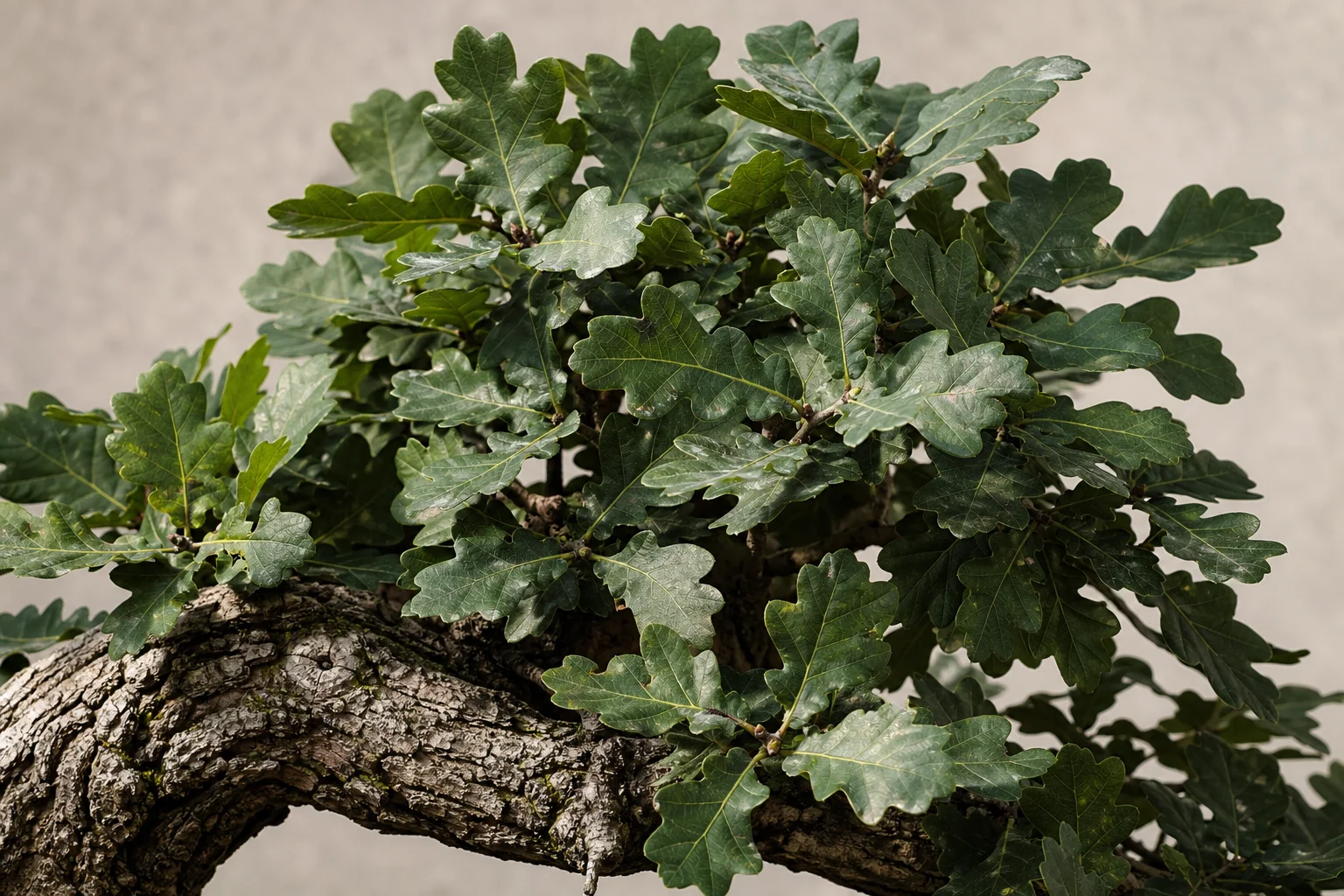
English oak
Quercus roburThe defining tree of the English landscape. Slow, deliberate, demanding patience — and unmatched in presence at full maturity.
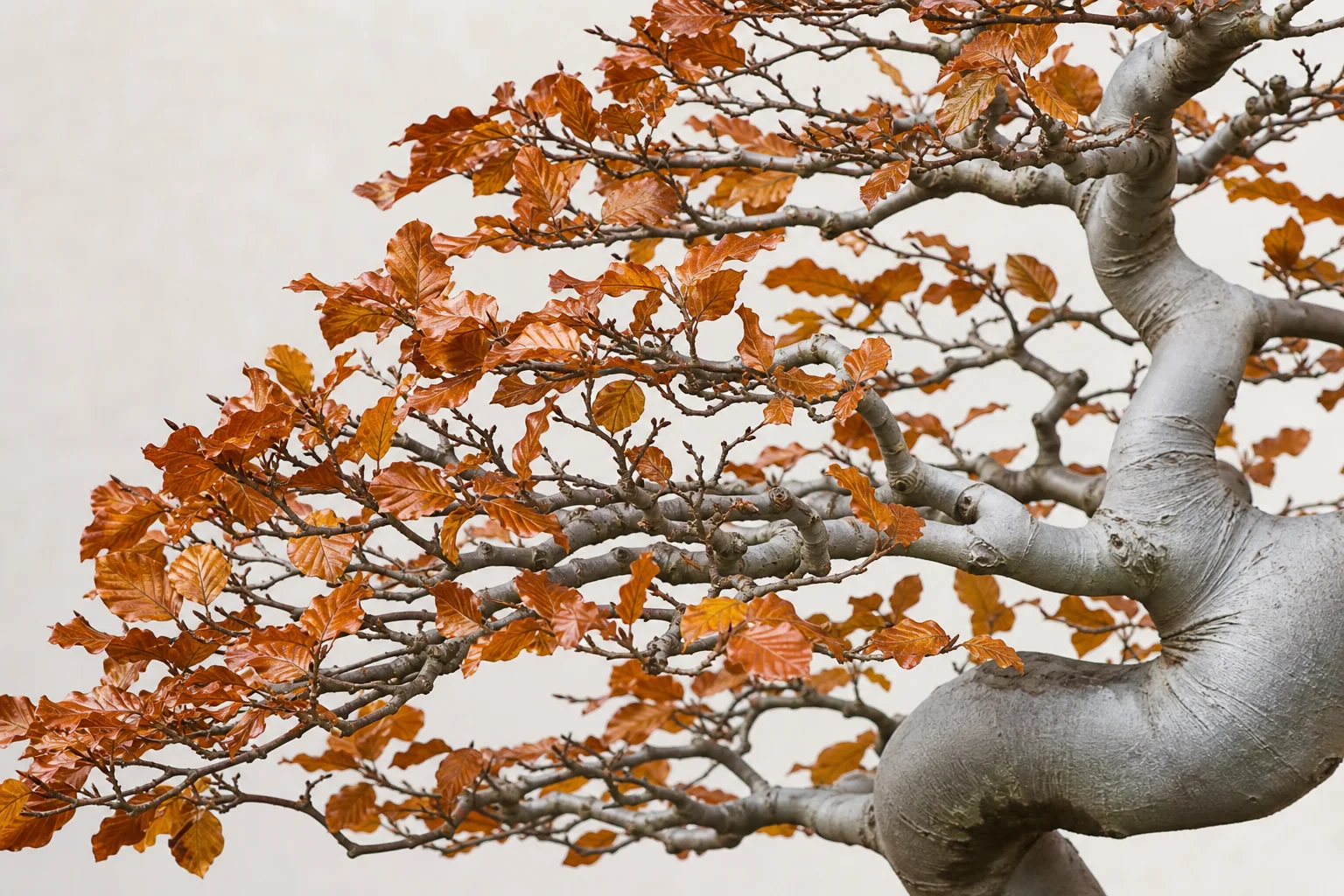
European beech
Fagus sylvaticaSmooth grey bark, copper-brown winter leaves held through to spring, and a presence that no other deciduous bonsai quite matches.
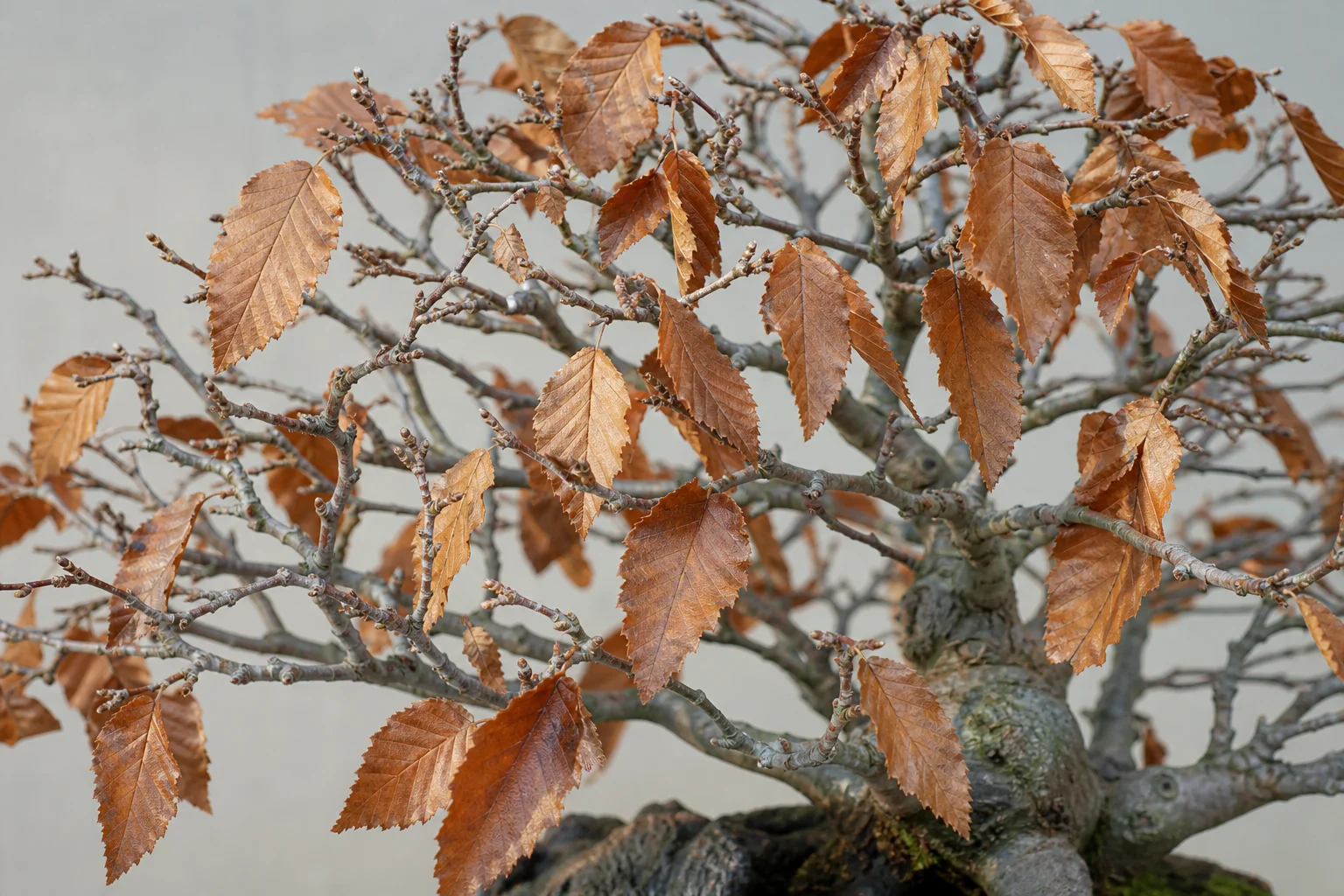
European hornbeam
Carpinus betulusThe UK native that bonsai forgot. Strong, fast, beautiful in winter, and lovely in spring — and you can find good material in any hedgerow.