Pomegranate bonsai care
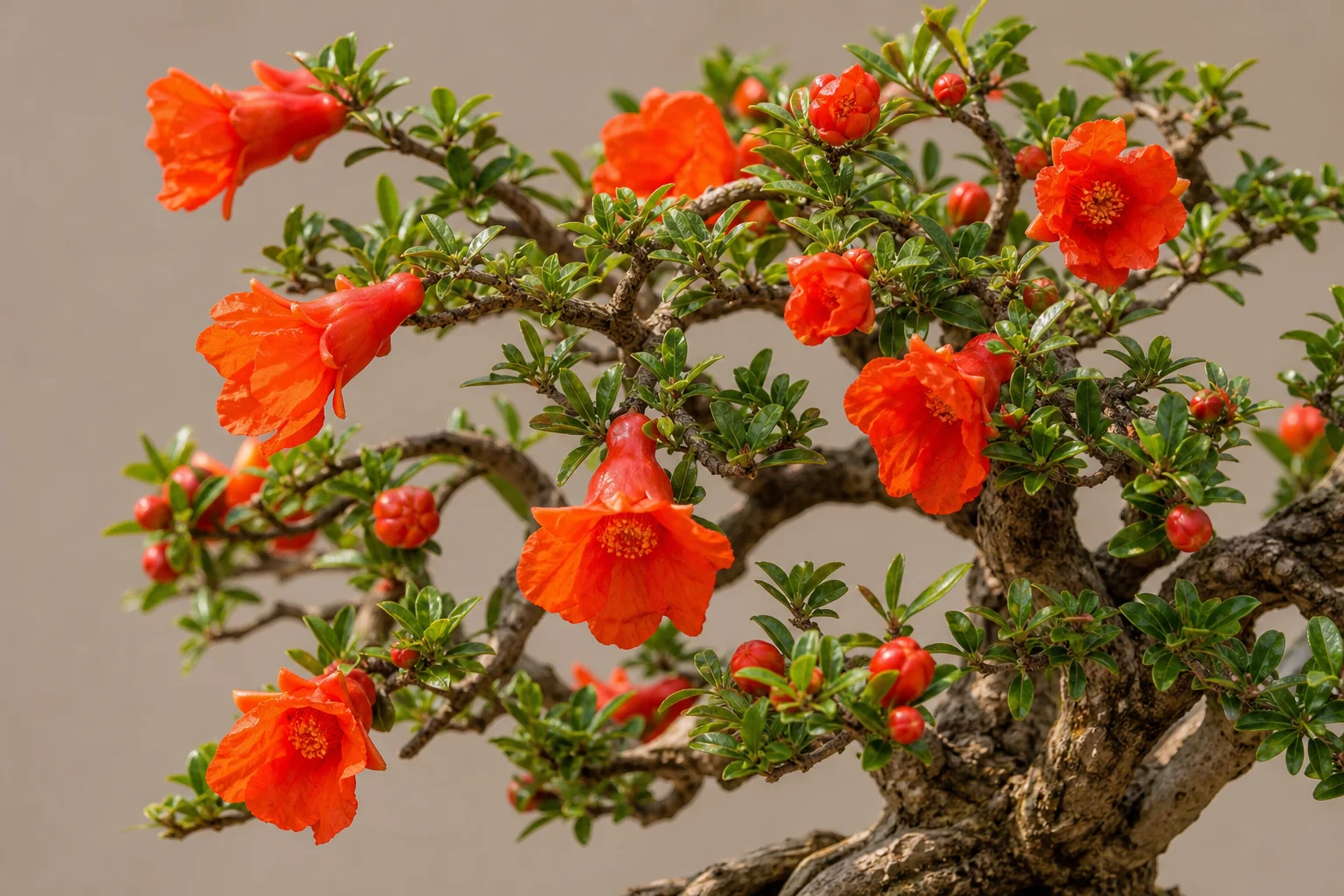
Punica granatumOrange-red trumpet flowers in summer, miniature pomegranate fruit in autumn, twisted gnarled trunk character on collected ancient material. Borderline-hardy but stunning.
Water
Every 1 day
check daily in summerLiquid feed
Every 7 days
growing seasonSolid feed
Every 28 days
slow releaseRotate
Every 14 days
even canopy growthPomegranate sits in roughly the same UK category as olive — Mediterranean species that have become more viable for outdoor cultivation as British summers have warmed, but that still need careful winter management to survive in pots. Where olive is grown for its silver foliage and ancient trunk, pomegranate's appeal is more colourful: bright orange-red flowers in June and July, followed by miniature versions of the familiar pomegranate fruit through autumn.
Two main forms are used in bonsai. Standard Punica granatum produces full-size flowers and fruit but the leaves and overall scale are large for bonsai. The dwarf form (Punica granatum 'Nana') is the bonsai standard — smaller in every dimension, flowering more reliably on younger plants, and fitting bonsai scale much better. Most quality pomegranate bonsai material available in the UK is some form of dwarf pomegranate.
Collected ancient material from Mediterranean countries (Spain, Italy, Turkey) is available from European yamadori dealers and represents the species at its most dramatic — gnarled, twisted, deeply fissured trunks that look genuinely ancient. The trade-off is the same as for olive: imported material is expensive and requires careful UK winter management.
The species rewards patience. Young pomegranates can take 5–10 years to flower reliably, though dwarf forms flower sooner. Once established and flowering, the display is unforgettable.
Native to Iran and the broader region from northern India through to the eastern Mediterranean. Cultivated for fruit for at least 5,000 years — pomegranate is one of the oldest cultivated species, appearing in ancient Egyptian, Greek, and Persian iconography. Naturalised across the Mediterranean basin and widely planted globally in warm climates. As bonsai, the species has been developed particularly in Italy, where some of the world's finest pomegranate bonsai are grown.
Seasonal calendar
Timing is for South East England. Select your region above to see adjusted guidance.
- Maintain winter shelter
- Minimal watering
- Continue winter care
- Plan spring repotting
- Structural pruning while dormant
- Begin gradual return to outdoor late month if mild
- Buds break with warmth
- Begin increasing watering
- Repotting window
- Start liquid feeding
- Active growth
- Flower buds forming — minimal pruning
- Pinch new shoots after 4-5 leaves
- Peak flowering — orange-red trumpets
- Switch to high-K feed mid-month
- Wiring window opens
- Continue flowering and fruit set
- Continue high-K feeding
- Fruit developing and colouring
- Stop feeding mid-month
- Fruit ripens
- Plan move to winter shelter
- Into winter shelter before hard frost
- Reduce watering significantly
- Fully dormant under shelter
- Leaf drop complete
Watering
Water moderately. Pomegranate is more thirsty than olive but less so than maples or wisteria. Daily through the growing season; twice daily in summer heat for trees in shallow pots.
The species tolerates brief dryness without serious damage but consistent dryness during flowering and fruit development reduces both. Maintain steady moisture from May through September especially.
In winter while dormant in shelter, reduce watering significantly — every 7–14 days. Saturated cold roots are a serious risk.
Tap water of any hardness is fine.
Feeding
Moderate to heavy feeding during growth. Weekly liquid feed at full strength from May through to mid-September. Slow-release organic pellets in spring and again in early summer.
For flowering, switch to a high-K low-N tomato-style feed from mid-July through August. This supports flower bud formation for the following year and improves fruit set in the current year.
Stop feeding by late September.
Heavy feeding works well on pomegranate — the species is vigorous when conditions suit it and supports more nitrogen than restrained-feeding species like satsuki or pines.
Soil & Repotting
Free-draining and tolerant. Pomegranate accepts a wide range of substrates including slightly alkaline conditions.
60% akadama, 30% pumice, 10% lava is reliable. The species tolerates cheaper development mixes well — useful for collected material and trees in active development.
Repot every 2–3 years on young trees, every 3–4 on mature specimens. The window is late spring after risk of severe cold has passed — typically late April to early May. This is later than for hardy deciduous species and reflects the pomegranate's preference for warm conditions during root work.
Pomegranate tolerates moderate root work — up to a third of the root mass on healthy trees. The species recovers reasonably quickly once growth starts.
Newly imported collected material recovers slowly. Pot into deep wooden boxes with coarse free-draining substrate and provide consistent warmth and shelter for the first 12–18 months.
Pruning
Pomegranate pruning is moderately complex because flowering happens on current year's growth — the timing rules are different from species that flower on previous year's wood.
Through the growing season, let new shoots extend to four or five leaves then cut back to two — but be cautious about pruning during flower bud formation (June–July). Pruning during this period can reduce flowering.
Major structural pruning in late winter or early spring (March–April) before bud break. The species back-buds reliably on old wood and tolerates substantial cutbacks. Hard chops on collected material produce vigorous new growth within weeks once active growth begins.
After flowering and fruiting (September–October), light cleanup pruning to remove spent flower stems and any unwanted growth. Major structural work is best left until spring.
The species has thorns on vigorous wood — wear gloves when pruning.
Defoliation can be used on healthy refined trees in mid-summer but isn't typically necessary on dwarf forms whose leaves are already appropriately scaled.
Wiring & Styling
Wire after new growth hardens in early summer or on bare wood in winter. Pomegranate bark thickens with age and develops attractive fissures. Wire marks moderately on younger thin bark, less on older thicker sections. Apply loosely and check fortnightly.
Wood is moderately flexible when young, stiffer with age. Major bends on older branches benefit from raffia wrapping. The species' natural twisting growth means some character can be developed through directional pruning alone.
Informal upright with substantial twisted trunk character is the classic pomegranate style — particularly on collected ancient material. Twin-trunk and multi-trunk forms work well. Literati on tall slender material with crown foliage suits the species. Cascade and semi-cascade are uncommon but possible.
The species' main aesthetic assets are the flowering and fruiting displays plus mature trunk character. Styling should showcase these — open structures that allow the flowers to be seen from below, and clean trunk lines that emphasise gnarled bark and twisted shape.
Winter care
Borderline hardy in the UK — H4 rating means hardy through southern English winters in mild years but vulnerable in severe cold.
Below -5°C sustained, move to unheated greenhouse, cold frame, or sheltered porch. The goal is cool dormancy, not warmth. Pomegranate needs cold to flower properly the following year — don't keep in heated rooms.
In southern England, modest shelter (against a wall, off the ground, out of wind) is usually sufficient in normal winters. In the Midlands and north, plan winter protection from late November through March. In Scotland and Northern Ireland, the species needs reliable cold-frame or greenhouse protection.
Reduce watering significantly through winter. Saturated cold roots are a serious risk.
Never bring indoors during dormancy.
Propagation
From semi-hardwood cuttings in summer with rooting hormone — moderate to good success rate. From seed possible but slow and produces variable seedlings — not true to cultivar. Air layering works well on suitable branches. The best route to substantial bonsai material is collected Mediterranean yamadori from specialist European dealers, or buying established UK garden specimens that have been growing for 15+ years.
Common problems
Generally healthy in UK cultivation. The pomegranate's traditional pests (pomegranate aphid, pomegranate fruit borer) are uncommon in UK conditions.
Frost damage
Symptoms: Branches die back after unexpected cold; tree fails to push spring growth or pushes weakly.
Cause: Late or early frosts catching unhardened growth; or sustained sub -5°C without shelter.
Solution: Move under cover when freezing forecast. Cut back winter-damaged wood once danger passes — pomegranates back-bud well from undamaged sections. Severe cold can kill the entire above-ground portion; trees often recover from roots if mulched.
Root rot from winter waterlogging
Symptoms: Tree fails to push spring growth or pushes very weakly; substrate sour-smelling.
Cause: Cold saturated substrate.
Solution: Reduce winter watering dramatically. Ensure free drainage. Emergency repot into dry substrate may save trees caught early.
Aphids
Symptoms: Curled sticky young leaves and shoots in spring.
Cause: Standard spring pest pressure.
Solution: Hose off. Neem if persistent.
Scale insects
Symptoms: Small brown bumps on stems and undersides of leaves.
Cause: Common pest, particularly on imported Mediterranean material.
Solution: Manual removal with alcohol-dipped cotton bud. Horticultural oil in winter. Systemic insecticide for severe infestations.
Failure to flower
Symptoms: Tree grows vigorously but produces few or no flowers.
Cause: Multiple possible causes: tree too young (especially with seedling-grown stock), insufficient sun, excess nitrogen feeding, insufficient winter cold to break dormancy properly.
Solution: Buy dwarf or named flowering cultivars rather than seedlings. Ensure full sun position from May through September. Switch to high-K feeding from mid-July. Provide cool (but sheltered) winter dormancy.
Fruit drop before ripening
Symptoms: Developing fruit falls in late summer before colouring.
Cause: Usually water stress, sometimes inadequate pollination, occasionally heavy fruit load on a young tree.
Solution: Maintain consistent watering through summer. Thin fruit early on young trees to allow remaining fruit to develop. Mature trees usually self-regulate fruit load.
Popular cultivars
Full-size pomegranate. Larger leaves, flowers, and fruit than dwarf forms. Acceptable for bonsai but the scale is challenging.
The bonsai standard. Smaller in every dimension, flowers reliably on young plants, fits bonsai scale well.
Commercial fruiting cultivar. Suitable for larger bonsai but the fruit can become disproportionate.
Japanese double-flowered cultivar with orange-red blooms. Refined and popular for bonsai. Less fruit production than single-flowered forms.
Double-flowered ornamental form. Spectacular when in bloom; minimal fruit.
Track your Pomegranate with Kentai.
Collection tracking, care logs and photo history are free — no card, no time limit.
More care guides
Sango Kaku maple
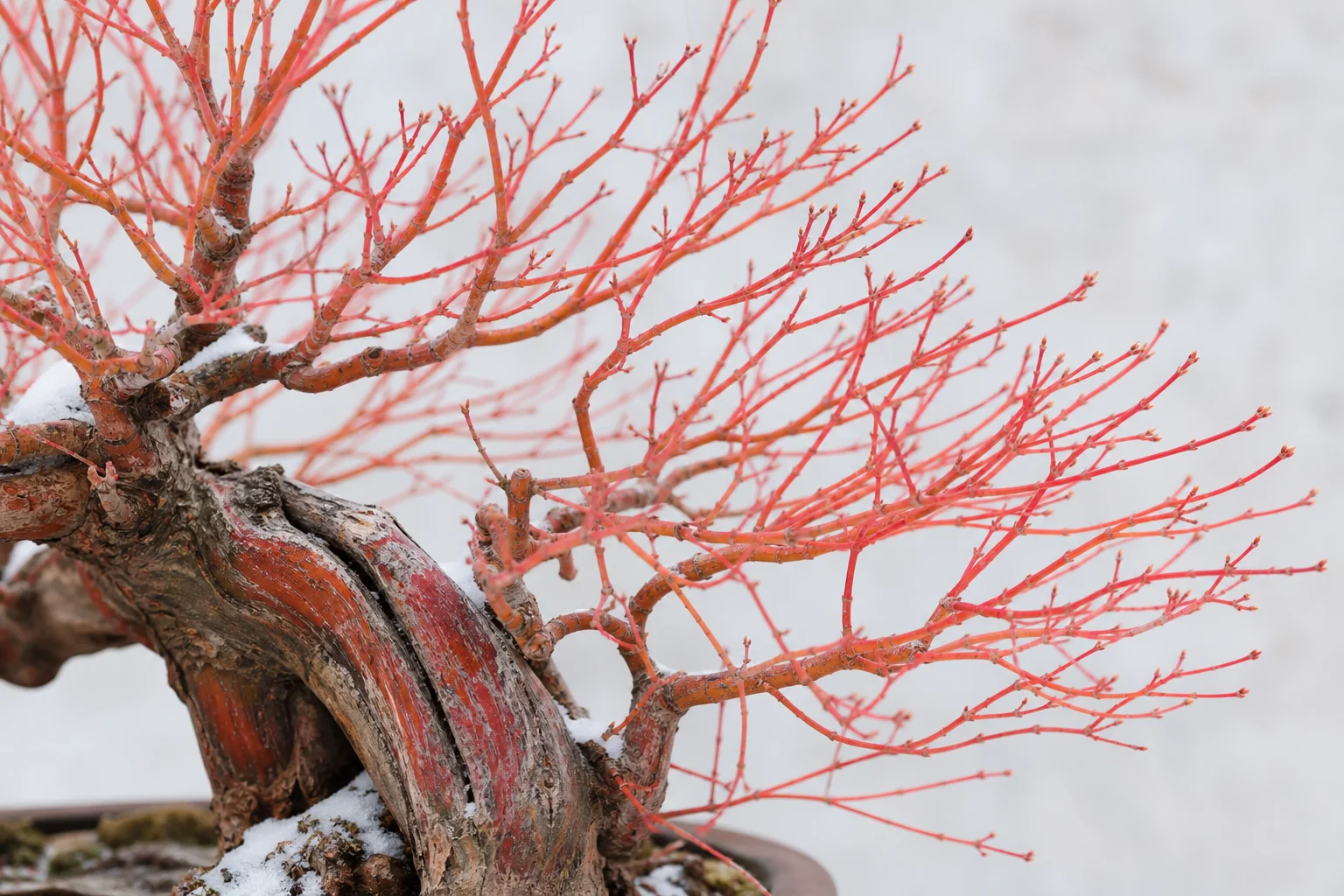
Acer palmatum 'Sango Kaku'The coral-bark maple. Year-round interest from bright coral-red young bark on the previous year's growth — at its most intense in winter when bare twigs glow against snow.
Shishigashira maple
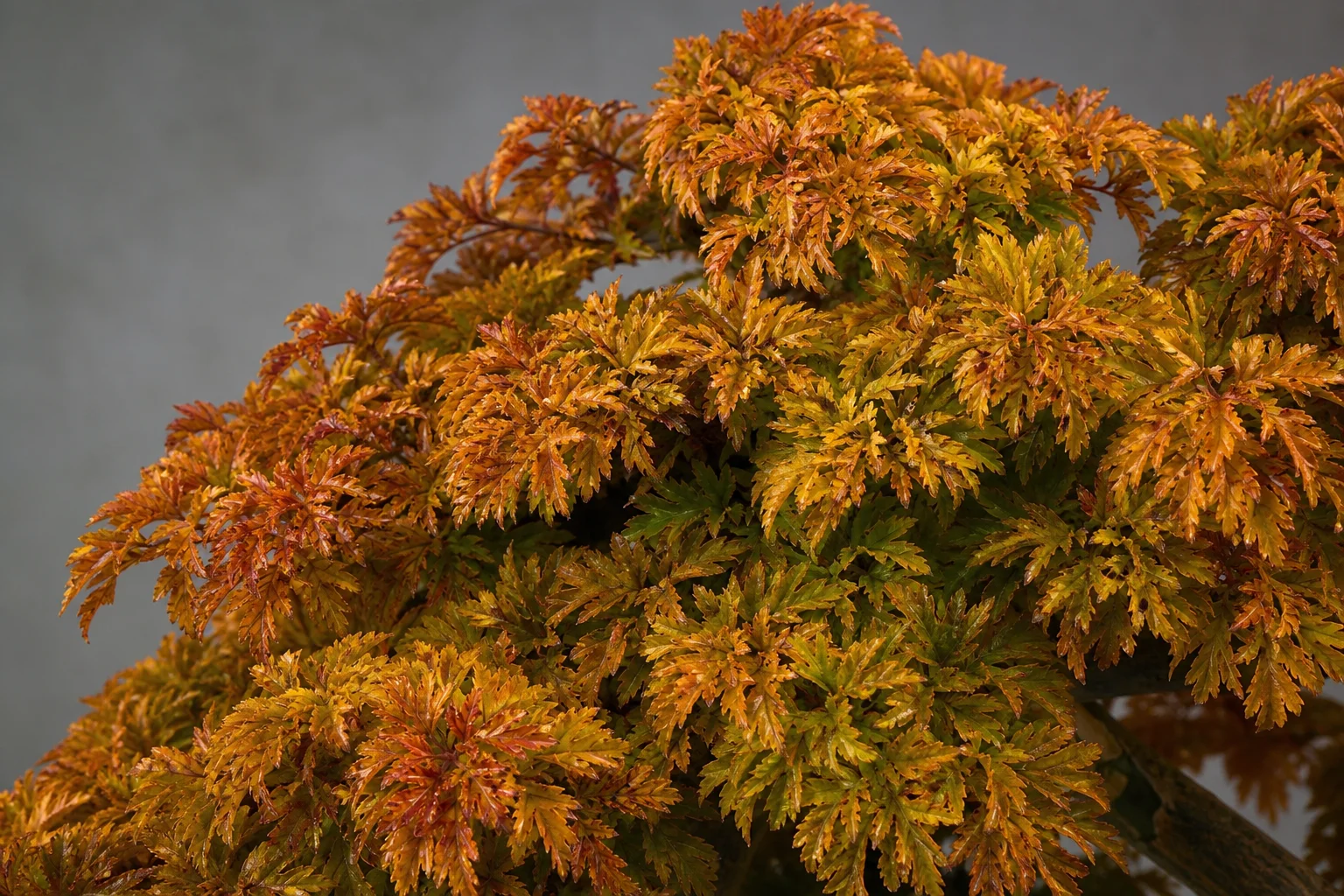
Acer palmatum 'Shishigashira'The crinkled-leaf maple. Tightly curled, deeply lobed small leaves clustered densely on short shoots — a cultivar whose habit looks bonsai-trained before any work is done.
Silver birch
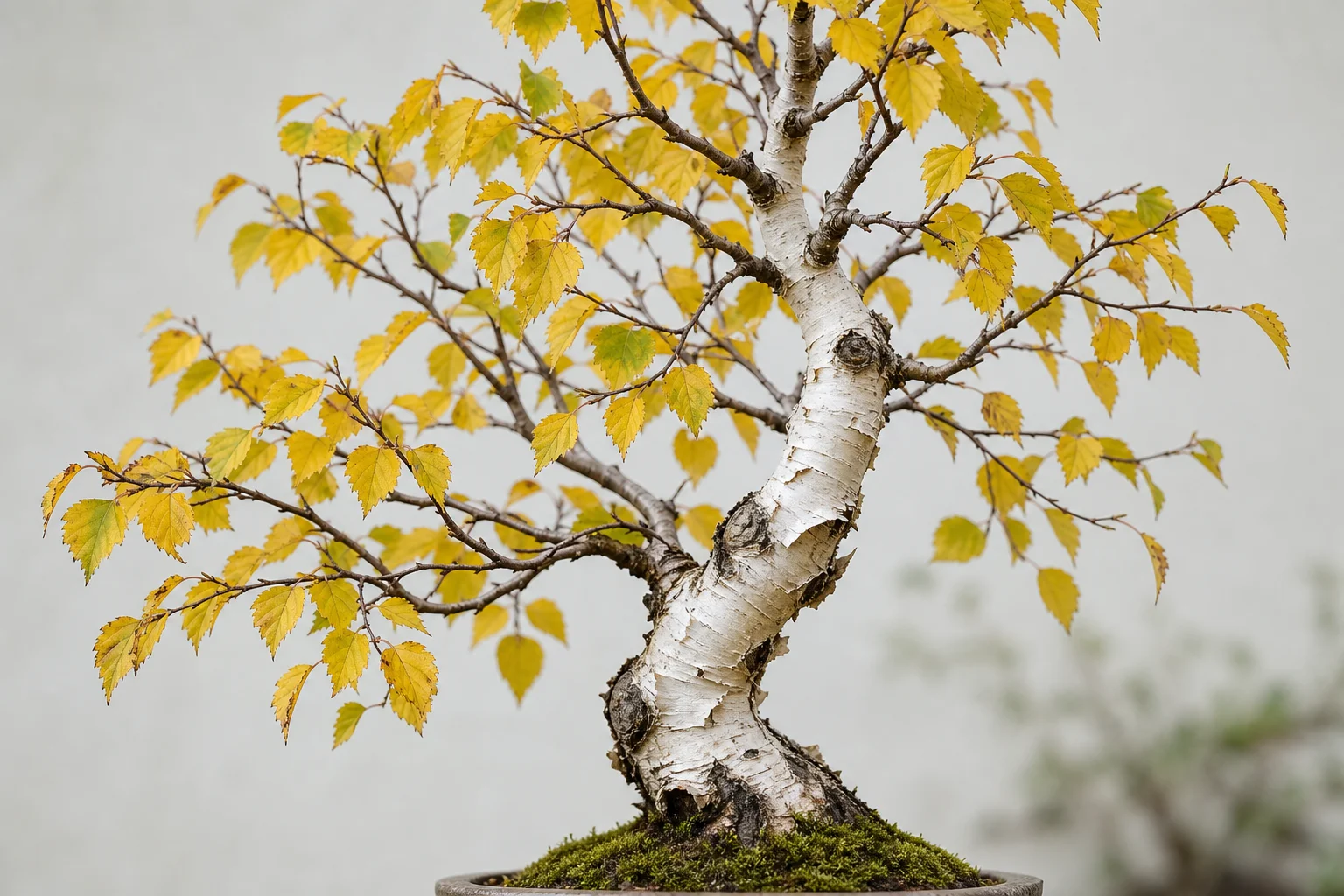
Betula pendulaThe white-bark UK native. Striking visually but genuinely tricky as bonsai — a species more often killed than refined by inexperienced growers.