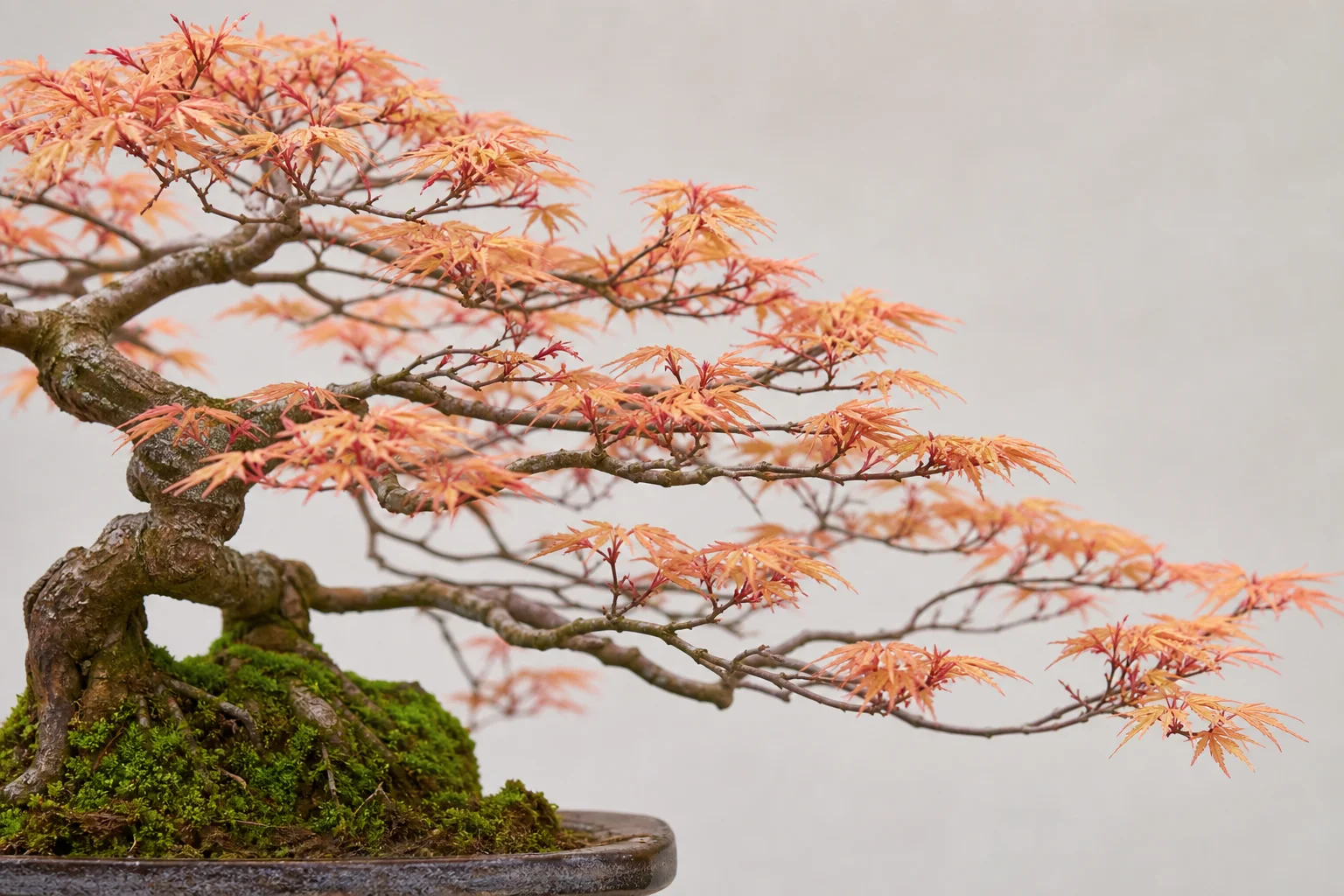
Kiyohime maple bonsai care
Acer palmatum 'Kiyohime'The dwarf Japanese maple. Tiny leaves, naturally spreading low habit, orange spring colour — and the cultivar that makes shohin bonsai possible without years of refinement.
Water
Every 1 day
check daily in summerLiquid feed
Every 7 days
growing seasonSolid feed
Every 28 days
slow releaseRotate
Every 14 days
even canopy growth"Kiyohime" is the cultivar to reach for when you want a Japanese maple bonsai in shohin or mame size without waiting 20 years for leaves to reduce. The natural leaf size is 2–3cm versus 5–8cm on base palmatum — already in bonsai proportions on day one. Combined with a naturally spreading, almost horizontal habit and very short internodes, the cultivar produces bonsai-scale trees almost without intervention.
The habit is the defining feature. Where base palmatum grows upright, Kiyohime spreads horizontally — branches extend nearly parallel to the ground with minimal upward leader development. This sounds limiting for styling but in practice produces some of the most natural-looking small Japanese maple bonsai available. The cultivar suits root-over-rock plantings, semi-cascade compositions, and informal upright styles with a strong horizontal emphasis.
Spring colour is light orange to peach. The foliage transitions to green through summer and produces variable autumn colour — usually gold with red highlights, occasionally fully red on trees in good light.
Trunk development is slow — slower than base palmatum, slightly faster than Shishigashira. The cultivar is best used for medium to small bonsai where its natural scale is appropriate, rather than attempting to develop substantial trunks over decades.
Japanese cultivar. The name "Kiyohime" translates as "pure princess" or "clear princess" — referencing both the diminutive scale and the delicate spring colour. Among the most popular maple cultivars for bonsai globally. Several closely related dwarf cultivars exist — Kashima, Kotohime, Yatsubusa — with subtle differences in habit and leaf detail.
Seasonal calendar
Timing is for South East England. Select your region above to see adjusted guidance.
- Structural pruning while dormant
- Plan year's work
- Begin repotting late month
- Final winter pruning
- Main repotting window
- Protect emerging buds from late frost
- Light orange foliage emerges
- Begin daily watering
- First feed
- Start half-strength liquid feed
- Begin pinching new shoots
- Maintain apex strength via selective pruning
- Wiring window opens
- Twice-daily watering in heat
- Continue pinching
- Reduce nitrogen feeding mid-month
- Watch for leaf scorch
- Stop feeding mid-month
- Reduce watering
- Gold and red autumn colour
- Continue reducing watering
- Leaf drop
- Sweep fallen leaves
- Structural pruning
- Position out of intense winter sun
Watering
Daily through the growing season. Kiyohime's small leaves and shallow root run mean it tolerates dryness less well than base palmatum — even brief drought scorches leaf margins.
In hot summer weather, twice daily for trees in shallow pots. Morning sun and afternoon shade suit the cultivar; afternoon shade is more important than it would be for vigorous cultivars because Kiyohime's small leaves desiccate faster.
In winter, regular but reduced watering. Use rainwater where possible.
Feeding
Weekly half-strength liquid feed from late April through to mid-September. Slow-release organic pellets in spring and early summer.
Heavy feeding produces longer internodes and larger leaves — quickly losing the cultivar's natural scale. Restrained feeding suits Kiyohime better than vigorous cultivars.
Stop feeding by mid-September.
Soil & Repotting
Free-draining and slightly acidic. Standard Japanese maple substrate.
60% akadama, 30% pumice, 10% lava in 2–6mm grade. The cultivar performs well in fine-grade substrate (1–3mm) for refined small bonsai. Rainwater preferred.
Repot every 2 years on young trees, every 3 on mature specimens. The window is mid-February through to early April. Repot as buds swell.
Kiyohime's small root system tolerates moderate root work — up to a third of the root mass. The cultivar recovers reasonably quickly. Don't combine repotting with major pruning in the same year on small specimens.
Pruning
Kiyohime pruning is essentially the same as base palmatum but the smaller scale means less aggressive cutting.
Structural pruning in late winter. Through the growing season, allow new shoots to extend to 3–4 leaves then cut back to 2. Pinch every two to three weeks. The cultivar's naturally short internodes mean pinching is more effective than for cultivars with long extensions.
A characteristic challenge: the apex of a Kiyohime tree tends to weaken over time because the cultivar's natural spreading habit favours lateral growth over apical. Keep the apex stronger than the lower branches in your pruning balance, otherwise it weakens and the tree loses height definition.
Defoliation works on healthy trees and produces dramatically refined second-flush foliage. The cultivar can take annual defoliation on vigorous specimens, biennial on more refined trees.
Wiring & Styling
Wire after leaves harden in early summer or on bare branches in winter. Bark is thin — apply loosely and check fortnightly. Aluminium for almost all work; small-gauge for shohin specimens.
The naturally horizontal habit means much styling work involves preserving and emphasising the spreading branches rather than fighting them upward.
Informal upright with strong horizontal branching emphasis is the natural fit. Semi-cascade works particularly well — the cultivar's habit suggests this style without aggressive bending. Root-over-rock plantings are exceptional. Forest plantings of multiple Kiyohime produce dense low groves that look genuinely ancient at small scale.
The cultivar is among the few Japanese maples that suit a natural-looking miniature tree aesthetic without years of refinement work. Lean into this character rather than fighting it.
Cascade is possible. Formal upright and pure broom styles fight the cultivar's habit.
Winter care
Hardy across most of the UK with no protection needed in normal winters. The cultivar's shallow root system makes it slightly more vulnerable to extreme cold than vigorous upright cultivars; in Scotland and exposed positions, light shelter in severe winters is sensible.
Never bring indoors.
Propagation
Always grafted onto Acer palmatum rootstock. Cuttings rarely succeed. The graft union usually shows near the base — quality Kiyohime bonsai have the graft positioned low enough to be hidden or have been air-layered onto own roots.
Common problems
Generally healthy. Inherits base palmatum's vulnerabilities but the small scale means problems are often less severe.
Apex weakening
Symptoms: Top of the tree loses vigour over years while lower branches remain strong; the tree gradually loses upward definition.
Cause: The cultivar's natural spreading habit favours lateral growth over apical extension.
Solution: Maintain stronger pruning on lower branches and weaker pruning at the apex. Feed the apex slightly more than the rest. If the apex has weakened severely, hard cut back lateral branches and let the leader extend for a season before resuming standard work.
Leaf scorch
Symptoms: Brown crispy margins on the small leaves, particularly mid-summer.
Cause: Drought, hard water, or excess sun. The small leaves desiccate faster than base palmatum.
Solution: Provide afternoon shade. Use rainwater. Maintain consistent moisture. Once scorch occurs, affected leaves don't recover for the year.
Verticillium wilt
Symptoms: Individual branches die back; dark streaking in cut wood.
Cause: Soil-borne fungus.
Solution: No cure. Remove affected branches well below visible damage.
Chlorosis from alkaline water
Symptoms: Pale leaves with green veins.
Cause: Hard tap water.
Solution: Use rainwater. Repot more frequently.
Difficulty developing trunk thickness
Symptoms: Trunk remains slender despite years of growth.
Cause: Normal cultivar behaviour — Kiyohime is slow to thicken.
Solution: Accept the cultivar's natural scale (it's best suited to shohin and small bonsai anyway), or develop in open ground for 3–5 years before potting up. Don't force growth with heavy feeding — that produces oversized leaves and long internodes while still not thickening the trunk dramatically.
Aphids
Symptoms: Curled sticky leaves in spring.
Cause: Standard spring pest pressure.
Solution: Hose off gently. Neem if persistent.
Popular cultivars
The classic dwarf Japanese maple cultivar. Light orange spring colour, small leaves, naturally spreading habit.
Similar dwarf habit to Kiyohime but with slightly different leaf shape and more orange-red spring colour. Sometimes confused commercially.
Even more compact than Kiyohime, with smaller leaves still. Excellent for mame work. Less widely available.
Group name for several dwarf palmatum cultivars. 'Yatsubusa' on its own typically means dense compact dwarf habit.
Pink-tinged dwarf. Less common in UK bonsai but suitable.
Track your Kiyohime maple with Kentai.
Collection tracking, care logs and photo history are free — no card, no time limit.
More care guides
Other Acer guides: Arakawa maple · Deshojo maple · Field maple · Full-moon maple · Japanese maple · Sango Kaku maple · Shishigashira maple · Trident maple
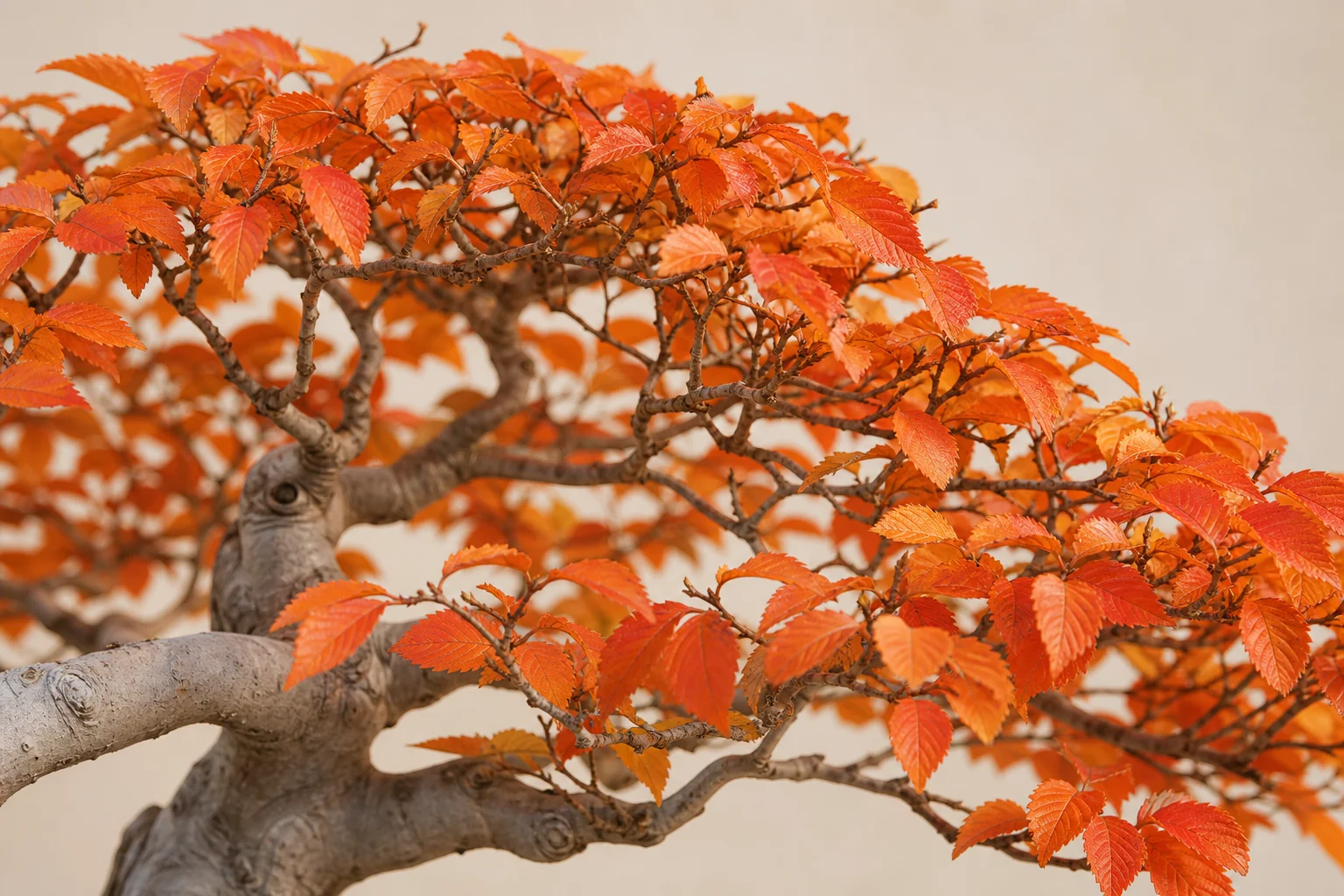
Korean hornbeam
Carpinus turczaninowiiThe Asian hornbeam most commonly imported as refined bonsai. Smaller leaves than European hornbeam, exceptional ramification potential, brilliant autumn colour.
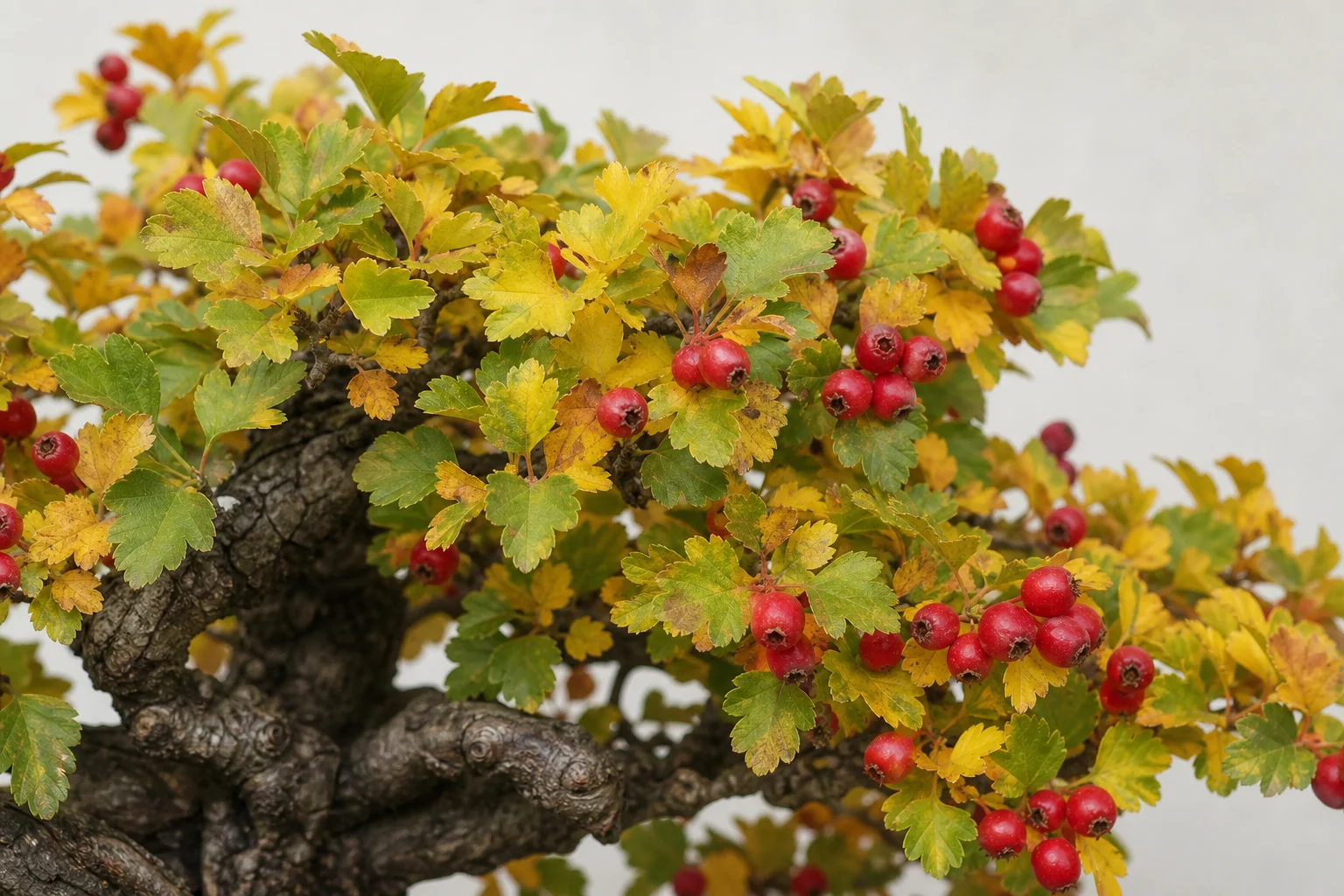
Midland hawthorn
Crataegus laevigataThe second UK native hawthorn. Similar to common hawthorn but with subtle differences worth knowing if you're collecting wild material or growing for ecology — and the parent of 'Paul's Scarlet', the double-flowered cultivar widely planted in UK streets and gardens.
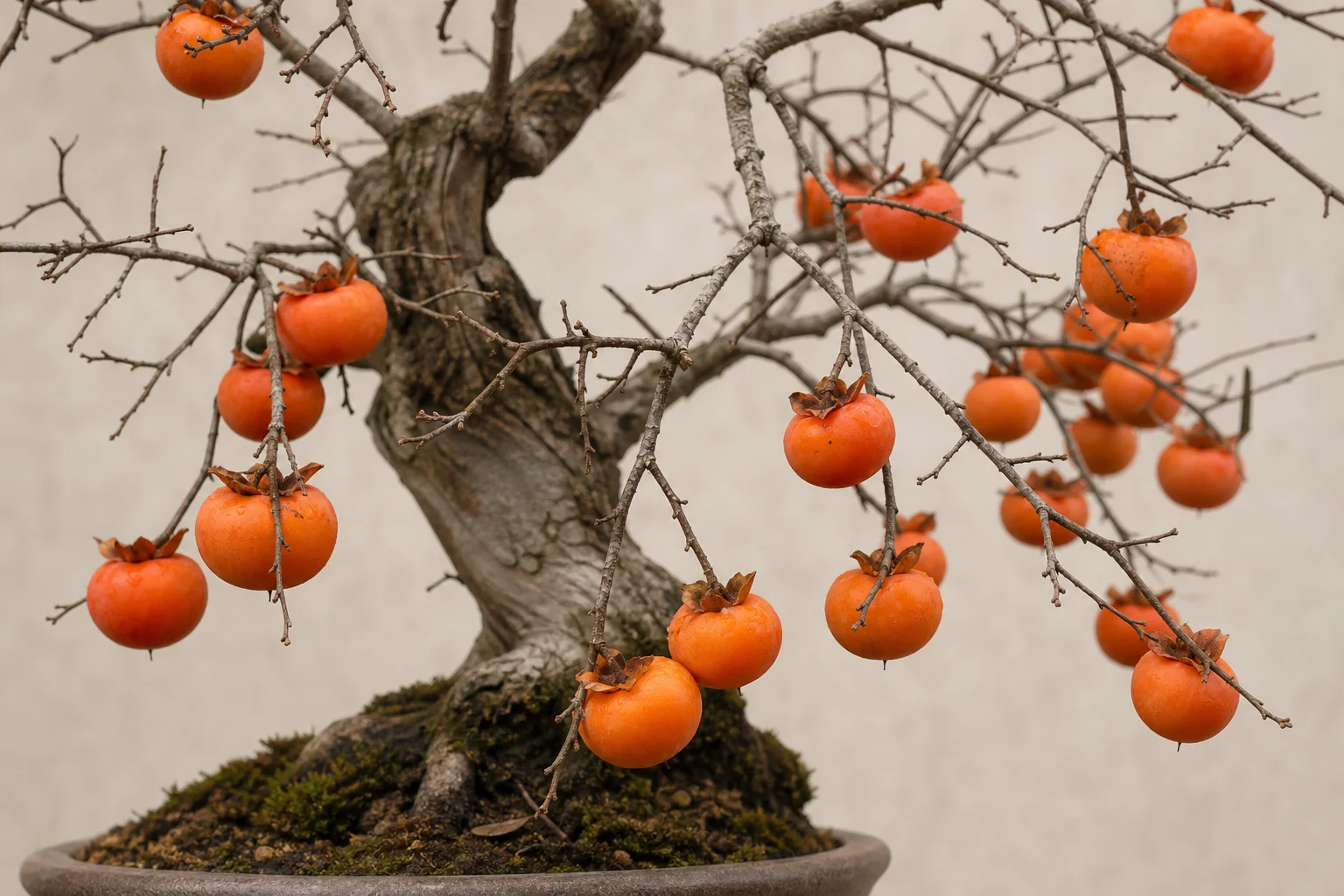
Persimmon
Diospyros kakiBright orange fruit hanging on bare branches into winter, brilliant autumn foliage colour, plated bark on mature trees — and one of the more dramatic seasonal bonsai displays in cultivation.