Sango Kaku maple bonsai care
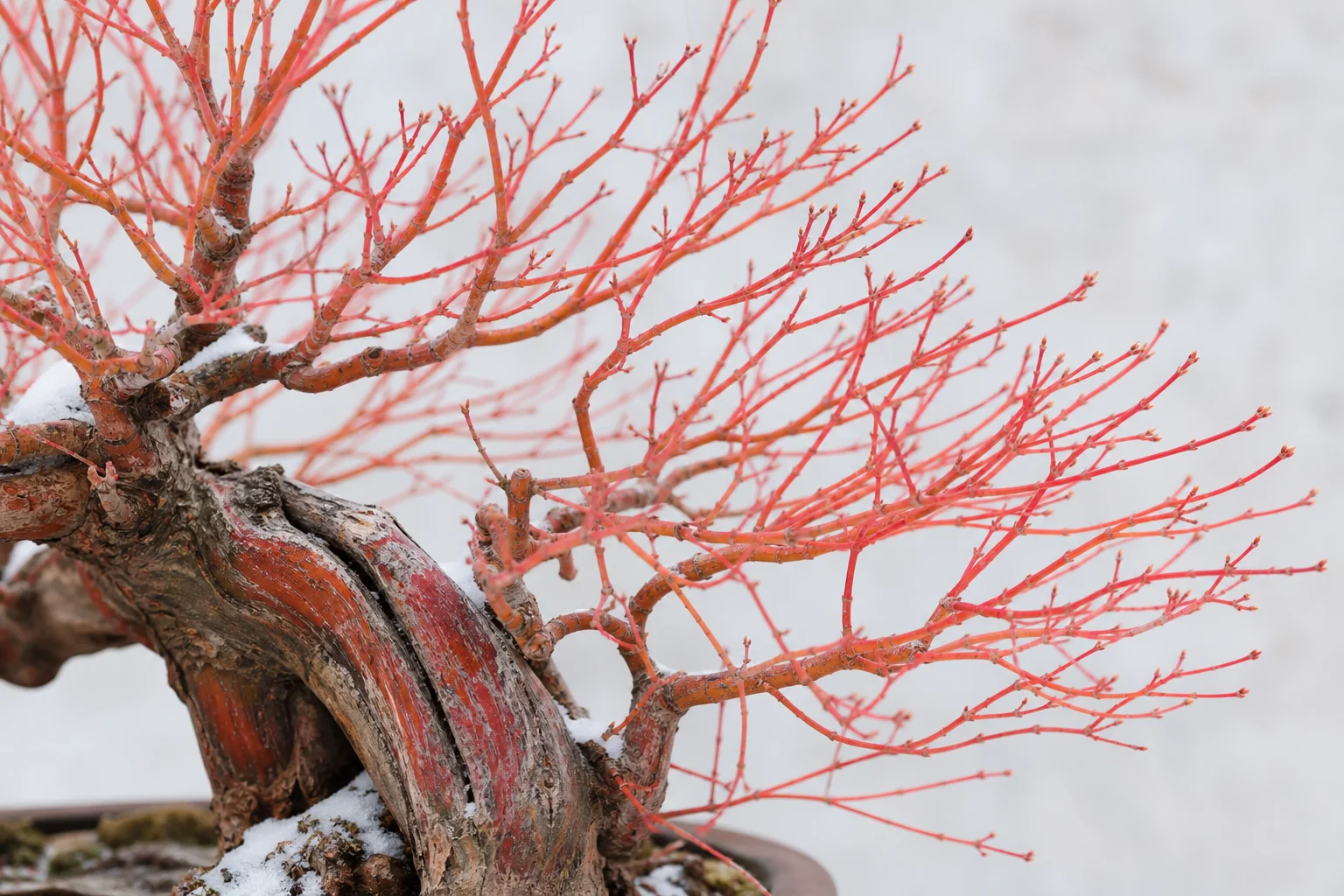
Acer palmatum 'Sango Kaku'The coral-bark maple. Year-round interest from bright coral-red young bark on the previous year's growth — at its most intense in winter when bare twigs glow against snow.
Water
Every 1 day
check daily in summerLiquid feed
Every 7 days
growing seasonSolid feed
Every 28 days
slow releaseRotate
Every 14 days
even canopy growthSango Kaku (literally "coral tower") is the Japanese maple cultivar selected for bark colour rather than leaf character. The young bark on the previous year's growth is a bright coral-red to salmon-pink, most intense in winter when the tree is bare and the colour stands out against the surrounding landscape. As bark ages on older sections, it darkens toward standard maple grey-brown, but the constant production of new red shoots maintains the year-round display.
Foliage is standard palmatum-style. Light green spring growth, mid-green summer, gold-yellow autumn (the cultivar tends toward yellow rather than red in autumn — an exception among Japanese maples). The yellow autumn colour against the coral bark on bare twigs as leaves drop produces one of the more memorable transitions in bonsai display.
The cultivar grows vigorously — closer to base palmatum than to refined dwarf cultivars. Trunk and branch development happens at a reasonable pace, and bark colour intensity is maintained through ongoing growth.
One practical consideration: the coral bark colour intensifies in cold weather and on growth that has received good light. Trees in shade or in mild conditions produce less intense colour. The cultivar benefits from a brighter position than some palmatums and tolerates moderate winter cold without complaint.
Japanese cultivar with a long history. The English name "coral bark maple" is descriptive; the Japanese name "Sango Kaku" translates to "coral tower" or "coral pillar." A related but distinct cultivar, "Beni Kawa," produces darker red bark with similar habit. Both are widely propagated by grafting.
Seasonal calendar
Timing is for South East England. Select your region above to see adjusted guidance.
- Peak bark colour display
- Heavy structural pruning while dormant
- Begin repotting late month
- Final winter pruning — preserve colour twigs
- Main repotting window
- Protect emerging buds from late frost
- Light green foliage emerges
- Begin daily watering
- First feed
- Start half-strength liquid feed
- Begin pinching
- Wiring window opens
- Mid-summer leaf colour at deepest green
- Twice-daily watering in heat
- Continue pinching
- Reduce nitrogen mid-month
- New shoots developing red coloration on this year's growth
- Stop feeding mid-month
- Colour begins developing on hardening wood
- Yellow autumn colour against developing red bark
- Reduce watering
- Leaves drop revealing coral bark
- Display season begins
- Peak bark display
- Light structural work on dormant trees
Watering
Daily through the growing season. Standard Japanese maple watering needs — twice daily in summer heat for trees in shallow pots.
In winter, regular but reduced watering. The cultivar is fully dormant and uses little water, but never let pots dry completely.
Use rainwater where possible.
Feeding
Weekly half-strength liquid feed from late April through to mid-September. Slow-release organic pellets in spring and early summer.
For bark colour intensity, restrained feeding produces better results than heavy feeding. Excess nitrogen produces vigorous growth with less concentrated red pigment. A balanced or slightly potassium-heavy formulation suits the cultivar.
Stop feeding by mid-September.
Soil & Repotting
Free-draining and slightly acidic. Standard Japanese maple substrate.
60% akadama, 30% pumice, 10% lava in 2–6mm grade. Rainwater preferred.
Repot every 2–3 years on young trees, every 3–4 on mature specimens. The window is mid-February through to early April. Repot as buds swell.
Sango Kaku tolerates moderate root work — up to a third of the root mass. The cultivar's vigorous habit means recovery is faster than refined dwarf cultivars.
Pruning
Standard Japanese maple pruning technique with one Sango Kaku-specific consideration.
The cultivar's value is in young bark — the previous year's growth shows the strongest coral colour. This means the tree needs continuous production of new shoots to maintain the display. Heavy pruning that removes most current-year growth eliminates the next winter's colour show until new shoots develop.
The practical balance: prune for structure and ramification, but always leave some young shoots through winter to provide colour. Many Sango Kaku growers structure their pruning to leave colour-providing twigs at the front (display side) of the tree while doing heavier work on the rear.
Through the growing season, allow new shoots to extend to 4–5 leaves then cut back to 2. Pinch every two to three weeks. Structural work in late winter.
Defoliation works on healthy trees but should be used cautiously — the cultivar's strength is in trunk and bark character rather than refined leaves, and aggressive defoliation can stress the tree without providing proportional aesthetic benefit.
Wiring & Styling
Wire after leaves harden in early summer or on bare branches in winter. Bark is thin on young coral-coloured wood — wire marks easily and the resulting scars show against the red colour. Apply very loosely on coral-bark sections and check fortnightly.
Aluminium for almost all work; copper for thicker structural branches only.
Informal upright is the natural fit. The cultivar's habit suits styles that show off both the foliage in summer and the bark in winter — open structures with visible twigging from typical viewing angles work better than dense closed pads.
Twin-trunk and clump styles work well. Cascade is uncommon but possible. Forest plantings of multiple Sango Kaku in winter (bare) produce striking groves with multiple coral trunks.
The bark colour is the cultivar's main aesthetic asset — styling should ensure twiggy young growth is clearly visible, particularly during the bare winter display season.
Winter care
Hardy across most of the UK with no protection needed in normal winters. The cultivar's vigorous habit makes it less vulnerable than dwarf cultivars to severe weather.
Bark colour intensifies with cold — the cultivar produces the most spectacular winter display in cold winters with good air movement. Mild winters produce less dramatic colour.
Never bring indoors.
Propagation
Always grafted onto Acer palmatum rootstock. Cuttings rarely succeed. Air layering possible but slow.
Common problems
Generally healthy. Inherits base palmatum's vulnerabilities. The cultivar's vigour means it's slightly more robust than refined dwarf forms.
Loss of bark colour intensity
Symptoms: New growth bark is duller red or even green-brown rather than coral.
Cause: Insufficient light, mild weather, or excess nitrogen feeding.
Solution: Brighter position. Restrict nitrogen feeding. Cold weather intensifies colour — the cultivar is at its best in cold UK winters. Some seasonal variation is normal.
Wire scars on coral bark
Symptoms: Permanent spiral marks visible on coloured twigs.
Cause: Wire on thin young bark.
Solution: Apply loosely; check fortnightly; remove before biting in. On display-quality coral twigs, consider directional pruning instead of wire.
Branch dieback in cold winters
Symptoms: Whole twigs or thin branches die back after severe cold.
Cause: Sango Kaku is slightly less hardy on thin young wood than mature wood — the coloured twigs themselves are vulnerable to extreme cold and desiccation.
Solution: Provide shelter from drying winds in exposed positions. Light frost cover in severe weather. Affected twigs can be pruned away in spring.
Verticillium wilt
Symptoms: Individual branches die back; dark streaking in cut wood.
Cause: Soil-borne fungus.
Solution: No cure. Remove affected branches well below visible damage.
Aphids
Symptoms: Curled sticky leaves in spring.
Cause: Standard spring pest pressure.
Solution: Hose off. Neem if persistent.
Yellow rather than red autumn colour
Symptoms: Autumn foliage is gold-yellow rather than the red typical of other Japanese maples.
Cause: Normal cultivar behaviour — Sango Kaku is a yellow-autumn cultivar.
Solution: Not a problem. The yellow colour combined with coral bark produces an unusual and attractive display. If red autumn is preferred, choose a different cultivar (Deshojo, Osakazuki, base palmatum).
Popular cultivars
The classic coral bark Japanese maple. Bright coral-red young bark, yellow autumn colour.
Related cultivar with darker red bark and slightly improved resistance to coral spot disease. Increasingly available in UK.
Selected form with particularly intense bark colour. Less common but worth seeking out.
The green-bark counterpart to Sango Kaku — bark is bright green on young growth. Same care, different visual feature.
Track your Sango Kaku maple with Kentai.
Collection tracking, care logs and photo history are free — no card, no time limit.
More care guides
Other Acer guides: Arakawa maple · Deshojo maple · Field maple · Full-moon maple · Japanese maple · Kiyohime maple · Shishigashira maple · Trident maple
Shishigashira maple
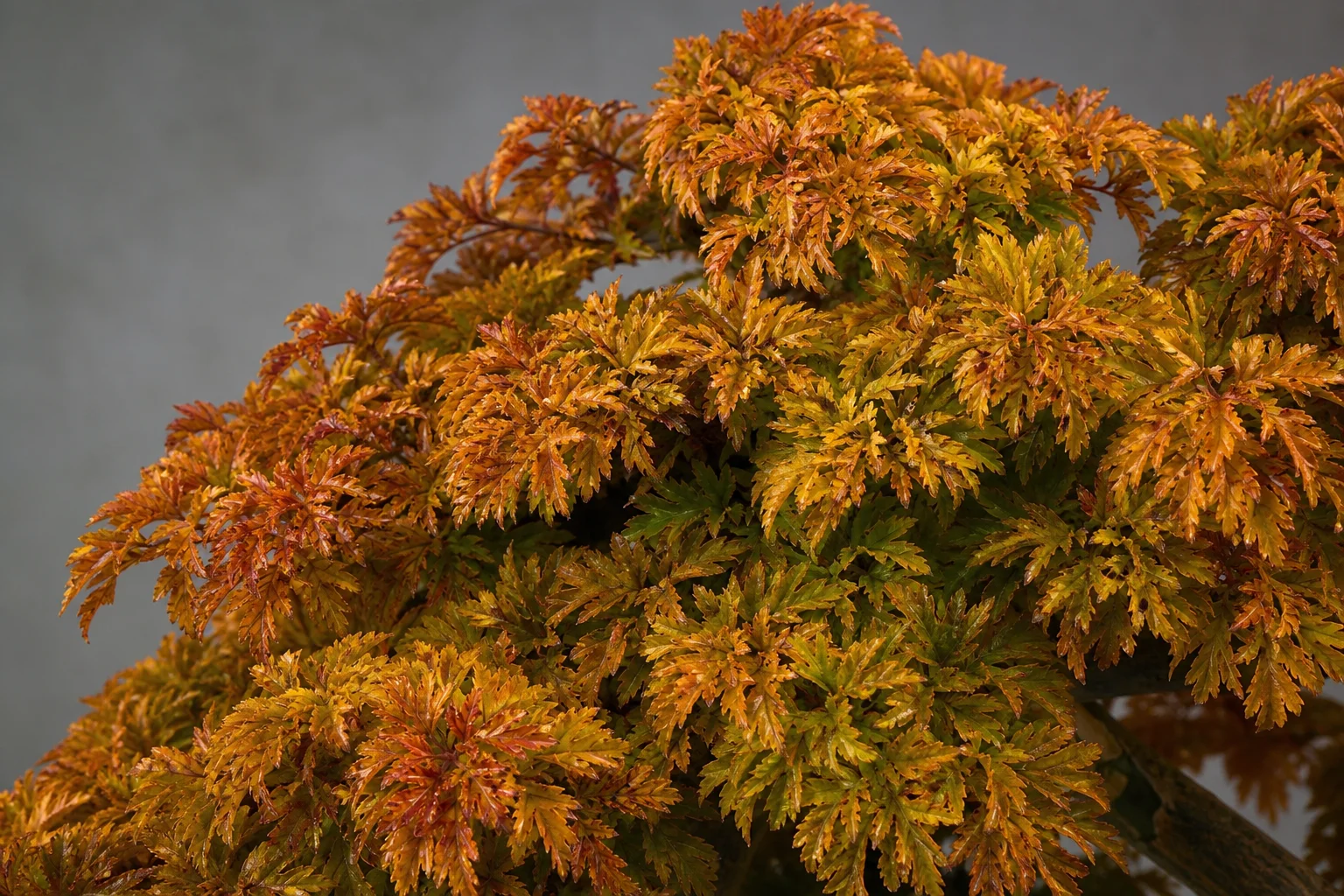
Acer palmatum 'Shishigashira'The crinkled-leaf maple. Tightly curled, deeply lobed small leaves clustered densely on short shoots — a cultivar whose habit looks bonsai-trained before any work is done.
Silver birch
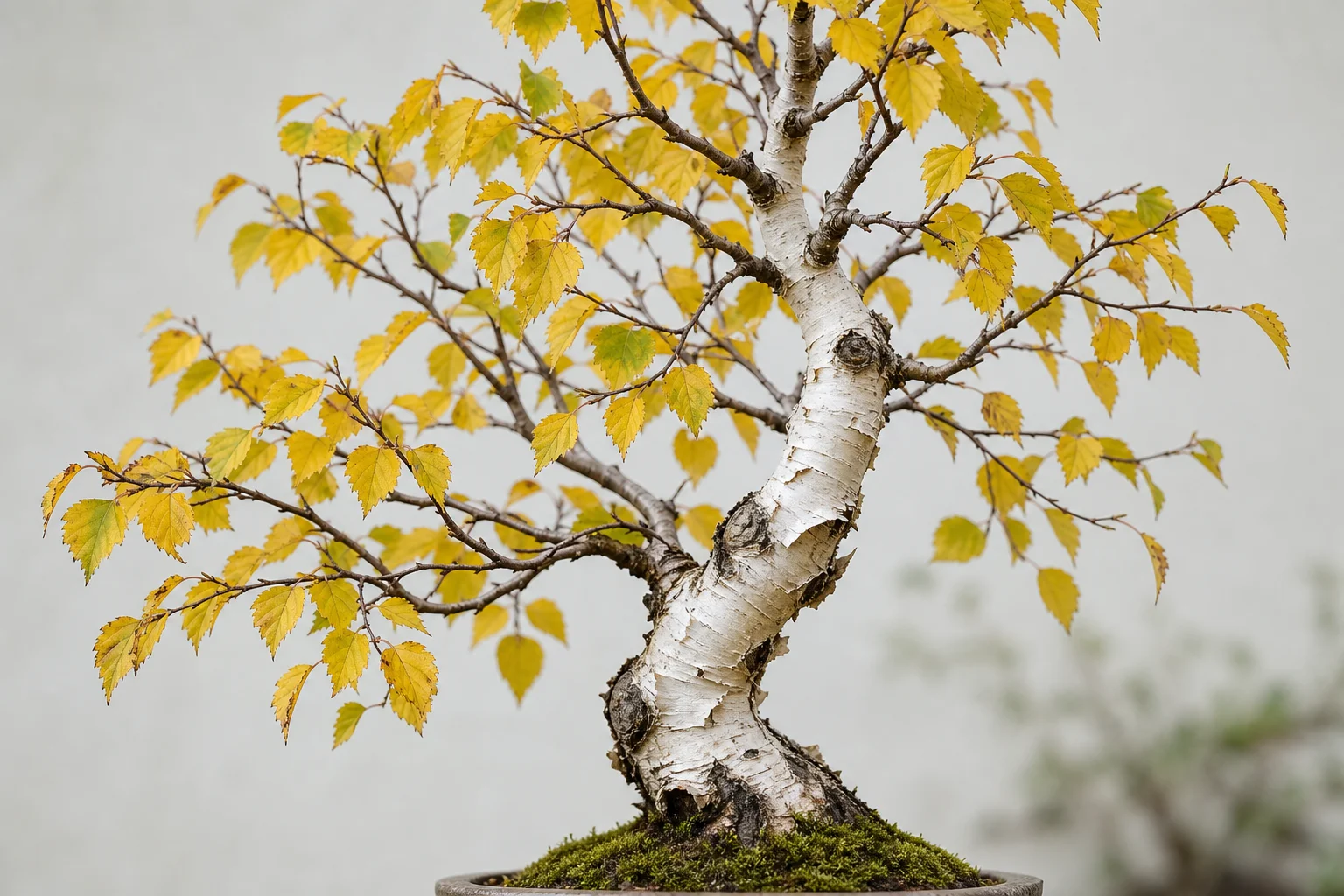
Betula pendulaThe white-bark UK native. Striking visually but genuinely tricky as bonsai — a species more often killed than refined by inexperienced growers.
Tamarisk
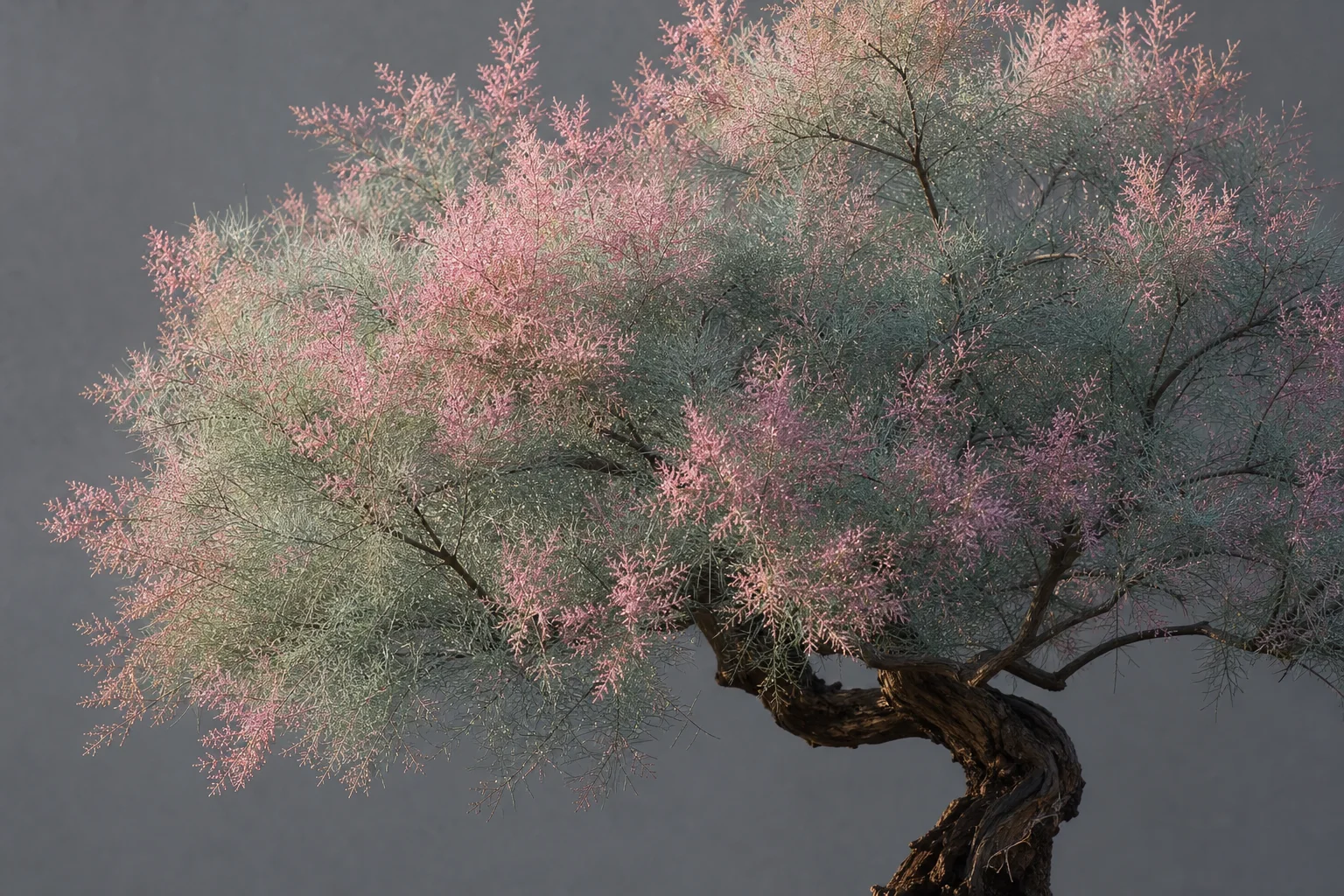
Tamarix gallicaFeathery scale-like foliage, pink flower plumes in late spring or summer, salt tolerance unmatched among bonsai species — and a distinctive softness that no other tree quite provides.