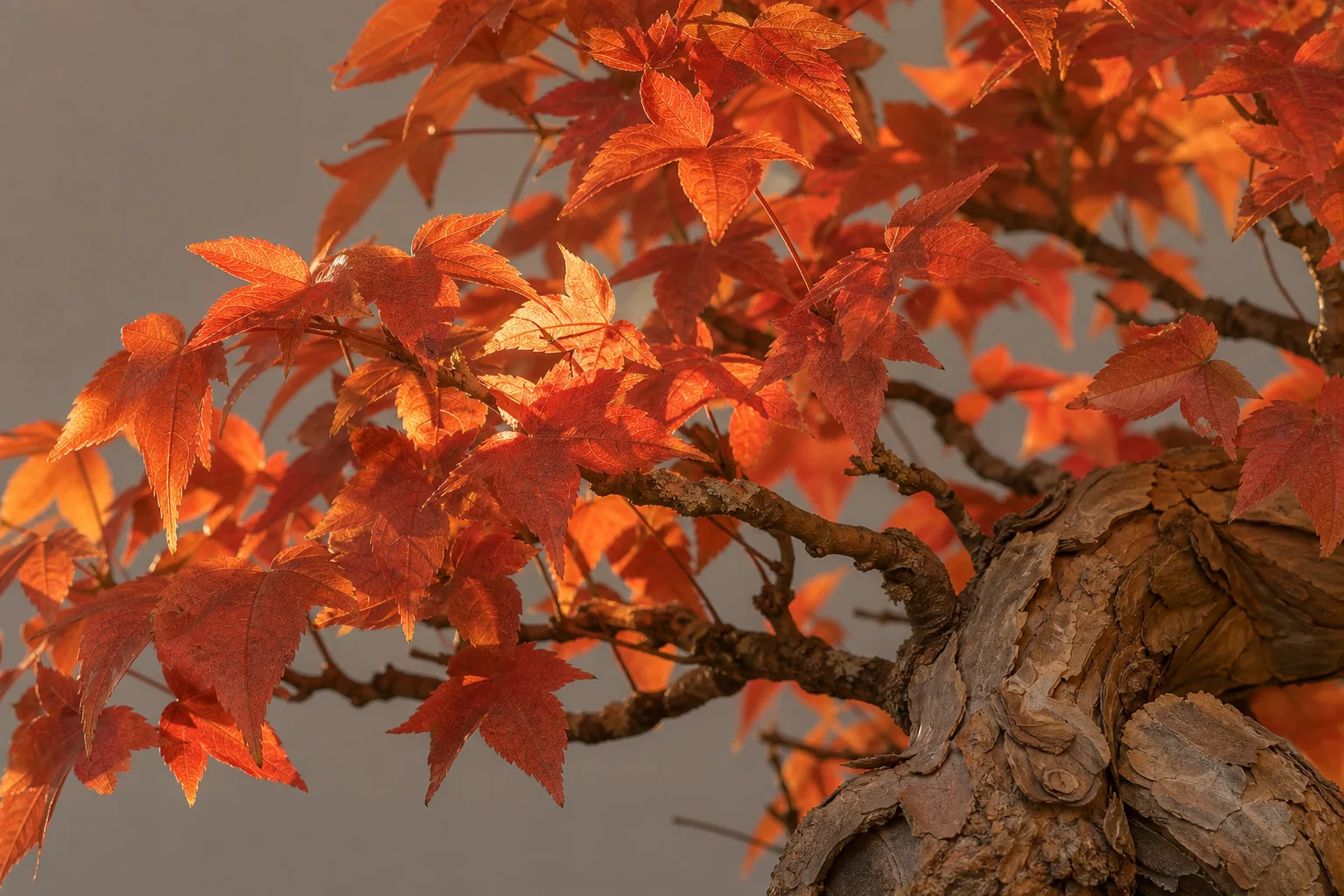
Trident maple bonsai care
Acer buergerianumThe other classic maple — faster, hardier, more forgiving than its Japanese cousin, and famous for spectacular flaking bark.
Water
Every 1 day
check daily in summerLiquid feed
Every 7 days
growing seasonSolid feed
Every 28 days
slow releaseRotate
Every 14 days
even canopy growthIf Japanese maple is the prima donna of deciduous bonsai, the trident maple is the dependable workhorse — and arguably the better choice for a first deciduous tree. It's faster-growing, more tolerant of full sun, more forgiving of pruning errors, and develops one of the most distinctive bark patterns in bonsai: an exfoliating, plated, almost reptilian texture that reads as ancient at twenty years old.
The three-lobed leaf (palmatum has five-to-seven lobes, buergerianum has three) is smaller than palmatum's and reduces beautifully with refinement. Internodes shorten readily with consistent pinching. Back-budding on old wood is prolific — heavy chops on a healthy trident will be covered in new shoots within weeks. All of this makes it the species people reach for when they want trunk girth and character fast.
If you've struggled with a Japanese maple, try a trident next. Everything you learned will apply, and the tree will be more patient with you while you're learning.
Native to eastern China, Korea, Taiwan, and Japan, in a wider and warmer range than Japanese maple. Naturally adapted to hotter summers, which is why it tolerates full UK sun where palmatum scorches. Long cultivated as bonsai in China before its adoption in Japan; some of the most famous root-over-rock specimens in the world are tridents.
Seasonal calendar
Timing is for South East England. Select your region above to see adjusted guidance.
- Structural pruning while dormant
- Plan repotting
Buds may already be swelling by late month in mild years.
- Repot as buds swell
- Final structural cuts
Earlier repotting window than Japanese maple.
- Continue repotting in cooler regions
- Move out of winter shelter
- Leaves harden by late month
- Begin daily watering
- First slow-release feed
- Start weekly liquid feed at full strength
- Begin pinching new shoots
- Second slow-release feed mid-month
- Wiring window opens
- Defoliate refined trees late month
- Twice-daily watering in heat
- Continue pinching every 2-3 weeks
- Reduce nitrogen feeding mid-month
- Continue pinching
- Switch to low-N autumn feed
- Stop feeding entirely by late month
- Autumn colour (orange/red on most cultivars)
- Reduce watering
- Leaf drop complete
- Sweep fallen leaves
- Apply winter protection
- Structural pruning
- Wire bare branches
- Monitor pot drainage
Watering
Daily through the growing season, twice daily in heatwaves. Tridents are vigorous and thirsty in full leaf but tolerate brief dryness better than Japanese maple — a forgotten morning watering won't ruin the season. They also tolerate slightly heavier substrates than palmatum without root issues.
The two genuine risks are wet feet in winter (root rot on a saturated, cold pot) and dryness during heavy summer growth (leaves scorch at the margins, especially after defoliation). Water deeply when you water — until it runs from the drainage holes — and let the surface dry between waterings rather than keeping the substrate constantly damp.
Rainwater is preferred but tridents tolerate hard tap water better than palmatum.
Feeding
Heavier feeders than Japanese maple. Begin weekly liquid feed at full strength once leaves harden in late April. Slow-release organic pellets in mid-April and again in mid-June work alongside liquid feed for trees in development.
For trees you're refining (rather than developing trunk girth), feed more cautiously — half-strength liquid feed weekly is enough. Overfeeding produces coarse, oversized leaves and long internodes that undo refinement work.
Stop nitrogen-heavy feeding from mid-August. Continue with a low-N, high-K autumn feed for three to four weeks to harden wood for winter, then stop entirely by late September.
Soil & Repotting
Free-draining and slightly acidic to neutral. Tridents tolerate a wider range of substrates than Japanese maples but still perform best in akadama-based mixes.
For refined trees: 60% akadama, 25% pumice, 15% lava. For trees in development pushing for trunk thickening: 50% akadama, 30% pumice, 20% lava, in a coarser grade. Tridents will perform well in mixes that maples would sulk in — useful for keeping costs down on young material.
Repot every 2 years for young trees, every 3 for refined specimens. The window opens earlier than for Japanese maple — late January to early March in southern England, mid-February to mid-March further north. Tridents wake up earlier and tolerate cooler soil temperatures.
The species shrugs off aggressive root work. You can safely remove half the root mass on healthy trees and even bare-root them every few cycles for a complete refresh. This is the species to learn root work on. Comb the roots out radially, prune cleanly, settle into fresh substrate, water in heavily.
The famous trident root-over-rock plantings exploit this tolerance: roots are spread across a rock at repot time, and the tree's vigour fills in around the stone over a decade or two. Worth considering for any trident with interesting nebari.
Pruning
Tridents accept hard pruning gladly. Major structural cuts in late winter (February) — they heal faster than most species and rarely die back from clean cuts. Trunk chops on healthy trees back-bud reliably within four to six weeks.
Through the season, let new shoots extend to five or six leaves, then cut back to two. Repeat every two to three weeks in vigorous growth. Trees being refined need constant pinching from May through September. Defoliation is a useful refining technique — every two years on healthy trees, late June, removes all leaves to force a second smaller flush.
Don't be precious. The single biggest difference between a developing trident and a finished one is years of cut-back-and-grow cycles. Trees that look messy in June often look elegant by September after enough cycles.
Wiring & Styling
Wire after leaves harden in early summer (June) or on bare branches in winter. Bark thickens and develops the species' characteristic plating with age, and wire marks remain visible for several years — apply loosely and check fortnightly. Smooth-bark cultivars need raffia-wrapping for substantial bends.
Tridents thicken fast — a wire applied in June can cut in by August. Take it off promptly. You can re-apply once the bark recovers.
Almost every style except formal upright. Root-over-rock is the signature trident planting and worth attempting at least once. Informal upright, twin-trunk, clump and forest plantings all work well. The species' vigour suits styles that emphasise mature trunk character — broom-style trees with their dense ramification are particularly fine.
Coastal-influenced literati and windswept work less well than for pines and junipers, but informal upright with a slight lean is a natural fit.
Winter care
Hardier than Japanese maple but still pot-vulnerable. Down to -5°C, no protection needed if sheltered from wind. Below -5°C, into an unheated greenhouse, cold frame, or sheltered porch. The root ball is the vulnerable part — wrap pots in fleece or bury them in a mulched bed for sustained cold spells.
Tridents need cold dormancy — never bring indoors. They also benefit from being out of strong winter sun, which can warm the trunk enough to start sap flow on a freezing day and cause cambial damage when the temperature drops again at night.
Propagation
Easy from semi-hardwood cuttings in June with rooting hormone — high success rate, the standard route for cultivars. From seed in autumn after cold stratification — produces variable seedlings, useful for developing rough nursery stock. Air layering is straightforward and quick on this species (often roots within a single season) and is the best way to get a substantial nursery tree into a bonsai pot with good nebari.
Common problems
Tridents are robust. Most problems are watering-related; pest pressure is lower than on Japanese maple.
Verticillium wilt
Symptoms: Individual branches die back over weeks; dark streaking visible in cut wood.
Cause: Soil-borne fungus. Less common on tridents than on palmatum but does occur.
Solution: No cure. Remove affected branches well below visible damage, disinfect tools between cuts. Severe cases — dispose of tree and substrate, disinfect pot.
Aphids
Symptoms: Curled spring shoots, sticky leaves, ants on the tree.
Cause: Standard spring pest pressure.
Solution: Hose off. Neem or insecticidal soap in the evening if persistent. Repeat weekly until clear.
Leaf scorch
Symptoms: Brown crispy margins on leaves, worst on outer canopy after hot dry spells.
Cause: Drought combined with strong wind. Tridents tolerate full sun better than palmatum but still need water to back it up.
Solution: Water more attentively in summer. Mulch the soil surface to reduce evaporation. Affected leaves will not recover but the tree will.
Wire scarring
Symptoms: Visible spiral marks remaining on bark after wire removal.
Cause: Wire left on too long during a growth flush.
Solution: Largely permanent — tridents scar more visibly than many species. Future wirings should be loose and checked every two weeks. Bark eventually plates over scars but it takes years.
Black spot
Symptoms: Dark spots on leaves through summer, yellowing and dropping early.
Cause: Fungal — overhead watering, poor airflow.
Solution: Water at the soil. Improve circulation around the tree. Bin affected leaves promptly.
Loss of inner foliage
Symptoms: Outer canopy thickens, inner branches become bare and twiggy.
Cause: Outer growth blocking light to interior. Common on dense, well-developed trees.
Solution: Selectively thin outer pads in summer. The interior will back-bud within weeks given light. Maintain by consistent thinning at every refinement cycle.
Popular cultivars
Compact, small-leaved cultivar — the gold standard for shohin trident bonsai. Slow but rewarding.
Smaller habit, refined leaves, good bark development. Excellent for medium-sized bonsai.
Variegated foliage with pink and cream marbling on new growth. Slower-growing, demanding more attention.
Very small leaves and dense habit. The choice for refined mame and shohin work.
Track your Trident maple with Kentai.
Collection tracking, care logs and photo history are free — no card, no time limit.
More care guides
Other Acer guides: Arakawa maple · Deshojo maple · Field maple · Full-moon maple · Japanese maple · Kiyohime maple · Sango Kaku maple · Shishigashira maple
Willow
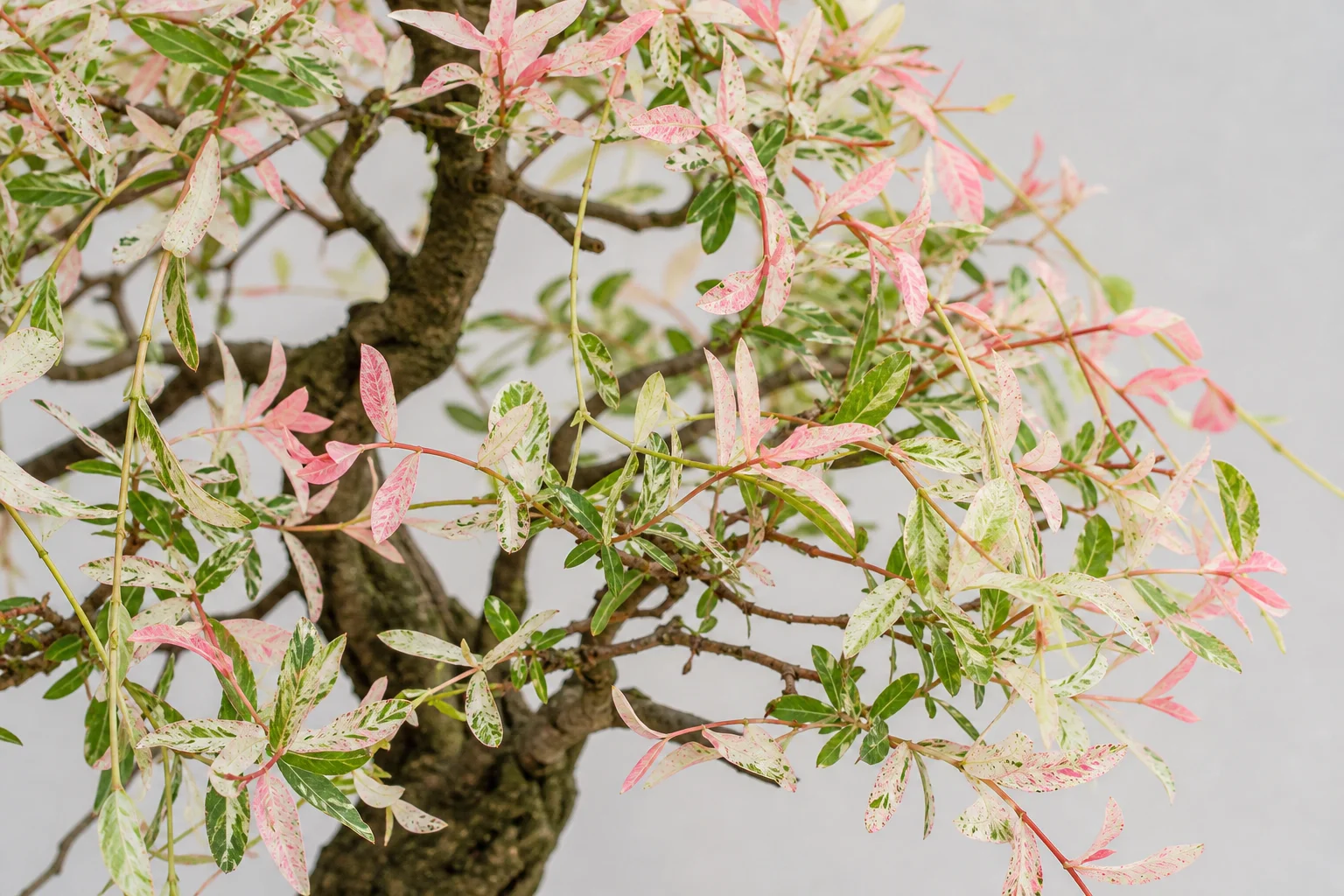
SalixVigorous, water-loving, fast-growing — and challenging for bonsai precisely because of that vigour. The species that breaks every conventional rule about bonsai water management.
Wisteria
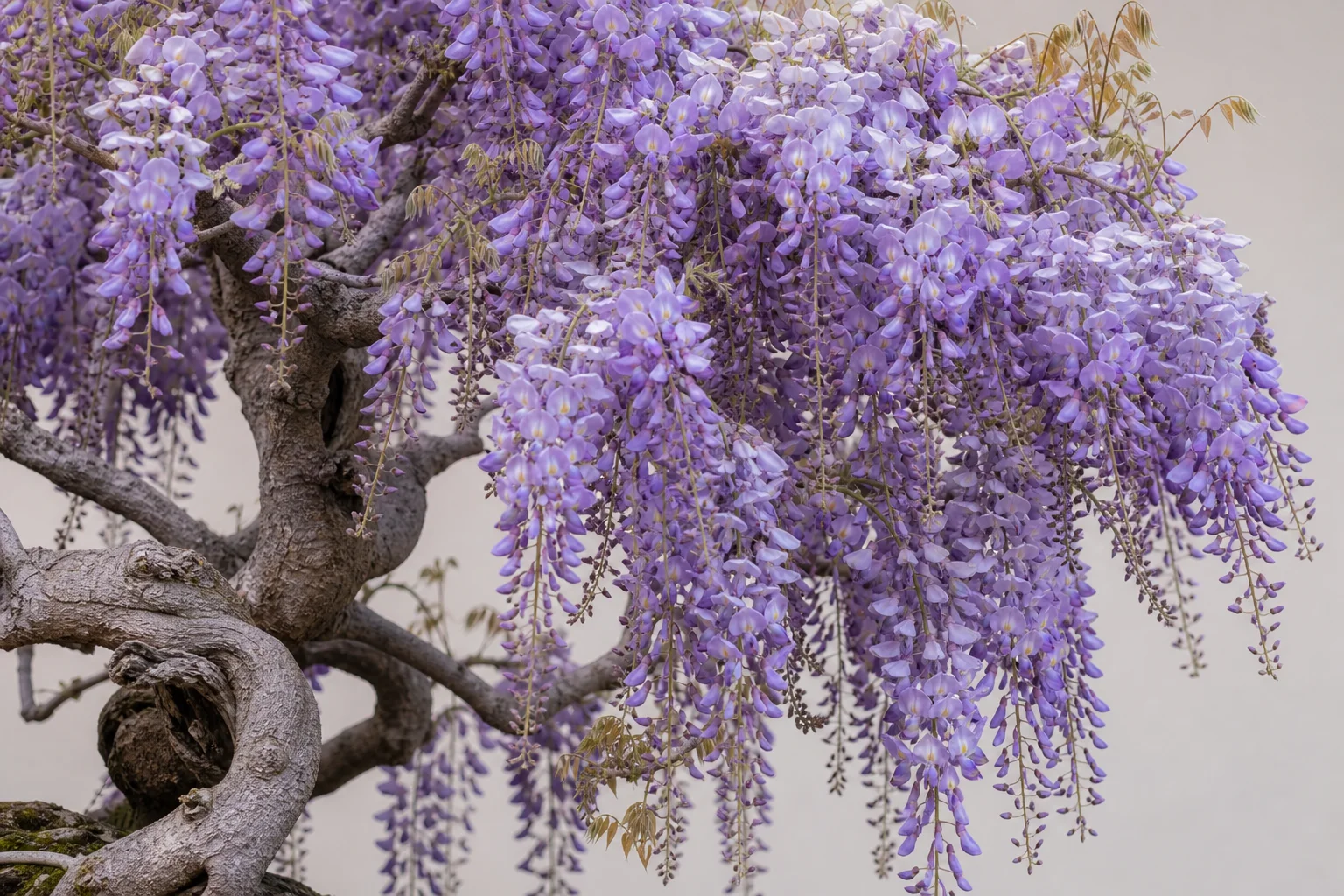
Wisteria floribundaPendulous racemes of lavender, white, or pink flowers in May–June — the most spectacular flowering bonsai when it works, and the most frustrating when it doesn't.
Arakawa maple
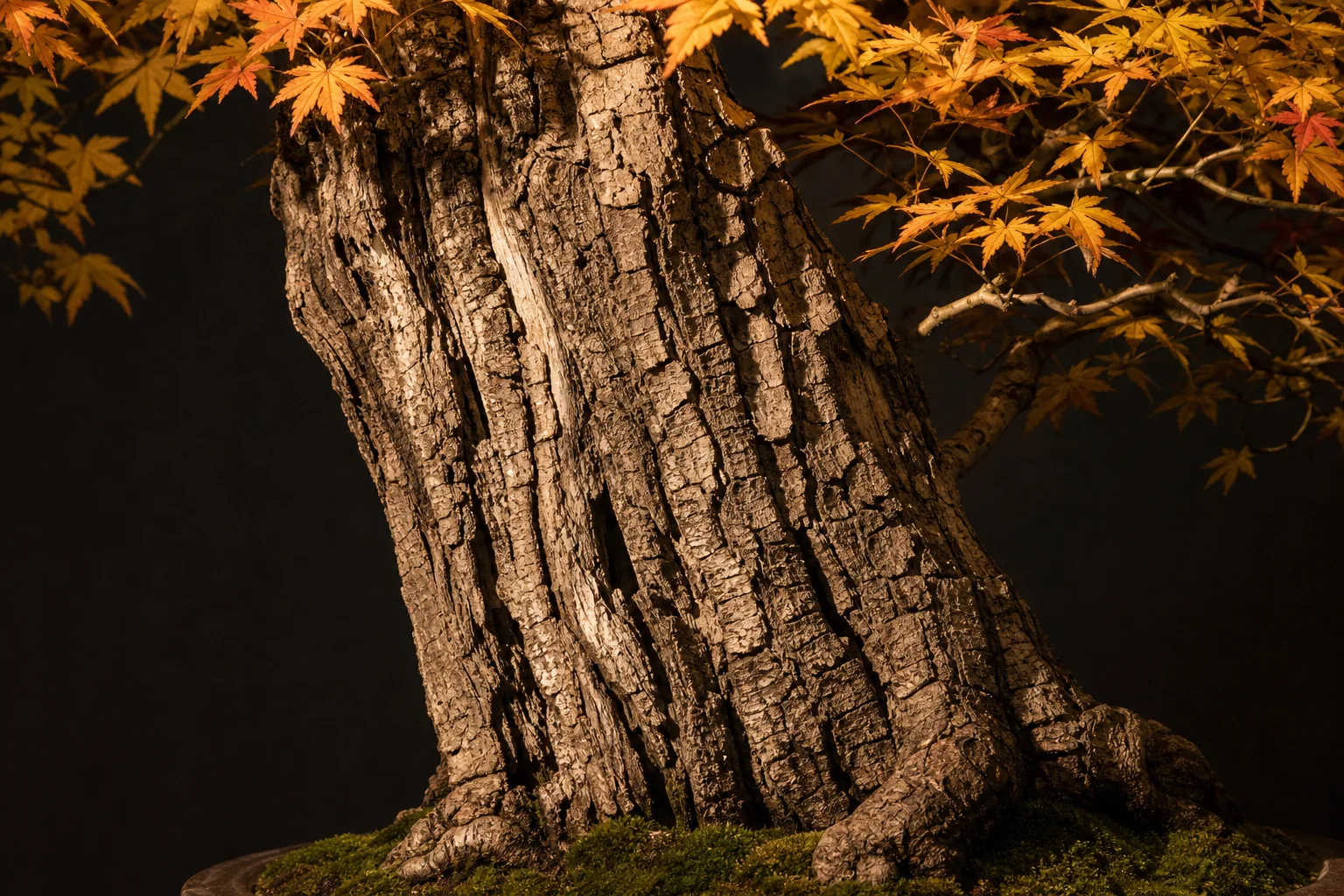
Acer palmatum 'Arakawa'The rough-bark Japanese maple. Develops corky deeply fissured bark unique among palmatum cultivars — trunk character that takes other species 50 years to acquire.