Serissa bonsai care
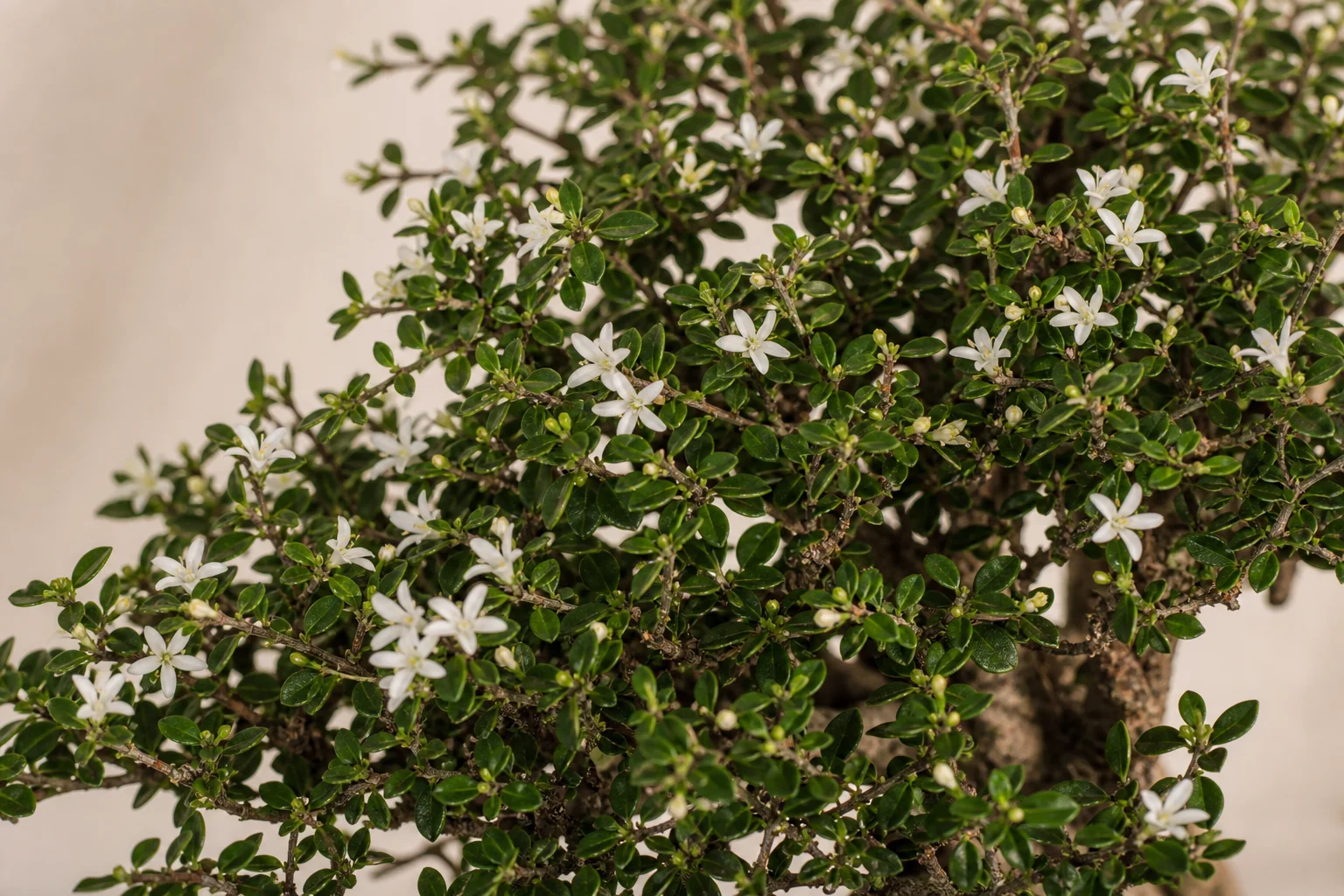
Serissa japonicaSmall white star-shaped flowers year-round, tiny dark leaves, refined twiggy habit — and a reputation as the most temperamental indoor bonsai you can buy. The drama queen of the indoor world.
Water
Every 2 days
check daily in summerLiquid feed
Every 14 days
growing seasonSolid feed
Every 28 days
slow releaseRotate
Every 7 days
even canopy growthSerissa has earned its reputation. The species produces small white star-shaped flowers (hence the Japanese name "tree of a thousand stars") almost continuously through the year, develops fine ramification suitable for refined small-scale bonsai, has naturally tiny leaves that need no reduction, and looks beautiful when thriving. It also drops its leaves at the slightest excuse — a change in light, temperature, watering routine, or even moving the pot to a slightly different location can trigger dramatic defoliation that takes weeks to recover from.
Some Serissa losses are spectacular. A tree thriving in a warm bright room may shed all its leaves within 72 hours of being moved 1 metre to a different position. A tree that flowered prolifically all summer may stop flowering in autumn and not resume for six months. A repotting that would barely register on ficus can put Serissa into a sulk that lasts through winter. The plant's nickname among experienced indoor bonsai growers is unprintable.
The species' Latin name (Serissa foetida — current name Serissa japonica) refers to the smell of the crushed foliage, which is unpleasant. Don't crush the leaves while pruning.
Despite all this, Serissa is genuinely beautiful when it works, and many growers keep them successfully for years once they understand the temperament. The art is consistency. Pick a position with the right light, temperature, and humidity, water consistently, and don't move the tree. Trees left alone in good conditions for years can produce some of the finest refined small-scale indoor bonsai available.
This species is not for new growers. Try Schefflera, ficus, or jade first. After 2–3 years of successful indoor bonsai cultivation, Serissa becomes a reasonable challenge.
Native to southern China and Southeast Asia. Long cultivated in China as small ornamental and bonsai plants. The species has been a feature of Chinese bonsai (penjing) tradition for centuries, particularly in the Lingnan style of southern China. Several closely related Serissa species exist but S. japonica/foetida is the standard for bonsai.
Seasonal calendar
Timing is for South East England. Select your region above to see adjusted guidance.
- Maintain humidity in heated rooms
- Don't move the tree
- Continue stable conditions
- Light monthly feeding
- Begin slightly more regular watering
- Resume bi-weekly feeding
- Repotting window opens — accept post-repot leaf drop
- Active growth resumes
- Main pruning window if needed
- Flowering may begin or continue
- Continue pinching
- Watch for spider mites
- Active growth and flowering
- Maintain consistent conditions
- Continue care routine
- Flowering may continue
- Begin reducing feeding mid-month
- Maintain humidity
- Reduce watering as light decreases
- Continue stable position
- Establish winter routine
- Monthly feeding only
- Minimal interventions
- Don't move the tree
Watering
Water consistently and carefully. The species is sensitive to both extremes — overwatering causes root rot, underwatering causes catastrophic leaf drop. The window between is narrower than for most indoor bonsai.
Water when the surface starts to dry, typically every 2–3 days indoors. Don't let pots dry significantly between waterings. Don't saturate.
Humidity matters significantly. The species needs 50%+ humidity for sustained health. UK heated winter rooms (often 30–40% humidity) gradually weaken Serissa over months — flower production drops, foliage thins, eventual decline. Humidity tray, daily misting, or grouping with other plants is essential.
Use filtered or rainwater where possible. The species is moderately sensitive to alkaline conditions.
Feeding
Light feeding. Half-strength liquid feed every two weeks from April through October. Reduce to monthly through winter at quarter strength.
Serissa responds to consistent moderate feeding. Heavy feeding produces vigorous growth but reduces flowering. The species' charm is the constant small flower production rather than vigorous foliage — restrained feeding maintains the flowering character.
Avoid high-nitrogen formulations. Balanced or slightly high-PK feeds work better.
Soil & Repotting
Free-draining but moisture-retentive. The species needs both drainage and moisture availability.
50% akadama, 30% pumice, 20% lava is reliable. Generic bonsai mixes work. The species accepts slightly heavier substrates than jade or bougainvillea — pure pumice would be too dry.
Repot every 2–3 years. The window is late spring (April–May). Serissa tolerates root work less well than most indoor bonsai — remove no more than a third of the root mass on healthy trees.
After repotting, the species frequently drops all foliage within days. This is normal. New leaves emerge within 4–6 weeks if conditions are maintained. Don't panic; don't move the tree; don't increase watering. Maintain humidity and patience.
Don't combine repotting with major pruning. Serissa needs all its energy for one or the other.
Pruning
Serissa pruning is forgiving of cutting itself — the species back-buds reliably and tolerates moderate cutbacks. The challenge is the environmental response to the work.
Through the growing season, pinch new shoots back to 2–3 leaves once 4–5 develop. Pinch every two to three weeks. The species' fine ramification develops with consistent technique.
Major structural pruning in late spring after the tree has settled into active growth — typically May. Avoid heavy pruning in winter or after any environmental change.
Don't crush the foliage while pruning — the unpleasant smell will linger on hands and tools.
Defoliation isn't a useful technique on Serissa. The species defoliates itself spontaneously enough that intentional defoliation produces no benefit and adds stress.
Wiring & Styling
Wire after new growth hardens. Bark is thin — apply loosely and check fortnightly. Aluminium for almost all work; small gauge for refined small specimens.
The species' fine ramification means most styling is achieved through pruning rather than wire. Major wire applications are uncommon on mature Serissa.
Informal upright is the natural fit. The species' fine ramification suits broom-style and clump compositions. Cascade and semi-cascade are uncommon but possible on suitable material.
The species' main aesthetic assets are the fine ramification, small dark leaves, and continuous flower display. Styling should emphasise these — open compositions with visible twigging and clear flowering zones rather than dense closed canopies.
Forest plantings work but require considerable effort given the species' temperament.
Winter care
Indoor permanently in the UK. Minimum temperature 5°C — but happier above 12°C. Keep well away from cold windows and draughts.
Light: bright indirect to morning direct. The species can suffer in intense afternoon sun behind glass. East-facing or filtered south-facing windows work well.
Humidity is the most critical environmental factor for long-term success. Without supplementary humidity, Serissa gradually declines through UK winters even with otherwise perfect care.
Don't move the tree. Once you've found a position that works, leave it there year-round. Some growers position Serissa with reference points (specific tile, marked spot) to ensure the tree returns to exactly the same place after any necessary repotting or maintenance.
Propagation
Easy from semi-hardwood cuttings any time during warm conditions, with rooting hormone — high success rate. Air layering works well. From seed possible but rarely used. Most UK Serissa material is purchased as mass-produced imports or from specialist suppliers.
Common problems
Mostly environmental and stress-related. The species' temperament means many "problems" are actually normal responses to changes that wouldn't affect tougher species.
Sudden defoliation
Symptoms: Tree drops most or all leaves within days.
Cause: Environmental change — moved tree, change in temperature, draft, change in watering, dust on leaves wiped off, anything really. The species earned its drama queen reputation.
Solution: Don't panic. Maintain humidity. Don't change anything else. Don't water more than usual (overwatering is the second mistake new growers make). New leaves emerge within 4–6 weeks if root system is healthy. If new leaves don't appear within 8 weeks, examine roots.
Failure to flower
Symptoms: Tree produces foliage but few or no flowers.
Cause: Insufficient light, overfeeding (particularly nitrogen), or environmental stress.
Solution: Maximise light. Reduce nitrogen feeding. Maintain consistent conditions. Stressed Serissa stops flowering before showing other symptoms — flowering is the species' luxury function and is reduced under any stress.
Root rot from overwatering
Symptoms: Tree weakens, leaves yellow and drop, eventual collapse; substrate sour-smelling.
Cause: Watering too frequently, particularly during periods when the tree isn't actively growing.
Solution: Reduce watering. Improve drainage. The species has narrow water tolerance — slightly drier is better than slightly wetter for survival.
Spider mites in dry winter air
Symptoms: Fine stippling on tiny leaves; eventual yellowing.
Cause: Heated UK winter rooms below 40% humidity.
Solution: Raise humidity to 50%+. Wipe foliage if practical (be careful — the foliage is delicate and the smell is unpleasant). Neem oil if persistent.
Loss of refined ramification
Symptoms: Tree grows but produces longer internodes; the fine twiggy character is lost.
Cause: Inconsistent pruning combined with overfeeding.
Solution: Pinch consistently every two weeks during growth. Reduce feeding to quarter strength. The fine ramification builds back gradually over 2–3 seasons with consistent technique.
Unpleasant smell when pruning
Symptoms: The Latin species name foetida is accurate.
Cause: The species produces volatile compounds in foliage and roots that smell unpleasant when crushed or cut.
Solution: Don't crush leaves during pruning. Use sharp clean tools that cut without crushing. Wash hands and tools after work. Some growers wear gloves for Serissa work specifically.
Popular cultivars
Current accepted name. The standard for bonsai work.
Older botanical name still widely used on plant labels. Same plant. The foetida refers to the unpleasant smell of crushed foliage.
Variegated cultivar with cream-white margins on small leaves. Striking but slightly less vigorous than the species.
Cultivar with white-edged leaves. Popular for bonsai.
Pink-flowered cultivar. Less common but available from specialist suppliers.
Double-flowered cultivar with snow-white blooms.
Track your Serissa with Kentai.
Collection tracking, care logs and photo history are free — no card, no time limit.
More care guides
Chinese sweet plum
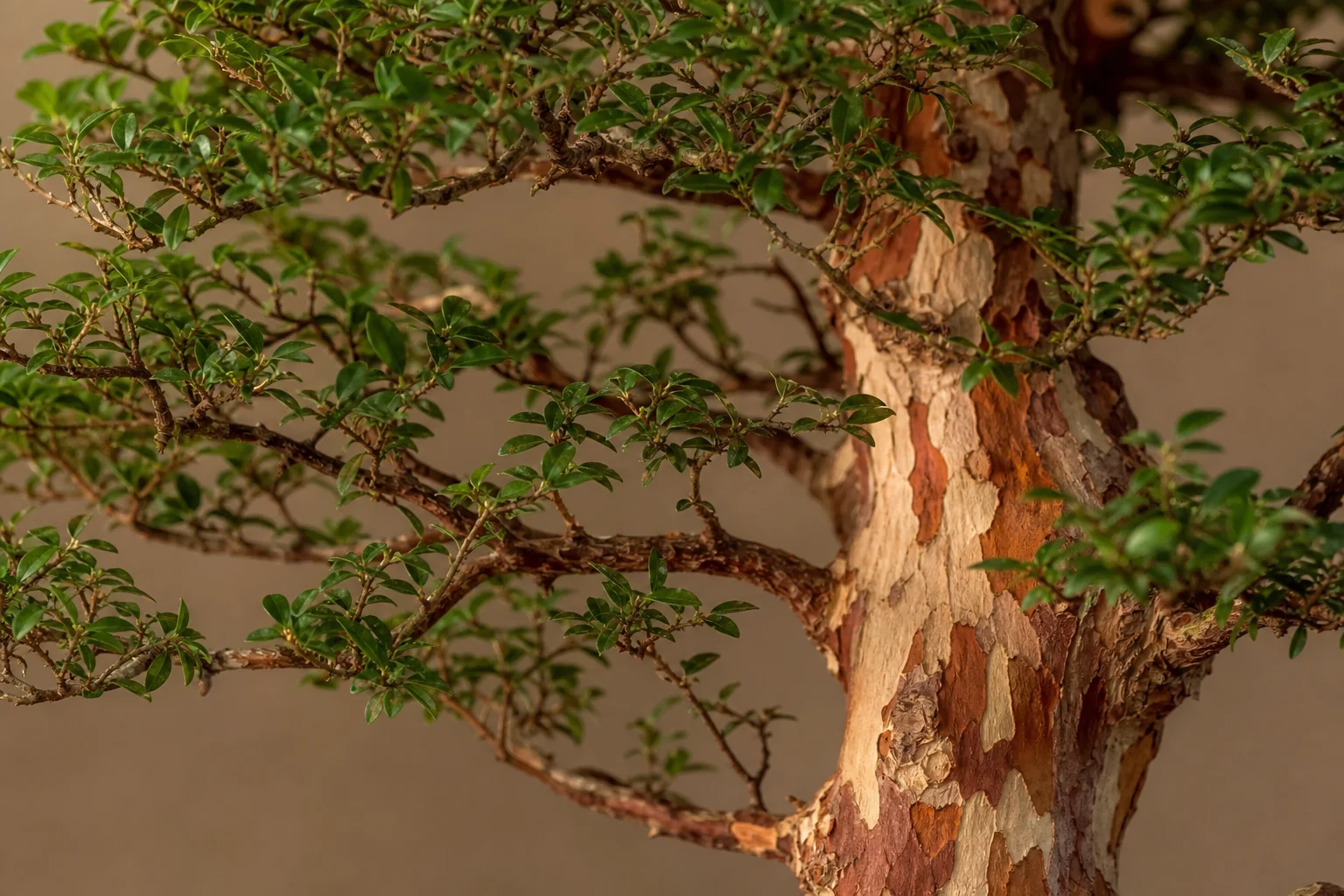
Sageretia theezansThe other indoor bonsai. Distinctive peeling bark, tiny leaves, and a more refined character than the mass-market ficus.
Dwarf jade
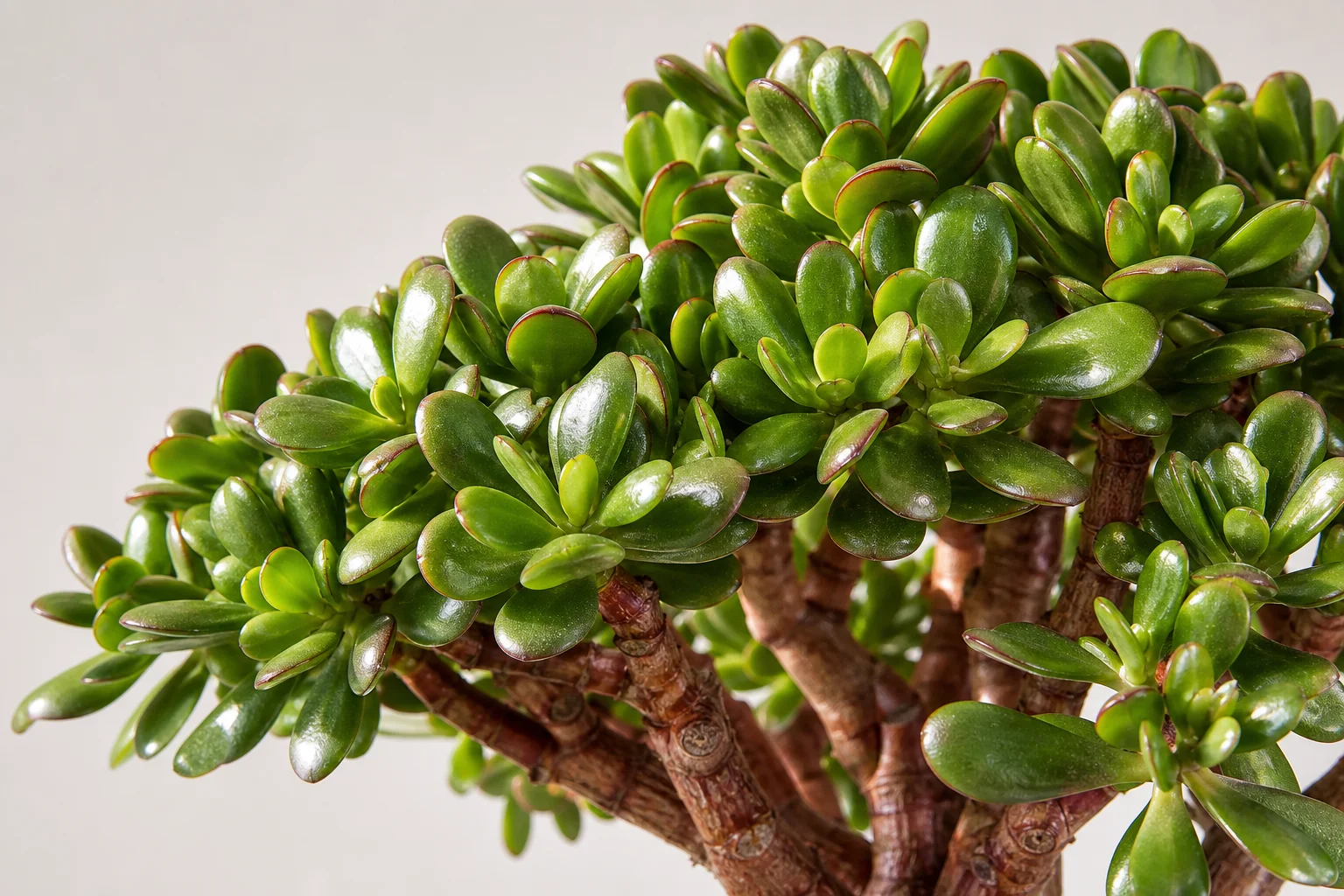
Portulacaria afraThe succulent bonsai. Drought-proof, sun-loving, almost impossible to kill, and fundamentally unlike any other species in your collection.
Dwarf umbrella tree
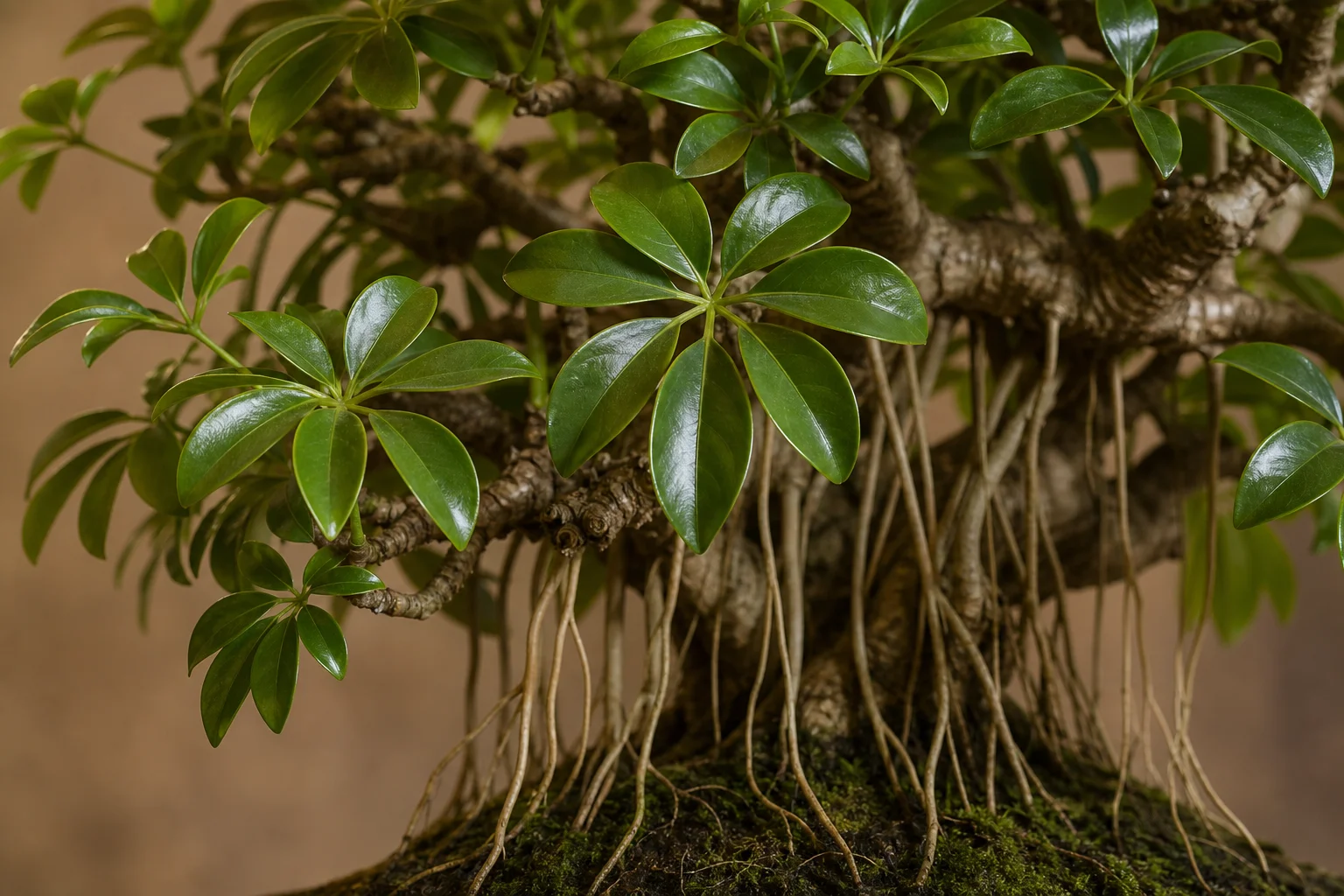
Schefflera arboricolaThe banyan-style indoor bonsai. Aerial roots, compound leaves arranged in umbrella patterns, almost impossible to kill — and one of the few species that genuinely lives up to its "easy indoor bonsai" marketing.