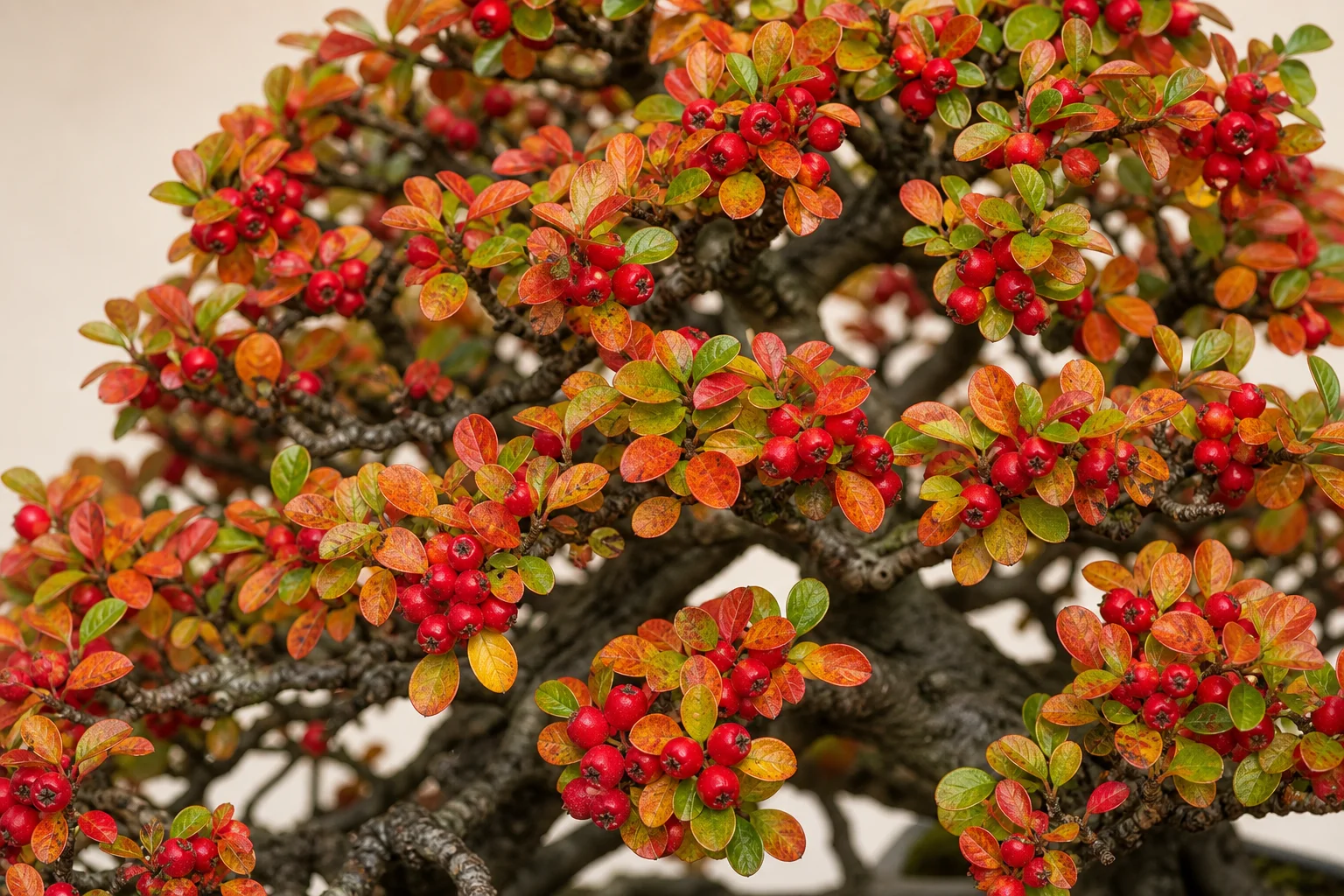
Cotoneaster bonsai care
Cotoneaster horizontalisSmall leaves, spring flowers, red berries through autumn and winter — and easy. The flowering shrub that thinks it's a bonsai already.
Water
Every 1 day
check daily in summerLiquid feed
Every 7 days
growing seasonSolid feed
Every 28 days
slow releaseRotate
Every 14 days
even canopy growthCotoneaster is a starter bonsai that genuinely deserves the recommendation. The leaves are naturally tiny (no reduction work needed), the herringbone branch structure on Cotoneaster horizontalis looks designed for bonsai, the small white-and-pink spring flowers cover the tree in May, and the red berries persist through autumn and into winter. All of this on a plant that grows in every UK garden, tolerates clumsy beginners, back-buds reliably, and costs almost nothing as starter material.
There are two main cotoneasters used for bonsai: C. horizontalis (the herringbone-branched species widely planted on walls and banks, semi-evergreen in mild winters) and C. microphyllus (smaller leaves, more genuinely evergreen, denser habit). Both are excellent. C. horizontalis is more readily available; C. microphyllus is slightly more refined.
The species' main limitation is scale — cotoneasters are naturally small-trunk plants and developing serious trunk girth takes time. They work best as shohin (small) and mame (very small) bonsai rather than large specimens.
Native to mountainous central China, where various Cotoneaster species grow as low-spreading shrubs on rocky slopes. C. horizontalis was introduced to Western gardens in the late 1870s and has been widely planted ever since, naturalising in some UK regions. Hundreds of species in the genus, of which a dozen or so are commonly grown for bonsai.
Seasonal calendar
Timing is for South East England. Select your region above to see adjusted guidance.
- Structural pruning while dormant
- Plan repotting
- Repot as buds swell
- Final winter pruning
- Complete repotting
- First buds break
- Leaves emerge
- Begin daily watering
- First slow-release feed
- Flowering — leave undisturbed
- Start weekly liquid feed
- Post-flowering pruning if needed
- Pinch new shoots
- Wiring window opens
- Twice-daily watering in heat
- Berries forming
- Continue pinching
- Reduce nitrogen feeding mid-month
- Berries colouring
- Switch to low-N autumn feed
- Berries fully coloured
- Autumn leaf colour
- Berries provide main aesthetic interest
- Leaf drop (partial in mild winters)
- Berries persist
- Structural pruning
- Berries provide winter interest
Watering
Daily through the growing season. Cotoneasters tolerate brief dryness without serious damage but consistent dryness causes leaf yellowing and early drop. Twice daily in summer heatwaves for trees in shallow pots.
In winter, regular checking — semi-evergreen species continue mild transpiration through mild winters, and the persistent berries indicate ongoing physiological activity.
Tap water of any hardness is fine.
Feeding
Weekly liquid feed from late April through to mid-September. Slow-release organic pellets in spring and again in early summer. For flowering and fruiting, ensure adequate phosphorus and potassium — a balanced or slightly high-PK feed produces better display than high-nitrogen feeds.
Reduce nitrogen from late August. The species hardens well for winter with restrained late feeding.
Soil & Repotting
Free-draining and tolerant. Cotoneaster is unfussy about substrate.
60% akadama, 30% pumice, 10% lava is reliable. The species tolerates a wide range of mixes including cheaper development substrates.
Repot every 2–3 years for young trees, every 3–4 for mature specimens. The window is mid-February through early April — wider than for most species. Repot as buds swell.
Cotoneaster tolerates aggressive root work — up to half the root mass on healthy trees. Comb roots radially, prune cleanly, settle into fresh substrate.
Garden-centre material being transitioned to bonsai is straightforward to work with — buy in spring, repot the following winter into a development pot, and begin styling in year two.
Pruning
Cotoneaster pruning is easy and the species back-buds reliably on old wood.
Structural pruning in late winter, or after flowering (mid-June) if you want to preserve next year's flower buds. Through the growing season, let new shoots extend to 4–5 leaves then cut back to 2. Pinch every two to three weeks.
The species flowers on previous year's growth, so aggressive pruning eliminates the next year's display. If flowers and berries are a priority, leave some shoots to extend through the previous summer.
Defoliation works on healthy trees but isn't usually necessary — the leaves are already small.
Wiring & Styling
Wire after leaves harden in late spring or on bare branches in winter. Cotoneaster bark is fairly forgiving but checks should be frequent — the species grows fast and wire can bite in within weeks during active growth. Aluminium for most work.
The natural herringbone branch pattern of C. horizontalis means many growers do minimal wiring on this species — clip-and-grow technique alone produces good ramification.
Informal upright is the most common style. Cascade and semi-cascade suit the species' naturally sprawling habit particularly well — C. horizontalis is almost naturally a semi-cascade plant. Root-over-rock plantings work beautifully because the species' roots are vigorous and quickly conform to stone.
Forest plantings of multiple young cotoneasters work well. Twin-trunk and clump styles are also natural fits.
The species' small scale makes it ideal for shohin (under 25cm) and mame (under 10cm) bonsai. Large specimens are difficult — the natural growth habit doesn't really produce substantial trunks.
Winter care
Fully hardy across the UK with no protection needed. Berries persist on the tree through autumn into winter and are a major aesthetic feature.
C. horizontalis is semi-evergreen — it retains some leaves through mild UK winters but drops them in colder spells. Don't try to keep all leaves through winter; the species is happiest dropping back to a clean structure in dormant periods.
Never bring indoors.
Propagation
Easy from semi-hardwood cuttings in June with rooting hormone — high success rate. Air layering works well in late spring. From seed possible but slow and produces variable seedlings (most cotoneaster species are apomictic, so seed-grown plants are usually similar to parent).
Common problems
Cotoneaster is robust but shares some Rosaceae diseases — fireblight is the most serious to know about.
Fireblight (Erwinia amylovora)
Symptoms: Sudden blackening and wilting of shoots, looking scorched, often with weeping cankers.
Cause: Bacterial disease affecting Rosaceae. Cotoneaster is among the more susceptible genera.
Solution: Cut back well below visible damage into healthy wood. Disinfect tools between cuts. Severe infections may require destroying the tree to prevent spread. Burn or bin all affected wood. Report serious outbreaks if you grow other Rosaceae nearby.
Woolly aphid
Symptoms: White cottony patches on stems and branch joints, sticky honeydew.
Cause: Common aphid species on cotoneaster.
Solution: Wash off with strong water jet, repeat weekly. Systemic insecticide if persistent. Inspect new acquisitions before adding to collection.
Scale insects
Symptoms: Small brown or white bumps on stems, sometimes with honeydew and sooty mould.
Cause: Various scale species attack cotoneaster.
Solution: Manual removal where possible. Horticultural oil in winter. Systemic insecticide for severe infestations.
Powdery mildew
Symptoms: White coating on leaves in late summer.
Cause: Humid stagnant air.
Solution: Improve airflow. Remove worst-affected leaves. Milk-water spray as preventative.
Failure to flower
Symptoms: Tree grows well but doesn't flower.
Cause: Usually over-pruning the previous summer — flowers form on previous year's growth.
Solution: Leave some shoots to extend through summer rather than pinching every shoot. The trade-off between refined ramification and floral display is real on this species.
Berry drop
Symptoms: Red berries fall prematurely in autumn.
Cause: Sometimes drought stress, sometimes natural for the year, sometimes bird predation.
Solution: Maintain consistent watering. Net the tree if birds are a problem (a single blackbird can strip a small cotoneaster in an afternoon). Some berry loss is normal and not concerning.
Popular cultivars
Wall cotoneaster — the most common UK garden species. Distinctive herringbone branch pattern, semi-evergreen, small pink flowers. The standard for cotoneaster bonsai.
Small-leaved cotoneaster. Truly evergreen, smaller leaves than horizontalis, denser habit. Excellent for refined work and shohin.
Native UK species — found wild only on Great Orme in Wales. Larger than horizontalis. Conservation rather than bonsai significance.
Prostrate evergreen species. Works for cascade and rock plantings.
Cranberry cotoneaster — larger red berries. Less commonly used for bonsai but striking when fruiting.
Track your Cotoneaster with Kentai.
Collection tracking, care logs and photo history are free — no card, no time limit.
More care guides
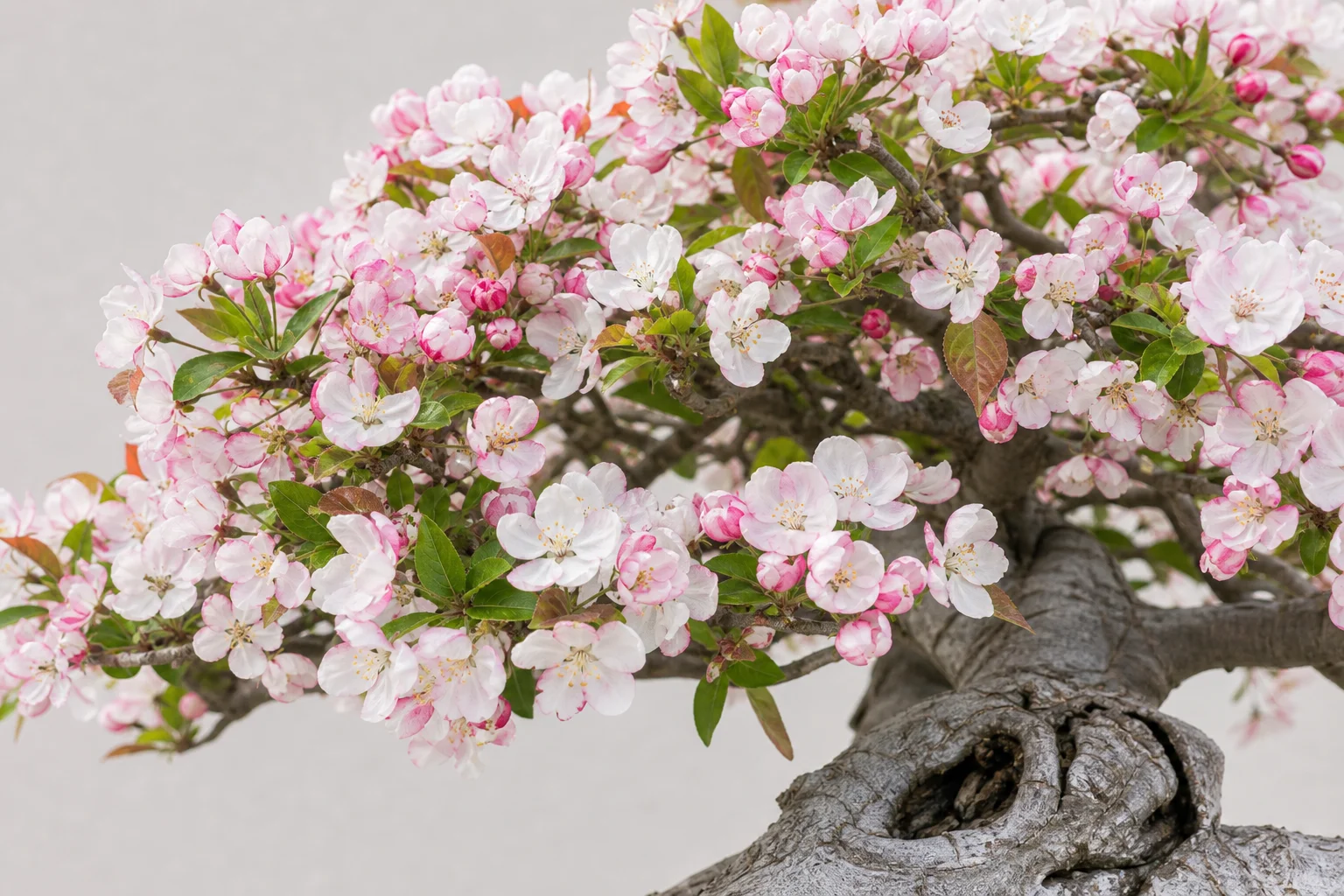
Crab apple
Malus sylvestrisPink-and-white spring blossom, small bright fruit in autumn, and the genuine theatre of a tree that performs differently every month of the year.
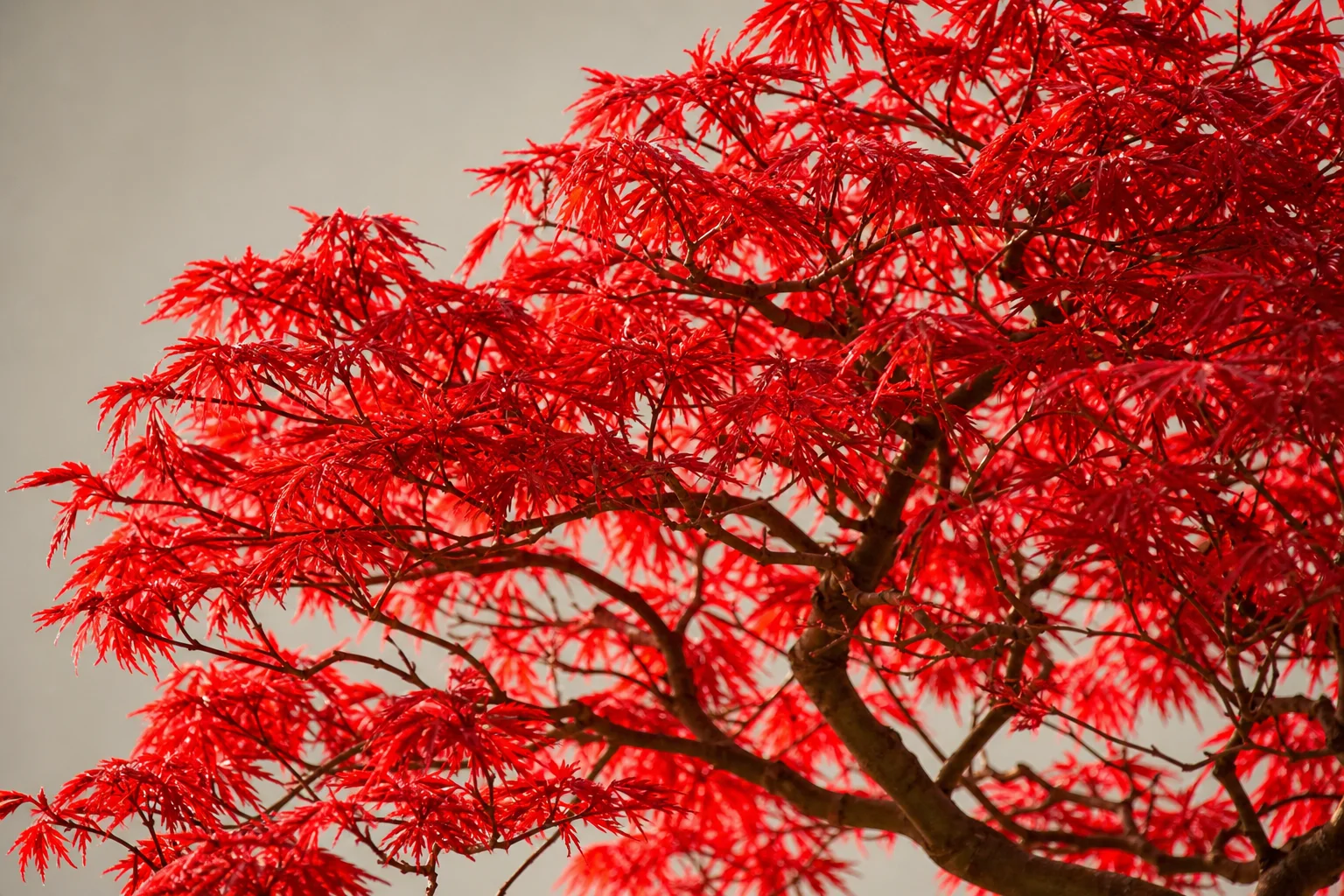
Deshojo maple
Acer palmatum 'Deshojo'Brilliant scarlet spring foliage that fades to green-bronze through summer and returns to red in autumn. The most theatrical of the common Japanese maple cultivars.
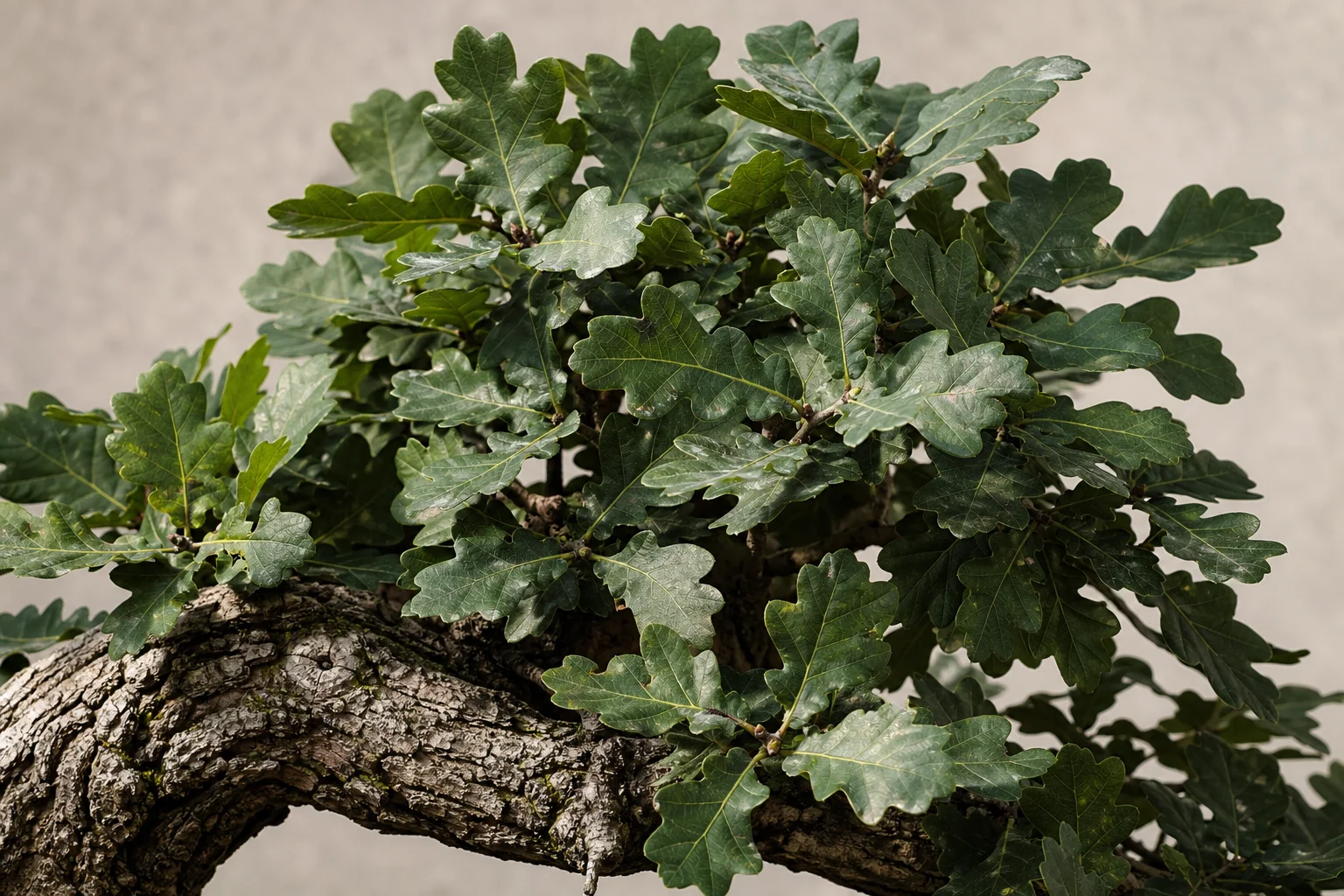
English oak
Quercus roburThe defining tree of the English landscape. Slow, deliberate, demanding patience — and unmatched in presence at full maturity.