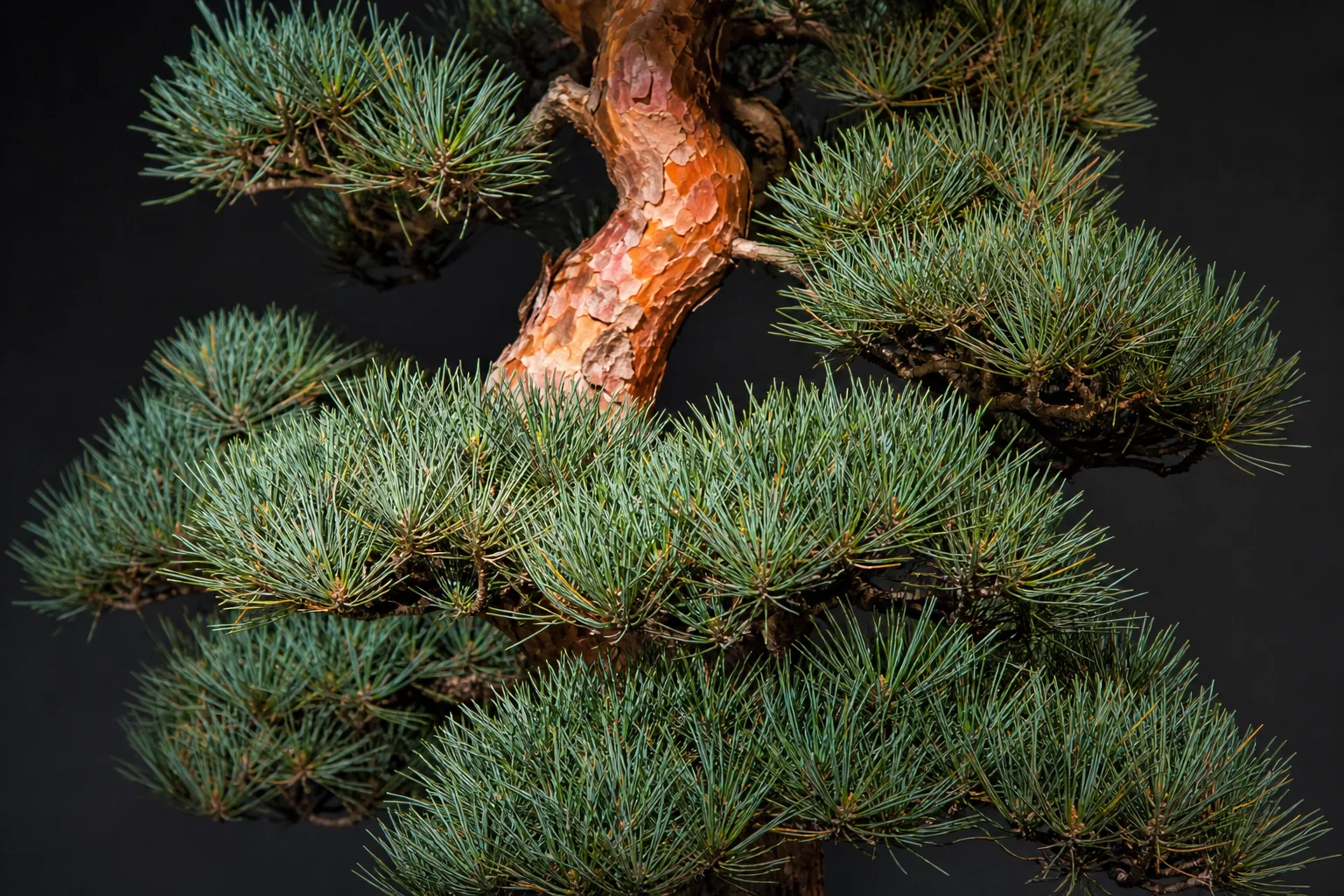
Scots pine bonsai care
Pinus sylvestrisThe UK's native pine — orange-flaked bark, blue-green needles, and a natural affinity with rocky, windswept styling.
Water
Every 3 days
check daily in summerLiquid feed
Every 14 days
growing seasonSolid feed
Every 28 days
slow releaseRotate
Every 30 days
even canopy growthScots pine is the only pine truly native to the British Isles, and it makes one of the great bonsai species. Mature wild trees in the Cairngorms have everything you want in a bonsai: pronounced taper, deeply fissured plates of orange-pink bark, dead silver branches, and crowns shaped by centuries of wind. Translating that aesthetic into a pot is the work of decades, but Scots pine is one of the few species where collected mountain material can give you most of that character on day one.
The species has two distinct phases as bonsai. Years one to ten are about establishment — getting collected or nursery material onto its roots, building the basic structure, and learning the tree's responses. Years ten onwards are about refinement — short needles, fine ramification, deadwood work, and the slow accumulation of bark plating. It is not a fast species. It does not produce dramatic results in any one season. It rewards consistency and patience and punishes nothing more harshly than impatient over-attention.
For UK growers, Scots pine has a particular advantage over Japanese black pine and Japanese white pine: it's adapted to exactly the climate you have. No special winter protection, no concerns about cold-damp combinations, no need to fuss over needle hardening. It just grows.
Native across northern Europe and Asia from Scotland to Siberia. In the UK its natural strongholds are the Caledonian pine forests of the Scottish Highlands — Glen Affric, Abernethy, Glen Tanar — where remnant ancient woodland holds genuinely old trees. Adapted to poor, acidic, free-draining soils, full exposure, and prolonged cold.
Seasonal calendar
Timing is for South East England. Select your region above to see adjusted guidance.
- Structural pruning if needed
- Plan collection of any wild material
- Major styling work on dormant trees
- Wire structural branches
- Collect wild material if planned
- Begin watching for root activity before repot
- Repot if root tips visible
- Pot up collected material into recovery boxes
- Candle pinching begins late month
- First light feeding
- Complete candle work
- Continue light feeding
- Needles extending — leave undisturbed
- Maintain dry/wet cycling on watering
- Last feed early month
- Begin assessing needle balance for autumn thinning
- Needle pulling — thin old needles
- Stop feeding
- Wiring window opens
- Structural pruning begins
- Heavy wiring season
- Deadwood work — carve jin and shari
- Continue wiring and styling on dormant trees
- Monitor watering — much less needed
Watering
Pines are not maples. The instinct to water daily will kill a Scots pine over a season — overwatering causes root death and the resulting fungal problems are the most common killer of pine bonsai.
Water when the surface of the substrate has dried — usually every 2–4 days in summer, every 4–7 days in spring and autumn, every 7–14 days in winter. When you water, water thoroughly until it runs from the drainage holes. Then let the substrate dry meaningfully before the next watering. Wet-dry cycling is what pine roots want.
The exception is freshly collected material in its recovery years — for the first one or two springs after collection, water more attentively as the tree rebuilds fine roots. Once established, ease back into the standard cycle.
Tap water is fine. Pines tolerate hard water without complaint.
Feeding
Feed cautiously. Heavy feeding produces long needles, long internodes, and weak branches — the opposite of what you want on a refined pine. Half-strength liquid feed every two weeks from May through August. Slow-release organic pellets once in spring (April) and once in early summer (June). Stop feeding by early September.
Trees in active development (post-collection recovery or pushing for trunk thickness) can be fed more aggressively. Refined trees being maintained for show should be fed sparingly — some of the best Scots pine bonsai in the UK receive almost no nitrogen for years at a time.
Soil & Repotting
Very free-draining, acidic to neutral. Scots pines are adapted to lean substrates and will root rot in anything that holds water for long.
60% pumice, 25% akadama, 15% lava in a fairly coarse grade (2–6mm). For collected material in recovery boxes, pure pumice or pure kiryu works well — both provide maximum drainage and oxygen while roots establish. Avoid any organic-rich potting mixes; they will kill the tree within a season.
Repot every 4–6 years on established trees; longer is fine. The window is later than for deciduous species — wait for clear signs of root activity, typically late March to early May depending on region. Pines tolerate root work poorly and don't want their roots disturbed unless necessary.
Remove no more than a third of the root mass on a healthy established tree, and considerably less on older or collected material. Don't bare-root a pine. Preserve the mycorrhizal fungi in the existing root ball — Scots pines depend on these fungi and a complete bare-root can set a tree back by years or kill it outright.
Collected wild material is a special case. Lift trees in March or April, before bud break. Don't pot directly into a bonsai pot — use a deep wooden recovery box with pure pumice. Allow at least two years (often three to five) before any further root work or styling.
Pruning
Pine pruning is fundamentally different from deciduous pruning, and getting it wrong is the most common reason Scots pine bonsai fail.
The basic seasonal pattern is: candle work in spring, needle thinning in late summer, structural work in autumn.
Candle pinching (May–June): partially or fully remove candles before needles extend. Strong candles can be cut back by half to two-thirds; weaker candles left alone or shortened slightly. This balances vigour across the tree — the weak branches you leave alone get a head start while you set the strong ones back.
Needle pulling (September): remove old needles (last year's growth) to let light into the interior. Leave more needles on weaker branches than on strong ones — this is how you redistribute energy. A pine where every branch has identical needle count will become unbalanced over time as strong branches dominate.
Structural pruning (October–February): remove unwanted branches while the tree is dormant. Major cuts heal slowly; seal them.
Do not pinch candles like deciduous shoots. Do not cut needle bundles in half (it browns the cut ends). Do not "tidy up" a pine in midsummer — let it grow undisturbed between candle pinching and needle thinning.
Wiring & Styling
Wire is essential for pine styling and Scots pines take wire well. Apply in autumn (October–November) after needles have hardened, or in winter on dormant trees. Leave for one to two growing seasons — pine branches set slowly and need time.
Use copper wire for structural branches and aluminium for finer work. Bark is reasonably forgiving but check every few months. On older trees with thick bark, raffia-wrap heavy bends.
Deadwood is a defining feature of mature Scots pine bonsai — jin (stripped dead branches) and shari (stripped trunk areas) read as the centuries of wind damage the species is known for. Don't be afraid to remove a branch to deadwood rather than cutting it flush.
Almost any style works except formal upright (chokkan, which is rare in nature for this species) and broom (alien to the genus). Informal upright with substantial deadwood is the classic. Literati (bunjin) — a tall slender trunk with foliage clustered near the top — suits the species perfectly and references the wild form. Windswept, semi-cascade, and twin-trunk all work. Forest plantings of multiple young trees are particularly fine and look completely natural.
Aim for an aesthetic of weathering and survival rather than youth and vigour. The best Scots pine bonsai look as though they've been through something.
Winter care
Fully hardy across the UK. Scots pines tolerate sustained -25°C in the wild and will not be troubled by anything the UK climate produces. No protection needed.
The only meaningful winter consideration is to avoid sudden temperature swings on south-facing benches in February and March — partial thawing followed by hard refreezing can damage roots in pots. A position with morning sun rather than afternoon sun reduces this risk.
Never bring indoors — even briefly. Pines need their cold rest.
Propagation
From seed (autumn-sown, cold-stratified through winter) — easy and the standard route for nursery production. Cuttings are difficult on most pines and rarely successful with Scots. Air layering is possible but slow and unreliable. The most rewarding sources of Scots pine bonsai material are: collected mountain trees (with landowner permission and respect for wild populations), nursery-grown yamadori-style material, or seedlings grown on for ten to fifteen years before styling.
Common problems
Generally healthy outdoors but can develop fungal root problems if overwatered, and have a few specific pest issues worth knowing.
Phytophthora root rot
Symptoms: Whole-branch or whole-tree collapse; needles dull and grey; soil smells sour.
Cause: Saturated substrate, often combined with cold. The most common cause of death in pine bonsai.
Solution: Usually fatal once symptoms appear. Prevention is the only treatment: very free-draining substrate, restraint with watering, generous drainage holes. If caught very early on one branch, hard repot into bone-dry pumice with aggressive root pruning can sometimes save the tree.
Pine needle cast (Lophodermium)
Symptoms: Old needles develop yellow then brown bands in spring; whole needles drop prematurely.
Cause: Fungal, worse in wet springs and on trees with poor airflow.
Solution: Improve airflow around benches. Remove and bin (not compost) affected needles and all fallen debris around the base. Copper fungicide as a spring preventative if the problem recurs. Healthy, well-spaced trees rarely have severe cases.
Adelgids and aphids
Symptoms: White woolly patches on needles and twigs, or sticky residue from aphids; needles may yellow.
Cause: Common sap-sucking pests on pines.
Solution: Wash off with a strong jet of water. Neem oil or horticultural soap if persistent. Inspect weekly in spring.
Long needles and weak ramification
Symptoms: Needles grow long and lanky; few side branches develop; tree looks loose and immature.
Cause: Overfeeding, especially with high-nitrogen feeds, combined with insufficient candle work.
Solution: Reduce feeding to a minimum for two seasons. Practice careful candle pinching every spring. Needle length will reduce gradually over three to five years.
Dead branch sections
Symptoms: Individual branches die back from the tips inwards.
Cause: Sometimes root issues, sometimes accumulated water damage to wood from poor wound sealing, sometimes simply branch senescence on older trees.
Solution: If single isolated branches, can be carved into jin as a feature rather than a problem. If multiple branches dying simultaneously, suspect root rot and check the substrate immediately.
Slow recovery after collection
Symptoms: Recently collected tree shows no growth or weak growth for a season or two after lifting.
Cause: Normal. Collected pines need time to rebuild fine root systems.
Solution: Wait. Don't repot, don't prune, don't style. Water carefully and feed very lightly. Recovery typically takes 2–4 years. Trees that survive year one usually go on to thrive.
Popular cultivars
The species itself. Collected mountain material from anywhere in northern Britain is the gold standard.
Compact slow-growing cultivar with blue-green needles. Useful for starter trees and shohin work.
Dwarf form with short needles and dense habit. Less character than wild material but useful for refined small bonsai.
Scandinavian provenance, slightly tighter habit. Sometimes available from specialist nurseries.
Track your Scots pine with Kentai.
Collection tracking, care logs and photo history are free — no card, no time limit.
More care guides
Other Pinus guides: Japanese black pine · Japanese white pine · Mugo pine
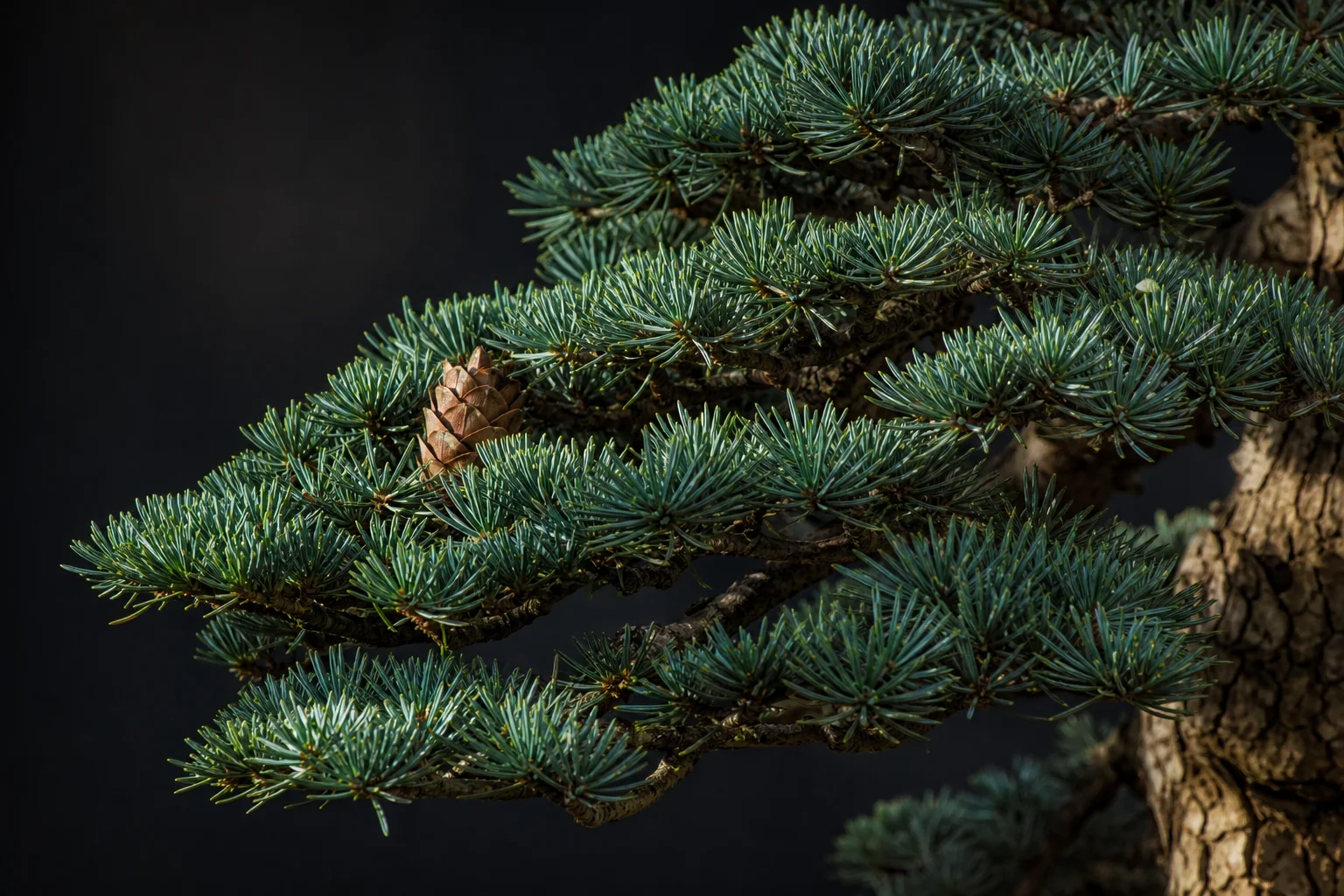
Spruce
PiceaStiff sharp needles arranged singly on woody pegs, distinctive cone display on mature trees, exceptional hardiness. The less-developed conifer worth considering.
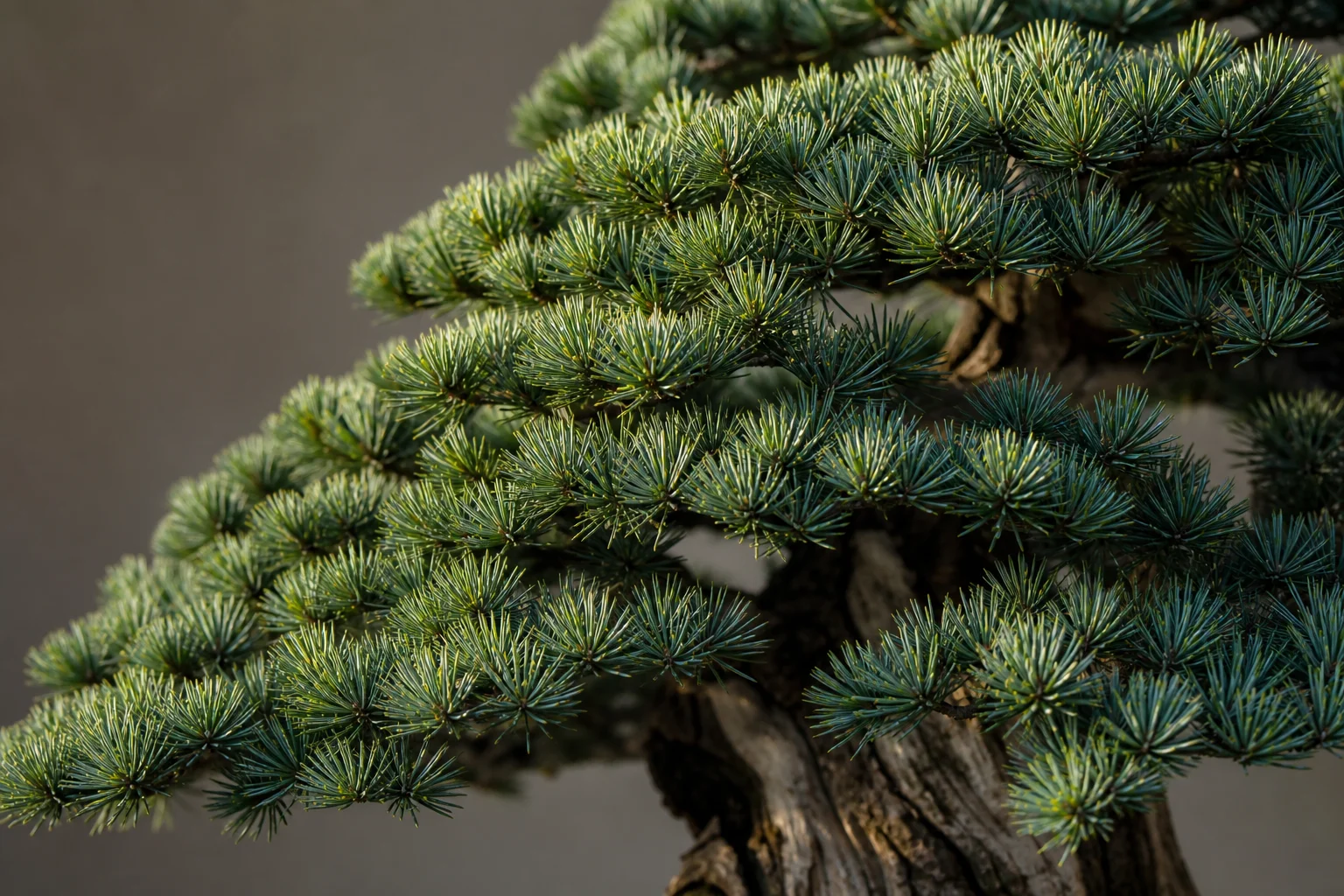
Cedar
CedrusClustered needles in distinctive rosettes, horizontal branching habit, and a presence that few conifers match. Less commonly grown than pines but worth seeking out.
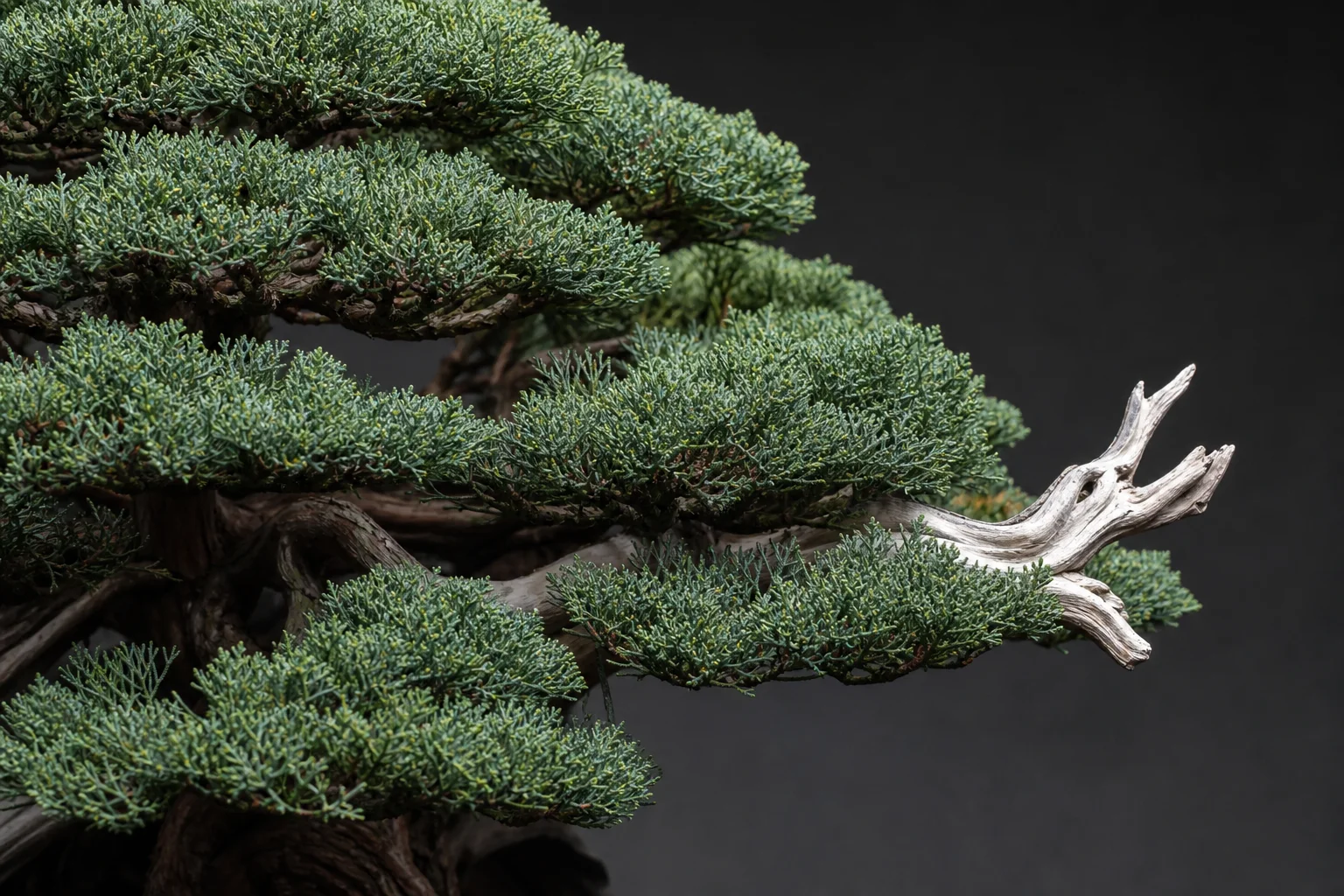
Chinese juniper (Itoigawa)
Juniperus chinensisThe connoisseur's juniper. Finer foliage, more dramatic deadwood potential, and the species behind most world-class juniper bonsai.