Willow bonsai care
SalixVigorous, water-loving, fast-growing — and challenging for bonsai precisely because of that vigour. The species that breaks every conventional rule about bonsai water management.
Water
Every 1 day
check daily in summerLiquid feed
Every 7 days
growing seasonSolid feed
Every 28 days
slow releaseRotate
Every 14 days
even canopy growthWillow is the bonsai species that thrives on the opposite of standard bonsai watering advice. Where every other tree in this catalog needs drainage to survive, willow happily sits in saturated substrate, can be grown with its pot standing in a tray of water, and produces vigorous growth in conditions that would rot any other species. This makes willow easy to keep alive but genuinely challenging to refine.
The cultivation challenges are several. Willows grow fast — far faster than any conventional bonsai species — which makes them difficult to keep at scale. They ramify reluctantly, preferring to extend long shoots rather than build dense fine branching. They have soft thin bark that marks visibly from wire. And many willow species produce long pendulous shoots that resist conventional bonsai styling — the natural weeping habit fights upright forms.
For UK growers, two willow species/cultivars are most suitable for bonsai:
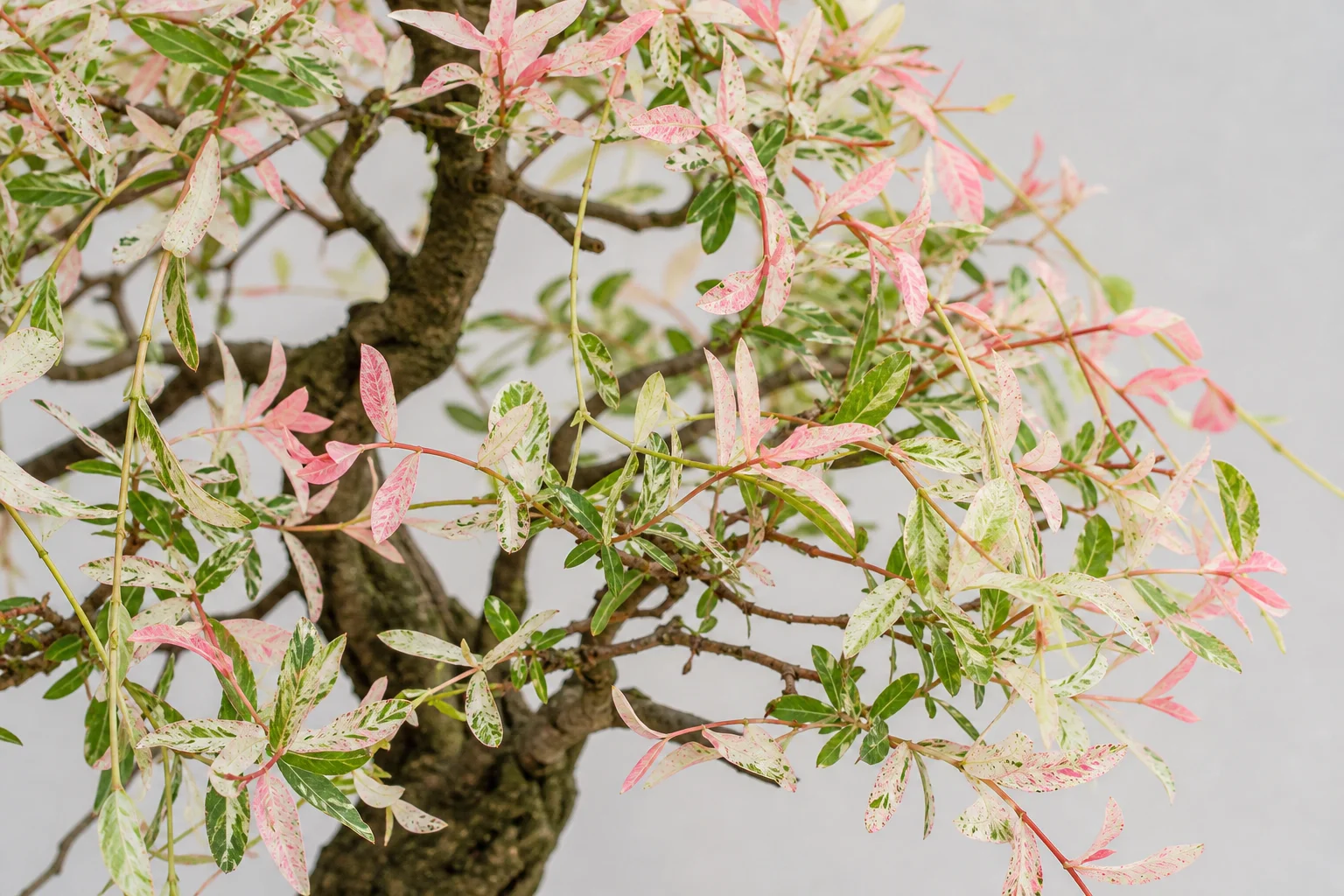
Salix integra 'Hakuro-nishiki' (dappled willow) — variegated cultivar with cream-pink-green foliage, more compact than most willows, naturally suitable for bonsai scale. Widely available in UK garden centres. The standard choice for willow bonsai.
Salix babylonica (weeping willow) — the classic large weeping willow, suitable only for cascade-style bonsai given its growth habit. Spectacular when developed but requires significant material to start with.
For new bonsai growers attracted to willow: try Hakuro-nishiki specifically rather than collected willow material. The cultivar's more controlled habit makes it dramatically easier than wild forms.
Salix is a large genus of around 400 species spread across the temperate and Arctic Northern Hemisphere. UK native willows include S. alba (white willow), S. fragilis (crack willow), S. caprea (goat willow), and many others. The genus is famous for fast growth, easy vegetative propagation (willow stakes are used in flood control and basket making), and water-loving habit. Long associated with watercourse landscapes globally.
Seasonal calendar
Timing is for South East England. Select your region above to see adjusted guidance.
- Major structural pruning while dormant
- Plan year's work
- Begin repotting late month — willow may need annual repotting
- Final winter pruning
- Main repotting window
- Take hardwood cuttings
- Catkins appear on some species
- Begin heavy watering
- First feed
- Leaves emerge
- Start weekly liquid feed
- Begin aggressive pinching
- Wiring window opens — check weekly on fast-growing wood
- Continue aggressive pinching
- Twice-daily or constant watering
- Continue pinching every 1-2 weeks
- Reduce feeding mid-month
- Take semi-hardwood cuttings
- Stop feeding mid-month
- Slightly reduce watering
- Yellow autumn colour
- Continue moderate watering
- Leaf drop
- Final structural assessment
- Heavy structural pruning
- Cuttings season begins
Watering
Heavy and frequent. Willow can be watered daily or even twice daily in summer without issue. The species genuinely loves water and tolerates conditions that would kill any other bonsai.
Many willow growers keep their trees in trays of standing water during summer — the substrate stays moist constantly and willow thrives. This is the only common bonsai species for which this is acceptable.
In winter while dormant, reduce watering but never let the substrate dry completely.
Tap water of any hardness is fine.
Feeding
Weekly liquid feed from late April through to mid-September. Slow-release organic pellets in spring and early summer.
Willow is vigorous and responds dramatically to feeding. The challenge isn't insufficient feeding but rather managing vigour — heavy feeding produces enormous extension that's difficult to control.
Restrained feeding actually suits refined willow bonsai better than aggressive regimes.
Soil & Repotting
Moisture-retentive rather than free-draining — the opposite of most bonsai species. Willow accepts standard substrates but can also be grown in heavier mixes.
50% akadama, 30% pumice, 20% organic component (peat-based compost or composted bark). This is unusual for bonsai but suits willow's preferences. The species tolerates substrates that would kill other bonsai.
Repot every 1–2 years — willow's vigour fills pots faster than most species. The window is mid-February through to early April. Repot as buds swell.
Willow tolerates aggressive root work — up to half the root mass or more on healthy trees. The species recovers very fast and rarely sulks after repotting.
After repotting, water heavily and continue normal moisture-loving regime. Don't worry about overwatering willow.
Pruning
Willow pruning is a matter of managing rather than encouraging growth. The species' vigour means standard "let shoots extend and cut back" approaches produce trees with long internodes and weak ramification.
Through the growing season, pinch new shoots back aggressively — every two weeks or even weekly, after just 2–3 leaves have extended. This is more frequent than for any other species in this catalog.
Structural pruning in late winter (February–March). The species back-buds reliably on old wood and tolerates dramatic cutbacks. Trunk chops work well and produce vigorous response — useful for restarting overgrown specimens.
Defoliation works on healthy trees and helps manage leaf size, but isn't essential given how easy willow is to grow generally.
The species' natural pendulous growth on weeping cultivars means wire is often used to position branches against gravity. Major shoots will simply continue weeping downward if not actively managed.
Wiring & Styling
Wire after new growth hardens in early summer or on bare branches in winter. Willow bark is thin and marks easily — apply very loosely and check weekly during active growth. Aluminium for almost all work.
The species' fast growth means wire bites in dramatically faster than on slower species — sometimes within a single month during summer. Many willow growers avoid wire entirely on refined specimens and rely on directional pruning, accepting the limitations this places on styling.
Cascade and semi-cascade are the natural fits for willow, particularly for weeping cultivars. The species' pendulous habit suggests these styles directly.
For non-weeping cultivars like Hakuro-nishiki, informal upright and clump styles work well. The variegated foliage is a major aesthetic feature.
Formal upright and broom styles fight the species' habit. Forest plantings work but require constant management of vigour.
Winter care
Fully hardy across the UK. Most Salix species shrug off any British winter — the genus is famously cold-hardy.
The main winter consideration is moisture management — willow likes wet feet but saturated cold roots can rot if drainage is absolutely blocked. Standing water is fine if it can drain through eventually.
Never bring indoors.
Propagation
Trivially easy from cuttings — willow's legendary regenerative capacity means almost any pruned shoot will root if pushed into damp substrate. Hardwood cuttings in winter, semi-hardwood in summer, both work. Air layering essentially happens by accident on suitable conditions. From seed possible but rarely used given how easy cuttings are.
Common problems
Generally healthy but with several species-specific issues.
Long internodes and coarse growth
Symptoms: Tree produces long extensions with widely spaced leaves; ramification fails to develop.
Cause: Normal willow vigour combined with insufficient pinching.
Solution: Pinch every 1–2 weeks rather than every 3–4. Reduce feeding to half strength. Accept that willow ramification will never be as fine as elm or zelkova — the species' character is different.
Wire scars on thin bark
Symptoms: Permanent spiral marks visible on bark even after wire removal.
Cause: Willow's fast growth and thin bark combine to produce wire damage faster than on most species.
Solution: Check wire weekly during active growth. Remove and re-apply rather than leaving in place. Consider directional pruning instead of wire on refined specimens.
Willow anthracnose (Marssonina salicicola)
Symptoms: Dark spots on leaves; affected leaves yellow and drop early; twig dieback in severe cases.
Cause: Fungal disease common in damp UK summers.
Solution: Improve airflow. Remove and bin (not compost) affected leaves. Copper fungicide preventatively if recurring. Hakuro-nishiki and other cultivars show variable resistance.
Willow scale
Symptoms: Small white bumps on stems; sticky honeydew; sooty mould.
Cause: Sap-sucking pest common on willows.
Solution: Manual removal where possible. Horticultural oil in winter on bare branches. Systemic insecticide for severe infestations.
Cuttings rooting in pot saucers
Symptoms: Willow shoots in standing water root spontaneously, sometimes producing new plants from prunings.
Cause: Willow's legendary rooting capacity.
Solution: Not a problem so much as a curiosity — useful for propagation. Remove unwanted spontaneous plants if growing on benches with other trees.
Loss of variegation on Hakuro-nishiki
Symptoms: Variegated cream-pink-green foliage reverts to plain green.
Cause: Some shoots on variegated cultivars produce non-variegated growth, particularly in low light or after stress.
Solution: Prune out non-variegated shoots promptly — they're more vigorous than variegated growth and will dominate the tree if left.
Popular cultivars
The standard willow for bonsai. Variegated cream-pink-green foliage, compact habit, naturally bonsai-suitable scale. Widely available in UK garden centres.
Classic weeping willow. Suitable only for cascade-style bonsai given the strongly weeping habit. Spectacular when developed.
UK native pussy willow with attractive silver catkins in early spring. Less commonly used for bonsai but suitable. Vigorous.
UK native. Famous as the source of cricket bats. Large in nature but can be developed as bonsai with significant work.
UK native. Slender purple-tinged stems. Used historically for basket making. Suitable for bonsai with strong-coloured young wood.
Tiny arctic willow native to Scottish mountains. The smallest tree in the world. Curiosity for bonsai work — naturally tiny.
Track your Willow with Kentai.
Collection tracking, care logs and photo history are free — no card, no time limit.
More care guides
Wisteria
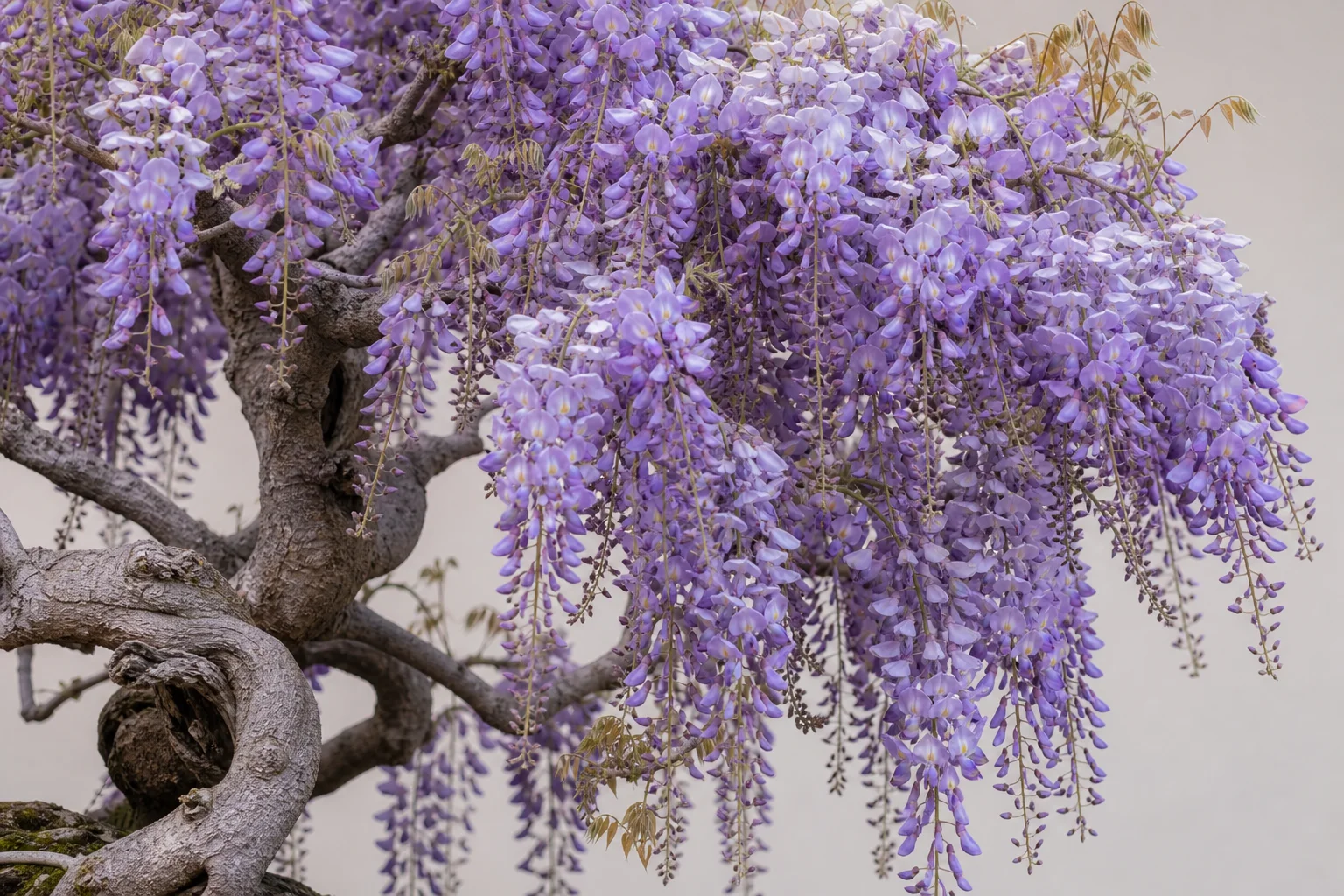
Wisteria floribundaPendulous racemes of lavender, white, or pink flowers in May–June — the most spectacular flowering bonsai when it works, and the most frustrating when it doesn't.

Arakawa maple
Acer palmatum 'Arakawa'The rough-bark Japanese maple. Develops corky deeply fissured bark unique among palmatum cultivars — trunk character that takes other species 50 years to acquire.
Cherry / Prunus
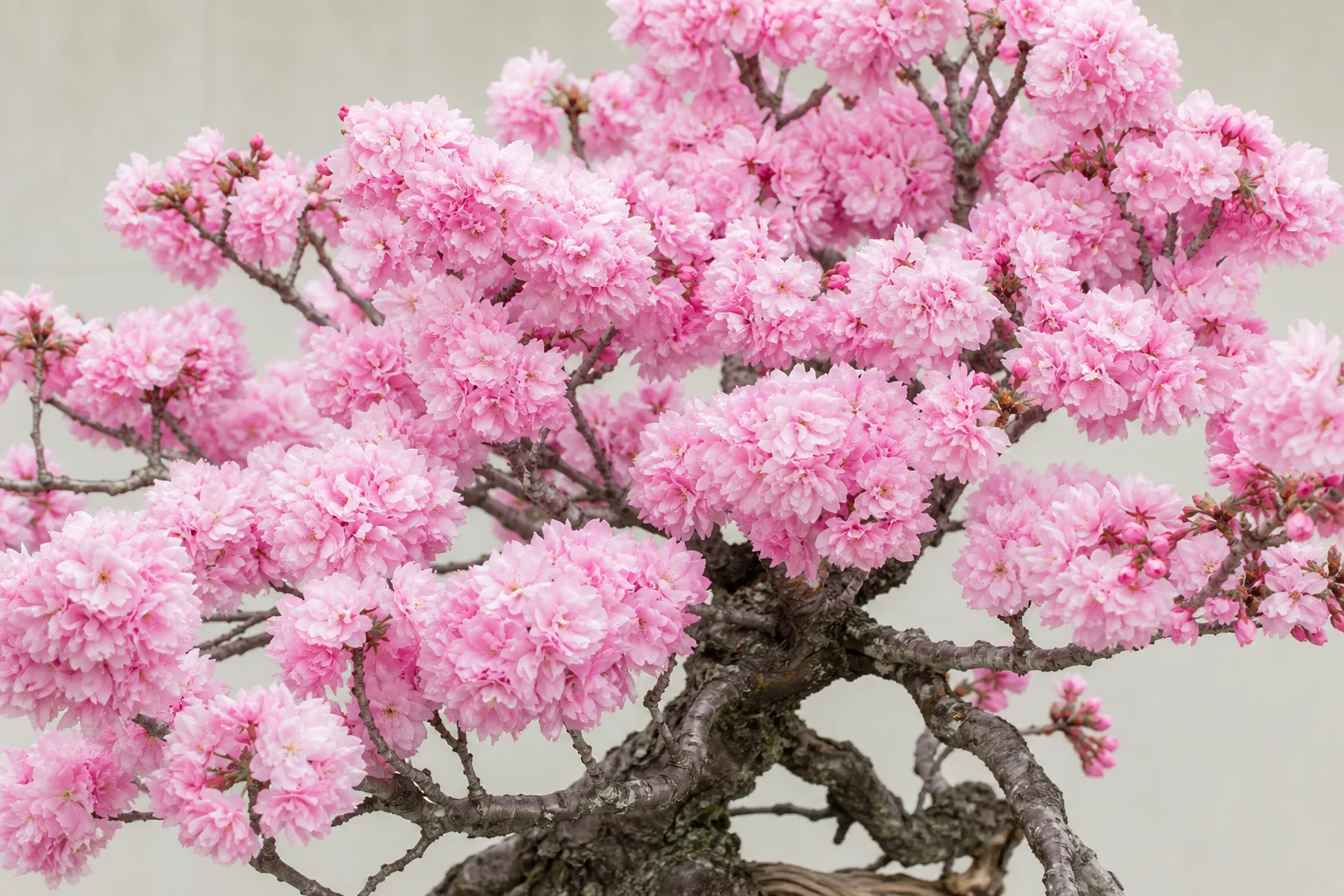
PrunusThe sakura genus. Includes Japanese flowering cherry, plum, peach, almond, and apricot — and produces some of the most culturally significant flowering bonsai in the tradition. Demanding but unforgettable.