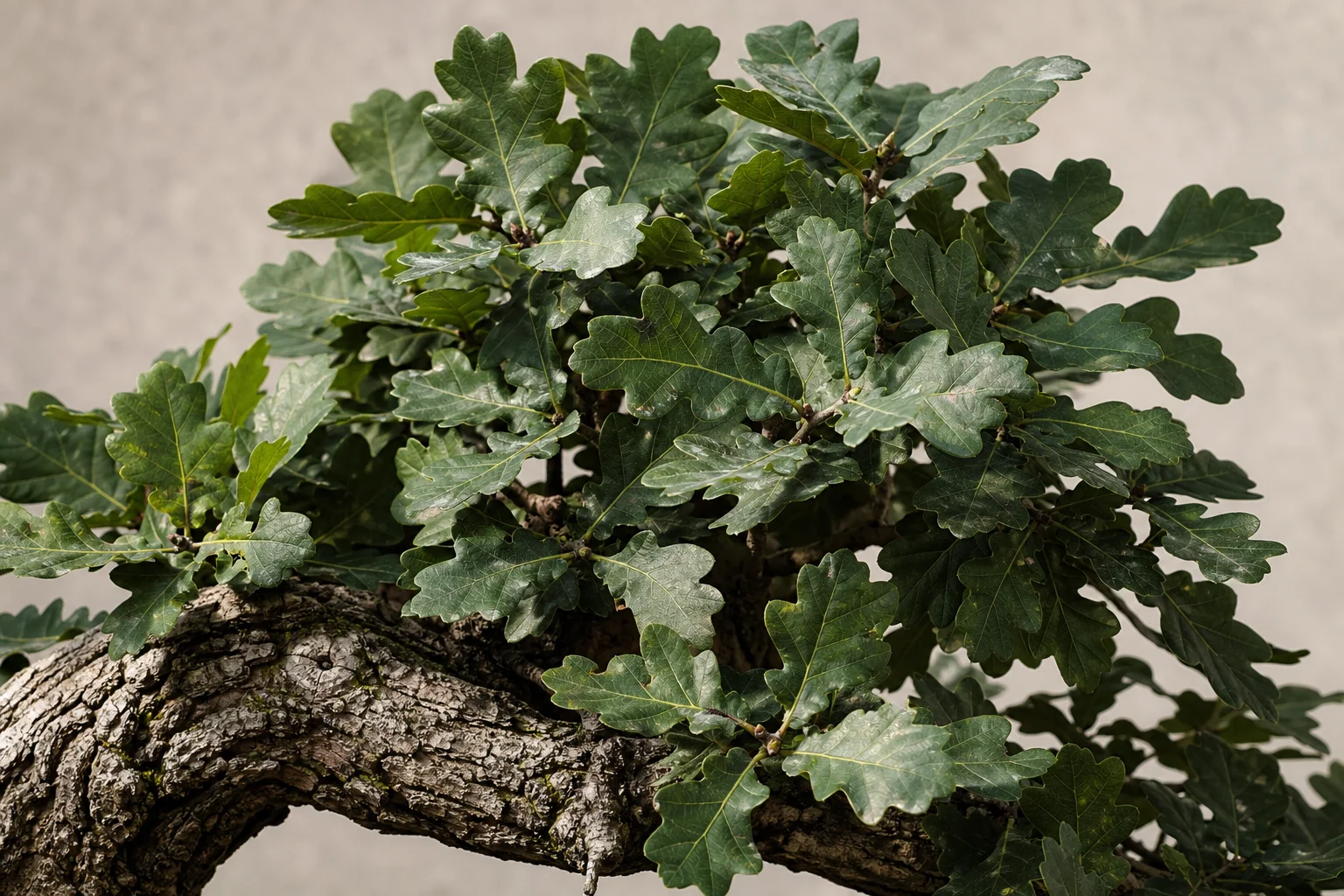
English oak bonsai care
Quercus roburThe defining tree of the English landscape. Slow, deliberate, demanding patience — and unmatched in presence at full maturity.
Water
Every 1 day
check daily in summerLiquid feed
Every 14 days
growing seasonSolid feed
Every 28 days
slow releaseRotate
Every 14 days
even canopy growthEnglish oak is the species that defines the British countryside, planted as boundary trees and parkland specimens for the better part of a millennium. The very oldest UK trees — the Major Oak in Sherwood, the Bowthorpe Oak in Lincolnshire — are 800-plus years old. Translating that scale and presence into a pot is the longest-running project in temperate bonsai.
This is not a fast species. It does not produce dramatic results in any one year. The leaves are large and reduce slowly even with consistent technique. Back-budding on old wood is unreliable. Repotting tolerance is moderate. Recovery from any setback takes a year longer than you expect. None of these is a deal-breaker, but they collectively mean oak is the wrong choice for anyone who wants visible progress quickly.
What oak offers in return is unmatched character. Even a young oak bonsai reads with quiet authority. A mature one — heavy fissured bark, gnarled trunk, leaves reduced to half their natural size — has presence that imported tropical species and faster temperate trees can't quite match. For UK growers willing to commit to the long game, this is one of the great bonsai species.
Native throughout the British Isles and across most of Europe. Adapted to a wide range of soils — clay, sand, chalk — and tolerant of waterlogging that would kill many trees. Long-lived and slow-growing in the wild; substantial bonsai material can occasionally be collected from hedgerows or fields due for clearance.
Seasonal calendar
Timing is for South East England. Select your region above to see adjusted guidance.
- Structural pruning while fully dormant
- Plan year ahead
- Repot as buds swell
- Final winter structural work
- Complete repotting
- Buds break late month in south
- Leaves emerge
- Begin daily watering
- First slow-release feed
- Start fortnightly liquid feed
- Pinch new shoots
- Wiring window opens
- Defoliate refined healthy trees late month
- Twice-daily watering in heat
- Continue light pinching
- Stop feeding by end of month
- Watch for powdery mildew
- Reduce watering
- Acorns develop on mature trees
- Autumn colour (russet brown)
- Reduce watering further
- Leaf drop
- Sweep fallen leaves
- Structural pruning
- Winter wiring
Watering
Daily through the growing season. Oaks are thirsty in full leaf and the large leaves transpire heavily — a pot allowed to dry will scorch leaf margins, and the scorched leaves don't recover that season.
Equally, the species tolerates wet feet better than most. UK oaks in heavy clay routinely sit in waterlogged ground through winter without problem. In pots, you still want free-draining substrate, but oak is less fussy than many species about occasional saturation.
Tap water of any hardness is fine. The species evolved across UK soils of every type and adapts.
Feeding
Moderate feeder, but not heavy. Liquid feed every two weeks from late April through to mid-August. Slow-release organic pellets in spring and early summer. Stop feeding by end of August.
Oak doesn't respond well to overfeeding. Heavy feeding produces oversized leaves and long internodes that take years to refine away — the species' large leaves are already its main aesthetic challenge, and feeding the tree harder makes the problem worse. Restrained feeding produces better trees.
Soil & Repotting
Free-draining and adaptable. Oak is tolerant of substrates from slightly acidic to slightly alkaline.
60% akadama, 30% pumice, 10% lava is reliable. For trees in development or recovering from collection, coarser mixes with more pumice (50/40/10) help with root establishment. Oak tolerates cheaper bonsai mixes for development material — useful for keeping costs down on slow-developing projects.
Repot every 3–4 years for young trees, every 5–7 for mature specimens. The window is mid-February through mid-March — repot as buds swell but before they break. Don't miss the window; oak doesn't tolerate root work outside it well.
The species tolerates moderate root work but is slower to recover than most deciduous bonsai. Remove no more than a third of the root mass on healthy trees, less on older specimens. Don't bare-root. Preserve the mycorrhizal fungi — oak is heavily dependent on them and aggressive bare-rooting can set a tree back by years.
Collected wild material recovers slowly. Pot into deep wooden boxes with coarse free-draining substrate, leave undisturbed for at least three years before any further work. Patience here pays for itself.
Pruning
Oak pruning is slow work. The species back-buds less reliably than most deciduous bonsai — particularly on bare old wood — and heavy cutbacks can fail to produce new shoots where you want them.
Plan carefully. Don't remove branches until you're certain. Build ramification through consistent pinching rather than relying on back-budding to fix structural errors.
Through the growing season, let new shoots extend to four or five leaves then cut back to two. Pinch every three to four weeks in moderate growth. The species is less vigorous than maples or elms; expect slower response.
Defoliation works on healthy trees (late June) and is one of the few reliable ways to reduce leaf size significantly on oak. Use carefully — every two years on healthy specimens is plenty.
Structural pruning in late winter (February). Major cuts heal slowly and should be sealed.
Wiring & Styling
Wire after leaves harden in early summer or on bare branches in winter. Oak bark is rough and resistant to marking — among the most forgiving bonsai barks once established. Aluminium for most work; copper for thicker structural branches.
Oak wood is strong but reasonably flexible when warmed. Major bends are possible but slow — wire usually needs to stay on for at least a full growing season.
Informal upright is the natural fit and what most oak material naturally suggests. Twin-trunk and clump styles work well. The species' strong horizontal branching habit suits forest plantings (yose-ue) for compositions referencing English woodland.
Literati works on the right material — particularly on collected hedgerow specimens with elegant trunks. Cascade is rare but possible. The species' character favours styles that emphasise mature trunk and bark, so don't rush past structural development to focus on ramification.
Deadwood is acceptable but less dramatic than on pines or junipers. Oak wood is dense and rot-resistant, holding carved features for decades, but the visual effect is muted compared to bleached juniper wood.
Winter care
Fully hardy across the UK with no protection needed. English oak handles British winters without complaint. Pots in exposed positions benefit from shelter from prevailing wind in late winter to protect swelling buds — strong wind can desiccate exposed buds on smooth bark.
Never bring indoors.
Propagation
From acorns (autumn-sown, no stratification needed — they need to remain moist through winter, not dry out, or they fail) — easy and the standard route to nursery material. Acorns gathered from wild trees produce variable seedlings; this variation is useful for development. Cuttings rarely succeed. Air layering is possible but very slow.
Common problems
Several specific oak problems are worth knowing, particularly the gall-forming wasps that occasionally cause cosmetic issues.
Oak powdery mildew
Symptoms: White powdery coating on leaves, particularly on new growth in late summer.
Cause: Fungal — encouraged by warm dry weather and humid still air.
Solution: Improve airflow around the tree. Remove worst-affected leaves. Milk-water spray (1:10) as preventative; sulphur-based fungicide if severe. Very common on oak and difficult to eliminate entirely but rarely seriously damaging.
Knopper gall and other galls
Symptoms: Distorted growths on acorns, leaves, or twigs — various shapes depending on the gall wasp species.
Cause: Various tiny wasps lay eggs in oak tissues; the tree forms a gall around the larva.
Solution: Cosmetic only — galls don't seriously harm the tree. Remove if aesthetically bothersome. Generally just accept them as part of growing oak.
Leaf miners
Symptoms: Pale meandering tunnels visible inside leaves.
Cause: Larvae of small moths or flies feeding between leaf surfaces.
Solution: Remove affected leaves where possible. Systemic insecticide rarely necessary. Damage is usually limited and cosmetic.
Slow back-budding
Symptoms: Branches pruned hard fail to produce new buds where wanted.
Cause: Normal species behaviour. Oak back-buds less reliably than most deciduous bonsai.
Solution: Plan pruning carefully. Build structure through pinching. If back-budding is required, ensure the tree is in peak health and feed well the year before.
Leaf scorch
Symptoms: Brown crispy margins on summer leaves.
Cause: Pot allowed to dry combined with strong sun or wind.
Solution: Water more attentively in summer. Move out of strongest afternoon sun in heatwaves. Mulch surface to reduce evaporation. Affected leaves will not recover but the tree will.
Acute oak decline
Symptoms: Black weeping patches on trunk, sometimes with cracking bark and rapid dieback.
Cause: Bacterial complex, increasingly common on UK oaks since the 2000s.
Solution: No reliable treatment. Affected trees usually decline over several years. If your bonsai develops symptoms, isolate it from other oaks and seek expert advice. Less common on small pot-grown trees than on mature landscape oaks but worth knowing about.
Popular cultivars
English / pedunculate oak. The wild type. Most quality oak bonsai is seedling-grown or collected wild material of this species.
The other UK native oak. Care identical. Slightly more upland habitat in the wild — Welsh and Scottish woodlands often have sessile rather than pedunculate. Both make excellent bonsai.
Mediterranean species with deeply corky bark. Less hardy than English oak (protect below -5°C) but the bark develops dramatic character much faster.
Evergreen Mediterranean oak. Different care entirely — small leaves, year-round foliage. Less hardy than English oak.
Track your English oak with Kentai.
Collection tracking, care logs and photo history are free — no card, no time limit.
More care guides
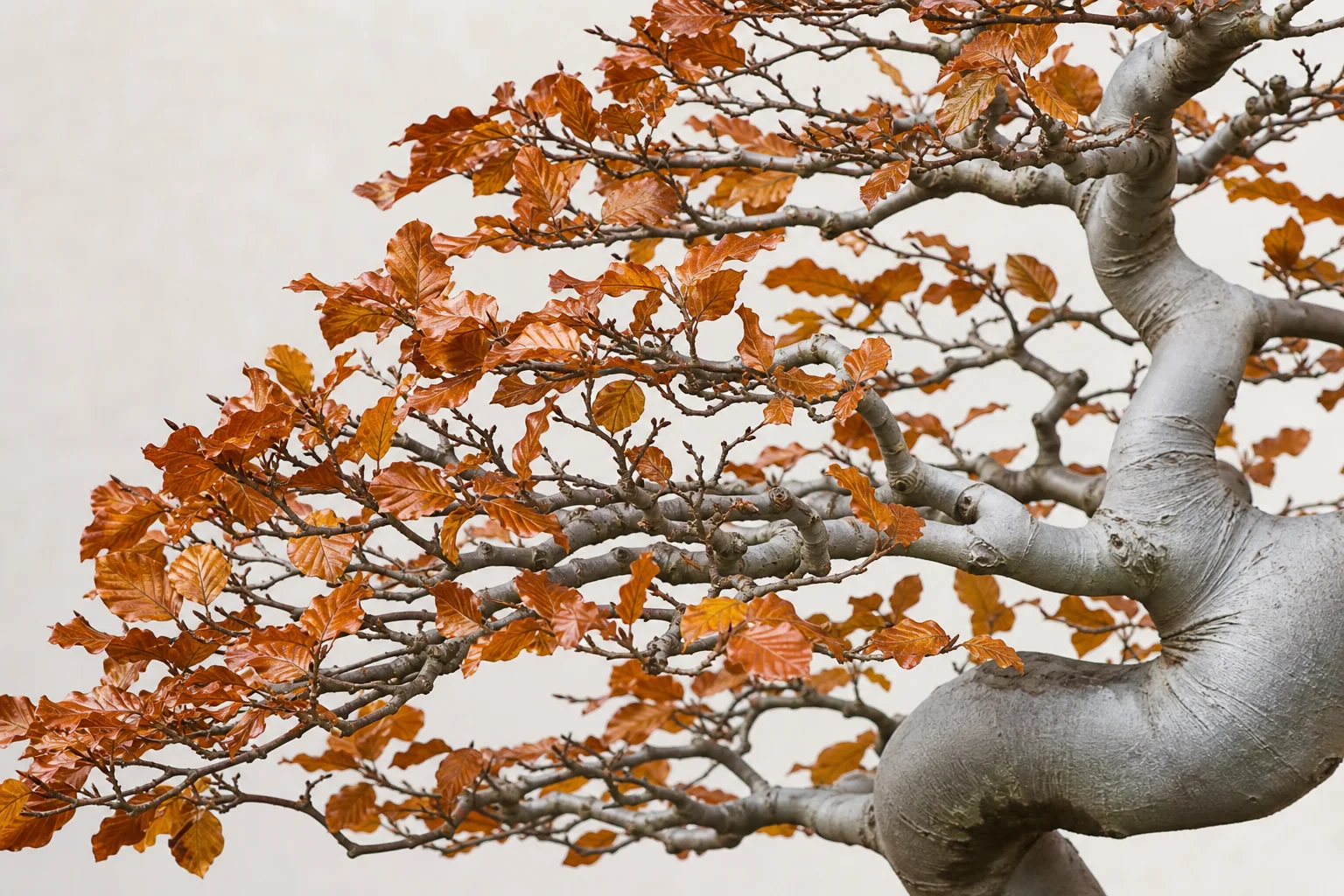
European beech
Fagus sylvaticaSmooth grey bark, copper-brown winter leaves held through to spring, and a presence that no other deciduous bonsai quite matches.
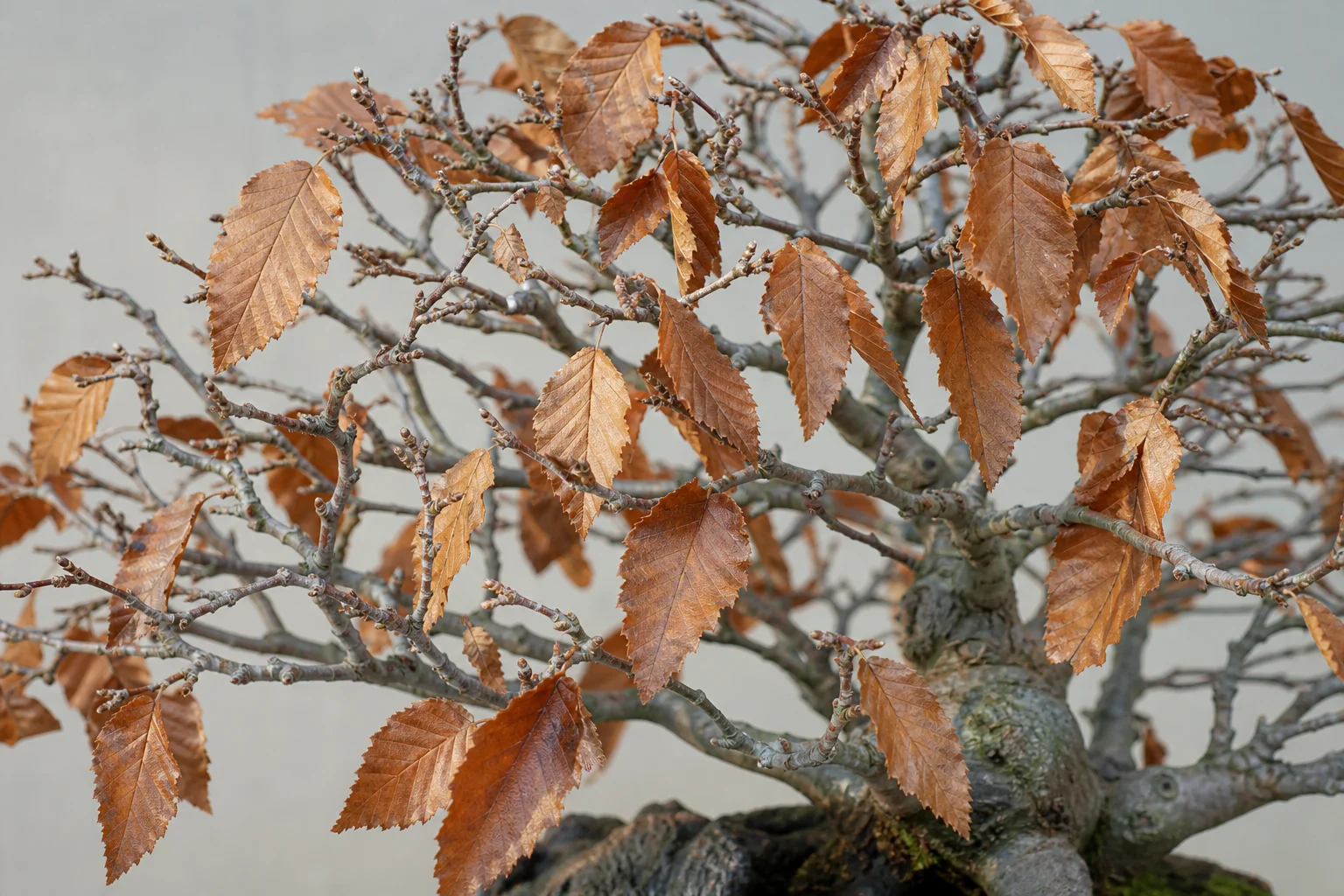
European hornbeam
Carpinus betulusThe UK native that bonsai forgot. Strong, fast, beautiful in winter, and lovely in spring — and you can find good material in any hedgerow.
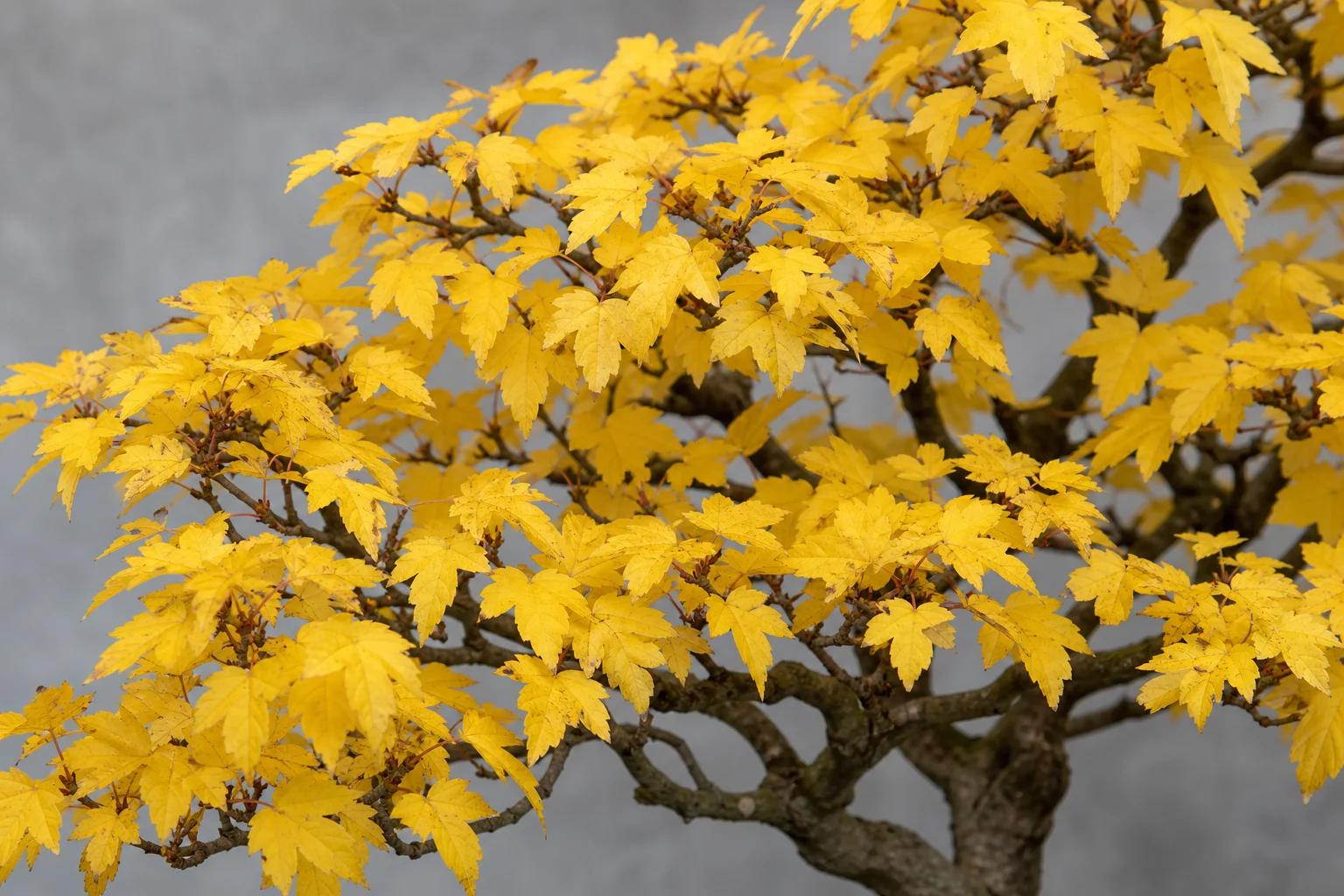
Field maple
Acer campestreThe UK's native maple — bulletproof hardy, butter-yellow autumn colour, and free in every English hedgerow.